
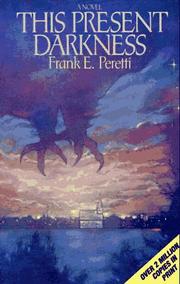
This Present Darkness
2,384-word summary 11 min read 375 pages in the book
- First published
- 1986
- Publisher
- Crossway Books
- Pages
- 375
- ISBN
- 9780891073901
- Series
- Darkness (#1)
Reading options
What's inside (8 sections)
I picked up This Present Darkness because I kept hearing it named as the book that made Christian fiction a shelf of its own in the 1980s. It came out in 1986 from Crossway Books, runs 375 pages in the edition most people cite, and stands as book 1 in the Darkness series. I expected a small town thriller with angels in the margins. What I got was louder and stranger than that, a full collisions story where every lawsuit and school board vote in a fictional town called Ashton has fighters in the sky above it.
The premise is simple to state and busy in practice. Ashton is a quiet college and mill town in the Northwest that is being bought out from under its people. A corporation tied to a New Age group wants land, influence, and control of the college. At the same time the local church is shrinking, the local paper is shrinking, and decent people are tired. Above all of it, Peretti shows angels and demons as real soldiers fighting for the town. Human choices open or close doors for them. Prayer lets the angels move. Selfishness, lies, and occult practice give the demons room.
Peretti writes like a pastor who also loves action films. Chapters cut fast between prayer meetings and police cars, between a demon snarling on a rooftop and a tired reporter typing at midnight. The style is plain, earnest, and very sure about right and wrong. That certainty will either carry you through or wear you down, and I felt both at different points.
A tired town with a plan
Ashton looks ordinary at first. There is a main street with shops that close early, a community church with peeling paint, a small paper called the Clarion, a college that brings in young people and outside money, and hills and farms around the edges. People know each other. They nod at the grocery store. They argue at town meetings and then go home to supper.
Into this pattern comes a slow takeover. Agents for a group linked to the Universal Consciousness Society start buying property, filing suits, and placing friendly people in key jobs. The society presents itself as calm and modern. It offers meditation classes, counseling, self help language, and talk about unity and higher thought. Behind the brochures, Peretti shows something harder. The leaders answer to spirits who want Ashton cut off from the gospel and handed over.
The college is central to the plan. Psychology professor Juleen Langstrat teaches courses that mix therapy talk with spirit contact. Students learn to empty their minds, picture guides, and accept voices as wisdom. Some are harmed in ways they cannot name. One young man, Kevin Weed, drifts into trance states and ends up tied to a demon who uses him like a tool. A local girl from a troubled home gets pulled into the same circle because it feels kind at first.
At the same time the town machinery starts to squeeze the few people who ask questions. Health inspectors show up at odd hours. Loans get called in. The police chief, Oliver Young, seems helpful in public and works for the other side in private. He steers investigations away from the society and toward its critics. By the time most residents notice anything, the society controls the paper trail. Deeds, permits, court dates, and school policies all tilt one way.
This is the part of the book I found most believable, oddly enough. Peretti may frame it in spiritual terms, but the mechanics of a small town takeover feel researched. A well funded group does not need to threaten people in alleys. It can hire lawyers, donate to the right fund, offer the college a grant, and wait. Ashton falls asleep because the steps are boring. That boredom is the point.
Hank and Marshall
The human story rests on two tired men who do not like each other at first.
Hank Busche pastors Ashton Community Church. His congregation has shrunk to a handful. His wife Mary has left him, at least for a time, worn out by the strain of ministry with little fruit. Hank prays, visits, fixes the church roof himself, and preaches on Sundays to empty rows. He is not slick. He forgets to eat. He keeps sermon notes on cards and loses them. What he has is a stubborn habit of staying. When odd things start happening around town, a vandalized church van, threatening calls, a lawsuit aimed at his little flock, he does not run. He starts asking who benefits.
Marshall Hogan edits the Clarion. He came to Ashton to escape a failed career in the city and a drinking problem that cost him a marriage. He lives above his work, smokes too much, and trusts almost no one. His young reporter Bernice Krueger is sharp, restless, and hungry for a real story. She grew up around hard facts and wants to prove herself. Marshall holds her back at first because he is afraid of libel suits and of losing the last job he has. Then his own curiosity wakes up.
Hank and Marshall meet over the same set of facts from opposite ends. Hank sees spiritual coldness and moral pressure. Marshall sees money moving and records that do not add up. Their early scenes together are prickly. Hank talks about prayer and Marshall hears evasion. Marshall talks about sources and Hank hears cynicism. Peretti lets them stay annoyed with each other for a good stretch, which helps. When they finally start trading notes, the alliance feels earned.
Around them are neighbors who fill out Ashton. Alf Brummel is a big, kind officer who hates what the department has become and feeds information to Marshall at risk to his job. Lucy Brandon passes along salon gossip with a soft center. Church members show up for night prayer even when scared.
Bernice carries much of the middle. She follows paper trails to motels and county offices, interviews frightened students, and gets threatened for it. One long stretch has her trapped and praying for the first time in years while Hank and others pray for her by name miles away.
Angels held back and demons pushing
The famous part of the book is the unseen war, and Peretti does not keep it subtle.
Above Ashton stand angels assigned to protect people and places. Their captain is Tal, tall and scarred from old battles, loyal and grieved by human failure. With him fights Guilo, strong and quick, and a number of lesser angels with names and posts. They watch homes, the church, the newspaper office, and individual people. They can strike demons, guard roads, and block lies, but only within limits. When humans refuse to pray, argue among themselves, or cherish secret sins, the angels weaken. Their swords grow heavy. Their light dims. At several points Tal must pull back from a street or a house because no one below is asking for help.
Opposing them are demons under a prince who claims Ashton. Rafar is the chief on the ground, cruel and clever, fond of using courts and rumors rather than claws when he can. Under him are many others who attach themselves to people and institutions. They whisper, accuse, inflate pride, and stir fear. Peretti gives them ugly bodies to match their work. They crouch on rooftops, slide through meeting rooms, and scream when angels arrive in force. Their dialogue among themselves is all blame and flattery. No one trusts anyone.
The mechanics stay consistent. A demon cannot simply possess a resistant person. It must be invited through occult practice, sustained hatred, or surrender to a lie. A Christian who prays and confesses is hard to touch directly, so demons aim at circumstances instead. Angels, in turn, cannot force humans to do right. When Hank repents of pride, Tal grows stronger at once.
Some readers will find this system crude. Everything maps too neatly. Yet as a story engine it works. Every boring meeting in town has a second level. A prayer gathering in a living room changes the odds on a highway at night.
Prayer as action
For all the sword play, the book treats prayer as the main human action, not a pause between actions.
Hank learns this slowly. Early on he prays dutifully and then tries to fix everything with visits and arguments. After his church is sued and his character is smeared, duty is not enough. He gathers the remnant for all night prayer. They sing rough hymns, read psalms aloud, confess old grudges, and name neighbors one by one. Peretti shows the effect at once overhead. Angels who were pinned down stand up. A demon roadblock breaks. A frightened witness finds courage to call the paper.
Marshall learns the same lesson from outside faith. He does not start as a believer. Alf prays for him in simple words. Bernice, shaken by what she has seen, asks for help in plain speech. By the end Marshall prays himself, awkwardly and without polish.
The book also shows failed prayer, which I appreciated. Church members pray loudly while refusing to forgive each other, and the angels stay weak. The rule seems to be that prayer must match obedience.
This focus gives the middle a repeating rhythm. Threat rises, angels falter, someone repents, angels rally. I felt the drag near the two thirds mark, when another lawsuit and another night chase blurred together.
The school, the festival, and the fight in the open
Everything converges on the college and a town festival meant to celebrate unity.
Juleen Langstrat plans a large event with music, booths, and a keynote about consciousness. On paper it is harmless civic pride. In the plot it is cover for a final push. New teachers will be installed, curriculum changes will be locked in, and Hank will be publicly disgraced by a planted scandal. Police under Oliver Young will keep order in a way that keeps cameras away from the wrong tents. Lawyers have injunctions ready if the Clarion prints anything.
The student thread peaks here too. Kevin Weed, now deeply bound, is prepared as a vessel for public display. The plan is to show a marvel, a trance with knowledge he could not have, and claim it as proof. Bernice has documents and testimony that could spoil the show, but getting them into print means getting past threats, a stolen car, and a newsroom break in. Alf risks his badge to escort her. Marshall must decide whether to run the story without every confirmation a careful editor would want.
Peretti stages the festival as a long crosscut sequence. On the ground, Hank confronts lies with a calm statement and refuses to be baited into rage. Marshall prints. Bernice testifies. Alf stands visible in uniform beside people he is supposed to intimidate. Students begin to ask loud questions. Overhead, Tal and Guilo lead an assault on Rafar and his host. The writing swaps every few pages, ground then sky, and the pace finally matches the stakes.
Without giving away each beat, the resolution follows the logic set up from the start. Truth told in public weakens the cover story. Prayer offered without show strengthens the angels. Demons who relied on secrecy lose footing when lights come on. The festival does not end in mass conversion. It ends in exposure. Contracts are questioned. Officials resign. Some students walk away from Langstrat classes. Some do not. Hank church is still small. The Clarion is still broke. Victory looks like room to breathe, not a parade.
I liked that restraint. Peretti could have ended with Ashton kneeling as one. He does not. He ends with work to do and people sobered by what they saw. That choice keeps the book from floating off entirely.
What works and what wears thin
What works first is momentum. Short chapters, clear villains, a ticking takeover, and a second level of combat keep the pages moving. You always know what each side wants. The Clarion investigation gives the plot a spine of documents and deadlines. Even readers who do not share the theology can follow the money and the lawsuits.
Second, Ashton feels lived in. The church kitchen with weak coffee, the newsroom with jammed drawers, the farmhouse where prayer meetings run past midnight, all of it has texture.
Third, the book takes evil seriously without making it cool. Rafar and his crew are petty and vicious. Langstrat is a skilled teacher who believes her own pitch about help and wholeness. That makes her more troubling than a cartoon villain.
What wears thin is subtlety. Dialogue often explains too much. Characters announce themes in plain speech. Demons state their plans outright. Angels explain rules at length.
Character depth is uneven too. Hank and Marshall grow. Bernice and Alf have clear arcs. Almost everyone else is fixed, which flattens drama after a while.
The treatment of counseling will bother modern readers. The book lumps together a wide span of practices, from relaxation scripts to occult channeling, as if they are one road. A steadier book would separate careful therapy from spirit contact.
There is also the matter of gender. Women in Ashton are often victims, helpers, or tempters tied to the society. Bernice breaks the mold by doing real investigation. Still, the center belongs to two men.
Should you read it. If you want to understand why so much later Christian fiction looks the way it does, yes. This is the source code. If you want a thriller that treats prayer as plot, you will likely finish it fast. If you need moral gray areas or spare prose, this may not be your book.
I closed it thinking about the night prayer scenes more than the battles. A handful of older people with sore knees, a pot of soup on the stove, a list of names, a phone that might ring with bad news, and a choice to stay. Peretti stages heaven as armies, but his best image of faith is smaller. It is neighbors refusing to leave town to its buyers. For all my complaints about speeches and repeats, that image stayed with me past the last page, which is more than many louder novels manage.
FAQ
Is This Present Darkness part of a series?
Yes. It is book 1 in the Darkness series, followed by Piercing the Darkness, which returns to many of the same ideas in another town.
Who are the main human characters?
Pastor Hank Busche, newspaper editor Marshall Hogan, reporter Bernice Krueger, officer Alf Brummel, and professor Juleen Langstrat drive most of the action.
Is it only for Christian readers?
It was written for Christian readers and assumes prayer and angels are real. Thriller readers outside that view can follow the plot but may not share its frame.
Similar books
More from Darkness first, then related titles.

Lullaby
A reporter discovers that a poem in a children's book kills anyone who hears it, and his attempt to destroy every copy turns into a road trip through grief,…
2,147-word summary · 10 min read
Everything's Eventual: 14 Dark Tales
Fourteen Stephen King stories shuffled by the deal of a card deck, from the haunted room of 1408 to quiet tales of grief that sting as much as the monsters.
2,000-word summary · 9 min read

If It Bleeds
Holly Gibney faces an outsider plus three more tales of dread.
2,219-word summary · 10 min read
Four Past Midnight
Four novellas about a plane lost in time, a writer haunted, and horrors small and large.
2,584-word summary · 11 min read
Horns
Accused of killing Merrin Williams, Ig Perrish wakes with horns that force strangers to confess their darkest sins.
2,264-word summary · 10 min read
Revival
Jamie Morton shadows preacher Jacobs from boyhood healings to electric cures that open a door best left shut.
2,037-word summary · 9 min read
NOS4A2
Vic McQueen's bike finds lost things through a bridge, pitting her against Manx's Rolls-Royce ride to Christmasland.
2,060-word summary · 9 min read
Later
Boy Jamie Conklin sees dead people who must answer truthfully, pulling him into NYPD cases and a drug crew's greed.
2,009-word summary · 9 min read
The Dark Half
A Maine novelist buries his violent pen name George Stark, then faces murders that carry his own fingerprints.
2,956-word summary · 13 min read

Rosemary's Baby
A young couple's dream apartment in the Bramford turns dark when helpful neighbors and a trusted doctor take over Rosemary's pregnancy.
2,665-word summary · 12 min read
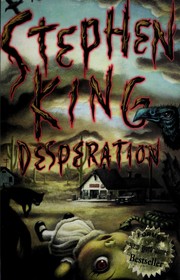
Desperation
Travelers on Highway 50 are hauled into empty Desperation, Nevada, where a possessed deputy serves an old thing in the mine.
2,993-word summary · 13 min read
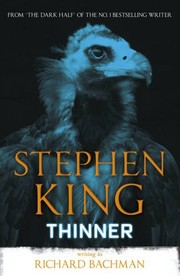
Thinner
A Connecticut lawyer escapes punishment after a fatal crash, then an old Romani father lays a wasting curse on him and the pounds start falling off.
2,502-word summary · 11 min read
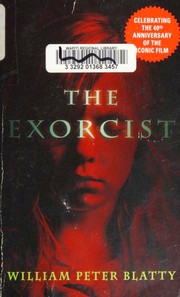
The Exorcist
In Georgetown, twelve-year-old Regan suffers a violent possession, and priests Karras and Merrin step in after doctors fail to save her.
2,093-word summary · 9 min read
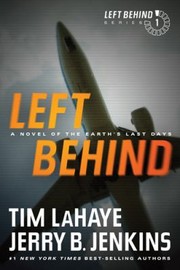
Left Behind
Pilot, journalist, pastor, and student wake after millions vanish in Rapture.
2,050-word summary · 9 min read
Doctor Sleep
Grown Dan Torrance gets sober in New Hampshire and helps gifted Abra Stone face the True Knot.
2,841-word summary · 13 min read

The Outsider
Coach Terry Maitland's DNA and witnesses point to an impossible murder, until Ralph Anderson and Holly Gibney trace it to El Cuco.
2,586-word summary · 11 min read

Hidden Pictures
Nanny Mallory sees Teddy drawings predict a murder in New Jersey.
2,332-word summary · 10 min read
The Shining
The Shining retold: Jack winters at Overlook with Wendy and Danny, REDRUM, hedge maze chase.
2,011-word summary · 9 min read

The Tale of the Body Thief
Lestat trades bodies with a psychic thief for one day of mortality and ends up trapped, sick, and hunting his own vampire body.
2,069-word summary · 9 min read

The Only Good Indians
Four Blackfeet men who killed a pregnant elk are hunted by her spirit a decade later, and the only person who can end the cycle is a teenage girl who was not…
2,010-word summary · 9 min read
Lisey's Story
Two years after her novelist husband dies, Lisey Landon follows a trail of clues into his childhood and the other world that made him a writer.
1,998-word summary · 9 min read

Night Film
A disgraced journalist investigates the death of a reclusive horror director's daughter, following a red coat through hospitals, secret clubs, and a family…
2,690-word summary · 12 min read
The Troop
A Boy Scout troop on a Canadian island takes in a stranger who cannot stop eating, and the worm inside him turns a camping trip into a war.
2,457-word summary · 11 min read
Locke & Key, Vol. 1: Welcome to Lovecraft
After their father is murdered, the Locke children move into a haunted family estate where keys unlock doors to ghosts, other places, and dangerous secrets.
2,019-word summary · 9 min read
The Last House on Needless Street
A lonely man, a cat and a mysterious neighbor pull you into a house full of buried trauma.
2,627-word summary · 12 min read
The Chalk Man
Childhood chalk codes lead to a murder that follows friends thirty years later.
2,350-word summary · 10 min read
Relic
A museum beast kills during an exhibition while an agent investigates.
2,066-word summary · 9 min read
Hannibal
Lecter hides in Florence while Starling and Verger close in from both sides.
2,590-word summary · 12 min read

Full Dark, No Stars
Four novellas about revenge where ordinary people do terrible things and live with it.
2,646-word summary · 12 min read

The Call of Cthulhu and Other Weird Stories
Seventeen tales from Dagon to Innsmouth, led by Cthulhu, the Colour, and the Whisperer, in S. T. Joshi careful Penguin edition with notes and corrected texts.
2,593-word summary · 12 min read