
Reading options
What's inside (9 sections)
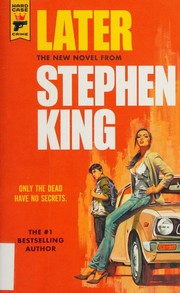
Later is Stephen King in friendly storyteller mode, the voice that says listen, kid, this happened, and keeps you up past bedtime. It follows Jamie Conklin from age six to high school in New York, a boy who sees dead people who must answer his questions truthfully. Part crime story, part ghost story, part coming of age about a mother and son holding on too tight.
Jamie sees dead people
Jamie lives with his single mother Tia, a literary agent hustling in Manhattan. Money is tight after the crash but love is steady. Uncle Harry, Tia's brother with early Alzheimer's in a care home, visits in fog. Neighbor Professor Burkett, retired, kind, a little lonely, lends books. Jamie's secret is simple and huge. Since toddlerhood he sees the recently dead lingering. They look solid until they fade. If he asks, they must tell truth. They cannot refuse.
Early encounters set rules and cost. A man hit by a car near Central Park waves though dead, traumatizing Jamie at three. Mona, Burkett's late wife, chats and gives small comforts, teaching Jamie ghosts are not always scary. Tia is the only living person told. She believes fast because mothers know when kids lie and Jamie does not. She swears him to silence. No teachers, no doctors, no friends. Gift like this gets you studied or mocked.
King writes kid logic well. Jamie tests limits carefully. Can ghosts lie by omission? Do they know future? Do they feel cold? Answers come through trial. They know what they knew alive plus a little beyond, but not everything. They fade after days unless tied by strong feeling. Jamie learns to ask precisely because vague questions get useless truth. That discipline later saves him with police and killers.
What I liked is how normal life continues around the weird. School, bedtime stories, laundry, Tia on the phone shouting about royalties. The supernatural does not replace domestic detail. It presses on it. Jamie must do homework while a dead man sits on his bed waiting to be asked where he left keys. That mix of eerie and ordinary is King at his most readable.
Tia's agency and Regis Thomas
Tia represents romance novelist Regis Thomas, whose western love books pay their rent. When the market dips and Tia overspends, they wobble. Then Regis dies mid series with no outline, threatening bankruptcy. Tia, desperate, drives Jamie to Regis's house with cop girlfriend Liz to ask the ghost for the final plot. Jamie asks, Regis tells, Tia writes it up under another name and saves the agency.
This sequence is both funny and queasy. Funny because Regis's ghost complains about being dead while dictating love scenes. Queasy because Tia uses her son as a tool and justifies it as survival. King does not let her off. Jamie feels used and says so in kid words that sting. I did not want to be a cheat sheet. Tia apologizes and does it anyway when money calls again. Their bond frays in ways that feel true to single parent pressure.
Liz Dutton, NYPD detective dating Tia, enters here as cool ally. She brings pizza, helps with rent talk, treats Jamie kindly without condescension. She also sees utility fast. A boy who makes the dead talk could close cases. Tia warns her off. Liz nods and remembers. That remembered hunger drives the middle of the book when Liz returns needing a bomb location to save her job.
The publishing satire is light but sharp. Agents fretting about covers, authors missing deadlines through death, editors praising books they have not read. King, long agented himself, writes it with affectionate bite. He also shows how money fear makes decent people bend. Tia is not evil. She is scared of losing the apartment that keeps Jamie safe. Fear makes her borrow against his soul.
The bomber and the Dead Light
A year later Liz grabs Jamie after school, frantic. Serial bomber Kenneth Therriault planted one last bomb then killed himself. Thousands could die. She needs the ghost to talk. Against Tia's rules, Jamie agrees because kids will die otherwise. Therriault tells where, police disarm, headlines praise anonymous tip. But unlike other ghosts, Therriault sticks around, taunting Jamie at night with promises and threats.
Here horror deepens. Therriault is not just a man but ridden by something Jamie calls the Dead Light, a cold brightness glimpsed in It and other King works, a predator that feeds on pain. Burkett, who knows old rituals from books, warns Jamie about Chud and about holding on too tight to the dead. Advice is cryptic because Burkett fears naming things gives them power. Jamie, scared to sleep, tries to ignore Therriault until ignoring fails.
The confrontation is classic King kid courage. Jamie faces Therriault in an empty lot, grabs and holds despite terror, refusing to let go until the ghost begs and the Light promises to leave him alone. He also makes the Light promise to come if he whistles, a bargain that feels clever at twelve and ominous later. King writes the scene with physical detail. Snot, shaking hands, peed pants barely held. Bravery includes mess.
After, Burkett dies and warns from beyond never to call the Light. Jamie nods while already knowing he might. Power tempts even good kids when loved ones are threatened. That seed waits for the finale. I appreciated that King lets victory cost sleep. Jamie needs nightlights again, wets the bed once, snaps at Tia. Trauma does not vanish because the ghost left.
Burkett and books
Professor Martin Burkett gives the book its warmest adult friendship. Retired, widowed, living with books floor to ceiling, he lends Jamie adventure novels and listens without prying. He knows about the dead from old reading, not experience, and offers rituals with warnings rather than promises. Do not call what you cannot feed, he says, and do not feed what you call. Jamie half understands and fully trusts his tone.
Burkett's wife Mona, dead but lingering kindly, checks on them both. She tidies ghost shelves, reminds Burkett to eat, teases Jamie about girls. Her presence shows ghosts can be domestic, not only threats. When she finally fades after Burkett's death, Jamie mourns a second grandmother. The farewell, with Mona straightening Burkett's tie for the last trip, is gentle horror at its best. Love persists a little past breath, then lets go.
Books themselves matter here. Tia agents stories, Regis writes them, Burkett collects them, Jamie lives in them. King slips in affectionate jokes about publishing while showing how stories pay rent and shape morals. Jamie learns to ask ghosts good questions the way readers learn to ask books. Who are you, what do you want, what did you leave undone. Those questions work on the living too. Tia starts answering more honestly once Jamie asks her the same way.
Liz turns and Marsden's pills
The last act shifts to crime. Liz, fired for skimming and using, kidnaps Jamie to force help robbing drug kingpin Donald Marsden's hidden Oxy stash. She kills Marsden, drags Jamie to ask the fresh ghost where pills hide, finds less than expected, and turns rage on the boy. Jamie, cornered in a library panic room, whistles. The Dead Light comes, kills Liz horribly, then turns hungry eyes on Jamie.
King stages this as moral test, not spectacle. Jamie could let the Light eat Liz and enjoy it after betrayal. He does not. He orders it away at cost to himself, holding focus while it shows him tempting visions of power without rules. He calls police, tells partial truth, goes home shaking. Tia holds him and finally hears the full cost of using him. No more favors, she promises, and this time means it because she saw what almost took him.
Marsden's ghost is pathetic rather than scary, worried about his fish and his reputation. That banality grounds the horror. Evil here is not ancient. It is a cop stealing pills to start over and a dealer counting tablets while dying. The Light feeds on such small greeds grown large. Jamie learns monsters often wear work clothes.
A fair criticism is that Liz's turn feels fast. Loving girlfriend to kidnapper in fifty pages. King plants clues. Missing money, pills in a jacket Tia found earlier, lies about overtime. Reread, the slide shows. First read, it shocks. I accepted shock as point. Addiction and job loss can flip people quickly, especially those used to authority. Still, I wanted one more scene of Liz choosing before the gun.
Fathers, Alzheimer's, and later
The coda lands softly and lingers. Years later Jamie, nearly grown, visits dying Uncle Harry to ask who his father is. Harry, lucid for a minute, says he is. The implication of incest between siblings, never detailed, horrifies Jamie more for what it means about Tia's silence than for biology. He chooses not to ask how, to spare his mother retelling. He also learns Harry's early Alzheimer's may be inherited. A simple test could tell. He decides to test later, hence the title's ache.
This ending reframes the whole book. Seeing the dead is not the real curse. Time is. Knowing you might forget those you love, knowing mothers age, knowing choices narrow. Jamie tries to stay hopeful about college, writing, girls. But fear hums underneath. King, now old himself, writes teen dread of forgetting with tender accuracy. I thought of my own parents while reading and called after.
Style is plainspoken first person with asides to reader. Short chapters, cliff ends, jokes about New York rents and agent life. No dense mythology, no multiverse homework. At 264 pages it moves fast. Horror fans get chills. Crime fans get procedure. Coming of age fans get a mother son story that respects both.
Read it if you like Joyland or The Colorado Kid, King's Hard Case run of humane crime with a twist. It is not his scariest, and the middle sags slightly with bomber logistics. It is among his kindest to a kid narrator. Jamie is brave, funny, and tired of being special. He wants to be ordinary and learns ordinary is fragile and worth guarding. Later, he says about many things. The delay is the point. Grow first, know when ready.
New York as character
New York in the late 2000s and early 2010s lives in details King clearly enjoys. Walk up apartments with radiators that clang, bodegas that cash checks, agents who lunch near Union Square, cops who drink coffee in cars outside schools. The crash empties offices Tia once courted. Rents rise anyway. Jamie walks to school past shuttered shops and new banks, learning the city through closures. Burkett's building, with old tenants and Padawan? No, with old tenants and mail piled, feels like a village inside Manhattan where everyone knows whose kid sees ghosts without saying so.
Liz as NYPD shows the city's harder edge. Overtime, CompStat pressure, guns locked but present, bars where cops vent. Her slide into theft mirrors city temptation. Oxy pills worth more than pensions, kingpins in brownstones with panic rooms, colleagues who look away for a cut. King does not paint all police as crooked. Liz's partner covers for Jamie out of decency. But he shows how badge plus debt plus access can turn a good detective into a kidnapper in months. Place shapes crime here as much as character.
The Dead Light, glimpsed in other King books as Todash darkness, fits New York too. Bright entities that feed in alleys and lots, attracted to pain the city concentrates. Jamie sees it flicker in subway tunnels and hospital halls where the dead linger thickest. Burkett's books call it by older names, but Jamie's kid term sticks because it looks like light gone wrong. Cold, hungry, patient. The city, full of lonely deaths in crowded rooms, feeds it well. Jamie learns to avoid certain blocks not from crime maps but from brightness only he sees. That private geography of fear feels true to kids in big cities who map safe corners by feel.
FAQ
When was Later published?
Hard Case Crime published it on March 2, 2021. The first paperback runs 264 pages.
Is Later part of a series?
No. It is a standalone crime horror novel narrated by Jamie Conklin, separate from Holly or Dark Tower.
What is Jamie's gift?
Dead people Jamie sees must answer his questions truthfully, but a bomber's ghost lingers and brings a Dead Light.
Similar books
The Outsider
Coach Terry Maitland's DNA and witnesses point to an impossible murder, until Ralph Anderson and Holly Gibney trace it to El Cuco.
2,586-word summary · 11 min read

If It Bleeds
Holly Gibney faces an outsider plus three more tales of dread.
2,219-word summary · 10 min read
The Chalk Man
Childhood chalk codes lead to a murder that follows friends thirty years later.
2,350-word summary · 10 min read
The Broken Girls
A journalist revisits her sister's murder while a restored boarding school gives up a girl missing since 1950.
2,579-word summary · 11 min read
Ask for Andrea
Three murdered women haunt their killer online dater to stop him from striking again.
2,118-word summary · 9 min read
The Sun Down Motel
In 1982 Viv vanishes from a Fell motel desk; in 2017 niece Carly takes the same shift to find her.
2,150-word summary · 10 min read
Odd Thomas
A twenty year old fry cook who sees the dead tries to stop a mass shooting in his desert town.
3,797-word summary · 17 min read
Death Note, Vol. 1: Boredom
Light Yagami finds a notebook that kills with a written name, and the hidden detective L sets a trap to expose him.
2,989-word summary · 13 min read
Hidden Pictures
Nanny Mallory sees Teddy drawings predict a murder in New Jersey.
2,332-word summary · 10 min read
Everything's Eventual: 14 Dark Tales
Fourteen Stephen King stories shuffled by the deal of a card deck, from the haunted room of 1408 to quiet tales of grief that sting as much as the monsters.
2,000-word summary · 9 min read
Full Dark, No Stars
Four novellas about revenge where ordinary people do terrible things and live with it.
2,646-word summary · 12 min read
Four Past Midnight
Four novellas about a plane lost in time, a writer haunted, and horrors small and large.
2,584-word summary · 11 min read
Revival
Jamie Morton shadows preacher Jacobs from boyhood healings to electric cures that open a door best left shut.
2,037-word summary · 9 min read
Holly
Grieving detective Holly Gibney takes a missing-girl case in 2021 and traces it to two polite retired professors with a basement secret.
2,607-word summary · 12 min read
The Dark Half
A Maine novelist buries his violent pen name George Stark, then faces murders that carry his own fingerprints.
2,956-word summary · 13 min read
End of Watch
A dying Bill Hodges and Holly Gibney face Brady Hartsfield again, as rigged game consoles push hurt teens toward suicide.
2,923-word summary · 13 min read
Finders Keepers
A boy finds a murdered writer's notebooks while the killer leaves prison hunting them and Hodges closes in.
2,157-word summary · 10 min read
Billy Summers
A hitman takes one last job in Red Bluff, poses as a writer, and runs when the setup turns on him.
2,882-word summary · 13 min read
Doctor Sleep
Grown Dan Torrance gets sober in New Hampshire and helps gifted Abra Stone face the True Knot.
2,841-word summary · 13 min read
Mr. Mercedes
Retired Hodges hunts Mercedes killer Brady Hartsfield concert plot.
2,281-word summary · 10 min read
The Shining
The Shining retold: Jack winters at Overlook with Wendy and Danny, REDRUM, hedge maze chase.
2,011-word summary · 9 min read

What She Knew
Rachel lets her eight-year-old son run ahead in a Bristol park, and the nine-day search turns her into a suspect in the public eye.
2,952-word summary · 13 min read

The Beach House
A young valet is beaten to death at a Hamptons party, and his law-student brother spends a year building a case against the family that covered it up.
2,049-word summary · 9 min read

Six Years
A professor who promised to forget the woman he loved sees her husband's obituary and discovers that the wedding, the marriage, and the woman herself may never…
2,076-word summary · 9 min read

The Trespasser
A Dublin Murder Squad detective investigates a staged dinner-party killing and finds a cover-up that reaches into her own department.
2,051-word summary · 9 min read

Rules of Prey
Minneapolis detective Lucas Davenport hunts a killer who leaves a new rule at every scene and treats murder as a game of wits.
1,914-word summary · 9 min read

The Late Show
Exiled to the LAPD night shift after accusing her supervisor, Renée Ballard keeps two cases that were meant to be handed off at dawn: a brutal assault and a…
2,563-word summary · 11 min read
Night Film
A disgraced journalist investigates the death of a reclusive horror director's daughter, following a red coat through hospitals, secret clubs, and a family…
2,690-word summary · 12 min read

4th of July
Lindsay Boxer shoots two armed teenagers in self-defense, faces a wrongful-death trial, and spends her leave chasing a string of throat-slashing murders in…
2,192-word summary · 10 min read
The Camel Club
Four Washington misfits witness a murder on Roosevelt Island and stumble into a conspiracy that reaches the Oval Office, with a hostage president and a nuclear…
2,354-word summary · 10 min read