
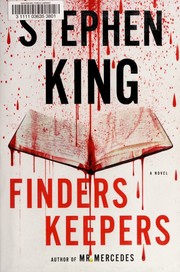
Finders Keepers
2,157-word summary 10 min read 448 pages in the book
- First published
- 2015
- Publisher
- Scribner
- Pages
- 448
- ISBN
- 9781501100079
- Series
- Bill Hodges Trilogy (#2)
Reading options
What's inside (11 sections)
I read Finders Keepers right after Mr. Mercedes because I needed to know what happened to Hodges and Holly. Stephen King published it in 2015 with Scribner. My reading follows the 448 page hardcover. It is the second in the Bill Hodges Trilogy. A boy finds stolen notebooks, a killer wants them back, and retired detective Bill Hodges gets pulled in. It is about obsession with books as much as murder, and that thread made it personal.
In 1978, Morris Bellamy, angry, bright, and mean, murders writer John Rothstein, famous for a runner trilogy about Jimmy Gold, steals his notebooks, and buries the cash and pages in a trunk. He goes to prison for another crime before he can read them. Decades later, Pete Saubers, a boy in a struggling family, finds the trunk in a creek bank, spends the cash secretly to save his family, and reads the notebooks like scripture.
Morris and the poison of ownership
Morris is one of King's most unpleasant creations, which is saying something. He loves Rothstein's books the way some fans love bands, totally, angrily, as identity. When Rothstein retires Jimmy Gold to ads and drink in the later books, Morris feels betrayed. He does not just dislike the ending. He thinks the author stole his life.
King writes Morris's prison years with care. Morris reads, brags, fights, waits. He befriends no one. He nurses the trunk location like a toothache. When he gets out, older, grayer, still furious, he finds the trunk empty and starts hunting. His logic is pure entitlement. Those pages are mine. That money is mine. That boy owes me.
What makes Morris scary is not size but patience. He watches houses, learns routines, breaks in quietly. He kills without pleasure but without pause. A scene where he sits in Pete's house reading Pete's school papers to learn him chilled me. He treats a family like research.
Pete and the notebooks
Pete is a good kid in a tight spot. His father was hurt at the City Center massacre from book one, work dried up, his mother stretches soup. The trunk cash lets him send anonymous envelopes that save the house. He knows it is wrong. He does it anyway to keep lights on.
The notebooks change him. Rothstein's unpublished novels, especially more Jimmy Gold, feel written for him. Pete copies passages, argues with friends about meaning, starts writing himself. King captures teen reading well, the underlining, the rereading, the belief that an author sees you. Pete hides the pages because exposure means losing them and shaming his family. That secrecy isolates him.
His sister Tina notices. His friend, his teacher, his mother all orbit a boy who is suddenly tired andJumping at knocks. Pete tries to sell the notebooks through shady dealers to get out from under. That decision brings Hodges in, and brings Morris closer. Every adult Pete meets about books wants a cut. That cynicism about literary estates feels pointed. King, a famous writer, knows what unpublished pages are worth and what they cost.
Hodges, Holly, and Jerome return
Bill Hodges is retired, running Finders Keepers with Holly Gibney and Jerome Robinson. He is heavier, slower, still sharp. Holly is anxious, brilliant, loyal, now more confident but still easily rattled by phones and crowds. Jerome is at college, strong, kind, pulled back for legwork.
Their entry is gradual. A dealer is murdered. Pete is threatened. Tina asks for help in a library whisper that Holly handles gently. King gives Holly lovely scenes. She talks to Tina like an older sister who remembers being scared, takes notes in careful print, and refuses to let Hodges bulldoze. Jerome does stakeouts, tech, and heavy lifting with humor. Hodges smokes less, coughs more, and knows his time is limited though he does not say it.
I liked that they are not superheroes. Hodges misreads Morris once and pays for it. Holly freezes on a call and recovers. Jerome gets punched. They win by persistence, phone records, and knocking on doors. The detective work is plain and believable. No lab magic. Just lists, patience, and care for a scared family.
Rothstein and Jimmy Gold
John Rothstein never appears alive except in memory and pages, but he haunts the book. Through excerpts and talk, King sketches a Salinger like figure who wrote three beloved novels about Jimmy Gold running from phoniness, then wrote two disappointing ones where Jimmy settles, then stopped. Fans split. Scholars circle. His wife and son fight over the estate.
Jimmy Gold's arc mirrors Pete and Morris. Jimmy runs, Morris runs in place, Pete wants to run toward writing. King uses the fictional novels to ask what authors owe readers. Rothstein's answer, in notes Pete reads, is that he owes honesty, not the ending you want. Morris can not accept that. Pete learns to. That contrast is the moral spine.
Some readers will find the book within a book talk slow. I liked it because King writes about reading with love. A passage where Pete reads a Rothstein paragraph about winter light and feels his chest loosen rang true. Anyone who found a book at thirteen that kept them alive will nod.
Tension that tightens
The last third is classic King suspense. Morris closes in on Pete's house. Hodges races with bad information. Holly stays on the phone with Tina, talking her through hiding. The standoff in a basement and a creek side involves notebooks that can burn, cash that can not be spent, and a boy who must choose between treasure and family.
King stages it without supernatural help. No shining. Just a shovel, a flashlight, a locked door. The violence is short and ugly. The aftermath lingers. Pete loses something he loved. Morris loses everything he thought he owned. Hodges gains a reason to keep working despite his body failing.
What lags is middle stretch with dealers and lawyers. Names of rare book men blur. Negotiations over price repeat. A subplot about Pete's father finding work could be shorter. King also spends pages inside Morris's head justifying murder through literary grievance. It is well written but sour. I needed air after those chapters and found it in Holly and Tina scenes.
The prose is direct, warm when with Pete's family, cold when with Morris. Dialogue carries it. King writes kids and retirees better than almost anyone. Tina's questions, Pete's evasions, Holly's careful phrasing, all sound right. Descriptions of houses, schools, and creek banks are specific without showing off.
The Saubers family under strain
Pete's parents carry the book's quiet heart. His father, injured at the City Center job fair bombing from book one, drinks too much and snaps. His mother works extra shifts, counts change, keeps the house clean as proof of order. Tina, younger, watches everything. When anonymous cash arrives, relief mixes with suspicion. Who helps without signing. What do they owe.
King writes money shame well. Pete's mother does not ask where the envelopes come from at first because she needs them. His father resents help because need feels like failure. Pete, feeding them stolen cash, feels both proud and sick. A dinner scene where they eat better meat and no one names why is painful and true. Love without honesty curdles.
Tina's friendship with Holly becomes a lifeline. Tina sneaks calls, hides in library stacks, draws maps of her house for escape. Holly, who knows fear from inside, does not tell her to calm down. She gives steps. Lock this door. Hold this phone. Say this sentence. Those instructions, plain and repeated, show King's respect for anxious kids and adults. Courage is a procedure you can practice.
When Morris enters their street, ordinary details turn threatening. A car parked too long. A man asking about schools. Mailbox left open. King builds dread from suburbia, not woods. That choice suits a trilogy about a detective who learned that evil parks in daylight and smiles at barbecues.
Dealers, estates, and King's own shadow
The rare book world satire bites because King lives it. Dealers who lowball teens, collectors who drool over notebooks, lawyers for Rothstein's son and ex wife who fight over pages they never read. Pete, trying to sell his treasure to save his family and fund college, learns that love of books and business of books are different trades.
A dealer named Andrew Hallorann type, oily and eager, offers cash and warnings. Another, older and kinder, tells Pete the truth about value and risk. Those scenes slow the thriller but deepen theme. What is an unpublished novel worth. Who owns a dead writer's drafts. What does a teen owe a family versus art. King, who has faced fans like Morris in mild form, writes without cruelty about collectors but with clear eyes. Wanting more story does not entitle you to a writer's life.
Rothstein's own voice, in notebook excerpts, is prickly and funny. He mocks his fame, his son's entitlement, his own late novels. He writes Jimmy Gold running again, older, tired, honest. Pete reads those pages and feels permission to write badly and keep going. That gift, more than cash, is what Morris wants to steal back. You can not steal permission, but Morris tries with a shovel and a knife.
Hodges, watching Pete, sees himself young and angry. He tells Pete that secrets grow teeth. Confess early. Take help. That advice comes from a man who hid drinks and fears for years. Holly adds her own version. She shows Pete her lists and routines without shame. Two damaged adults modeling honesty for a boy is the trilogy's warmth inside noir.
Two damaged adults modeling honesty for a boy is the trilogy's warmth inside noir.
Pete's writing tryouts add light. He shows Holly a paragraph about creek water and she praises verbs. He shows Jerome a dialogue and Jerome laughs in the right spot. Those small encouragements matter because Morris once wanted the same and turned bitter when Rothstein disappointed him. Pete learns early that praise helps but work decides. He keeps a notebook by his bed, writes daily, crosses out plenty. That habit, more than talent, separates him from Morris, who waited decades to steal rather than write.
King also slips in library love. Pete hides in stacks, smells glue, asks a librarian for Rothstein criticism who helps without prying. Holly meets Tina among picture books, where whispering feels safe. Those library scenes remind why King, a constant reader, writes about books with tenderness even in crime. Shelves hold refuge when houses hold threat.
Aftermath and Hodges time
The aftermath chapters give the book weight beyond capture. Pete must face his parents with truth about cash and pages. His mother cries, his father yells, then both hold him because he kept them afloat with stolen help. They repay what they can, accept aid openly, and agree to counseling and library hours instead of secrets. That boring plan is victory.
Tina, who called Holly, gains confidence. She joins debate, argues with teachers, protects Pete less and respects him more. Holly gives her a notebook with steps for panic, which Tina decorates with stickers. Those small exchanges show King's faith in practical kindness. Lists help. Calls help. Showing up helps.
Hodges feels his body failing more clearly here, coughs that linger, pains he hides. He does not tell Holly and Jerome everything, which worries them. He works longer hours because work means life. Readers who know book three will feel foreshadowing. Readers new will simply see a tired man who loves his odd office family. Jerome heads back to college with stories he can not tell. Holly keeps the office tidy and the phones answered. The agency holds.
Morris ends where entitlement ends, alone with pages he can not read because blood covers them. King grants him no insight. That refusal is moral. Some men do not learn. They rot. Pete, who could have become Morris by loving books too hard, learns to lend them instead. He starts writing his own stories, bad at first, honest. That turn from hoarding to making is the book's hope.
Who should open the trunk
Give Finders Keepers to crime readers who like character first, to King fans who want Hodges and Holly without horror, to book lovers who have argued about an author's late work. It works after Mr. Mercedes but can stand alone if you accept a few references to the concert plot. Do not give it to readers who need ghosts. Pair it with Misery for a double look at fans who turn love into knives.
At 448 pages I read it in three nights, underlining Rothstein lines and worrying about Tina. Pete starts counting cash in secret and ends choosing to tell truth and lose treasure to keep people. That choice, costly and clear, is why the book stays with me past the thrills. Stories are for sharing, not burying. Morris never learns it. Pete does.
FAQ
When was Finders Keepers published?
Scribner published it on June 2, 2015. The hardcover runs 448 pages and the ISBN is 9781501100079.
Is Finders Keepers part of a series?
Yes. It is book two of the Bill Hodges Trilogy, between Mr. Mercedes and End of Watch, with Holly and Jerome returning.
Who is John Rothstein?
John Rothstein, creator of Jimmy Gold, whose unpublished notebooks drive Morris Bellamy and Pete Saubers to risk all.
Similar books
More from Bill Hodges Trilogy first, then related titles.
Mr. Mercedes
Retired Hodges hunts Mercedes killer Brady Hartsfield concert plot.
2,281-word summary · 10 min read
End of Watch
A dying Bill Hodges and Holly Gibney face Brady Hartsfield again, as rigged game consoles push hurt teens toward suicide.
2,923-word summary · 13 min read
Holly
Grieving detective Holly Gibney takes a missing-girl case in 2021 and traces it to two polite retired professors with a basement secret.
2,607-word summary · 12 min read

Rules of Prey
Minneapolis detective Lucas Davenport hunts a killer who leaves a new rule at every scene and treats murder as a game of wits.
1,914-word summary · 9 min read

3rd Degree
The third Women's Murder Club novel follows a San Francisco terror cell and a three-day killing schedule, and it costs the club a member.
2,685-word summary · 12 min read

2nd Chance
Lindsay Boxer and the Women's Murder Club hunt the Chimera killer after a church shooting in San Francisco.
2,572-word summary · 11 min read
Troubled Blood
Strike and Robin take a year long cold case: doctor Margot Bamborough vanished in 1974, with a nurse hiding more.
2,211-word summary · 10 min read
1st to Die
Lindsay, Claire, Cindy and Jill hunt a honeymoon killer terrorizing San Francisco.
2,536-word summary · 11 min read

Along Came a Spider
Detective Alex Cross hunts Gary Soneji after two children vanish from a Washington school and a Lindbergh echo grows.
2,523-word summary · 11 min read
Billy Summers
A hitman takes one last job in Red Bluff, poses as a writer, and runs when the setup turns on him.
2,882-word summary · 13 min read

What She Knew
Rachel lets her eight-year-old son run ahead in a Bristol park, and the nine-day search turns her into a suspect in the public eye.
2,952-word summary · 13 min read

The Beach House
A young valet is beaten to death at a Hamptons party, and his law-student brother spends a year building a case against the family that covered it up.
2,049-word summary · 9 min read

Six Years
A professor who promised to forget the woman he loved sees her husband's obituary and discovers that the wedding, the marriage, and the woman herself may never…
2,076-word summary · 9 min read

The Trespasser
A Dublin Murder Squad detective investigates a staged dinner-party killing and finds a cover-up that reaches into her own department.
2,051-word summary · 9 min read

The Late Show
Exiled to the LAPD night shift after accusing her supervisor, Renée Ballard keeps two cases that were meant to be handed off at dawn: a brutal assault and a…
2,563-word summary · 11 min read

4th of July
Lindsay Boxer shoots two armed teenagers in self-defense, faces a wrongful-death trial, and spends her leave chasing a string of throat-slashing murders in…
2,192-word summary · 10 min read

61 Hours
A bus crash strands Jack Reacher in a snowbound South Dakota town where a drug gang, a corrupt police force, and a single witness are on a collision course.
2,227-word summary · 10 min read

Still Missing
A realtor is abducted at a Vancouver Island open house and held for more than a year. Told through therapy sessions, the novel follows her escape and the hunt…
2,466-word summary · 11 min read

Bad Luck and Trouble
A deposit of $1,030 summons Jack Reacher back to his old army unit, which is being picked off one name at a time.
2,366-word summary · 11 min read

Worth Dying For
Reacher stops for one night in rural Nebraska and finds a family that runs the county, a missing girl and a shipment worth killing for.
2,021-word summary · 9 min read

Say You're Sorry
A widowed prosecutor defends the teenager accused of killing her babysitter, uncovering a small town's secrets and a killer hiding in plain sight.
2,116-word summary · 9 min read

Echo Burning
Reacher hitches a ride with a Texas woman who wants her abusive husband killed, then has to prove she did not murder him when he comes home.
2,209-word summary · 10 min read

Girl, Forgotten
A rookie US marshal guards a judge with a stalker and ends up reopening the 1982 prom-night murder of the judge's pregnant daughter.
2,111-word summary · 9 min read

The Woods
Twenty years after two teenagers were murdered and two vanished at summer camp, prosecutor Paul Copeland identifies a fresh corpse as one of the missing.
2,490-word summary · 11 min read

The Redbreast
Harry Hole chases an ageing sniper through modern Oslo while two Norwegian volunteers on the Eastern Front carry a fifty-year-old betrayal toward a royal…
2,453-word summary · 11 min read

The Boy from the Woods
Wilde, found feral in a New Jersey forest in 1986, hunts for a missing teenager while a senator's secrets tear a wealthy town apart.
2,270-word summary · 10 min read

Broken Harbor
A family is found slaughtered in a half-built Dublin estate where no one broke in, and star detective Scorcher Kennedy must explain the holes in the walls.
2,308-word summary · 10 min read

Without Fail
Reacher is asked to test vice presidential security by planning to kill.
2,084-word summary · 9 min read

Things We Do in the Dark
A comedian kills her husband, then a podcaster digs up her teen murder past.
2,427-word summary · 11 min read

The Widow
A widow of a suspected criminal faces reporters and police while hiding what her marriage really cost.
2,599-word summary · 12 min read