

Girl, Forgotten
2,111-word summary 9 min read 400 pages in the book
- First published
- 2022
- Publisher
- William Morrow
- Pages
- 400
- ISBN
- 9780062858115
- Series
- Andrea Oliver (#2)
Reading options
What's inside (9 sections)
Karin Slaughter has been writing crime novels for more than two decades, and this one is a sequel to Pieces of Her, which means it arrives with baggage: an established protagonist, a cult plot hanging over from the previous book, and a Netflix adaptation of the predecessor that most readers will have seen first. You do not need any of that to follow Girl, Forgotten, which is a clean, nasty, well-constructed cold case story about a small town that buried a murder for forty years. It is also one of the angrier books I have read about how much damage a family with money can do when everyone around it decides to look away.
Two Deaths, Forty Years Apart
The book runs on two timelines, and Slaughter cuts between them with a confidence that makes the structure feel simple. In 1982, Emily Vaughn is seventeen years old and seven months pregnant, and she goes to her senior prom in Longbill Beach, Delaware, against the wishes of everyone in her life. She is beaten to death behind the prom in an alley that night, and the case goes cold within months.
In the present day, Andrea Oliver, a brand new deputy United States marshal, is assigned to a protective detail in the same small town. Judge Esther Vaughn has reported an anonymous death threat, and Andrea's job is to keep her alive while her partner, Deputy Marshal Leonard Bible, runs down the threat. Andrea is in her late twenties, still haunted by the mother she grew up with, the cult leader she met in Pieces of Her, and the fact that she is a rookie with a famous name in a service that does not particularly want her. Bible is the steady, unglamorous supervisor every rookie needs and few get.
The two timelines connect because Emily Vaughn was Esther's daughter. The judge has spent forty years knowing that the person who killed her child was never caught, and when anonymous letters start arriving, she wants to know why. Andrea wants to know too, for reasons that have nothing to do with the assignment, and the book lets the mystery unfold both forward and backward until the answers meet.
Emily at the End of 1981
The past sections are the strongest writing in the novel. Emily is smart, blunt, and mean in the way that popular seventeen-year-olds can be mean, and her pregnancy has made her an object of scandal in a town that prides itself on being respectable. She was drugged and raped at a Halloween party in October 1981, at the house of a friend, with the town's golden boy, Nardo Fontaine, as the father of the baby. Everyone knows, and almost nobody cares, because the Fontaines own the town's affection the way they own its businesses.
Emily's response is to refuse to disappear. She finishes school, keeps her dignity, and goes to the prom in a dress she bought herself. The prom chapters have a slow dread running under them, because the reader knows what happens in the alley and the teenage characters do not. Slaughter writes girls well: Emily and her friends are petty, loyal, exhausted, and only sometimes kind, and their cruelty is ordinary enough to hurt.
The other thread in the past is the farm. Outside town there is a small commune run by Dean Wexler, a place some of the local girls drift to, and it is exactly as bad as it sounds. Women in yellow dresses are starved, controlled, and isolated. A volunteer named Alice Poulsen dies there. A resident named Star Bonaire writes the word "Help" in flour on a table, which is a small detail that sits in my head weeks after finishing the book. The farm is the novel's argument that a town's respectable people are not the only people who prey on young women, and that both kinds of predators survive by the same silence.
The Cover-Up in Plain Sight
The full shape of what happened in 1982 takes most of the novel to assemble, and it is worth assembling slowly. Emily's former best friend, Blake Fontaine, burned Emily's dress and handbag to keep her brother's involvement quiet. Fragments of a black tux were found on the weapon, which was a bat. Nardo confessed to the rape. And then the police chief, Jack Stilton, shot Nardo dead and called it a justifiable homicide, because the Fontaine family's reputation was more valuable to him than the truth.
The killer, though, was not Nardo. It was Ricky Fontaine, Blake's twin sister, Emily's former friend and Nardo's ex-wife, who beat Emily to death behind the prom in a jealous rage. Ricky has been in prison ever since, serving a life sentence, which means the reader knows the answer early and watches the present-day characters catch up. Slaughter is not writing a whodunit. She is writing a book about what a conviction without accountability looks like, because the system found someone to blame without ever confronting the family that made the murder possible.
Andrea's modern timeline follows the wake of that old compromise. The current police chief is compromised. The judge is hiding something, and the something turns out to be that Esther sent the death threats to herself, as a way of pulling federal attention onto the cold case she could never get anyone to reopen. It is a trick that could feel cheap, and instead it lands as one more sad thing about grief: a woman in her eighties manufacturing danger because polite requests stopped working decades ago.
Three Generations of Women
The emotional architecture of the book is a line of mothers and daughters. Esther Vaughn raised Emily's child, Judith, as her own. Judith is now around forty, a collage artist, with a daughter named Guinevere, and the family that presents as immaculate is full of holes. Franklin Vaughn, Emily's father, is disabled after a stroke and can no longer participate in the story he built. Judith has grown up with a mother who cannot talk about her real mother, and the book handles that silence with patience.
Andrea's own mother story runs alongside it. She is still processing what she learned in Pieces of Her, and the novel gives her a relationship, Michael Vargas, and a boss who sees something in her worth protecting. The last piece of the plot is a phone call from Clayton Morrow, the cult leader from the previous book, calling from prison on a contraband phone and mentioning a name, Jasper. It is a deliberate hook for the next installment and it lands like a hand on the shoulder at the end of a horror film.
The climax involves Andrea confronting Ricky in prison after an overdose, forcing her to vomit so that she survives to keep serving her sentence. It is a grim, physically intimate scene, and it says something true about the book's moral universe: justice for Emily Vaughn was never going to look like closure. It was going to look like keeping the machinery running, one more day at a time.
The Farm in the Woods
The commune thread is the part of the book that has stayed with me longest. Dean Wexler runs a farm outside Longbill Beach that presents itself as a place of healing, and what it actually does is what places like it always do. The women wear yellow dresses. They are starved. They are told what to think and who to love, and the ones who try to leave are broken down until leaving stops being an idea they can hold. Alice Poulsen dies there, and the town absorbs the death as an accident. Star Bonaire, one of the residents, writes the word "Help" in flour on a counter, and it is the smallest, most desperate sentence in the novel.
Wexler matters to the plot because he calls the judge, and the call pulls the case open again. He claims to have photographs that prove he is Judith's father, which puts the Vaughn family's orderly story about Emily's rape and pregnancy in a different light for about fifty pages. The claim turns out to be part of the same long con, another man extracting money from a family that would pay anything to keep its secrets. What matters is the pattern. Emily was hurt by a boy at a party and the town covered for him. Women were hurt on a farm and the town looked away. The same silence runs through both timelines, and Slaughter is not subtle about the connection.
There is a second, quieter theme tangled up in the farm: the way women become responsible for cleaning up after the men who damage them. Esther raised her granddaughter alone. Judith raised her daughter alone. Emily, at seventeen, was already planning how to raise a baby by herself while the father played football. The book ends with the case solved and the family still carrying the cost, which is the honest arrangement.
Andrea in the Middle
Andrea Oliver is not a genius detective, and the novel is better for it. She is a rookie with a badge and a skill set that consists of paying attention, and she spends most of the book being told things she cannot act on because her assignment is protection, not investigation. Her partner, Leonard Bible, is the one with the experience and the quiet side project, and the relationship between the two of them carries the present-day timeline. He corrects her, trusts her, and then steps back when she needs to take the lead, and the dynamic works because neither of them is a caricature of the veteran and the rookie.
Andrea's own history is the complication. She was raised by a mother with a past, and in the previous book she learned that her whole childhood was built on a lie. This novel lets her sit with the aftermath of that without turning it into a side plot, and it gives her a relationship with Michael Vargas and an uncertain relationship with her mother. The thematic match is deliberate. Emily Vaughn's daughter grew up not knowing the truth about her mother, and Andrea grew up not knowing the truth about hers, and both of them are trying to build a self on top of a hole.
The present-day villainy is institutional, which is what separates Slaughter from writers who only want a killer reveal. Chief Stilton is still in power forty years later, still protecting the Fontaine name, still holding the town's memory in his hands. The Fontaine twins themselves are old now, one dead, one in prison, and neither has ever paid the full price. When Andrea finally confronts Ricky in prison, she has to save her life to keep her serving time, because even at the very end the system in this town requires a woman to do the hard labor of justice.
What Slaughter Does Well, and What She Overdoes
The pacing is excellent. Slaughter is a professional with a clock in her head, and the chapters are short, the hooks are sharp, and the information is released in the right order. The characters are distinct and mostly act like the people they are supposed to be, which is harder than it sounds in a book with thirty named adults. The past sections are the best thing here, with a texture of small-town 1982 that never leans too hard on nostalgia.
The flaws are Slaughter's usual ones. The violence is graphic, including sexual violence against a pregnant teenager, and the book does not look away, which some readers will need to know before starting. The modern plot occasionally tips into coincidence to keep the two timelines synced. Some of the red herrings are thicker than they need to be, and Bible's private investigation, which runs quietly through the book and connects to a string of deaths, is resolved with less weight than it deserves. The novel also ends on a setup rather than a conclusion, which is inevitable in a series and still slightly unsatisfying.
Still, this is one of the better cold case novels I have read in the last few years, and its anger is aimed well. The villains are not the people in prison. They are the ones who never had to explain anything, in a town where a murder could be filed away because the wrong family would have been embarrassed. Forty years later, the women of the family are still cleaning up the mess, and Slaughter makes sure the reader sees exactly who left it for them.
FAQ
Do I need to read Pieces of Her first?
It helps but is not required. Girl, Forgotten is a self-contained case for Andrea Oliver, though her past and her relationship with her mother carry over.
Who killed Emily Vaughn?
Ricky Fontaine, Emily's former best friend and the ex-wife of the baby's father, killed her behind the prom in a jealous rage.
Is Girl, Forgotten based on a true story?
No. It is fiction, though it draws on real patterns of small-town cover-ups and delayed justice.
Similar books
More from Andrea Oliver first, then related titles.
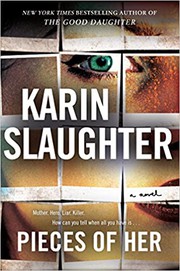
Pieces of Her
After her mother kills a mall shooter with shocking skill, Andy Oliver uncovers a hidden 1980s past of radicals and wealth.
2,791-word summary · 12 min read

Six Years
A professor who promised to forget the woman he loved sees her husband's obituary and discovers that the wedding, the marriage, and the woman herself may never…
2,076-word summary · 9 min read
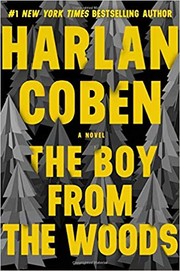
The Boy from the Woods
Wilde, found feral in a New Jersey forest in 1986, hunts for a missing teenager while a senator's secrets tear a wealthy town apart.
2,270-word summary · 10 min read
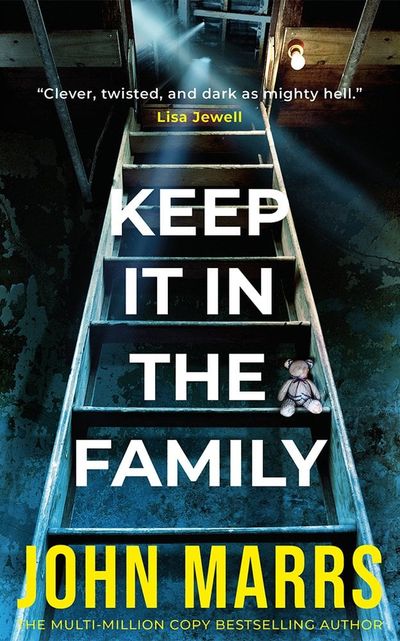
Keep It in the Family
Mia and Finn renovate a long empty house and find seven children hidden in the attic.
2,270-word summary · 10 min read
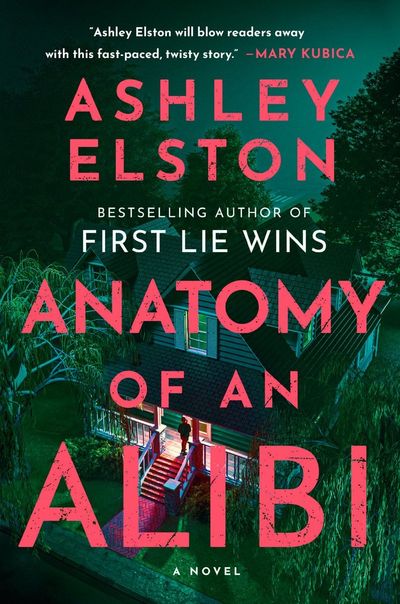
Anatomy of an Alibi
Two Louisiana women swap lives for twelve hours to spy on a husband, then he turns up murdered and only one of them has an alibi.
2,278-word summary · 10 min read
The Good Daughter
Twenty eight years after a home invasion shattered her family, a lawyer witnesses a school shooting that reopens old wounds.
2,505-word summary · 11 min read
Pretty Girls
Estranged sisters Claire and Lydia reunite after a murder exposes snuff films, their sister Julia's fate, and a killer near Lydia's daughter.
2,498-word summary · 11 min read

What She Knew
Rachel lets her eight-year-old son run ahead in a Bristol park, and the nine-day search turns her into a suspect in the public eye.
2,952-word summary · 13 min read

The Beach House
A young valet is beaten to death at a Hamptons party, and his law-student brother spends a year building a case against the family that covered it up.
2,049-word summary · 9 min read

Rules of Prey
Minneapolis detective Lucas Davenport hunts a killer who leaves a new rule at every scene and treats murder as a game of wits.
1,914-word summary · 9 min read

4th of July
Lindsay Boxer shoots two armed teenagers in self-defense, faces a wrongful-death trial, and spends her leave chasing a string of throat-slashing murders in…
2,192-word summary · 10 min read

61 Hours
A bus crash strands Jack Reacher in a snowbound South Dakota town where a drug gang, a corrupt police force, and a single witness are on a collision course.
2,227-word summary · 10 min read

Still Missing
A realtor is abducted at a Vancouver Island open house and held for more than a year. Told through therapy sessions, the novel follows her escape and the hunt…
2,466-word summary · 11 min read

Bad Luck and Trouble
A deposit of $1,030 summons Jack Reacher back to his old army unit, which is being picked off one name at a time.
2,366-word summary · 11 min read

3rd Degree
The third Women's Murder Club novel follows a San Francisco terror cell and a three-day killing schedule, and it costs the club a member.
2,685-word summary · 12 min read

Worth Dying For
Reacher stops for one night in rural Nebraska and finds a family that runs the county, a missing girl and a shipment worth killing for.
2,021-word summary · 9 min read
The Best of Friends
Three lifelong friends discover their teenage sons were hiding more than anyone knew after a night that leaves one dead, one in a coma and one silent.
2,040-word summary · 9 min read

Say You're Sorry
A widowed prosecutor defends the teenager accused of killing her babysitter, uncovering a small town's secrets and a killer hiding in plain sight.
2,116-word summary · 9 min read

Echo Burning
Reacher hitches a ride with a Texas woman who wants her abusive husband killed, then has to prove she did not murder him when he comes home.
2,209-word summary · 10 min read
The Drowning Woman
Living in her car in Seattle, Lee saves a wealthy stranger from drowning. The friendship that follows draws her into abuse, murder, and a plan to disappear.
2,578-word summary · 11 min read

The Woods
Twenty years after two teenagers were murdered and two vanished at summer camp, prosecutor Paul Copeland identifies a fresh corpse as one of the missing.
2,490-word summary · 11 min read
Without Fail
Reacher is asked to test vice presidential security by planning to kill.
2,084-word summary · 9 min read
Things We Do in the Dark
A comedian kills her husband, then a podcaster digs up her teen murder past.
2,427-word summary · 11 min read

The Widow
A widow of a suspected criminal faces reporters and police while hiding what her marriage really cost.
2,599-word summary · 12 min read
The Racketeer
A jailed lawyer trades a judge murder secret for freedom and revenge.
2,434-word summary · 11 min read
The Night Swim
A true crime podcaster covers a rape trial while probing an old drowning in a small town.
2,260-word summary · 10 min read
The Judge's List
Lacy Stoltz hunts a sitting judge who murders off his list.
2,513-word summary · 11 min read
The Innocent
A government hitman refuses one kill and must protect a teenage girl at the center of a cover-up.
2,403-word summary · 11 min read
The Girl Who Was Taken
A survivor returns alone while a reporter digs for her lost sister.
2,261-word summary · 10 min read

The Club
A luxury island resort for the rich turns deadly when secrets, staff and guests collide.
2,386-word summary · 11 min read