
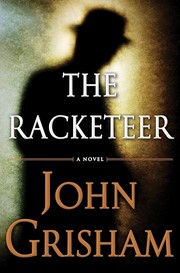
The Racketeer
2,434-word summary 11 min read 343 pages in the book
- First published
- 2012
- Publisher
- Doubleday
- Pages
- 343
- ISBN
- 9780385535144
Reading options
What's inside (8 sections)
I picked up The Racketeer because it is the Grisham book people describe as the twisty one, and at 343 pages in the 2012 Doubleday edition it reads fast for a legal thriller. John Grisham published it in 2012, and it centers on Malcolm Bannister, a former small town Virginia lawyer serving ten years in federal prison, who claims he knows who murdered a federal judge. The setup sounds simple. A dead judge, an empty safe, a prisoner with information. The execution keeps turning until the last fifty pages.
No courtroom trial drives this story. It is about prison time, FBI deals, witness protection, fake identities, and gold. If you want long cross examinations, look elsewhere. If you want a con told by the man running it, this fits.
A lawyer in prison
Malcolm Bannister opens his own account with a flat statement. He is a lawyer in prison. He is forty three, Black, a former Marine, once practicing in Winchester, Virginia. He is halfway through a ten year federal sentence at the prison camp near Frostburg, Maryland. His license is gone. His wife divorced him. His son is growing up without him. He works as a jailhouse lawyer, helping other inmates with motions he knows will mostly fail.
His conviction came from a real estate deal. A client asked him to handle paperwork for the purchase of a rural hunting property. The money behind it tied back to a Washington influence peddler who arranged parties with corrupt congressmen and underage girls. The FBI swept wide. Malcolm says he did the legal work without knowing the source of the funds. Prosecutors charged him with racketeering and money laundering anyway. A jury convicted. The judge gave him ten years.
Grisham spends time on why Malcolm is bitter. The agents who arrested him had earlier suggested he was not a target. He cooperated, handed over files, answered questions. Then they used his own paperwork against him. Whether Malcolm was naive or willfully blind is left open, and Grisham wants that doubt. Malcolm insists he was an innocent dupe. The government treated him as a useful conviction.
Prison life is drawn with routine rather than violence. Count times. Work assignments. Bad food. Commissary. Inmates with drug sentences far longer than their conduct seems to merit. Malcolm reads law, writes letters for men with hopeless appeals, and watches the news. He mentions one young inmate jailed over digging for Civil War artifacts on his own land after a preservation rule changed, an example Grisham uses to argue federal criminal law has grown too wide. Some readers will find these asides preachy. I found them consistent with a man who has had five years to study the code that put him away.
A short paragraph here matters. Malcolm is patient.
He is also planning something. He has been waiting for a particular kind of case. When news breaks that federal judge Raymond Fawcett has been found dead, Malcolm moves.
A dead judge and an empty safe
Judge Raymond Fawcett is found in his remote lakeside cabin in southwest Virginia with his young secretary, Naomi Clary. Both have been shot. There is no sign of forced entry. No struggle. A large, modern safe stands open and empty. Fawcett did not show up for court on a Monday morning, clerks worried, and agents found the scene.
Grisham gives Fawcett a background that explains why many people might want him dead. He was a federal judge for years, handled a major mining rights case involving uranium, and lived well beyond a judge's salary in some eyes. He kept a cabin, boats, and habits that drew gossip. His affair with his secretary was an open secret among staff. The FBI sets up a task force in Roanoke under Victor Westlake, with agents Hanski and Erardi doing much of the legwork. They chase financial records, enemies from old cases, and jealous spouses. Nothing holds.
The reward for information rises to 150,000 dollars. Newspapers run the mystery. Only four active federal judges had been murdered in American history before Fawcett, so the pressure is intense. Grisham shows the investigation stalling in a believable way. Too many files. Too many theories. A safe that tells no story except that someone knew the combination or forced it out of the owners.
Malcolm watches from Frostburg and writes to the warden, then to the FBI. He says he knows who killed Fawcett and why. He will name the killer in exchange for freedom. At first the agents treat him as another inmate with a story. Hanski and Erardi visit, listen, leave unconvinced. A young prosecutor tries to talk him down. Malcolm ends the meeting and goes back to his cell. He can wait. The FBI cannot.
This stretch works because Grisham keeps Malcolm calm. He does not beg. He names a federal rule, Rule 35, which allows a sentence to be cut when a prisoner helps solve a federal crime, and says he wants release, protection, and the reward. He asks for a new identity and plastic surgery, since the killer's friends will want revenge. The demands sound high until Westlake admits the case has nothing else.
The Quinn Rucker deal
Malcolm's story, when he finally tells it, is neat. He names Quinn Rucker, a Black drug dealer he met in Frostburg, as the killer. According to Malcolm, Rucker hated Fawcett because the judge took a 500,000 dollar bribe to go easy on Rucker's nephew in a drug case, kept the money, and still sent the young man to prison. Rucker escaped from prison, swore revenge, tracked Fawcett to the cabin, killed him and his secretary, and emptied the safe.
The FBI checks what it can. Rucker did escape. He did have family hurt by Fawcett's sentences. He is violent and connected. Agents find him, interrogate him hard, and get a confession that quickly falls apart. Rucker has bipolar disorder, shifts stories, then claims coercion. Still, once he is indicted for the double murder, the deal moves forward. Malcolm is released.
Release means erasure. The Marshals give him a new face through surgery, a new name, Max Reed Baldwin, papers, a place in Jacksonville, Florida, and the reward money. He is supposed to stay quiet, take a modest job the government arranges, and check in. Malcolm does the opposite. He skips the job. He travels. He watches the Rucker case from a distance.
Grisham hides a lot in this middle section by telling it straight. Malcolm narrates his freedom with pleasure. New clothes. A condo. Restaurants. He sounds like a man enjoying air after five years inside. Only small slips suggest more. He asks careful questions about who knows his new name. He keeps cash. He contacts Vanessa Young, a young woman who visited Quinn in prison and whom Malcolm noticed for her poise. Readers assume a romance. Grisham lets that assumption sit.
The FBI soon warns Max that Rucker's crew has found him and wants him dead. The Marshals offer to move him again. He refuses and disappears on his own. From the Bureau's view, he is an ungrateful witness. From Malcolm's view, he never trusted them in the first place. Both readings make sense, which is why the twist lands later.
One criticism belongs here. The interrogation and indictment of Rucker depends on agents bending rules to get a confession they know is thin. Grisham presents this as normal hardball, but innocent readers may pause. The book wants us to enjoy the FBI being played, yet it also shows them railroading a man with mental illness to close a high profile case. That moral wrinkle never quite gets addressed.
Max Baldwin, movies, and Jamaica
Now Max Reed Baldwin reinvents himself again. He sets up a loose film company, grows different habits, and finds Nathan Cooley, another man he knew in Frostburg. Cooley is white, rough, with a brother Gene who was shot by drug agents during an arrest. Malcolm tells Cooley he is making a documentary about federal overreach by the FBI and the drug agency, with investors ready to pay for interviews.
Cooley likes cameras and grievance, so he agrees. Malcolm, Vanessa, and Cooley board a private plane supposedly bound for Florida to meet money men. Mid flight Malcolm and Vanessa drug Cooley. The plane diverts to Jamaica. They plant a gun, cocaine, and a false passport on him. Jamaican police arrest him at landing. As the only white man in a crowded local jail, Cooley faces threats and beatings. Grisham does not soften this. The point is pressure.
In jail Cooley begs for help. He tells Max about a secret stash of gold worth millions hidden back in Virginia. If Max will get him out, he will split it. This is exactly what Malcolm wanted to hear.
The gold, as Cooley tells it, came from Judge Fawcett. Years earlier, before prison, Cooley and his brother helped carry a heavy safe into Fawcett's cabin. Cooley grew curious. He broke in once, found the safe, but could not open it. He went to prison on drug charges before he could finish. After release he returned, kidnapped Fawcett and Naomi Clary, forced the combination out of them by threatening the woman, then shot both and took the contents. Gold bars from a mining payoff, hidden for years.
Malcolm arranges for Vanessa to retrieve the gold while he stays with Cooley in Jamaica, playing the helpful producer. Vanessa finds the hiding place in Cooley's yard, moves bars into safe deposit boxes in several banks, and keeps records. Malcolm then returns to the United States, leaving Cooley stuck. The Jamaican shakedown for 500,000 dollars to free him was invented. Every step was staged.
This Jamaica section divides readers. I tore through it, but it relies on large luck. A plane can divert without questions. Foreign police will hold a man on planted evidence without checking. A hardened criminal will trust a film producer he just met. Grisham moves so quickly you may not mind. On a second thought, the seams show.
Whose gold and who walks free
Back home, Malcolm flips the board. Vanessa, who is in fact Quinn Rucker's sister, produces proof Quinn was in a drug rehab clinic when Fawcett died. He could not have killed anyone. The confession was false. The FBI must drop the case against Quinn.
Malcolm then offers the real killer. Nathan Cooley. He explains the safe, the mining company bribe that filled it with gold after Fawcett ruled to allow uranium mining, and the murder for the combination. He promises to mail a gold bar with Cooley's prints as proof, and predicts Cooley will confess once he learns Malcolm can free him from Jamaica only if he talks.
The Bureau realizes it has been conned from the start. Malcolm and Quinn were friends in Frostburg long before the murder. Quinn's escape, the bribe story, the confession, the release, the new face, the Jamaica trap, all served one plan hatched over years. Take Fawcett's gold, punish the system that jailed Malcolm, free Quinn, and leave the FBI unable to prosecute because immunity deals and public embarrassment tie its hands.
Victor Westlake suspects the shape of it but cannot prove intent. Malcolm has immunity for the help he gave. Quinn gets immunity in exchange for closing the judge murder. The gold itself sits in boxes under other names. Malcolm warns the Bureau to look into Fawcett's mining bribe or he will take the story to the press. Faced with a murdered corrupt judge, a false confession scandal, and a clever ex prisoner holding receipts, the government lets it go.
The book ends in Antigua. Malcolm, Vanessa, Quinn, and Quinn's brother Dee Ray share the gold, worth about 8.5 million dollars, and toast freedom. Cooley stays trapped, likely to confess to get out of Jamaica only to face murder charges at home. The FBI looks foolish. Malcolm looks rich.
Grisham closes without a trial, which fits the theme. Justice here is not decided by a jury. It is traded, bought, and staged.
Clever mechanics, thinner people
The puzzle is the pleasure. Grisham plants Rule 35 early, the safe early, Cooley as a background face early, then pulls them together. Rereading the Frostburg chapters after the reveal shows hints. Malcolm studying faces. Malcolm asking about safes. Malcolm noting who visits whom. The surgery and witness protection, which first look like paranoia, turn out to be tools to fool Cooley, who must not recognize the jailhouse lawyer who knew his secret. That is smart plotting, and Grisham earns it without cheating on dates or procedure too badly.
Pacing helps. Short chapters. Plain language. No long expert testimony. The 343 pages move, especially the first hundred in prison and the last hundred with the gold. Grisham knows prisons, small firms, Marshals paperwork, and how agents talk, and those textures feel right. Frostburg routines, Roanoke task force meetings, safe deposit box hops across state lines, all read like someone who asked working lawyers and agents.
Fair criticism, though, because the book invites it. Malcolm narrates almost everything, yet withholds the core friendship with Quinn until late. That is allowed in a con story, but it means we never see the real Malcolm until the end. His ex wife and son vanish after setup. Vanessa is more function than person until her identity is revealed. Naomi Clary, the murdered secretary, gets little beyond affair and victim. Fawcett himself is a crooked outline rather than a man. If you need deep character work, this will feel thin.
The morals are also slippery. Malcolm was likely overpunished for a paperwork crime, and the book argues federal law criminalizes too much. Yet his revenge requires letting a judge and a young woman die when he could have warned them, framing a mentally ill man, torturing Cooley by proxy in a foreign jail, and stealing millions. Grisham presents this as payback with a smile. Some readers will cheer. Others will notice the body count behind the smile. The book does not dwell on Naomi Clary as a person, which bothered me more on reflection.
Still, as a machine for surprise, it works. The title question, who is the racketeer, gets a layered answer. Cooley thought he was. Fawcett acted like one. The system that jailed Malcolm operated like one. Malcolm out racketeered them all. Read it in two or three sittings and do not peek at summaries. The fun is watching a man who lost five years buy them back with interest, even if the price makes you uneasy.
FAQ
When was The Racketeer published?
Doubleday published The Racketeer in 2012. The hardcover runs 343 pages and the ISBN is 9780385535144.
Is The Racketeer part of a series?
No. It is a standalone legal thriller about Malcolm Bannister, though it shares Grisham themes of prisons, FBI deals, and small firm lawyers.
How does Malcolm Bannister get out of prison?
He uses Rule 35 to trade information for release, takes the identity Max Reed Baldwin, traps the real killer in Jamaica, and recovers hidden gold.
Similar books
The Judge's List
Lacy Stoltz hunts a sitting judge who murders off his list.
2,513-word summary · 11 min read

The Beach House
A young valet is beaten to death at a Hamptons party, and his law-student brother spends a year building a case against the family that covered it up.
2,049-word summary · 9 min read

4th of July
Lindsay Boxer shoots two armed teenagers in self-defense, faces a wrongful-death trial, and spends her leave chasing a string of throat-slashing murders in…
2,192-word summary · 10 min read
Gray Mountain
A Manhattan associate furloughed after the financial crash takes a year of unpaid legal aid work in Appalachian coal country, and finds the case of her life…
2,026-word summary · 9 min read

The Guardians
A innocence lawyer reopens a prison murder where the wrong man waits on death row.
2,564-word summary · 11 min read

The Partner
A Biloxi lawyer fakes his death, steals $90 million, and hides in Brazil until hired muscle drags him home to trial.
2,221-word summary · 10 min read
The Rainmaker
Broke rookie Rudy Baylor sues an insurer over a denied transplant and faces Leo Drummond at trial.
3,040-word summary · 14 min read
The Pelican Brief
Law student Darby Shaw writes a brief on murdered justices and becomes a target, fleeing with a reporter.
2,994-word summary · 13 min read

What She Knew
Rachel lets her eight-year-old son run ahead in a Bristol park, and the nine-day search turns her into a suspect in the public eye.
2,952-word summary · 13 min read

Six Years
A professor who promised to forget the woman he loved sees her husband's obituary and discovers that the wedding, the marriage, and the woman herself may never…
2,076-word summary · 9 min read

Rules of Prey
Minneapolis detective Lucas Davenport hunts a killer who leaves a new rule at every scene and treats murder as a game of wits.
1,914-word summary · 9 min read

61 Hours
A bus crash strands Jack Reacher in a snowbound South Dakota town where a drug gang, a corrupt police force, and a single witness are on a collision course.
2,227-word summary · 10 min read

Still Missing
A realtor is abducted at a Vancouver Island open house and held for more than a year. Told through therapy sessions, the novel follows her escape and the hunt…
2,466-word summary · 11 min read

Bad Luck and Trouble
A deposit of $1,030 summons Jack Reacher back to his old army unit, which is being picked off one name at a time.
2,366-word summary · 11 min read

3rd Degree
The third Women's Murder Club novel follows a San Francisco terror cell and a three-day killing schedule, and it costs the club a member.
2,685-word summary · 12 min read

Worth Dying For
Reacher stops for one night in rural Nebraska and finds a family that runs the county, a missing girl and a shipment worth killing for.
2,021-word summary · 9 min read

Say You're Sorry
A widowed prosecutor defends the teenager accused of killing her babysitter, uncovering a small town's secrets and a killer hiding in plain sight.
2,116-word summary · 9 min read

Echo Burning
Reacher hitches a ride with a Texas woman who wants her abusive husband killed, then has to prove she did not murder him when he comes home.
2,209-word summary · 10 min read

Girl, Forgotten
A rookie US marshal guards a judge with a stalker and ends up reopening the 1982 prom-night murder of the judge's pregnant daughter.
2,111-word summary · 9 min read

The Woods
Twenty years after two teenagers were murdered and two vanished at summer camp, prosecutor Paul Copeland identifies a fresh corpse as one of the missing.
2,490-word summary · 11 min read

The Boy from the Woods
Wilde, found feral in a New Jersey forest in 1986, hunts for a missing teenager while a senator's secrets tear a wealthy town apart.
2,270-word summary · 10 min read
Without Fail
Reacher is asked to test vice presidential security by planning to kill.
2,084-word summary · 9 min read
Things We Do in the Dark
A comedian kills her husband, then a podcaster digs up her teen murder past.
2,427-word summary · 11 min read

The Widow
A widow of a suspected criminal faces reporters and police while hiding what her marriage really cost.
2,599-word summary · 12 min read
The Night Swim
A true crime podcaster covers a rape trial while probing an old drowning in a small town.
2,260-word summary · 10 min read
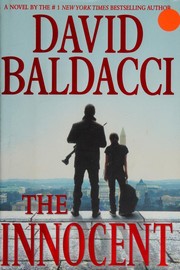
The Innocent
A government hitman refuses one kill and must protect a teenage girl at the center of a cover-up.
2,403-word summary · 11 min read
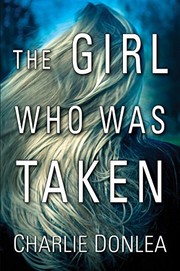
The Girl Who Was Taken
A survivor returns alone while a reporter digs for her lost sister.
2,261-word summary · 10 min read

The Club
A luxury island resort for the rich turns deadly when secrets, staff and guests collide.
2,386-word summary · 11 min read
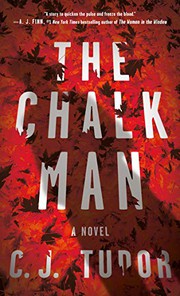
The Chalk Man
Childhood chalk codes lead to a murder that follows friends thirty years later.
2,350-word summary · 10 min read
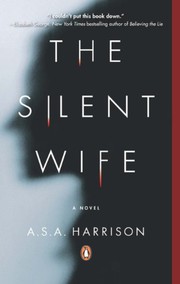
The Silent Wife
A Chicago psychologist watches her twenty-year partnership collapse when Todd leaves for Natasha, then plans murder.
2,591-word summary · 12 min read