
Reading options
What's inside (8 sections)
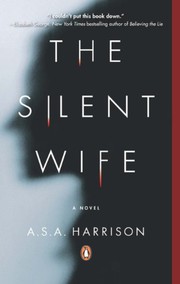
I picked up The Silent Wife because someone told me it was the quieter cousin of Gone Girl. That pitch stuck in my head. Both books came out around the same time and both deal with a partnership coming apart, but Harrison's novel felt different from page one. Less flash. More patience. I expected a fast thriller and instead got something that reads like sitting in a therapist's office while two people explain why they are still together.
The setup is simple. Jodi Brett and Todd Gilbert have lived together in Chicago for twenty years. They never married. Jodi works as a psychologist with a private practice. Todd runs a business and makes good money. From the outside they look stable. Inside, Todd has cheated for most of those twenty years and Jodi has known about a lot of it. She stayed anyway. The book opens just as that arrangement finally breaks. Todd has started seeing a much younger woman named Natasha, and this time he says he wants to leave for good, marry her, start a different life.
What kept me reading was not the question of whether Todd cheats. He does. It was watching Jodi decide what she will accept and what she will not. The chapters switch back and forth between her view and his. You hear her calm reasoning. Then you hear his version of the same events. The gap between them gets wider and stranger until one of them starts planning a murder.
Twenty Years Without Vows
Jodi and Todd met when she was in her twenties and he was older and already magnetic in that easy, confident way. They moved in together in Chicago and built a life that looked married in every practical sense except the legal part. They share a condo. They share friends. They share routines around meals, sleep, money, holidays. Jodi tells herself the lack of a certificate does not matter. In her mind, commitment is shown by staying.
Todd likes the arrangement too, though for different reasons. Marriage would pin him down. Living together lets him feel settled at home while keeping a sense of freedom outside it. Harrison makes this clear without turning Todd into a cartoon. He pays for dinners. He remembers birthdays. He can be warm with Jodi's friends. He also lies with impressive ease.
For years Jodi handled his affairs by filing them away. She knew about several women. She confronted him a few times early on, then stopped making it a crisis. Part of this comes from her training. She spends her days listening to other people's rationalizations, so she is good at building her own.
That section struck me as both believable and uncomfortable. Jodi is smart, financially stable, and liked by her patients. She is not trapped in the obvious way. She stays because leaving would mean admitting the last twenty years were built on a story she helped write. That kind of pride is hard to let go of. Harrison shows it in small scenes. Jodi cooking dinner while waiting to see if Todd will be late. Jodi cleaning the condo to keep her hands busy.
Alison, Jodi's close friend, gives voice to what Jodi avoids. Their lunches and phone calls show how long this has gone on. Alison has watched Todd stray before. She has watched Jodi forgive before. This time she hears something new in Jodi's voice. Flat. Tired. Less willing to explain Todd away.
The condo itself feels like a third presence in these early chapters. Quiet hallway. Familiar kitchen. A dog underfoot. Harrison spends time on domestic detail because that is what Jodi would lose. Beyond a man, she would lose a home, a schedule, a place in a social circle. When Todd starts talking about moving out, Jodi hears more than a breakup. She hears an eviction from her own life.
Natasha and the Slow Break
Natasha is in her twenties, pretty, direct, and connected to Todd's world through family friendship. That last detail makes the affair sting more. This is not a stranger from a business trip. This is someone Todd has known socially, someone Jodi has likely met at gatherings. Todd tells himself this one is different because Natasha wants commitment and a child, things he never gave Jodi.
Todd's telling of the affair is revealing. He frames it as growth. He is older now, facing health scares and money pressure, and he wants to prove he can still start over. He likes feeling chosen without the weight of past fights.
Jodi experiences it as a slow break rather than a single fight. Todd does not pack a bag in one night. He drifts. Late meetings. Vague plans. Phone turned face down. Then longer absences. Then talk of needing space. Harrison captures that middle stage well, where both people know what is happening but keep using polite words. I recognized that stage from real life. Nobody yells. Everyone is careful. The politeness makes it worse.
One painful thread is the pregnancy question. Natasha wants a family soon. Todd, who avoided that commitment with Jodi for two decades, suddenly acts open to it. For Jodi, that reversal hits hard. It suggests the issue was never marriage or kids in general. It was marriage or kids with her. She tries to stay clinical about it, studying Todd's fear of aging and his wish to feel young again. The analysis helps for an hour. Then the hurt returns at night.
Harrison does not make Natasha a villain, which I respected. She is young and she wants what Todd promises her. She can be selfish and naive at once. She pushes Todd to leave Jodi cleanly instead of lingering in both places. You can dislike what she represents for Jodi while still seeing why Todd finds her pull hard to resist. The blame stays where it belongs, on Todd's choices.
Two Voices Taking Turns
The structure is the main reason to read this book. Short chapters alternate between Jodi and Todd, almost all the way through. Jodi's sections feel controlled and observant, full of psychological language she uses on herself as much as on patients. Todd's sections feel looser and more self serving, full of justifications he does not even notice he is making.
Reading them side by side creates a queasy effect. Jodi will describe a dinner as tense and sad. Todd will describe the same dinner as proof they have grown apart and should part friends. Jodi will note that Todd forgot a promise. Todd will note that Jodi is cold lately. Neither fully lies. Both edit.
Harrison, who worked as an artist and writer in Toronto before her death in 2013, used her outside perspective well. She sets the story in Chicago and writes about comfortable professional life with precision. Offices. Restaurants. Therapy sessions. The details never feel showy.
The therapy material mostly works. Jodi listens to patients who repeat patterns she recognizes in her own home. She gives sound advice in the office and ignores versions of it at home. Harrison does not underline this too hard. She lets you notice it yourself, which is more effective.
Todd's voice divides readers. Some friends I talked to found him tiresome in his self pity. I saw that as the point. He is not a mastermind. He is a man in his fifties who has coasted on charm and now faces consequences he never planned for. His chapters show how ordinary self deceit sounds from the inside. He thinks he is being kind by telling Jodi he loves her while packing to leave. He never quite hears how hollow that sounds.
If there is a weakness in the structure, it is repetition in the middle. A few stretches circle the same fight. Todd pulls away. Jodi waits. Todd returns for comfort. Jodi hopes. After the third loop I wanted someone to act. Looking back, I think Harrison wanted that restless feeling. Long relationships often end in loops, not in one clean scene. Still, around the two thirds mark, I skimmed a couple of Todd chapters because his excuses started to sound identical.
Planning a Murder in Plain Sight
The turn toward crime happens quietly, which makes it chilling. Jodi does not snap. She considers. She has time on her hands once Todd is gone more nights. She starts thinking about what would happen if Todd died. At first it reads like fantasy, the kind of angry thought many people have and never act on. Then it gets practical.
She thinks about guns. She thinks about timing. She thinks about how Todd moves through his day, when the condo is empty, how she could explain her whereabouts. She visits a shooting range to learn how a weapon feels in her hands. She pays attention to locks, lights, parking spots. Harrison writes these passages in Jodi's calm clinical tone, which makes them stranger than any rant would. Jodi approaches murder the way she approaches a treatment plan. Steps. Risks. Backup ideas.
What makes this section work is how normal Jodi still seems. She sees patients. She buys groceries. She talks to Alison. She walks the dog. Nobody looking at her would guess she is rehearsing a killing in her head. That split felt true to me. People can hold careful professional lives together while one corner of their mind goes dark.
Todd, meanwhile, misses every signal. He is busy managing Natasha's expectations, smoothing things with Dean at work, and telling himself Jodi will be fine because she is strong. He notices Jodi is quieter. He tells himself quiet means acceptance. His blindness comes partly from arrogance, but mostly from habit. For twenty years Jodi cleaned up emotional messes, so he assumes she will clean up this one too.
Harrison adds small obstacles that raise tension without turning the book into a police procedural. Jodi worries about traces and neighbors. She worries about whether she could actually pull a trigger when the moment comes. You start dreading the night Todd comes home late and the condo is dark.
The planning feels grounded. No high tech tricks. No hired stranger in a movie plot. Just a woman using what she knows about her partner's habits and her own ability to stay composed. The ordinariness is what scared me. It suggests how close some breakups come to violence when pride, money, and age mix.
A fair criticism: readers who want a traditional mystery with clues and detectives will not find it here. Police enter late and lightly. The focus stays on the two main minds. If you need forensics and twists every thirty pages, this will feel slow. I missed that kind of propulsion at times, especially when Jodi's planning chapters piled up without a break.
What the Ending Actually Does
Without giving away the final beat by beat, the ending follows through on the threat the book builds. Todd comes home. Jodi is ready. Violence happens in a domestic space that once held their shared life. Harrison stages it without glamour. It is awkward, fast, and sad. Then comes the aftermath, which is shorter than many thrillers allow.
What struck me is how little relief the ending offers. There is no courtroom triumph. No clever speech where Jodi explains herself. The final chapters stay in the same alternating pattern, which means you see Todd's confusion alongside Jodi's resolve. That choice denies you a clean side to root for. Todd is guilty of cruelty and betrayal, but he does not grasp the scale of Jodi's rage until it is too late. Jodi has earned your sympathy for much of the book, but her decision crosses a line you cannot excuse.
To her credit, Harrison resisted making Jodi a hero. Some revenge stories cheer when the betrayed partner strikes back. This one does not. It shows the cost. Jodi loses the moral clarity she held as a therapist. She also loses the identity she built as the patient, loyal partner. What is left is someone who acted and must live inside that act. Todd loses more, clearly, but the book does not pretend his death fixes anything for the living.
Readers should know Harrison died of cancer in April 2013, just before publication that June. She did not write a sequel. That absence hangs over the ending. You finish and want to ask what she meant by Jodi's final calm. Was it peace or shock? The text supports more than one reading, and I kept turning those options over after I closed it.
One thing to flag: the last pages move quickly after so much slow buildup. Some readers will feel cheated that consequences get less space than planning. I shared that frustration. I wanted one more chapter showing how friends, police, and Natasha process what happened. Harrison gives you fragments instead. That restraint fits Jodi's voice, but if you like tidy closure, you may close the book frustrated.
Still, the close succeeds because the book never promised justice. It promised a portrait of denial breaking. Todd denied that his choices would destroy Jodi. Jodi denied for years that Todd's pattern would ever touch her core. The final scene forces both denials to end at once. It is grim, but it feels earned by everything before it.
Where It Drags and Who Should Read It
No book holds together for every reader, and this one has clear limits. The middle sags. Todd repeats himself. Jodi's self analysis, sharp at first, circles at times. Harrison loves interior thought more than action, so if you read mostly for plot, large parts will test you.
Age and gender shape the story in ways worth naming. Jodi is in her forties, Todd older, Natasha much younger. The book is frank about how aging changes dating power. Todd fears becoming invisible. Jodi fears being replaced by someone who can give Todd the late fatherhood story he now wants. Those dynamics give the thriller its ache. They also mean younger readers may find Todd pathetic rather than threatening and Jodi passive for too long. Stay patient through that stretch. Jodi's passivity is the mask. The book needs you to believe in it before it cracks.
So who should pick this up? Readers who liked the marriage pressure in Before I Go to Sleep or the slow character study in Defending Jacob will find familiar pleasures here, though Harrison is bleaker than both. If you enjoy alternating narrators who contradict each other, this is a strong example. If you work in helping professions, Jodi's split between professional skill and private blind spots may hit close to home.
I would not hand this to someone wanting a cozy mystery or a fast airport chase. There are no codes to crack and no detective to love. There is a condo, an office, a few restaurants, and two people talking past each other until talk runs out. That small scale is the point. Harrison shows how a shared kitchen can hold as much menace as any alley when trust leaves it.
For me, the book earned its place despite the slow middle. Jodi stayed with me. She is a specific woman who liked order, loved a dog, cared for patients, and made terrible peace with a man's wandering until she could not. Todd stayed with me too, as a warning about charm without accountability. I closed the final page sad rather than thrilled, and I mean that as praise. Few crime novels leave that kind of ache.
FAQ
Who are Jodi, Todd, and Natasha in The Silent Wife?
Jodi Brett is a Chicago psychologist, Todd Gilbert is her partner of twenty years, and Natasha is the younger woman Todd leaves Jodi for. Their triangle drives the alternating narrative toward violence.
How is The Silent Wife told?
Short chapters alternate between Jodi and Todd, showing the same dinners, fights, and money worries from opposite views. The gap between versions builds dread more than police twists do.
Is The Silent Wife a fast mystery?
No. The 2013 Penguin Canada edition runs 336 pages and stays close to home, work, and planning. Readers wanting forensics may find the middle slow, while readers who like character studies may prefer its patience.
Similar books

The Widow
A widow of a suspected criminal faces reporters and police while hiding what her marriage really cost.
2,599-word summary · 12 min read

Something in the Water
Honeymoon divers find a bag of cash and diamonds at sea, then lie until lies cost more.
1,943-word summary · 9 min read

What She Knew
Rachel lets her eight-year-old son run ahead in a Bristol park, and the nine-day search turns her into a suspect in the public eye.
2,952-word summary · 13 min read

The Beach House
A young valet is beaten to death at a Hamptons party, and his law-student brother spends a year building a case against the family that covered it up.
2,049-word summary · 9 min read

Six Years
A professor who promised to forget the woman he loved sees her husband's obituary and discovers that the wedding, the marriage, and the woman herself may never…
2,076-word summary · 9 min read

Rules of Prey
Minneapolis detective Lucas Davenport hunts a killer who leaves a new rule at every scene and treats murder as a game of wits.
1,914-word summary · 9 min read

4th of July
Lindsay Boxer shoots two armed teenagers in self-defense, faces a wrongful-death trial, and spends her leave chasing a string of throat-slashing murders in…
2,192-word summary · 10 min read

61 Hours
A bus crash strands Jack Reacher in a snowbound South Dakota town where a drug gang, a corrupt police force, and a single witness are on a collision course.
2,227-word summary · 10 min read

Still Missing
A realtor is abducted at a Vancouver Island open house and held for more than a year. Told through therapy sessions, the novel follows her escape and the hunt…
2,466-word summary · 11 min read

Bad Luck and Trouble
A deposit of $1,030 summons Jack Reacher back to his old army unit, which is being picked off one name at a time.
2,366-word summary · 11 min read

3rd Degree
The third Women's Murder Club novel follows a San Francisco terror cell and a three-day killing schedule, and it costs the club a member.
2,685-word summary · 12 min read

Worth Dying For
Reacher stops for one night in rural Nebraska and finds a family that runs the county, a missing girl and a shipment worth killing for.
2,021-word summary · 9 min read

Say You're Sorry
A widowed prosecutor defends the teenager accused of killing her babysitter, uncovering a small town's secrets and a killer hiding in plain sight.
2,116-word summary · 9 min read

Echo Burning
Reacher hitches a ride with a Texas woman who wants her abusive husband killed, then has to prove she did not murder him when he comes home.
2,209-word summary · 10 min read

Girl, Forgotten
A rookie US marshal guards a judge with a stalker and ends up reopening the 1982 prom-night murder of the judge's pregnant daughter.
2,111-word summary · 9 min read

The Woods
Twenty years after two teenagers were murdered and two vanished at summer camp, prosecutor Paul Copeland identifies a fresh corpse as one of the missing.
2,490-word summary · 11 min read

The Boy from the Woods
Wilde, found feral in a New Jersey forest in 1986, hunts for a missing teenager while a senator's secrets tear a wealthy town apart.
2,270-word summary · 10 min read

Without Fail
Reacher is asked to test vice presidential security by planning to kill.
2,084-word summary · 9 min read

Things We Do in the Dark
A comedian kills her husband, then a podcaster digs up her teen murder past.
2,427-word summary · 11 min read
The Racketeer
A jailed lawyer trades a judge murder secret for freedom and revenge.
2,434-word summary · 11 min read

The Night Swim
A true crime podcaster covers a rape trial while probing an old drowning in a small town.
2,260-word summary · 10 min read

The Judge's List
Lacy Stoltz hunts a sitting judge who murders off his list.
2,513-word summary · 11 min read

The Innocent
A government hitman refuses one kill and must protect a teenage girl at the center of a cover-up.
2,403-word summary · 11 min read

The Girl Who Was Taken
A survivor returns alone while a reporter digs for her lost sister.
2,261-word summary · 10 min read

The Club
A luxury island resort for the rich turns deadly when secrets, staff and guests collide.
2,386-word summary · 11 min read

The Chalk Man
Childhood chalk codes lead to a murder that follows friends thirty years later.
2,350-word summary · 10 min read
The Overnight Guest
A snowbound writer shelters a lost boy in Iowa while a twenty-year-old story of neglect closes in.
2,580-word summary · 11 min read

Running Blind
Jack Reacher must catch a killer who murders women with no forced entry and no trace.
2,008-word summary · 9 min read
Keep It in the Family
Mia and Finn renovate a long empty house and find seven children hidden in the attic.
2,270-word summary · 10 min read

Force of Nature
Four women walk out of the Giralang Ranges and Alice Russell does not, leaving Falk to link bush lies to firm fraud.
2,250-word summary · 10 min read