
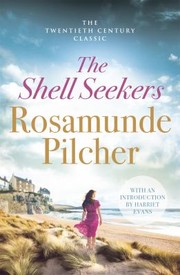
The Shell Seekers
2,592-word summary 12 min read 688 pages in the book
- First published
- 1987
- Publisher
- Hodder & Stoughton
- Pages
- 688
- ISBN
- 9780340752463
Reading options
What's inside (8 sections)
I came to this book because a friend kept leaving it on my kitchen table, saying it was the kind of novel you live inside for a week. She was right in a way I did not expect. Published in 1987 by Hodder and Stoughton, at 688 pages, The Shell Seekers is long, unhurried, and very confident about what it wants to be. It follows Penelope Keeling, sixty four, recently out of hospital after a mild heart attack, as she tries to decide what to do with the rest of her life while her grown children try to decide it for her.
What pulled me in was not the plot on the back cover. It was Penelope herself. She is funny, observant, stubborn, and tired from decades of managing other people's feelings. I liked spending time with her almost immediately, even when I disagreed with her choices. That matters because the book asks you to stay close to her for a very long time.
An elderly woman who refuses to be managed
When we meet Penelope, she is convalescing at her London flat after a heart scare. The doctors have told her to slow down. Her children have heard slow down as give everything up. She is the widowed mother of three adults, living mostly alone, surrounded by clutter that means something to her and looks like junk to everyone else.
Pilcher is good at the physical reality of this age. Penelope gets tired walking up stairs. She naps without planning to. She enjoys a glass of wine and a proper lunch and resents being treated as fragile. Her house in the country, Podmore's Thatch, is damp and too big and full of old paintings, letters, books, and kitchen tools she actually uses. To her children, especially her son Noel, the house looks like a problem to solve. To her, it is proof she has lived a full life on her own terms.
A lot of the early chapters move between small domestic scenes. Penelope shopping for food she should not eat. Penelope putting off phone calls. Penelope remembering her parents while she washes dishes. I found this section slow in the best sense for a while, then slow in a harder sense. Pilcher repeats the point about independence a few times. Still, the character work holds. You understand why Penelope dreads a sheltered flat near one of her children. It is not pride exactly. It is fear that if she stops choosing her own days, she will disappear.
Her GP and her friends tell her different versions of the same thing. Rest, but do not retire from yourself. That becomes the quiet question for the whole novel. What does a good last chapter look like when you are not rich in health but rich in memory.
Wartime youth and the flashbacks that explain her
The heart of the book, for me, is Penelope as a young woman during the Second World War. Pilcher cuts back to those years often, and those are the liveliest pages. Young Penelope is the daughter of Lawrence Stern, a famous painter, and his much younger French wife Sophie. She grows up between London art circles and summers in Cornwall, aware that her father is talented and selfish in equal measure.
When war comes, Penelope joins the WRNS and learns to drive, to file, to wait, to lose people. She is posted to different places, makes close female friends, and experiences the strange mix of boredom and danger that defined service life for many young women. Pilcher does not write battle scenes. She writes dances, cold huts, bad food, letters that arrive late, and news about someone you danced with last month.
The central wartime relationship is with Richard Lomax, an officer from a steady background who loves her in a calm, planned way. He wants marriage, a house, children, a predictable future. Penelope cares for him deeply, and for a while it looks like that will be enough. Then she meets Anton Mella, or rather she is thrown together with him in wartime France in circumstances that feel both romantic and squalid. He is older, married, magnetic, and wrong for her in every practical sense. Their brief affair results in a pregnancy and a lasting emotional mark.
I appreciated that Pilcher does not present this as a simple mistake. Penelope learns French life through that connection, sees art and food and conversation handled differently, and carries that openness into later life. She also learns what it costs to love someone you cannot keep. The chapters in Brittany and Paris are full of sensory detail. Wet wool, blackout curtains, thin soup, a church bell heard through rain, a borrowed bicycle. If you like historical fiction grounded in domestic detail rather than strategy maps, this is the strongest part of the novel.
There is fair criticism to make here too. Pilcher sometimes softens the war. Hunger, fear, and grief appear, but they pass quickly. The focus stays on emotional growth. Readers who want a harder account of women's service or occupied France may find it too gentle. I did not mind, because the point is memory. Elderly Penelope is not writing history. She is remembering what formed her taste, her tolerance, and her refusal to be shocked by her own children.
Three difficult children, three different kinds of pressure
If Penelope is the reason to stay, her children are the reason the plot moves. They are deliberately hard to like at first, and Pilcher lets them stay uncomfortable for a long time.
Noel is the elder son, early forties, working in advertising or sales depending on how he describes it that week. He is charming in short bursts, always short of money, always with a scheme. He lives with his girlfriend, spends too much, and sees his mother's paintings as his inheritance arriving late. He talks about auction estimates the way other people talk about football scores. I found him exhausting in a realistic way. Anyone who has a Noel in the family will recognize the phone calls that start warm and end with a request.
Olivia is the middle child, successful, controlled, an editor for a fashion magazine. She lives with a long term partner, Cosmo, without marrying him. She is intelligent and loyal to her mother, but she keeps love at arm's length. Work has taught her to solve problems fast, and she tries to solve Penelope the same way. Hire help. Sell the big house. Move somewhere sensible. Her coolness hides hurt. She saw her parents' marriage up close and decided she did not want need to turn into dependence.
Antonia is the youngest, early twenties, the daughter of Penelope's second marriage, still figuring out adult life. She has left a typing course, dislikes London, and drifts toward Cornwall and toward Danus, a young man who works with his hands and keeps his past close. Antonia is restless, romantic, and sometimes careless with other people's time. Of the three, she changes most. Her chapters include botched jobs, borrowed cottages, long walks, and learning that kindness without follow through is not enough.
What I liked is that Pilcher does not make them villains. Noel is greedy, but he is also frightened of being ordinary. Olivia is distant, but she shows up when it counts. Antonia is flaky, but she listens to her mother in a way the older two have forgotten how to do. The family arguments about money, care, and who gets to decide feel true to life. They talk past each other. They bring up old slights at the wrong moment. They apologize badly and then do something decent without comment.
The criticism I would make is that Noel stays a bit flat. He gets most of the selfish lines and few of the tender ones. Olivia and Antonia are given interior lives. Noel is given appetites. That imbalance makes the ending feel a little too neat for him, as if Pilcher ran out of patience.
The painting at the center of every argument
The title refers to a painting called The Shell Seekers, made by Penelope's father Lawrence Stern. It shows young Penelope and others searching for shells on a beach, and it hangs in Penelope's house where she sees it every day. To her, it is childhood, Cornwall summers, her father's attention at its most loving. To the art market, it is a valuable Stern oil, worth a great deal at auction.
Almost everyone around Penelope has an opinion. Noel wants it sold, along with several other Stern sketches and oils, so the money can be divided. Dealers circle. A gallery owner named Roy Brookner flatters and presses. Olivia is torn. She understands the market and also understands what the picture means to her mother. Antonia barely thinks in those terms. She likes the picture because it is her mother as a girl.
Pilcher uses the painting well. It lets her write about how value changes with age. When Lawrence was alive, his work was respected but not wildly expensive. After his death, prices rose. What was once a family object becomes an asset. That shift forces Penelope to ask who the art belongs to. The maker. The daughter who sat for it. The children who will inherit it. The public who might see it in a museum.
There are long, satisfying scenes of looking. Penelope dusting the frame. A dealer holding a sketch to the light. Olivia remembering where each picture hung when she was small. I am not an art expert, and I liked that Pilcher writes for non experts. She describes color, weight, brushwork, and the feeling of a room with a large oil in it, without jargon.
My reservation is that the money plot takes up a lot of pages in the middle. Meetings, phone calls, valuations, second opinions. It is realistic, and I suppose that is the point. Inheritance disputes are boring and draining in real life too. But after the third conversation about auction timing, I wanted to get back to Cornwall or wartime France. Stick with it. The payoff is emotional rather than financial, and it lands because Pilcher has made you wait.
One thing Pilcher gets right is that Penelope never treats the painting as only money or only sentiment. She knows it is both. Her final decisions about the Stern works feel consistent with a woman who loved her father, saw his faults clearly, and does not want her children to repeat the pattern of living off someone else's talent.
Cornwall as home, not just scenery
Cornwall is more than setting here. It is where Penelope feels most herself, and Pilcher writes it with the confidence of someone who knows the coastal paths, the weather, and the social rules of small towns.
Much of the later action happens around Porthkerris, a fictional village based on the real coastline of west Cornwall. There is the beach where the Stern children once searched for shells. There is the church, the pub, the small shops that close early, the cottages that smell of salt and paraffin. There is Podmore's Thatch itself, Penelope's country house, with its garden run a bit wild and its kitchen that always seems to have soup on the stove.
I loved the chapters where Antonia ends up in Cornwall. She walks. She helps in gardens. She learns to shop for one dinner at a time. She watches light change over water and begins to understand why her mother and grandfather painted it over and over. Danus, who knows the area through work and family, shows her a Cornwall that is not picturesque postcards. Leaking roofs. Buses that do not come. Jobs that end in October. Old people who will not leave houses that are killing them. Young people who want to stay but cannot afford to.
Penelope's return to Cornwall is the emotional peak for me. She is not cured. Her heart is still weak. But she moves through rooms she has known for fifty years and feels steadier than she does in London. She visits old friends, including people who knew her parents, and hears stories that correct her own memories in small, useful ways. Was Lawrence as generous as she remembers. Was Sophie as unhappy. Memory softens edges, Cornwall sharpens them again.
If there is a weakness, it is idealization. Pilcher loves this part of England and sometimes writes it as the answer to every city problem. Noel hates it, which is supposed to prove his shallow values. Olivia learns to appreciate it, which signals growth. That equation is a little simple. Plenty of good, thoughtful people find Cornwall too quiet, too wet, too far from work. The book does not really allow that view. Still, as a portrait of attachment to place, it is strong. You finish understanding why Penelope would rather risk a winter in a drafty house she loves than a safe spring in a flat she does not.
What holds, what slips, and who should read it
The last hundred pages bring the threads together without rushing. Penelope makes practical choices about the house, the paintings, and medical care. Olivia faces a decision about Cosmo and about whether a committed life without marriage can still be called committed. Antonia chooses work and steadiness over drift, at least for now. Noel gets what he wanted in a way that does not make him happy, which feels honest.
I admired the ending because it resists big speeches. People do not change completely. They adjust. Penelope does not forgive everyone or solve her children's lives. She clarifies what she will and will not do, and lets them react. There is sadness in that, especially around health. Pilcher is clear that another cardiac episode could come at any time. But there is also relief. A woman who has spent a lifetime accommodating artists, husbands, and children finally accommodates herself.
Who will like this. Readers who enjoy long family novels with houses, gardens, letters, and meals described properly. Readers who like dual timelines where the past explains the present without excusing it. Readers who do not mind sentiment when it is earned. At 688 pages, it demands patience. The middle sags when the art market plot repeats. Some dialogue feels dated now, especially around marriage and women's work, though Olivia's storyline pushes back more than I expected for a 1987 novel.
Who should skip it for now. If you need fast pacing, morally gray leads, or sharp social critique, this will feel too soft. If you dislike books where parents and children argue about money for chapters at a time, you will struggle in the middle third. If you want Cornwall written with grit rather than love, look elsewhere.
I closed it feeling fond of Penelope in a way I rarely feel about characters. She is not heroic. She married unwisely the second time, spoiled Noel a little, worked too hard to keep peace, and kept paintings she should have insured better. But she paid attention. To her parents, to lovers, to children, to beaches, to food, to light on water. The book suggests that attention is a form of love, and that deciding what to keep and what to let go is the last creative act. For a family saga first published in 1987, it has aged better than many of its peers because its core subject is not fashion or politics but how families price things that were never meant to be priced.
FAQ
When was The Shell Seekers published and how long is it?
It was first published in 1987 by Hodder and Stoughton. The standard modern edition runs 688 pages.
Is The Shell Seekers painting a real painting?
No. The main inheritance fight is over The Shell Seekers, a beach scene by Penelope's father Lawrence Stern, plus his other sketches and oils.
Is The Shell Seekers a slow read?
Yes, if you like long family stories with houses, memory, and Cornwall. It moves slowly in the middle when valuations and sales talks repeat.
Similar books

The Shadow Sister
Star D'Apliese steps out of her sister's shadow and follows a bookshop clue into the Edwardian life of Flora MacNichol, a woman who gave up love for duty.
2,260-word summary · 10 min read
True Colors
Three Grey sisters split over love and duty after their father judges them.
2,596-word summary · 12 min read
The Identicals
Twin sisters swap Nantucket and Martha Vineyard lives for a summer.
2,556-word summary · 11 min read

The Accidental Tourist
Grieving Macon writes travel guides for haters of travel, then Muriel intrudes.
2,252-word summary · 10 min read
Anne's House of Dreams
Newlyweds Anne and Gilbert start in a seaside house with kind neighbors.
2,465-word summary · 11 min read

Heart of the Matter
Two Boston mothers collide after a burn injury puts a single mom in the orbit of another woman's surgeon husband.
2,585-word summary · 11 min read
Major Pettigrew's Last Stand
A 68-year-old widower and a Pakistani shopkeeper widow fall for each other in a Sussex village that watches their every step.
2,957-word summary · 13 min read
The Pact
After Emily Gold dies from a gunshot, her boyfriend Chris Harte says it was a suicide pact and faces trial for murder.
2,873-word summary · 13 min read

What Happened to Goodbye
Mclean has reinvented herself in four towns since her parents divorced. In Lakeview she uses her real name, and for the first time staying put becomes a choice.
2,796-word summary · 12 min read
The Stationery Shop
Two teenagers fall in love in a Tehran stationery shop in 1953, are separated by the coup and a family deception, and meet again sixty years later.
2,024-word summary · 9 min read

The Japanese Lover
A Polish refugee and the son of a Japanese gardener fall in love in San Francisco in 1939, then keep the affair secret for nearly seventy years.
2,286-word summary · 10 min read

Little Earthquakes
Four Philadelphia women meet during pregnancy and discover that new motherhood is nothing like the plan, while friendship becomes the thing that holds them…
1,997-word summary · 9 min read

Mrs. Everything
Two Jewish sisters in Detroit grow up, apart and together, across seven decades of American life, from the 1950s to the 2016 election.
2,362-word summary · 10 min read

Ricochet
Lily Calloway tries to stay celibate for ninety days while Loren is in rehab, leaning on Rose, Connor, and Ryke as therapy forces her to face her childhood.
2,575-word summary · 11 min read

Under Locke
Iris Taylor moves to Austin broke and wary, takes a front-desk job at a tattoo shop, and spends the book learning that Dex Locke’s blunt cruelty and unexpected…
2,591-word summary · 12 min read
Summer Island
A radio advice host hides a scandal, and the estranged daughter hired to write about it agrees to care for her at the family's island house.
2,325-word summary · 10 min read

Sam's Letters to Jennifer
A grieving journalist reads her grandmother's letters and finds a decades-long love affair that changes how she sees her family.
2,310-word summary · 10 min read

Act Your Age, Eve Brown
Eve Brown crashes into a Lake District bed and breakfast, breaks the owner's arm, and talks her way into his kitchen. A grumpy-sunshine romance about work,…
2,474-word summary · 11 min read
The Rumor
Two Nantucket best friends, Madeline and Grace, watch a summer of small indiscretions get retold into gossip that reshapes both their households.
2,017-word summary · 9 min read

Two by Two
Sparks's twentieth novel turns from first love to a marriage breaking up: Russell Green loses his wife and his job, then rebuilds his life around his…
2,192-word summary · 10 min read
Between Sisters
Estranged sisters Meghann and Claire reunite in Washington when Claire announces a rushed wedding, then face their mother's desertion and a medical crisis.
2,467-word summary · 11 min read

At First Sight
Jeremy and Lexie are married and expecting a baby when anonymous emails tell him the child may not be his.
2,317-word summary · 10 min read

A Spool of Blue Thread
Four generations of the Whitshank family in Baltimore, and the silences, resentments and quiet love they hand down without ever saying so.
2,408-word summary · 11 min read

2 States: The Story of My Marriage
A Punjabi boy from Delhi and a Tamil Brahmin girl from Chennai meet at IIM Ahmedabad, and turn a love marriage into a campaign to convince two families.
2,634-word summary · 12 min read
Where We Belong
Marian's orderly New York life cracks when the daughter she gave up for adoption arrives, and the search for the father forces her to tell the truth.
2,056-word summary · 9 min read

What the Wind Knows
Annie scatters her grandfather's ashes on Lough Gill and is pulled into 1921 Ireland, where she becomes the missing Anne Gallagher and falls for Dr. Thomas…
2,056-word summary · 9 min read
Troubles in Paradise
In the final Paradise novel, Irene Steele rebuilds her life on St. John while the truth about Russ's death and Todd Croft's criminal empire finally surfaces.
2,471-word summary · 11 min read

This Is How You Lose Her
Yunior cycles through love affairs and betrayals in nine linked stories, tracing the damage he does and the family history behind it.
2,195-word summary · 10 min read

The Second Summer of the Sisterhood
Four friends share the traveling pants through a summer of grandmothers, first loves, and mothers who are learning to let go.
2,209-word summary · 10 min read
The Overdue Life of Amy Byler
A burned-out school librarian gets a summer to herself when her estranged husband returns, and discovers that being a mother does not have to mean losing…
2,055-word summary · 9 min read