
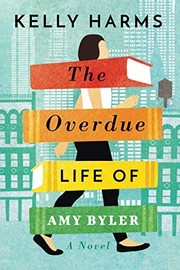
The Overdue Life of Amy Byler
2,055-word summary 9 min read 332 pages in the book
- First published
- 2019
- Publisher
- Lake Union Publishing
- Pages
- 332
- ISBN
- 9781542040570
Reading options
What's inside (2 sections)
The Overdue Life of Amy Byler is a book about a woman who forgets how to be a person. Amy Byler is a school librarian in a small town in Pennsylvania. She is the mother of two children, Cori and Joe. She is also, for all practical purposes, a single mother. Three years ago, her husband, John, went on a business trip to Hong Kong and never came back. He did not call. He did not write. He did not send money. Amy rebuilt her life without him, and she built it around her kids. Then John comes home.
The novel was published by Lake Union Publishing in 2019. It is 332 pages, and it is the kind of book that makes you laugh on one page and wince on the next. Kelly Harms writes with a light touch, but she is not afraid to show the ugliness underneath the jokes. Amy is tired, resentful, and lonely, and she has been pretending to be fine for so long that she has forgotten how to ask for help. When John reappears, he forces her to look at the life she has made and decide whether she wants to keep living it.
The story begins with a letter. Cori, Amy's fifteen-year-old daughter, is in a hospital bed, writing to her mother. She admits that Amy was right about her father. She apologizes for the decisions that put her in the hospital. She tells Amy to choose whatever will make her happy. It is a flash-forward, and it hangs over the rest of the book. You know something bad is going to happen to Cori. You do not know what, and you do not know how it will change Amy.
Three months earlier, Amy sees John at the local pharmacy. He is buying toothpaste and trying to look like he belongs. He tells her that he has come back to be a father. He wants to see the kids. He wants to make amends. Amy is furious, but she is also practical. She knows that Cori and Joe need a father, even if that father is unreliable. She agrees to a trial week at the start of summer. Cori is skeptical. Joe is excited. Amy's best friend, Lena, a former nun who teaches ethics, tells her that punishing John may not serve the children. Amy hates that Lena is right.
The trial week gives Amy something she has not had in years: time alone. She finds a library educators' conference at Columbia University and signs up. She tells herself it is for work. It is also an excuse to leave town. She reconnects with Talia, her college best friend, who is now the editor of a magazine called Pure Beautiful. Talia insists that Amy stay at her apartment in Brooklyn. Amy has not been to New York in years. She has not done anything for herself in longer than that.
The conference is where Amy remembers that she is good at her job. She presents a program called the Flexthology, a reading engagement system that lets students choose books at different reading levels on e-readers so that no one can tell who is reading below grade level. The program is clever, and Amy is proud of it. A librarian named Daniel Seong challenges her on the lack of diversity in her book selections. He is not hostile. He is serious, and he is right. Amy is stung, but she also respects him. They go for coffee, and the conversation turns personal. They end up sleeping together. It is the first time Amy has been with anyone since John left.
The next morning, Amy panics. She calls Lena, who tells her that consensual sex between single adults is not a sin. Amy is not convinced. She frames the encounter as a one-night stand and goes back to Pennsylvania. She is not ready for a relationship, and she is not ready to admit that she wants one. The book is honest about that. Amy's fear is not silly. She has been hurt, and she has two children who depend on her. She has spent years making herself small so that she can fit into the space that is left.
Then Talia turns Amy's visit into a story. She and her editorial assistant, Matt Clarke, orchestrate a makeover. They take Amy shopping, get her hair done, and fit her for a proper bra. Talia reveals that Amy's trip is being shaped into a feature for Pure Beautiful. The feature is about the "momspringa," a play on the Amish rumspringa, the period when young people explore the outside world before committing to their community. The idea is that mothers deserve a break, a chance to remember who they were before they became someone's mother. The photos go viral under the hashtag #momspringa.
The momspringa is the most divisive part of the book. Some readers will find it empowering. Others will find it privileged. Amy is staying in a nice apartment, spending money on clothes, and going on blind dates arranged by a magazine. She is not a typical single mother. She has a support system, a flexible job, and a friend with a guest room. The book knows this, but it does not always acknowledge it. The fantasy is part of the appeal. It is a wish-fulfillment story about a woman who gets to stop being needed for a while.
The summer extends. John asks to keep the kids for the rest of the summer. He offers Cori a diving camp and Joe a space camp. Amy sees how happy they are, and she agrees. She stays in Talia's Brooklyn apartment while Talia goes to Miami for work. She has a summer to herself, and she does not know what to do with it. She goes on the blind dates Matt arranges. None of the men are right. The dates are funny, but they are also sad. Amy is looking for something she cannot name.
Daniel finds her through the hashtag. He proposes that they be friends. He says a summer fling would hurt him, and he does not want to be hurt. Amy agrees, even though she wants more. They start spending time together, working on Flexthology book lists, talking about books and kids and the lives they did not plan. Daniel is a good listener. He is also a good father. His daughter, Cassandra, goes to Bronx Science, and he has built his life around her. Amy likes that about him. She also envies it.
Their feelings break through at Shakespeare in the Park. They see Julius Caesar at the Delacorte Theater, and Daniel tells Amy that he finds her beautiful, interesting, and impossible to keep at arm's length. They kiss. It is a romantic scene, and it is earned. Amy has spent the whole summer trying to convince herself that she does not need anyone. Daniel has spent the whole summer trying to convince himself that he does not want anyone. They are both wrong.
Then Cassandra complicates things. Amy meets her for lunch, and Cassandra is sharp, protective, and direct. She tells Amy that Daniel's ex-wife left them for three years before returning. She tells Amy that her father is not good at being abandoned. She challenges Amy about the momspringa. She says that the Amish rumspringa ends with a decision: go home or never turn back. Amy has to decide. The confrontation triggers a crisis. Amy realizes that she has been neglecting her children all summer. She feels guilty for enjoying herself. She leaves Daniel a voicemail saying that their relationship is doomed. She packs her bags.
Daniel comes to the apartment. Amy tells him that she is leaving, not because her kids need her, but because they do not. That realization undoes her. She has defined herself as a mother for so long that she does not know who she is without the constant need. They part at Penn Station with a kiss. It is a sad scene, and it is the best scene in the book. Amy is not choosing her children over Daniel. She is choosing to figure out who she is before she can be with anyone.
She gets home in time to see the kids off to camp. On the drive to drop Cori at diving camp, she and John have the most honest conversation they have had in years. John admits that he came back for the children, not for her. He plans to return to Hong Kong at the end of the summer. Amy brings up the miscarriage they had before he left. He deflects. He tells her that she has defined herself as the woman he martyred. It is a cruel thing to say, and it is also true. Amy realizes that she has been holding on to her anger because it gave her a story. She lets it go.
Then Cori gets hurt. She hits her head on a diving board while sneaking into a pool with friends. She has a subarachnoid hemorrhage, a brain bleed, and she needs emergency surgery. Amy and John race to the hospital. Amy takes charge. She signs the consent forms while John falls apart. Lena, Talia, Daniel, and Matt all arrive. Amy realizes that these people, not a restored marriage or a single location, are her true community. The surgery succeeds. Cori recovers.
The ending is not a fairy tale, but it is happy. Amy and John finalize their divorce. The settlement includes back child support. John returns overseas but commits to regular visits. Amy and Daniel start a long-distance relationship, with plans to reevaluate when Cassandra graduates. Daniel and Kathryn, the librarian from Chicago, have secretly secured a grant to fund Amy's Flexthology pilot in underfunded schools. Joe asks about applying to Bronx Science, and Amy lets herself imagine moving to New York. The book closes with letters and tweets responding to the momspringa article. Some readers love it. Some hate it. Amy realizes that she can be fully a mother and fully herself. Taking care of herself is not a betrayal of her children. It is part of taking care of them.
The book is also a love letter to female friendship. Lena and Talia are not just sounding boards for Amy. They have their own lives, their own disappointments, and their own ways of showing love. Lena's decision to leave the convent is treated with the same seriousness as Amy's decision to date again. Talia's career is not a punchline. The three women support each other without being saintly, and they call each other out when they need to. That is rare in this kind of novel. The friendship is not a subplot. It is the foundation that makes Amy's reinvention possible.
What works in The Overdue Life of Amy Byler is the voice. Amy is funny, self-deprecating, and sharp. She is also very angry, and the book lets her be angry without making her unlikeable. The friendship between Amy, Lena, and Talia is warm and complicated. The scenes at the library conference are a love letter to librarians and to the work of matching books with readers. The romance with Daniel is sweet, and it is grounded in shared interests rather than just attraction.
The weaknesses are the weaknesses of the genre. The book is predictable. The makeover, the viral hashtag, the handsome librarian, the emergency that brings everyone together, all of it is familiar. The ending is rushed, and some of the conflicts resolve too easily. John is a convenient villain, and his redemption is mostly off-page. The momspringa concept is fun, but it is also a marketing hook, and the book sometimes feels like it is selling the idea as much as exploring it.
Still, The Overdue Life of Amy Byler is a satisfying read. It is about a woman learning to take up space in her own life. It is about the difference between being needed and being loved. It is about the fact that mothers are people, with desires and ambitions and regrets, and that pretending otherwise hurts everyone. It is not a deep book, but it is a kind one. Sometimes that is enough.
FAQ
What is a momspringa?
It is the novel's term for a mother taking time away from her family to rediscover herself, modeled on the Amish rumspringa.
Does Amy get back together with John?
No. Amy and John finalize their divorce, and John returns overseas while committing to regular visits with their children.
Is The Overdue Life of Amy Byler part of a series?
No. It is a standalone novel.
Similar books
The Rumor
Two Nantucket best friends, Madeline and Grace, watch a summer of small indiscretions get retold into gossip that reshapes both their households.
2,017-word summary · 9 min read
Where We Belong
Marian's orderly New York life cracks when the daughter she gave up for adoption arrives, and the search for the father forces her to tell the truth.
2,056-word summary · 9 min read
Suzanne's Diary for Nicholas
A dumped editor reads a Vineyard mother's diary that reframes everything.
2,087-word summary · 9 min read

What Happened to Goodbye
Mclean has reinvented herself in four towns since her parents divorced. In Lakeview she uses her real name, and for the first time staying put becomes a choice.
2,796-word summary · 12 min read

The Japanese Lover
A Polish refugee and the son of a Japanese gardener fall in love in San Francisco in 1939, then keep the affair secret for nearly seventy years.
2,286-word summary · 10 min read

The Shadow Sister
Star D'Apliese steps out of her sister's shadow and follows a bookshop clue into the Edwardian life of Flora MacNichol, a woman who gave up love for duty.
2,260-word summary · 10 min read
Little Earthquakes
Four Philadelphia women meet during pregnancy and discover that new motherhood is nothing like the plan, while friendship becomes the thing that holds them…
1,997-word summary · 9 min read

Mrs. Everything
Two Jewish sisters in Detroit grow up, apart and together, across seven decades of American life, from the 1950s to the 2016 election.
2,362-word summary · 10 min read
Ricochet
Lily Calloway tries to stay celibate for ninety days while Loren is in rehab, leaning on Rose, Connor, and Ryke as therapy forces her to face her childhood.
2,575-word summary · 11 min read
Under Locke
Iris Taylor moves to Austin broke and wary, takes a front-desk job at a tattoo shop, and spends the book learning that Dex Locke’s blunt cruelty and unexpected…
2,591-word summary · 12 min read
Summer Island
A radio advice host hides a scandal, and the estranged daughter hired to write about it agrees to care for her at the family's island house.
2,325-word summary · 10 min read

Sam's Letters to Jennifer
A grieving journalist reads her grandmother's letters and finds a decades-long love affair that changes how she sees her family.
2,310-word summary · 10 min read
Act Your Age, Eve Brown
Eve Brown crashes into a Lake District bed and breakfast, breaks the owner's arm, and talks her way into his kitchen. A grumpy-sunshine romance about work,…
2,474-word summary · 11 min read
The Girls in the Garden
Clare moves her daughters to a gated London garden where the community feels safe; at the midsummer party, twelve-year-old Pip finds her sister bleeding in the…
1,973-word summary · 9 min read

Two by Two
Sparks's twentieth novel turns from first love to a marriage breaking up: Russell Green loses his wife and his job, then rebuilds his life around his…
2,192-word summary · 10 min read

The Echo of Old Books
Barbara Davis's 2023 novel sends a rare-book dealer in 1984 New Hampshire hunting for the authors of two unpublished volumes that tell opposite sides of one…
2,491-word summary · 11 min read
Between Sisters
Estranged sisters Meghann and Claire reunite in Washington when Claire announces a rushed wedding, then face their mother's desertion and a medical crisis.
2,467-word summary · 11 min read

Sing You Home
A music therapist, her new wife and an evangelical ex-husband end up in court over three frozen IVF embryos.
2,952-word summary · 13 min read

At First Sight
Jeremy and Lexie are married and expecting a baby when anonymous emails tell him the child may not be his.
2,317-word summary · 10 min read
2 States: The Story of My Marriage
A Punjabi boy from Delhi and a Tamil Brahmin girl from Chennai meet at IIM Ahmedabad, and turn a love marriage into a campaign to convince two families.
2,634-word summary · 12 min read
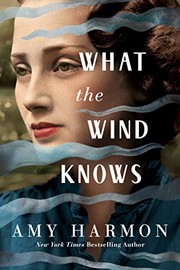
What the Wind Knows
Annie scatters her grandfather's ashes on Lough Gill and is pulled into 1921 Ireland, where she becomes the missing Anne Gallagher and falls for Dr. Thomas…
2,056-word summary · 9 min read
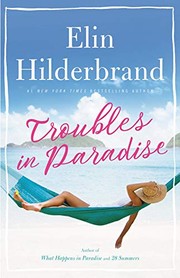
Troubles in Paradise
In the final Paradise novel, Irene Steele rebuilds her life on St. John while the truth about Russ's death and Todd Croft's criminal empire finally surfaces.
2,471-word summary · 11 min read

This Is How You Lose Her
Yunior cycles through love affairs and betrayals in nine linked stories, tracing the damage he does and the family history behind it.
2,195-word summary · 10 min read

The Second Summer of the Sisterhood
Four friends share the traveling pants through a summer of grandmothers, first loves, and mothers who are learning to let go.
2,209-word summary · 10 min read
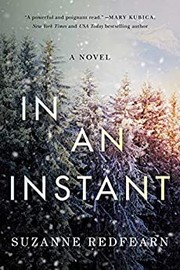
In an Instant
After a family camper crashes down a snowy mountain, sixteen-year-old Finn watches from the afterlife as survivors make impossible choices and try to live with…
2,130-word summary · 9 min read
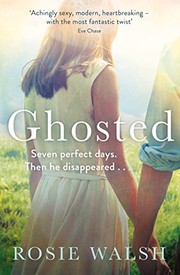
Ghosted
After seven perfect days with Eddie, Sarah is ghosted, and her search for answers uncovers a secret tied to the accident that changed both their lives.
2,011-word summary · 9 min read
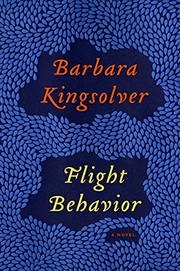
Flight Behavior
Dellarobia Turnbow is stuck in a Tennessee farm marriage until a valley full of monarch butterflies, and the scientist who comes to study them, force her to…
2,051-word summary · 9 min read

Delilah Green Doesn't Care
Delilah returns to Bright Falls to photograph her stepsister's wedding and falls for Claire, a bookstore owner and single mother, while a cruel bet threatens…
2,315-word summary · 10 min read

Aristotle and Dante Dive into the Waters of the World
Ari and Dante return for senior year in El Paso, navigating first love, AIDS, family grief, and the cost of being openly gay in 1987 Texas.
2,188-word summary · 10 min read
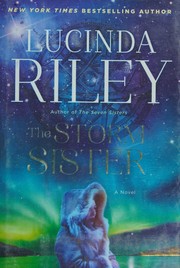
The Storm Sister
Ally D'Aplièse loses her father and her lover within weeks, then follows a brass frog and a Norwegian biography into Anna Landvik's music and the world of…
2,376-word summary · 11 min read