
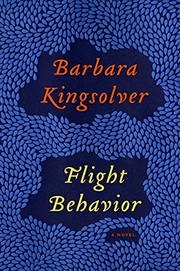
Flight Behavior
2,051-word summary 9 min read 436 pages in the book
- First published
- 2012
- Publisher
- Harper
- Pages
- 436
- ISBN
- 9780062124265
Reading options
What's inside (9 sections)
I picked up Flight Behavior because I wanted a novel about climate change that did not feel like a lecture. What I found was something stranger and better: a book about a woman who has been told her whole life that she is not the kind of person who gets to have ideas. The butterflies are the hook, but Dellarobia Turnbow is the reason the story stays with you.
The woman on the mountain
Dellarobia is twenty-eight and lives outside Feathertown, Tennessee, with her husband, Cub, and their two children, Preston and Cordelia. She got pregnant at seventeen, married quickly, and spent the next eleven years inside a life that was decided for her before she understood what she was choosing. The Turnbow farm is not a picturesque little homestead. It is a failing sheep operation, and Cub's parents, Bear and Hester, are in debt. Bear is preparing to sell the timber on the mountain to keep the family afloat.
On the morning the novel begins, Dellarobia is climbing toward a hunting cabin to meet Jimmy, a telephone repairman. She is not in love with him. She is looking for a way out of her marriage for an afternoon, which is a different kind of escape and a sadder one. Before Jimmy arrives, she sees the valley below her turned orange. The trees look like they are burning. She is so shaken that she goes home, confesses nothing, and carries the image around with her like a secret.
The orange turns out to be monarch butterflies. Millions of them have settled on the Turnbow property, hanging from the trees in sheets, covering the branches, filling the air when they move. The town decides it is a miracle. Hester starts charging visitors. The church wonders whether Dellarobia has been chosen for something. Reporters arrive. So do people who want to save the insects and people who want to argue about them.
The scientist in the barn
Ovid Byron is the lepidopterist who comes to study the colony. He is a Black scientist from a university in the Southwest, precise, impatient, and completely uninterested in the local story about a miracle. His team sets up equipment in the Turnbow barn. The butterflies should be in Mexico. Instead, they are in Tennessee, and the reason is not divine favor. It is a chain of ecological disruptions, including logging and extreme weather, that has wrecked the migration pattern the species has followed for generations.
Ovid hires Dellarobia to help with the work. She records temperatures, counts butterflies, labels samples, and learns the difference between a monarch and the parasites that feed on it. It is her first job outside the home. Kingsolver is very good on what that means. Dellarobia is not transformed by a single inspiring speech. She is transformed by competence. She discovers that she can follow a procedure, understand a data sheet, and ask a question that a scientist takes seriously. The pleasure she takes in that is almost painful to read because she had already accepted that this part of her life was over.
The novel is careful about the science without turning into a textbook. Ovid explains that the monarchs are not simply lost. They are responding to changed conditions, and their presence in Tennessee is a warning rather than a blessing. If the colony cannot survive the winter, the migration may collapse. The stakes are planetary, but the story keeps them local: the family needs money, Bear needs the timber sale, and the butterflies need the trees that the family needs to cut.
A marriage that was never a choice
Cub is not a villain. That is one of the novel's more interesting choices. He is a decent man who works hard, loves his children, and does not understand his wife. Their marriage began under pressure. Dellarobia lost a baby when she was seventeen, and the pregnancy and the loss were folded into a rushed wedding and a life that never got examined. Cub thinks he is doing what a husband should do. Dellarobia begins to see that he has never asked her what she wants, and that she has never been in a position to answer.
Ovid's wife, Juliet, arrives partway through the book and quietly demolishes Dellarobia's fantasy of being understood by Ovid. Juliet is a folklorist who studies the imagery surrounding monarchs. At dinner, Dellarobia watches Ovid and Juliet talk to each other as equals, interrupt each other, laugh at the same things, and take an interest in each other's work. It is not a dramatic revelation. It is worse than that. It is an ordinary picture of a marriage that functions, and it makes Dellarobia's own marriage look even lonelier.
Kingsolver also gives Dellarobia a lost child. The miscarriage is not a plot device that explains her sadness and then disappears. It sits under the story, especially once the novel introduces the Mexican belief that monarchs carry the souls of dead babies. Dellarobia's grief and the possible extinction of the butterflies become connected without being made equivalent. One is a private loss, the other a global one, and the novel respects the distance between them.
The town looks at the same thing and sees different worlds
The middle of the novel is about interpretation. The church sees a sign. The tourists see an attraction. The loggers see a threat to their livelihood. The scientists see a population in trouble. Dellarobia sees all of these things at once, which is part of what makes her tired. She is not a convert who has replaced faith with science. She is a woman who has started to notice how many people need a story to be simple.
Hester's secret adds another layer. She tells Dellarobia that she had a son during the Vietnam War, a child who was not Bear's, and that she gave him up. The son is Bobby Ogle, the pastor. Hester has lived with this secret for decades, and Dellarobia suddenly understands that her mother-in-law's hardness is not the same thing as indifference. It is a way of surviving. The revelation does not turn Hester into a saint. It just makes her a person.
The media circus is one of the funniest and most depressing parts of the novel. A television crew wants Dellarobia to cry on cue. A blogger decides she is a symbol. Hester sells T-shirts and snacks. The family that could not pay its bills a month earlier is suddenly running a small tourist operation, and the money is real enough to complicate the moral argument. Kingsolver is good at showing how quickly a miracle becomes a business and how quickly a business becomes a reason to keep the miracle going. Dellarobia hates it and understands it at the same time.
There is a lot of weather in this book. Rain, mud, cold, flood. Kingsolver uses the language of biblical disaster without letting the Bible settle the argument. Dellarobia's first thought when she sees the orange trees is the burning bush. Later, the rain makes people joke about building an ark. The novel wants you to feel the pull of those stories while also seeing what they can hide. A miracle can be a way of not looking at the damage.
The winter
The colony is hit by a severe storm. Most of the monarchs die. A ewe gives birth prematurely to a stillborn lamb, and the dead lamb brings Dellarobia's miscarriage back into the room in a way she cannot manage. This is where the novel's two scales finally meet: the fragile animal, the fragile child, the fragile future. Kingsolver does not push the comparison too hard. She lets the lamb be a lamb and the butterflies be butterflies, and the grief does the work.
Dellarobia confronts Cub. She tells him that she had planned to leave him on the day she saw the butterflies, and she admits that she has been living in a life she did not choose. Cub assumes she is in love with Ovid. She does not correct him with a romantic confession. Ovid is married, and the novel is not interested in turning Dellarobia's awakening into an affair plot. What she wants is not a different man. It is a different relationship to her own life.
She decides to move with Preston and Cordelia to Cleary, where she can go back to college and keep working in a lab. She gives Preston a smartphone they will share so he can look things up on his own. The ending is hopeful, but it is not tidy. Dellarobia has no guarantee of money, childcare, or success. She has a plan and the will to try it. That is all.
The ending and what it costs
A flood comes through. Dellarobia steps outside and sees birds flying away. In the distance, the butterflies rise from the trees. Most of the colony is gone. A small group has settled in a dead peach orchard nearby, which means the species has not vanished, but it has not been saved either. Dellarobia sees herself in those surviving insects: both of them are going to have to gather somewhere else and take their chances.
I found the ending moving, but I understand why some readers find it frustrating. Kingsolver refuses to give us a clean political victory. The logging plan is stopped, at least for now, but the climate crisis is not. Dellarobia leaves her marriage, but she does not step into a ready-made better life. The novel wants hope that is honest about its odds, and that is a difficult tone to sustain.
What works and what does not
The best writing in Flight Behavior is about work and money. Kingsolver is excellent on the arithmetic of poverty: the cost of gas, the shame of a school trip, the way a family decides who gets to eat what. Dellarobia's old clothes, the cramped house, the constant calculation of whether something is worth the drive, all of it feels observed rather than researched.
The weakest parts, for me, are the moments when a character starts explaining the science in a voice that sounds more like the author than the person. Ovid is allowed to be didactic because he is a scientist and because Dellarobia is his employee, but some of the speeches still land like a pamphlet. The novel is also long. The middle section, with the reporters and the church visitors, repeats its point about competing interpretations more often than it needs to.
I also wanted more from Preston. He is a lovely character, curious and funny, and his relationship with Dellarobia is one of the warmest things in the book. He gets less space than the ecological argument, which is a shame, because the novel's best case for the future is not a statistic. It is the sight of a kid being allowed to ask questions.
Still, this is a book I keep recommending. It takes a subject that usually produces either denial or despair and puts it inside a life that is already full of unsolved problems. Dellarobia does not become an activist in the heroic sense. She becomes a person who can no longer pretend not to know what she knows. That is a smaller transformation than a revolution and a more believable one.
The title is doing more work than it first appears to do. Flight behavior is a scientific term for how insects move, but it is also what Dellarobia has never been allowed to do. She has spent her adult life staying put, keeping the peace, and making herself small enough to fit the space the family has left for her. The butterflies do not teach her to fly. They give her a reason to notice that she has been crawling.
The butterflies are beautiful, and the novel never lets you forget that their beauty is evidence of something going wrong. That double vision is the whole book. It is also why the story works. Kingsolver does not ask you to choose between loving the world and being afraid for it. She asks you to hold both, the way Dellarobia does when she stands in the rain and watches the orange cloud lift off the mountain.
FAQ
What is Flight Behavior about?
Dellarobia Turnbow, a restless farm wife in Tennessee, discovers a valley of monarch butterflies on her family's land and becomes involved with the scientists studying them.
Is the butterfly phenomenon real?
Yes. Monarch butterflies have shifted and varied their overwintering sites, and Kingsolver drew on research about climate change and monarch migration.
What is the main theme?
The novel explores climate denial, class, female desire, and the gap between knowing something and acting on it.
Similar books
The Bean Trees
Taylor Greer flees Kentucky, inherits Cherokee toddler Turtle, and roots with Tucson strays.
2,082-word summary · 9 min read
The School for Good Mothers
A mother sent to a reform school fights to keep her daughter under cold surveillance and strict rules.
2,114-word summary · 9 min read
The Signature of All Things
Botanist Alma Whittaker grows up in Philadelphia trade wealth, studies mosses, marries distant Ambrose Pike, and sails to Tahiti seeking how species change.
2,535-word summary · 11 min read
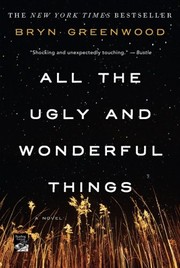
All the Ugly and Wonderful Things
Wavy grows up neglected in rural Kansas and forms a lasting bond with Kellen, a biker tied to her family, in Greenwood's 2016 novel of survival and taboo.
2,429-word summary · 11 min read
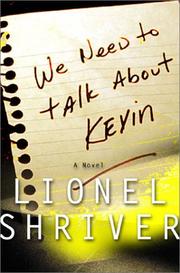
We Need to Talk About Kevin
In letters to her dead husband, Eva reconstructs how her son Kevin grew from a cold child into a school killer.
2,041-word summary · 9 min read
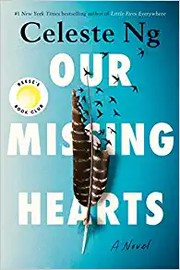
Our Missing Hearts
In a fearful future America, twelve-year-old Bird crosses the country to find the poet mother who left him.
2,434-word summary · 11 min read

Everything I Never Told You
In 1977 Ohio, sixteen-year-old Lydia Lee is found dead in a lake, forcing her interracial family to face the secret pressures around race, school and duty that…
2,711-word summary · 12 min read
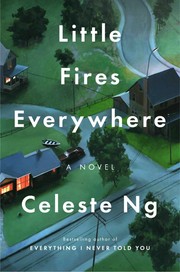
Little Fires Everywhere
In planned Shaker Heights, Elena Richardson rents to drifting artist Mia Warren, and a custody fight over baby May Ling splits friends and teens.
1,911-word summary · 8 min read
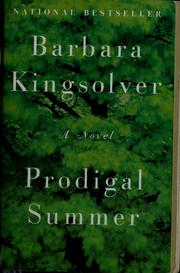
Prodigal Summer
Three lives in one Virginia mountain valley summer: a ranger watching coyotes, a widow learning moths and goats, and feuding elders guarding chestnuts, retold…
2,308-word summary · 10 min read
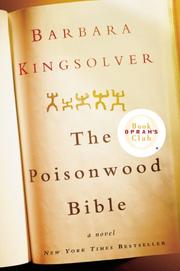
The Poisonwood Bible
A missionary drags his wife and four daughters to the Congo in 1959, and Africa remakes each of them.
2,227-word summary · 10 min read
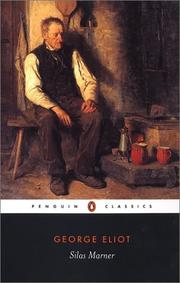
Silas Marner
A falsely accused weaver hoards gold in Raveloe until a stolen hoard and an abandoned child remake his narrow life.
2,699-word summary · 12 min read

Little Earthquakes
Four Philadelphia women meet during pregnancy and discover that new motherhood is nothing like the plan, while friendship becomes the thing that holds them…
1,997-word summary · 9 min read

Mrs. Everything
Two Jewish sisters in Detroit grow up, apart and together, across seven decades of American life, from the 1950s to the 2016 election.
2,362-word summary · 10 min read

Howards End
Forster's 1910 novel follows two families, a house in Hertfordshire, and a burned note, asking whether money and feeling can ever be connected.
2,187-word summary · 10 min read
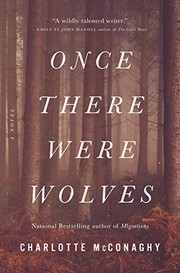
Once There Were Wolves
A biologist reintroduces fourteen wolves to the Scottish Highlands while protecting her traumatized twin sister, then finds a body in the snow that could…
2,682-word summary · 12 min read

Fathers and Sons
Arkady brings the nihilist Bazarov home to his father's estate, and a generational argument turns into love, a duel, and an early death.
2,192-word summary · 10 min read
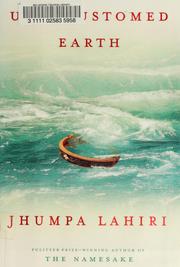
Unaccustomed Earth
Lahiri’s second story collection follows Bengali families in America and abroad, tracing the quiet distances between parents and children, spouses, and the…
2,333-word summary · 10 min read

The Age of Miracles
A California girl grows up while the Earth's rotation slows, and ordinary adolescence continues alongside slow catastrophe.
2,417-word summary · 11 min read

Peace Like a River
An asthmatic boy in the early 1960s narrates his family's search for his older brother, who is accused of two killings and has escaped custody.
1,969-word summary · 9 min read

We Are Okay
Marin fled San Francisco after her grandfather vanished and stopped answering anyone. When Mabel visits her college dorm, she has to say what happened.
2,253-word summary · 10 min read

The Chosen
A shattered pair of glasses in a 1944 Brooklyn softball game starts a friendship between a Hasidic boy and his Orthodox neighbor, and their fathers pull them…
2,443-word summary · 11 min read

Sing You Home
A music therapist, her new wife and an evangelical ex-husband end up in court over three frozen IVF embryos.
2,952-word summary · 13 min read

A Spool of Blue Thread
Four generations of the Whitshank family in Baltimore, and the silences, resentments and quiet love they hand down without ever saying so.
2,408-word summary · 11 min read

This Is How You Lose Her
Yunior cycles through love affairs and betrayals in nine linked stories, tracing the damage he does and the family history behind it.
2,195-word summary · 10 min read
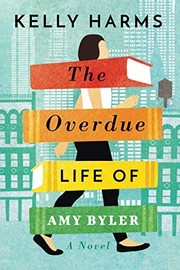
The Overdue Life of Amy Byler
A burned-out school librarian gets a summer to herself when her estranged husband returns, and discovers that being a mother does not have to mean losing…
2,055-word summary · 9 min read

And Every Morning the Way Home Gets Longer and Longer
An elderly grandfather, his son, and his grandson share memories and fears as the old man's mind begins to fade, in a short novel about grief and love.
2,078-word summary · 9 min read
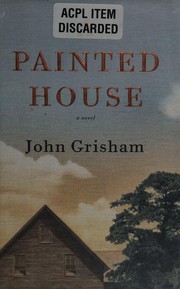
A Painted House
In 1952 Arkansas, seven-year-old Luke Chandler picks cotton with his family and learns how quickly poverty, violence, and adult secrets can end a childhood.
2,060-word summary · 9 min read
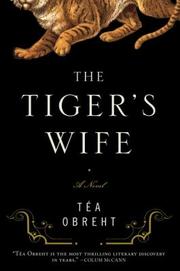
The Tiger's Wife
A young doctor in a war-scarred Balkan country chases the stories her grandfather left behind, including a deathless man and a deaf girl who loved an escaped…
2,232-word summary · 10 min read

The Story of Edgar Sawtelle
A mute boy on a Wisconsin dog-breeding farm relives Hamlet as his uncle returns, his father dies in the barn, and the dogs inherit what is left.
2,392-word summary · 11 min read
Olive, Again
Elizabeth Strout returns to Crosby, Maine, as Olive Kitteridge marries Jack Kennison, confronts her son, and faces old age, grief, and small-town judgment.
2,333-word summary · 10 min read