
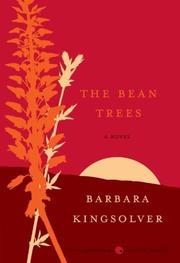
The Bean Trees
2,082-word summary 9 min read 256 pages in the book
- First published
- 1988
- Publisher
- Harper Perennial
- Pages
- 256
- ISBN
- 9780061765223
- Series
- Greer Family (#1)
Reading options
What's inside (12 sections)
I read The Bean Trees because Demon Copperhead sent me back to Kingsolver's start. Barbara Kingsolver published it in 1988, her debut novel. My reading follows the 256 page Harper Perennial paperback. Marietta Greer leaves Kentucky, inherits a Cherokee toddler in Oklahoma, and builds a family of choice in Tucson. It is warm, funny, and quietly radical about motherhood and sanctuary.
Marietta, who renames herself Taylor on the road to leave Kentucky's fates behind, drives west in a broken car with little money and fierce resolve to avoid pregnancy and pity. In Oklahoma a woman thrusts a toddler into her arms in a parking lot and vanishes. The girl, silent and bruised, has been hurt in ways Taylor slowly learns. With no papers and no plan, Taylor drives on to Tucson, where the desert holds space for strays.
Tucson as refuge
Tucson in the book is all heat, light, and second chances. Taylor finds work at Jesus Is Lord Used Tires, run by the formidable Mattie, who fixes flats and hides refugees in back rooms. She rents with Lou Ann, a fellow Kentuckian abandoned by her husband, raising baby Dwayne Ray while fearing every disaster the news invents. Those two households merge into shared meals, shared childcare, and shared courage. Kingsolver writes domestic comedy with political edges. Burnt casseroles beside sanctuary runs. Laundry beside forged papers.
Mattie deserves special praise as the novel's moral center. Older, capable, and calmly illegal in the best way, she runs an underground railroad for Central American refugees through her tire shop. Taylor learns by watching her. Change tires. Hide families. Ask nothing unnecessary. That ethic of practical aid shapes Taylor's own choices with Turtle, the toddler. Help first. Paperwork later. The book treats sanctuary as neighborliness rather than heroics, which makes it more demanding, not less. Anyone can help. Most look away. Mattie does not.
Lou Ann's arc balances Taylor's boldness with anxious realism. Left with an infant, convinced every plane will crash on her, she grows from fearful to functioning through work and friendship. Her letters to her distant family, her obsession with disasters, her slow return to competence all ring true for young mothers abandoned. Taylor teases her. Lou Ann steadies Taylor in turn. Their sisterhood, unglamorous and daily, carries the book's thesis. Family is people who stay for dishes, not blood that shares names.
Turtle herself is drawn with heartbreaking restraint. Silent for months, hiding under furniture, calling plants by careful names when she finally speaks. Her abuse history emerges in fragments. Cigarette marks. Night terrors. A grip that will not release Taylor's shirt. Kingsolver, a biologist by training, observes the child like precious fieldwork. Small hands. Watchful eyes. Growth measured in words per week. When Turtle first laughs, the scene lands like sunrise because the book made you wait through night.
Estevan, Esperanza, and sanctuary
Estevan and Esperanza, Guatemalan refugees Mattie shelters, give the novel its political spine and its most devastating chapters. They fled death squads, lost a child, and live in limbo while Taylor befriends them over garden rows. Estevan, gentle teacher turned dishwasher, helps Taylor with Turtle's silence through stories. Esperanza, hollowed by grief, borrows Turtle for aching afternoons that help both. Their presence asks what America owes the fleeing. The book answers through Mattie's tires and Taylor's spare room. More than it gives.
The garden motif braids through with biological joy. Bean trees, wisteria with rhizobia partnerships underground, mirror the human networks above. Mattie explains how beans fix nitrogen for neighbors through root alliances. Taylor plants. Turtle waters. Those quiet chapters teach ecology as ethics. Nobody thrives alone. Not plants. Not refugees. Not single mothers. Kingsolver's science background glows here without lecturing. Dirt under nails convinces better than speeches.
Custody threatens late when Turtle's past resurfaces through systems that prefer paperwork to love. Taylor, undocumented as mother in every legal sense, faces losing the child she saved to relatives or state processes that never protected her. The book resolves this through community help that bends rules without breaking hearts. Details stay general enough to avoid manual, specific enough to satisfy. What matters is who shows up. Mattie. Lou Ann. Estevan. The tire shop becomes courtroom of character. Love testifies. It counts.
What grows and what wilts
What grows is voice, community, and moral clarity without preaching. Taylor narrates in first person with Kentucky wit that never mocks its origins. One liners about tires, heat, and men land constantly. The found family accrues naturally through meals and favors rather than declarations. Sanctuary politics emerge from faces, not pamphlets. That method persuaded thousands of readers who would never pick up policy books. Stories smuggle ethics past defenses. Kingsolver knows and plants accordingly.
What wilts is thinness in places debut novels often show. Taylor's avoidance of pregnancy gets heavy signaling early. Some male characters flatten into lessons. The ending ties custody and romance with neatness that real sanctuary cases rarely allow. Readers wanting systemic depth should pair with nonfiction on asylum. Readers wanting heart will forgive shortcuts because earned emotion covers seams. The book aims to move more than to document. It moves.
The prose is warm, funny, and observant. Short chapters. Dialogue rich with regional music. Desert described as participant rather than backdrop. Kingsolver avoids purple even when celebrating blooms. A sentence about bean roots does more work than paragraphs of theme. That efficiency, learned from science writing, serves fiction beautifully. Say what lives. Let meaning root.
Length at 256 pages suits the tale. No bloat. A few Tucson montages could trim, but they feed the garden logic. The final drive, with Taylor and Turtle heading toward settled life, closes with earned calm rather than triumph. Family made. Work continues. Beans fix nitrogen quietly. So do neighbors.
Language, humor, and science
Taylor's first person voice carries the book with Kentucky music that never mocks its own. She renames herself mid drive, narrates tires like people, and jokes through fear without minimizing it. That humor does political work. Readers who would flinch from lectures absorb sanctuary ethics through laughter. A tire shop hiding families sounds less threatening when Mattie deadpans through it. Laughter opens doors that outrage bars. Kingsolver, still early in craft, already understood that comedy smuggles conviction past customs.
The biology passages glow with professional love. Rhizobia partnerships. Wisteria roots. Turtle's developmental milestones tracked like field notes. Those details never read as research dumps because Taylor learns them live from Mattie and Estevan. Knowledge arrives through work, not exposition. Change a tire. Learn symbiosis. That pedagogy suits the book's argument that understanding grows through doing beside others. Readers finish knowing how beans feed neighbors and why that matters for immigration debates. Science as neighborliness. Facts with dirt on them.
What the voice occasionally hides is Taylor's fear, which surfaces in driving scenes where humor thins. Night highways. Empty tanks. A child breathing too quietly in back. Those passages show the cost beneath jokes. A young woman alone with a bruised toddler and no money performs cheer to keep moving. The performance fools characters more than readers. We hear tires counting down. That quiet dread balances the comedy and prevents the book from floating into whimsy. Stakes stay physical. Gas, food, papers. Survival first. Jokes as fuel, not denial.
Men, mothers, and chosen kin
The book's men deserve balanced notice because Kingsolver writes them as lessons rather than villains or saviors. Taylor's Kentucky boyfriend embodies escape from smallness without cruelty. Lou Ann's vanished husband embodies abandonment with checks that bounce. Estevan embodies gentleness under impossible pressure. None rescues Taylor. Each teaches her what to accept and refuse in partnership. That even handedness suits a novel about women building households that work without men at center. Men orbit usefully. They do not anchor. The tire shop runs fine either way.
Motherhood gets the book's deepest thinking through contrasted models. Lou Ann's anxious hovering. Mattie's calm competence. Esperanza's hollowed grief. Taylor's learning curve from accidental guardian to deliberate mother. Each style responds to different wounds. Together they argue that good mothering has many shapes but shared core. Show up. Pay attention. Stay past difficulty. Those verbs recur across storylines like rhizobia underground. Different plants. Same nourishment. Readers who mother in any form will find their own style honored somewhere in the quartet. That inclusion is deliberate generosity. Take what fits. Leave guilt.
The ending's quiet radicalism deserves naming. No wedding rescues. No windfall fixes papers. Family forms through promises kept daily rather than vows staged once. Taylor keeps Turtle through community testimony, not legal magic. Lou Ann keeps Dwayne Ray through showing up scared. Those continuations promise ongoing work rather than closure. Sequels exist because life does. Pigs in Heaven continues the story precisely because custody, like gardening, needs seasons of tending. Plant again. That is the whole ethic in two words.
Estevan's gentleness under erasure
Estevan deserves extended honor as the novel's tenderest creation and its political conscience. A teacher in Guatemala reduced to dishwasher in Tucson, he speaks softly, parents kindly, and endures limbo without surrendering dignity. His English, learned and careful, carries poetry that native speakers miss in haste. Discussions of poetry with Taylor over garden rows rank among the book's loveliest passages. Two displaced people finding canon in beans. Those scenes argue that refugees bring culture, not just need. Estevan teaches more than he receives despite having nothing. Remember that asymmetry when debates frame sanctuary as charity alone. It is exchange.
Esperanza's hollow grief balances his gentleness with unsparing cost. Having lost a child to state terror, she borrows Turtle to hold life briefly, then returns her with tears that frighten Taylor. That borrowing could read as exploitation and instead reads as mutual medicine. Both wounded females, one who lost and one who was lost, comfort through contact no therapy arranges. Kingsolver handles these scenes with delicacy that avoids sentimentality through specifics. How Esperanza folds clothes. How Turtle leans. Details carry what declarations would cheapen. Witness, not pity, heals a little.
Tucson heat as mercy
The desert setting deserves final praise as more than backdrop. Heat that forces slow afternoons. Monsoons that break tension with smell of wet dust. Nights cold enough for blankets after days that melt tires. Those rhythms shape behavior more than any speech. People nap midday and talk late. Gardens need dawn watering. The book's pace follows climate rather than plot outline, which gives it lived texture rare in issue novels. Place dictates tempo. Tempo permits noticing. Noticing saves Turtle, who reveals herself slowly like desert after rain. Stay through seasons. Blooms follow.
Lou Ann's becoming
Lou Ann's growth from fearful to functioning deserves closing emphasis as the book's quietest triumph. Abandoned with an infant, convinced of imminent disasters, she mothers through panic by routine. Bottles at hours. Walks around blocks. Letters home admitting fear. Those small disciplines accumulate into competence that surprises her more than anyone. By finale she works, parents, and chooses Taylor daily rather than clinging. That chosen sisterhood, no longer desperate, sustains both households. Fear does not vanish. It gets chores. Do them and dread shrinks to size.
Why debuts endure
First novels that last usually do one thing perfectly rather than many things well. Here that one thing is voice meeting place. Taylor's Kentucky music over Tucson heat creates friction that generates light across every chapter. Later Kingsolver books grow more ambitious in structure and politics, but few match this one's pure readability. Rereading after Demon Copperhead shows seeds of everything. Social novels rooted in observed work. Science braided with story. Anger at systems expressed through kindness to people. The debut contains the career in miniature like rhizobia in a seed. Plant it and the later forest makes sense.
Who should plant
Give The Bean Trees to readers who like found family, to Kingsolver fans tracing from debut to Demon Copperhead, to book clubs that enjoy sanctuary debates with heart. It suits gardeners, mothers, and anyone who left home to become themselves. Do not give it to readers needing thriller pace or systemic policy depth. Pair it with Pigs in Heaven, the Greer family continuation, or with Mattie's real world counterparts in sanctuary work.
At 256 pages I read it in two sittings, marking garden pages. Taylor starts fleeing fate as Marietta and ends keeping Turtle as Taylor, rooted by choice in desert soil. That renaming, from given to grown, is why the debut endures. Nobody thrives alone. Plant beans. Keep child. Stay.
FAQ
When was The Bean Trees published?
Published in 1988. This Harper Perennial paperback runs 256 pages and the ISBN is 9780061765223.
Is it part of a series?
Yes. It opens the Greer family story continued in Pigs in Heaven.
Who is Turtle?
Turtle, the silent bruised toddler thrust into Taylor's car in Oklahoma, named for her grip.
Similar books
More from Greer Family first, then related titles.

Little Earthquakes
Four Philadelphia women meet during pregnancy and discover that new motherhood is nothing like the plan, while friendship becomes the thing that holds them…
1,997-word summary · 9 min read
Summer Sisters
Vix and Caitlin share Martha's Vineyard summers from age twelve into adulthood, through first love, grief, marriage, and a disappearance that still haunts Vix.
3,633-word summary · 16 min read

Divine Secrets of the Ya-Ya Sisterhood
Sidda Walker, a theater director, fights with her mother Vivi after a New York Times interview, then learns Vivi's past through the Ya-Ya scrapbook from…
2,611-word summary · 12 min read

Flight Behavior
Dellarobia Turnbow is stuck in a Tennessee farm marriage until a valley full of monarch butterflies, and the scientist who comes to study them, force her to…
2,051-word summary · 9 min read

We Are Okay
Marin fled San Francisco after her grandfather vanished and stopped answering anyone. When Mabel visits her college dorm, she has to say what happened.
2,253-word summary · 10 min read

Big Swiss
A transcriptionist for a sex coach falls for one of his clients, the tall Swiss gynecologist she calls Big Swiss, in a funny novel about work and secrets.
2,523-word summary · 11 min read

A Spool of Blue Thread
Four generations of the Whitshank family in Baltimore, and the silences, resentments and quiet love they hand down without ever saying so.
2,408-word summary · 11 min read
The School for Good Mothers
A mother sent to a reform school fights to keep her daughter under cold surveillance and strict rules.
2,114-word summary · 9 min read

The Interestings
Meg Wolitzer follows Jules Jacobson from 1974 arts camp into middle age, as friendship with Ethan and Ash turns into envy, money gaps, marriage strain, and…
2,990-word summary · 13 min read

Almond
Yunjae, born with alexithymia, navigates grief and friendship with troubled Gon after losing mother and grandmother.
2,088-word summary · 9 min read
The Story of the Lost Child
Elena and Lila age through motherhood, quakes, and a vanishing.
2,500-word summary · 11 min read

Fly Away
After Kate's death, Tully, Marah, and Dorothy face grief and addiction while trying to rebuild their lives.
2,940-word summary · 13 min read

Those Who Leave and Those Who Stay
Elena publishes into Florence salons while Lila labors through Naples factories across the 1970s.
2,034-word summary · 9 min read

Freedom
A St. Paul couple and their grown children strain marriage, loyalty, and ideals in 2000s America.
2,678-word summary · 12 min read
We Need to Talk About Kevin
In letters to her dead husband, Eva reconstructs how her son Kevin grew from a cold child into a school killer.
2,041-word summary · 9 min read

The Elegance of the Hedgehog
A Paris concierge hides her brilliant mind while a gifted girl plans her death, until a new tenant sees through them both.
2,248-word summary · 10 min read

The Corrections
An aging Midwestern couple tries to gather three troubled adult children for one last Christmas at home.
2,094-word summary · 9 min read
Our Missing Hearts
In a fearful future America, twelve-year-old Bird crosses the country to find the poet mother who left him.
2,434-word summary · 11 min read

Beautiful World, Where Are You
Two friends Alice and Eileen trade letters while navigating love with Felix and Simon.
2,872-word summary · 13 min read

The Memory Keeper's Daughter
On a snowy night a doctor gives away his newborn daughter and tells his wife she died.
2,154-word summary · 10 min read

Everything I Never Told You
In 1977 Ohio, sixteen-year-old Lydia Lee is found dead in a lake, forcing her interracial family to face the secret pressures around race, school and duty that…
2,711-word summary · 12 min read
Little Fires Everywhere
In planned Shaker Heights, Elena Richardson rents to drifting artist Mia Warren, and a custody fight over baby May Ling splits friends and teens.
1,911-word summary · 8 min read
Prodigal Summer
Three lives in one Virginia mountain valley summer: a ranger watching coyotes, a widow learning moths and goats, and feuding elders guarding chestnuts, retold…
2,308-word summary · 10 min read
The Poisonwood Bible
A missionary drags his wife and four daughters to the Congo in 1959, and Africa remakes each of them.
2,227-word summary · 10 min read

What Happened to Goodbye
Mclean has reinvented herself in four towns since her parents divorced. In Lakeview she uses her real name, and for the first time staying put becomes a choice.
2,796-word summary · 12 min read

Alone With You in the Ether
Two people in Chicago agree to six conversations, and the experiment becomes a love affair that is also a study of bipolar disorder, obsession, and the shape…
2,713-word summary · 12 min read

Dumplin'
Willowdean Dickson enters her town's beauty pageant as a protest and discovers that confidence is harder to keep once she lets someone close.
1,922-word summary · 9 min read

Mrs. Everything
Two Jewish sisters in Detroit grow up, apart and together, across seven decades of American life, from the 1950s to the 2016 election.
2,362-word summary · 10 min read

Howards End
Forster's 1910 novel follows two families, a house in Hertfordshire, and a burned note, asking whether money and feeling can ever be connected.
2,187-word summary · 10 min read

Hard Luck
Rowley has a girlfriend, so Greg turns to a Magic 8 Ball, a family Easter hunt and the school yearbook for answers.
2,586-word summary · 11 min read