
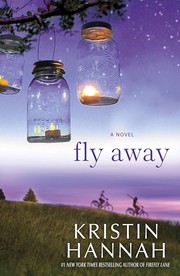
Fly Away
2,940-word summary 13 min read 400 pages in the book
- First published
- 2013
- Publisher
- St. Martin's Press
- Pages
- 400
- ISBN
- 9780312577216
- Series
- Firefly Lane (#2)
Reading options
What's inside (8 sections)
I picked this one up because Firefly Lane left me annoyed in a specific way. I liked Tully and Kate enough to finish it fast, and then the ending felt unfair, the kind where you close the book and sit there thinking about your own friends for a while. When I heard there was a sequel, I was not sure I wanted it. Do we really need to go back? But a friend who reads a lot of Hannah told me this one is darker and stranger, more about the kids and about Tully's mother, and that got me. First published in 2013 by St. Martin's Press, around 400 pages in hardcover, Fly Away is book 2 in the Firefly Lane series. It starts about four years after Kate dies and follows Tully, Kate's daughter Marah, and Tully's mother Dorothy as they each fall apart in different ways.
Fair warning. This is a sad book. If the first book made you cry, this one will probably get you more than once. It is also messier. I mean that in both senses. The lives in it are messy, and the plotting is messy too. I still think it was worth reading, mostly for Dorothy's part near the end, but there were nights where I had to put it down and stare at the wall because another bad choice was about to happen and I could see it coming.
After the funeral
The story opens in 2010, then pulls back to 2006 right after Kate Ryan dies of inflammatory breast cancer. That structure took me a chapter to get used to. We see Tully Hart, once the big Seattle talk show host, getting a call in the middle of the night and ending up in the hospital after a car crash. Then we go back to the funeral to learn how everyone got to that point.
Kate's funeral is awful in the way real ones are. Johnny Ryan, her husband, is trying to hold it together for their kids. Marah is sixteen. The twins, Lucas and the other boy, are younger and quieter in that stunned kid way. Johnny remembers Kate in flashes. Work, home, small fights, the ordinary stuff that suddenly feels huge.
Tully does not sit inside for the service. Johnny finds her afterward in the parking lot, dancing by herself with earbuds in. At first it looks disrespectful. Then you learn Kate asked for it. Kate told Tully to play music and dance, to not make the day only about crying. That detail stuck with me. It fits what we knew about them. Kate knew Tully would not survive a standard church service without doing something weird, so she gave her a job.
The reception at the Ryan house is tense. Tully is family but not family. She promised Kate on her deathbed that she would be there for the kids. She means it. She just has no skills for it. What does a woman who lives alone in a condo, who has staff for everything, know about a grieving teenage girl who will not eat or talk?
Johnny decides they need to get away. He plans a trip to Hawaii for him and the kids. Tully assumes she is invited. She is not. That stung to read. I get why Johnny did it. He needed space to be a dad without an audience, and Tully can take over a room without trying. But Tully reads it as rejection, and she is already raw. This is the first of many moments where nobody is exactly wrong and everyone gets hurt anyway.
Hawaii helps a little and not enough. The boys swim and eat and sleep better. Marah shuts down more. She misses her mom in a physical way. She misses her house on Bainbridge Island. Then Johnny tells them they are moving to Los Angeles for a job. For Marah, that feels like losing her mom twice. Friends, school, the room where her mom read to her, all gone.
I found this part believable and frustrating. Believable because grief makes people move and quit jobs and repaint kitchens at midnight. Frustrating because Johnny keeps making big calls without really asking Marah what she needs. He loves her. That is clear. He is also a dad who fixes things by moving them.
Tully loses the floor under her
While the Ryans are in Hawaii, Tully tries to go back to work. She took time off while Kate was sick. She assumed her talk show would wait. It did not. The network cancelled it. Just like that, the thing she built her whole identity around is gone.
She does what Tully always does. She acts like she is fine. She goes to the Ryan house when no one is there and starts cleaning out Kate's closet. Clothes on the bed, shoes in bags, that sweet and terrible smell of someone's shampoo still on a sweater. Johnny walks in and blows up. I understood both sides. Tully thought she was helping. Johnny saw someone going through his dead wife's things without asking.
From there Tully slides. Panic attacks start. She thinks she is having a heart attack more than once and ends up in emergency rooms. A doctor gives her Xanax. Then more pills for sleep. She mixes them with wine. She tells herself it is temporary. It is not.
Her attempt at a comeback is painful to read. She takes a smaller TV job that is clearly below what she used to do. She quits fast. She decides to write a memoir instead. That means going back to her childhood, which she has spent her adult life trying not to think about.
Her childhood is the part of the first book that always bothered me most. Dorothy Hart, who called herself Cloud back in the seventies, was the kind of mother who showed up with big promises and left without saying goodbye. Hippie dresses, boyfriends with vans, parties where little Tully was in the way. Then foster care, then a grandmother who was strict but present. Tully grew up hungry for attention and very good at getting it on camera. Without Kate, without work, all that old hurt comes back fast.
I will say here that Hannah writes fame falling apart well. Not the glamorous part. The boring part. Empty condo, mail piled up, phone not ringing. Tully kissing a stranger in a bar because someone recognized her and for a minute she felt like herself again.
Marah and the wrong boy
Marah is sixteen when her mom dies and around eighteen to twenty for most of the middle of the book. Hannah keeps her at the center for long stretches, which I liked. Grief at that age is so physical. Marah cannot sleep. Food tastes wrong. School feels fake. Her dad tries rules. Tully tries friendship. Neither works.
In Los Angeles, Marah goes quiet in a new school. She does not make friends. She starts cutting herself with a small pocketknife. The book does not make this sensational. It presents it as something Marah does to let pressure out when her head gets too loud. Tully finds out around graduation time and freaks out in a way that is actually useful for once. She finds Marah a therapist she knows.
Marah agrees to therapy only if Johnny lets her stay with Tully for a while. This is 2008 in the book's timeline. She moves to Seattle. She goes to sessions and group meetings and hates them. She sits with her arms crossed. She lies when she needs to. Anyone who has been a teen in therapy, or parented one, will recognize the dynamic.
Then she meets Paxton. He is older, thin, into dark poetry and late nights. He pays attention to her in a way that feels grown up. For a girl who feels invisible at home, that is powerful.
I hated Paxton on sight, which is probably the point. He is not a cartoon villain. He is just selfish and into his own myth. He has friends who live together in messy houses, no real jobs, a lot of talk about the system and art and freedom. Marah moves into that world because it asks nothing of her except to stay high and stay close.
Tully knows about Paxton before Johnny does. Marah tells her in confidence. Tully, desperate to be the cool godmother Kate asked her to be, keeps the secret. I kept yelling at the pages. Tell Johnny. Be the adult.
They move Marah to the University of Washington in the fall. Dorm boxes, new sheets, that hopeful parent weekend feeling. It does not hold. Marah keeps seeing Paxton. Grades slip. Lies pile up. When Johnny finds out, there is a huge fight. He cuts Tully off. Marah drops out and runs to Portland with Paxton. That December confrontation in 2009 is one of the hardest scenes. Voices raised, doors slammed, Tully saying the wrong thing in the wrong tone. After that, silence.
Portland is bleak. Marah lives with a rotating group of kids in a damp house. She tells herself she chose this. She also sells a story about Tully to a celebrity magazine for cash, the one about pills that opens the book. She regrets it almost right away. That guilt will sit on her for a long time.
The crash and the long sleep
Back to 2010. Tully drives into a concrete barrier late at night in the rain. The book leaves room to wonder if she meant to do it. Pills in her system, wine, that magazine story staring at her from a newsstand, a voicemail she cannot unsend. Johnny gets the middle of the night call every spouse and parent dreads and drives to the hospital.
Tully has a brain injury. The doctors put her in a medically induced coma to give her brain a chance. Machines beep. Nurses come and go. Johnny sits there feeling guilty about the fight. Marah hears about it in Portland and feels sick because of the magazine piece. She is sure Tully read it and gave up.
While Tully is under, Tully talks to Kate. Not in a ghost with chains way. More like a waiting room between life and death where Kate is there, impatient and funny, walking Tully through old memories.
Kate keeps asking Tully to look at her life straight. Not the TV version. The real one. The mother who left. The friend who died. The goddaughter she failed. The pills she told herself were fine. It is uncomfortable. Tully wants comfort. Kate offers honesty instead.
At the hospital, the vigil grows. Kate's parents come. Johnny comes. Marah comes with Paxton at first, which causes new tension.
The part that surprised me most was Dorothy showing up. I expected her to send flowers and disappear, which is her pattern. She does not. She stays.
Cloud tells the truth at last
Dorothy Hart, Cloud, is sixty nine in these hospital chapters and finally sober. That matters. Hannah does not pretend sobriety fixes everything. Dorothy is still awkward. She talks too much when she is nervous. She does not know where to stand in the hospital room. But she keeps coming back, which is new.
When Tully is stable enough to move, Dorothy takes her home to the old house on Firefly Lane to care for her. She changes sheets, tracks meds, talks to Tully even though Tully cannot answer.
And slowly, sitting by that bed, Dorothy tells her story. Not the fun hippie stories with guitars and road trips. The real one.
She grew up with abuse that I will not detail here because the book itself is careful about it. What matters for Tully is this. Dorothy was hurt young by people who should have protected her. She learned to numb herself with drugs and moving. By the time Tully was born, Dorothy was already lost.
I am not excusing what Dorothy did. The book does not ask you to. Leaving a small child alone, choosing boyfriends over your kid, missing birthdays and school plays, those leave marks. Tully has those marks. But hearing where Dorothy came from helped me understand why Tully chased cameras and applause so hard. If your mother cannot look at you straight, a studio audience that claps when you walk out must feel like medicine.
There is a reveal late about Tully's father, a man who loved Dorothy and died in Vietnam. I will not spoil the specifics. I will say it landed for me because it was small, not grand. No rich secret family, no letter that fixes everything. Just a young man who was kind for a short time and then gone, and a girl who never got over it.
If you read only for plot, you might find these Dorothy chapters slow. They are mostly a woman talking to a woman who cannot talk back. I found them the strongest part. Maybe because I am at an age where I see my parents more clearly, less as heroes or villains and more as people who got hurt before I was born.
What works and what wears thin
What works first. The grief feels true. Not poetic grief. Snotty, boring, angry grief. Marah sleeping till two. Johnny reheating the same pasta. Tully staring at her phone hoping Marah texted. Dorothy folding laundry with too much care because her hands need something to do. Hannah gets the daily texture right.
The friendship flashbacks work too. Little moments, like Kate saving Tully a seat, Tully doing Kate's makeup before a date. Those bits reminded me why people loved the first book.
Marah's journal thread works best of all. Kate left a journal for her daughter. Marah avoids it for most of the book. When she finally sits by Tully's bed and reads aloud, something shifts.
Now the criticism, because there is plenty.
The middle sags. Between the move to Los Angeles and the Portland slide, there are a lot of scenes that do the same job. Another party where Marah drinks too much. Another morning where Tully wakes up foggy and promises to do better. Another fight where Johnny says the controlling thing and Marah shuts down. I get that addiction and grief are repetitive in real life. On the page, repetition needs shape. Some of these chapters could have been cut or combined.
The book also piles disasters high. Show cancelled, panic attacks, pills, wine, car crash, coma, cutting, dropout, tabloid betrayal, absent mother returns, Vietnam reveal, journal miracle. Taken one by one, each is plausible. Stacked together, it can feel like the author did not trust one big pain to be enough. Kirkus called it piling up disasters like a train wreck, which is harsh but not wrong. I kept thinking, let them breathe for ten pages. Let someone make soup and watch bad TV without something exploding.
Paxton is thin as a character. We get the look and the poems and the attitude, but not much inner life. He functions as a bad choice more than a person. Maybe that is honest to how Marah sees him at twenty, just a warm body who pays attention. As a reader I wanted one scene that made me understand why a smart girl stays, beyond grief and attention. We get hints, not a full picture.
Johnny gets shortchanged too. He starts as the steady dad trying his best, then becomes mostly the angry voice on the phone. The twins especially fade out.
And the coma device will not be for everyone. If you dislike books where dead characters talk to living ones in limbo, this will test you. I accepted it because Kate's voice stayed sharp. A friend who read it with me rolled her eyes hard. She said it felt like a way to avoid harder scenes where Tully has to apologize while awake. She has a point. The real apologies, to Johnny and Marah, do happen after Tully wakes, but they are shorter than I wanted.
Who is this for? If you loved Firefly Lane and want to know what happens after, this answers that. If you like books about mothers and daughters that do not flinch, Dorothy's chapters alone are worth it. If you want a tidy romance or a fast thriller, skip it. This is slow, sad, and focused on three women trying to forgive each other without good scripts for how to do it.
A note on content. There is substance use throughout, pills and alcohol, a car crash that reads like a possible suicide attempt, self harm by cutting, grief after cancer death, and talk of childhood abuse and mental hospital treatment. Nothing felt gratuitous to me, but it is a lot. Take care if those topics are close to home.
I read the last eighty pages in one sitting on a Sunday with cold coffee. Tully waking is not sudden. A finger moves. Then eyes open and close. Dorothy keeps a notebook by the bed. Marah reads more of Kate's journal.
The end does not pretend everything is fixed. Tully has rehab ahead and trust to rebuild. Marah has school to rethink and guilt about the magazine story to carry. What changes is that they are finally in the same room telling the truth, or trying to.
Would I press it on a friend? Yes, with caveats. Read Firefly Lane first or you will be lost. Give yourself time. Do not read it right after a loss if you are still in the raw part.
FAQ
Is Fly Away part of a series?
Yes. Fly Away is book 2 in the Firefly Lane series, a sequel to Firefly Lane from 2008. It was published in 2013 by St. Martin's Press and follows Tully, Marah, and Dorothy after Kate's death.
Does Tully survive the car crash?
Yes. She suffers a brain injury in a 2010 car crash and spends months in a coma. Dorothy nurses her at the Firefly Lane house, and Tully starts waking as Marah reads Kate's journal aloud.
Is Fly Away only about grief?
No. It also covers motherhood, addiction, and forgiveness. Grief drives the plot, but Dorothy's late confession and Marah's break from Paxton matter just as much.
Similar books
More from Firefly Lane first, then related titles.

Firefly Lane
Best friends Tully and Kate grow from teens to adults through careers, love, and loss.
2,734-word summary · 12 min read

We Are Okay
Marin fled San Francisco after her grandfather vanished and stopped answering anyone. When Mabel visits her college dorm, she has to say what happened.
2,253-word summary · 10 min read

Night Road
A crash on graduation night kills Mia Farraday and sends her friend Lexi to prison. Years later, mother Jude must face blame and grief to reach forgiveness.
2,969-word summary · 13 min read

Little Earthquakes
Four Philadelphia women meet during pregnancy and discover that new motherhood is nothing like the plan, while friendship becomes the thing that holds them…
1,997-word summary · 9 min read

Someone Like You
Halley and her best friend Scarlett face a summer of grief, a surprise pregnancy, and Halley's dangerous first romance in Sarah Dessen's 1998 young adult novel.
2,218-word summary · 10 min read

The Deep End of the Ocean
A three year old vanishes at a Chicago hotel reunion, and nine years later the Cappadoras must face his return as a teen raised by someone else while grief…
2,951-word summary · 13 min read

You've Reached Sam
After Sam dies, Julie calls his phone to hear his voicemail and he answers, forcing her to face grief and learn how to say goodbye.
2,887-word summary · 13 min read

The Great Believers
Yale builds a Chicago art collection as AIDS takes his friends, and Fiona searches Paris for her daughter thirty years later.
2,742-word summary · 12 min read

Lock and Key
Abandoned Ruby moves in with her sister and learns to trust Nate and Cora.
2,407-word summary · 11 min read

The Bean Trees
Taylor Greer flees Kentucky, inherits Cherokee toddler Turtle, and roots with Tucson strays.
2,082-word summary · 9 min read

Suzanne's Diary for Nicholas
A dumped editor reads a Vineyard mother's diary that reframes everything.
2,087-word summary · 9 min read
Forever, Interrupted
Elsie elopes in May, loses Ben nine days later, and learns grief beside the mother in law she never met.
2,051-word summary · 9 min read

Walk Two Moons
Sal rides west with her grandparents telling Phoebe's story while facing her own mother's absence in Idaho.
2,554-word summary · 11 min read
Divine Secrets of the Ya-Ya Sisterhood
Sidda Walker, a theater director, fights with her mother Vivi after a New York Times interview, then learns Vivi's past through the Ya-Ya scrapbook from…
2,611-word summary · 12 min read
Home Front
A Guard pilot deploys, comes home wounded, while husband and daughters fight to heal together.
2,091-word summary · 9 min read

Mrs. Everything
Two Jewish sisters in Detroit grow up, apart and together, across seven decades of American life, from the 1950s to the 2016 election.
2,362-word summary · 10 min read

Hard Luck
Rowley has a girlfriend, so Greg turns to a Magic 8 Ball, a family Easter hunt and the school yearbook for answers.
2,586-word summary · 11 min read

Sam's Letters to Jennifer
A grieving journalist reads her grandmother's letters and finds a decades-long love affair that changes how she sees her family.
2,310-word summary · 10 min read

Two by Two
Sparks's twentieth novel turns from first love to a marriage breaking up: Russell Green loses his wife and his job, then rebuilds his life around his…
2,192-word summary · 10 min read
The House We Grew Up In
The Bird family of the Cotswolds breaks apart after a suicide and spends twenty years not talking about what happened.
2,198-word summary · 10 min read

The First to Die at the End
On the night Death-Cast launches, a boy with a bad heart meets a model with everything ahead of him, and one of them gets the call.
2,908-word summary · 13 min read

Sing You Home
A music therapist, her new wife and an evangelical ex-husband end up in court over three frozen IVF embryos.
2,952-word summary · 13 min read

At First Sight
Jeremy and Lexie are married and expecting a baby when anonymous emails tell him the child may not be his.
2,317-word summary · 10 min read

A Spool of Blue Thread
Four generations of the Whitshank family in Baltimore, and the silences, resentments and quiet love they hand down without ever saying so.
2,408-word summary · 11 min read

The Second Summer of the Sisterhood
Four friends share the traveling pants through a summer of grandmothers, first loves, and mothers who are learning to let go.
2,209-word summary · 10 min read
The Overdue Life of Amy Byler
A burned-out school librarian gets a summer to herself when her estranged husband returns, and discovers that being a mother does not have to mean losing…
2,055-word summary · 9 min read
In an Instant
After a family camper crashes down a snowy mountain, sixteen-year-old Finn watches from the afterlife as survivors make impossible choices and try to live with…
2,130-word summary · 9 min read

Flight Behavior
Dellarobia Turnbow is stuck in a Tennessee farm marriage until a valley full of monarch butterflies, and the scientist who comes to study them, force her to…
2,051-word summary · 9 min read

Delilah Green Doesn't Care
Delilah returns to Bright Falls to photograph her stepsister's wedding and falls for Claire, a bookstore owner and single mother, while a cruel bet threatens…
2,315-word summary · 10 min read

Aristotle and Dante Dive into the Waters of the World
Ari and Dante return for senior year in El Paso, navigating first love, AIDS, family grief, and the cost of being openly gay in 1987 Texas.
2,188-word summary · 10 min read