
Reading options
What's inside (8 sections)
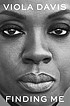
I did not come to this book as a superfan. I knew Viola Davis from the screen, the way most people do, as the woman who could walk into a scene and change its temperature. I had seen the awards clips and the crying memes and the speeches that get passed around online. What I did not know was anything about Central Falls, Rhode Island, or the apartment with rats, or the girl who wet the bed until she was fourteen and thought nobody cared. That gap is what made me pick it up. HarperOne published Finding Me on April 26, 2022, and the hardcover runs 304 pages. It is a memoir, so you know roughly where it ends, with success. The surprise is how little the success explains, and how much of the book stays back in the early rooms.
Davis tells you upfront that she ran from her past for a long time. The book is her decision to stop running and turn around and look at it. That sounds like the kind of line every memoir uses. Here it feels literal. She goes back to specific floors and kitchens and school hallways. She names what happened in them. If you want a light celebrity story with backstage anecdotes, this is not quite that. It is heavier and slower, closer to someone sitting across from you and telling you the truth after years of giving the polished version.
A childhood in Central Falls
She was born in St. Matthews, South Carolina, in 1965, and grew up mostly in Central Falls, Rhode Island. Her father, Dan Davis, worked with horses at the racetrack. Her mother, Mary Alice, worked as a maid and in factories, and later became known locally as an activist. There were five sisters and a brother in the mix, plus cousins and neighbors moving through small rooms. Money was short in a way that touched everything. Heat. Hot water. Food. Clothes that fit.
The apartment she describes most stays with you. Rats. She means it plainly, not for effect. Rats in the walls and in the rooms, droppings, gnawed food, the sound of them at night. No reliable heat in a Rhode Island winter. Sometimes no hot water. She writes about hunger and about the smell of urine that clung to her clothes as a child, because she wet the bed for years and could not always wash properly. At school, kids smelled it. They mocked her for it. They mocked her for being Black and poor in a mostly white town. She got into fights. She describes herself as angry and shut down, a kid carrying shame she did not have words for.
Her father drank and could turn violent. That is stated without softening. Her mother worked constantly and loved her children, but survival took most of her hours. Davis does not paint either parent as a villain in a simple story. Her father had his own history, growing up in a harsh Southern order that taught him very little tenderness. Her mother gave what she could and held the family together through stretches that might have broken it. Still, Davis is clear about the cost. She grew up feeling unprotected. She learned early to watch a room for danger. She learned to make herself small or loud depending on what the moment needed.
School was rough. She was dark skinned in classrooms where that made her a target. Boys chased her and threw things. Girls froze her out. Teachers mostly looked past her. She talks about feeling invisible and then, when noticed, feeling exposed for the wrong reasons. The bedwetting lasted until she was about fourteen, and the shame around it shaped how she saw herself. She thought of herself as dirty and unwanted. Nobody, in her memory, sat her down and asked what was wrong in a way that opened her up. So she carried it.
What saves this section from feeling like misery piled on misery is the detail. She remembers food, like sugar sandwiches when there was nothing else. She remembers the cold floor under her feet. She remembers her sisters laughing together in a way that briefly made the apartment feel safe. Poverty here is not an abstract theme. It is a set of physical facts. Cold. Hunger. Smell. Noise. That concreteness kept me reading even when I wanted to look away.
Seeing Cicely Tyson and daring to want more
The turn comes the way it does for a lot of kids with nothing. She saw someone on a screen and thought, that could be a door.
For Davis, it was Cicely Tyson. She saw her on television and was struck by the sight of a Black woman carrying herself with dignity and force in a story that took her seriously. In a house with little privacy and little quiet, the television was one of the few windows out. Davis started to imagine acting, not as fame exactly, but as a way to speak and be heard. It gave her a place to put feelings she could not say at home or at school.
A school program called Upward Bound became the bridge. Through it she met an acting coach who took her seriously, which was new. He gave her exercises and attention and told her she had something worth training. That kind of notice can sound small from the outside. Inside a life like hers, it was large. Someone with skill looked at her and said, keep going.
She earned her way to Rhode Island College and studied theater there. College was not a smooth rescue. She still carried the habits of home. She was defensive. She felt behind students who had grown up with lessons and travel and parents who knew how colleges worked. But she worked. She took the stage whenever she could. She learned how to use her voice in a room, how to stand still and let people look at her without flinching. Those years gave her a base of craft and a little proof that the dream was not crazy.
If you have read a lot of memoirs about art school as salvation, you might expect this part to glow. It does not, quite. Davis keeps the loneliness in the frame. She was grateful and driven, but she still felt marked by where she came from. That mark follows her through the whole book. Success keeps arriving, and the old feeling keeps arriving with it, asking whether she belongs.
Juilliard and the trip that changed her
After Rhode Island College, she went to Juilliard in New York, one of the most selective acting schools in the country. On paper it was arrival. In practice it was friction.
She describes a program built around a European canon, with methods that did not always know what to do with a Black woman from Central Falls. The training was strict. Voice. Movement. Classical texts. Some of it helped her. Some of it felt like being asked to sand off the parts of herself that made her distinct. She bristled. She has a strong will, and you can feel it in these pages. She did not want to be reshaped into someone neutral and placeless. She wanted to bring her own history into the work.
Around age twenty-five, she traveled to Africa, and she writes about that trip as a reset. It was not tourism in her telling. It was a return to something older than the rules she had been taught at school. She describes feeling connected to a past that slavery and migration had broken apart. She came back with more clarity about who she was when she acted. Less apology. More root.
Back in New York, she ground it out. Stage roles. Small parts. Study. She married Julius Tennon, an actor and producer, in 2003, and he becomes one of the steady facts of the later book. But the middle years were thin financially. Even as her reputation among theater people grew, with awards attention and respect from peers, the money did not always follow. She kept helping family back home, because need there did not pause for her career. That pressure sits under many chapters. She could be praised on stage at night and worried about bills in the morning.
I appreciated that she does not tidy this stretch into a lesson. She lets it feel long. Training can be both useful and alienating. A big school can open doors while making you doubt your face. A trip can change your sense of self without fixing your bank account. She holds those truths side by side instead of forcing them into shape.
Hollywood and the narrow rooms it offered
When film and television work came, it came through a narrow door. Davis is frank about the parts she was offered early on. Addicted mothers. Women in crisis with a few scenes and no past. Characters defined by trouble rather than by inner life. Later, as her name grew, she got a run of what she calls best friend roles, the supportive Black friend to a white lead. She played them well. She also felt the limit in her bones.
She kept working on stage too, where the roles had more weight. Theater gave her room to act with her full body and history. Screen work paid more but often asked for less. She moved between the two, building skill and waiting for parts that matched what she knew she could do.
The bigger breaks did come. A short but shattering run in Doubt brought her wide attention and an Academy Award nomination. The Help made her famous to a much larger audience, though the film itself later drew criticism for centering white savior framing, a debate she addresses with mixed feelings rather than dismissal. Television changed her life when How to Get Away with Murder cast her as Annalise Keating, a brilliant and guarded law professor. She won an Emmy for that role in 2015, the first Black woman to win lead drama actress, and her speech about opportunity is now part of awards history. Then came Fences on film, after she had already won stage honors for the same story, and with it the Academy Award for supporting actress. A later leading role in Ma Rainey's Black Bottom brought another Oscar nomination.
She writes about these peaks without pretending they healed her. That is one of the more honest threads in the book. Each win helped her career and her family. None of them removed the early shame on its own. She could stand on a stage holding a trophy and still hear the old voices from the school hallway. Fame gave her a platform. It did not give her peace. That distinction matters to her, and she repeats it in different ways until you believe her.
Money stayed complicated for longer than outsiders might guess. Work on stage and on screen did not always add up to safety, especially with family obligations and gaps between jobs. She describes years of patching income together. Even success in acting can be lumpy, with fees and timing outside your control. That plain talk about cash, coming from someone people assume is rich, felt useful. It corrects the idea that talent plus awards equals immediate ease.
Facing the past, building a family
The emotional center of the book is not an award night. It is therapy.
Davis describes starting serious therapeutic work as an adult and learning to name what had shaped her. Generational trauma is the phrase she uses, meaning pain passed down through her parents and grandparents, from the South and from systems that starved Black families of safety and pay. She talks about emotional abandonment, the sense that no adult in her early life was able to meet her feelings with steady care. Naming it did not excuse anyone. It let her see the pattern instead of blaming herself for everything.
This is also where her marriage and motherhood enter fully. Julius Tennon is drawn as a partner who saw her without flinching. Their bond reads as practical as much as romantic. He backed her work. He steadied the house. They adopted their daughter Genesis in 2011, and Davis writes about motherhood with a mix of joy and fear. She wanted to give Genesis the safety she had missed. She also had to face how motherhood stirred her own old wounds. A crying child can bring back the rooms you grew up in. She does not hide that.
Her relationship with her parents shifts in these chapters. She revisits her father with more understanding of what formed him, without erasing what he did. She honors her mother while admitting what was missing. Forgiveness here is not a single scene. It is slow work, with backsliding. She describes setting boundaries, telling the truth out loud, learning to ask for help. For someone taught to survive by hardening, softening took practice.
I found these pages the most moving because they avoid easy uplift. She does not claim that love fixed her in a month. She shows herself learning to eat differently, to rest, to speak up on sets, to stop accepting scraps. Self worth, in her account, is built through repeated choices. Say no to a thin role if you can afford it. Ask for the pay you deserve. Let your husband help. Let your daughter see you cry and recover. Small acts, done over years, change the shape of a life.
Where the book shines and where it sags
The strengths are plain. Davis has a strong voice on the page, direct and warm, with humor that breaks through at good moments. When she writes about acting, you learn things. How she prepares. How she finds a character through the body. How it feels to wait in a trailer knowing your part is thin and deciding to fill it anyway. When she writes about class and color in Hollywood, she is specific. She names the kinds of rooms, the kinds of notes from producers, the kinds of praise that still keeps you in a box. Readers who care about film and television will find those passages worth the price alone.
The childhood chapters are the best sustained writing in the book. They have place, people, and small objects that stay in mind. Cold radiators. Shared beds. A mother coming home tired. A father loud after drinking. The sting of being laughed at for how you smell. She does not rush those scenes to get to fame. She lets them breathe, which is why the later success lands with weight.
There are weak spots, and a friend should name them. The middle career stretch can feel episodic. One job follows another, and the through line thins. Some chapters circle the same point about worth and visibility without adding new matter. A few passages lean on repeated phrases about truth and shedding facades, which lose force through repetition. Readers who want a detailed account of making any single film may feel shortchanged. She gives you the arc of the work more than a day by day diary of sets.
Tone is another thing to know going in. This is a sincere book, not an ironic one. If you prefer memoirs with distance and dry jokes on every page, the earnestness here may wear on you. I did not mind it, because the facts underneath are so hard that sincerity feels earned. But there were moments when I wanted more air, more lightness between heavy scenes. The pace also slows near the end as reflection takes over from story. That is common in memoirs, and it happens here.
Who should read it. Anyone interested in acting as a trade will learn from it. Anyone who grew up poor will recognize parts of it, even if the details differ. Anyone who follows conversations about race and casting will find a firsthand account that is blunt without being bitter. If you only want gossip about co-stars, look elsewhere. There are famous names, but they are not the point. The point is how a girl from a cold apartment learned to stand in a room and be seen, and what it cost to keep standing there.
I closed the book thinking less about trophies than about maintenance. Davis keeps saying, in her own way, that finding yourself is not a finish line. It is upkeep. Therapy upkeep. Marriage upkeep. Work upkeep. The girl who ran now walks back through the old rooms on purpose, not to live there again, but to make sure they stop running her. That image stayed with me longer than any awards story, and it is why I would pass this to a friend who is tired of polished success tales and wants something with more floor and wall in it.
FAQ
When was Finding Me published?
HarperOne published it on April 26, 2022. The hardcover runs 304 pages with ISBN 9780063037328.
Is Finding Me part of a series?
No. It stands alone as Davis's memoir, covering her childhood through her stage and screen career.
Who are the central people in the book?
Her parents Dan and Mary Alice Davis, her husband Julius Tennon, and her daughter Genesis anchor the family story.
Similar books
The Color of Water
A Black journalist presses his white mother about her hidden past, from a Virginia store to twelve college degrees.
2,457-word summary · 11 min read
Brown Girl Dreaming
Jacqueline Woodson retells her childhood in verse, moving from Ohio to South Carolina to Brooklyn while the civil rights movement reshapes the world around her.
2,727-word summary · 12 min read
Open
Tennis star Andre Agassi recalls hating tennis, falling to No. 141, and rebuilding his life on his own terms.
2,352-word summary · 10 min read
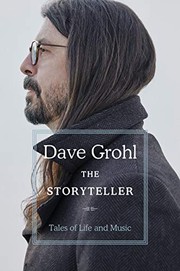
The Storyteller: Tales of Life and Music
Foo Fighters frontman recalls Nirvana, drumming, fatherhood, and life on the road.
2,307-word summary · 10 min read
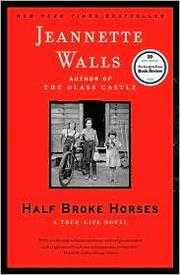
Half Broke Horses
Jeannette Walls tells her grandmother Lily Casey Smith's frontier life, from a Texas dugout to teaching at fifteen and ranching in Arizona.
2,580-word summary · 11 min read
Dreams from My Father
Obama traces his Kansas and Kenyan families from Hawaii to Chicago community work to a first trip to Kenya.
2,053-word summary · 9 min read
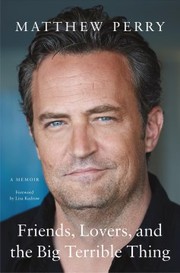
Friends, Lovers, and the Big Terrible Thing
Matthew Perry revisits Friends fame and a long struggle with addiction, from junior tennis to Chandler Bing to a 2018 health crisis, with blunt humor.
2,258-word summary · 10 min read
Untamed
Glennon Doyle leaves a strained marriage, falls for Abby Wambach, and rebuilds life around honesty and desire.
2,561-word summary · 11 min read
Crying in H Mart
Japanese Breakfast singer Michelle Zauner remembers her Korean mother through food, grief, and growing up in Oregon.
2,337-word summary · 10 min read
The Vanishing Half
Twin sisters split as one lives Black and one passes as white.
1,971-word summary · 9 min read
I'm Glad My Mom Died
Jennette McCurdy recalls child acting, her mother's control, eating disorders, and the slow work of getting free.
2,049-word summary · 9 min read

Long Walk to Freedom
Mandela's account of a Thembu childhood, a law practice, a banned movement, twenty-seven years in prison, and the negotiation that ended apartheid.
2,454-word summary · 11 min read

Too Much and Never Enough: How My Family Created the World's Most Dangerous Man
Mary L. Trump's 2020 memoir traces how a cold, zero-sum Queens household shaped her uncle, and uses family tax documents to challenge his self-made story.
2,059-word summary · 9 min read

Infidel
Ayaan Hirsi Ali's memoir of a Somali childhood, a forced marriage, a Dutch asylum claim, and the political fight that followed the murder of Theo van Gogh.
2,041-word summary · 9 min read
Unaccustomed Earth
Lahiri’s second story collection follows Bengali families in America and abroad, tracing the quiet distances between parents and children, spouses, and the…
2,333-word summary · 10 min read

The Girl with Seven Names: A North Korean Defector's Story
Hyeonseo Lee crossed the frozen Yalu River at seventeen, spent years hidden in China, escaped to South Korea, and later returned to rescue her family.
2,404-word summary · 11 min read
Beautiful Boy: A Father's Journey Through His Son's Addiction
David Sheff recounts watching his son Nic slide into meth addiction, and his own desperate, humbling search for how to help without destroying them both.
2,076-word summary · 9 min read
The Magnolia Story
How Chip and Joanna Gaines met, closed their first shop, nearly lost everything in a housing development, and built Fixer Upper.
2,994-word summary · 13 min read

Sing You Home
A music therapist, her new wife and an evangelical ex-husband end up in court over three frozen IVF embryos.
2,952-word summary · 13 min read
Life
The Rolling Stones guitarist tells his own story: a Dartford childhood, the band's first gigs, the drug raids, the tax years and Patti Hansen.
2,761-word summary · 12 min read
This Is How You Lose Her
Yunior cycles through love affairs and betrayals in nine linked stories, tracing the damage he does and the family history behind it.
2,195-word summary · 10 min read
The Blind Side: Evolution of a Game
Michael Lewis traces how the left tackle became a premium position and tells the story of Michael Oher, a homeless Memphis teenager whose size and speed made…
2,038-word summary · 9 min read

Scrappy Little Nobody
Anna Kendrick's essays trace her path from a Portland childhood and Broadway to Hollywood, with jokes, anxiety, and a refusal to pretend fame fixed her.
2,092-word summary · 9 min read
On the Come Up
Bri Jackson, a sixteen-year-old rapper in Garden Heights, chases a record deal while a viral song turns her into a symbol she never wanted to be.
2,034-word summary · 9 min read

The Letters of Vincent van Gogh
Vincent van Gogh's letters to his brother Theo, in a Penguin Classics selection edited by Ronald de Leeuw, trace a decade of work, faith, and obsession.
2,611-word summary · 12 min read
A Raisin in the Sun
Lorraine Hansberry's 1959 play follows the Younger family as a $10,000 insurance check, a house in a hostile neighborhood, and a stolen investment test their…
2,444-word summary · 11 min read
The Stranger Beside Me
Ann Rule's classic memoir of her friendship with Ted Bundy, written by the true-crime author who knew him long before the world learned what he had done.
2,481-word summary · 11 min read
Born Standing Up: A Comic's Life
Steve Martin's memoir of how a shy Disneyland magician's assistant built a strange avant-garde act, and why he walked away from stand-up at his peak.
2,034-word summary · 9 min read
The Warmth of Other Suns
Three migrants ride north out of Jim Crow toward Chicago and LA.
2,561-word summary · 11 min read