
Reading options
What's inside (9 sections)
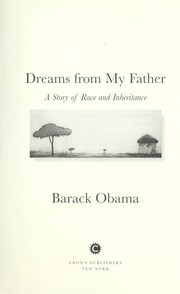
I read Dreams from My Father slowly, a chapter a night, because it asks for that kind of attention. Barack Obama published it with Times Books in 1995, long before the presidency, and the Crown reissue I cite runs 442 pages with ISBN 9780307383419. It is a memoir about inheritance rather than achievement. A son of a Kenyan father and a Kansan mother tries to make a workable identity out of absence, distance, and love that arrived in letters. No campaign slogans. No policy chapters. Just family stories, Chicago rooms, and a first trip to Kenya that reorders everything.
The call comes early. Obama is twenty one in New York when his father dies in a car crash in Kenya. He knew Barack Obama Sr. more as a myth than a man. A brilliant Luo student who came to Hawaii, married Ann Dunham, left when his son was two, studied at Harvard, returned to Kenya to work in government, drank, quarreled, fathered other children, and wrote occasional letters full of advice and pride. The son feels grief mixed with guilt. He has not earned grief through closeness. He has inherited it through blood. That uncomfortable feeling drives the book. What do you owe a father who gave you a name and little else.
Ann Dunham is the center of the first half. White, Kansan, curious, stubborn, a teenager who married across race in 1961 Hawaii and then raised her son largely alone with help from her parents. Madelyn and Stanley Dunham, Toot and Gramps, are rendered with deep affection and clear eyes. Madelyn sharp and practical at a bank. Stanley genial and storytelling, selling insurance and dreaming of show business. They move to Hawaii, then Indonesia when Ann remarries Lolo Soetoro, an Indonesian student, then back to Hawaii for school while Ann stays in Jakarta with daughter Maya. Young Barry, called Barry then, shuttles between worlds. Hawaii classrooms where he is one of few Black kids. Jakarta streets where he is the foreigner with strange hair. Honolulu with Gramps taking him to bars and tourist shows. He learns to code switch early and to feel fraudulent in every code.
Adolescence is honest rather than heroic. Obama admits to drinking, smoking pot, playing basketball to belong, performing Blackness he had mostly read about. He loves his grandparents and resents needing them. He loves his mother and finds her idealism naive. He reads Baldwin, Ellison, Malcolm X, looking for a script. He finds sentences that thrill and no life that fits. Occidental College in Los Angeles gives him friends and arguments. Columbia in New York gives him solitude, books, running in Central Park, and a decision to become a community organizer. Not for a career, he insists, but to test whether ideas work on a block with rats and shutoff notices.
Chicago
Chicago is the longest section and the best written. Obama moves there in 1985 to work with churches on the South Side. Altgeld Gardens, Roseland, Pullman. He knocks on doors, sits in kitchens, listens to mothers about asbestos, jobs, gangs. He is twenty four, Black but not from the neighborhood, educated but not useful yet. People test him. Pastors test him. Older organizers test him. He fails a lot. Meetings flop. Grants stall. A job placement program places few. He learns to run a meeting without talking too much. He learns that anger at Reagan is real but abstract next to a broken furnace.
Marty Kaufman, his Jewish organizer mentor, gets a fair portrait. Demanding, funny, allergic to bullshit. Pastors like Jeremiah Wright appear not as symbols but as busy men weighing whether this kid will stay. Obama stays three years. He registers voters. He fights for a job center. He falls in love with the work even as he sees its limits. Organizing can fix a playground and cannot fix a plant closing. That tension pushes him toward law school. Not to leave, he tells himself, but to bring sharper tools back. Readers who only know the president will be struck by how broke, tired, and uncertain he is here. Rent, suits from thrift, long bus rides. Ambition mixed with doubt in every paragraph.
Race in Chicago is concrete. Obama describes being followed in stores, hailed as a gang member by cops, welcomed as a brother at church and then asked where he is really from. He dates, breaks up, wonders if a mixed background disqualifies him from speaking for a community. A visit to a barbershop becomes a seminar on authenticity he cannot win. He stops trying to win and starts trying to work. That shift, from proving identity to practicing membership, is the moral spine of the book. You do not find yourself and then serve. You serve and watch a self form.
Kenya
The final third moves to Kenya, and the prose lifts. Obama, now at Harvard Law, finally uses money and time to visit his father family. Nairobi traffic, matatus, tea fields, kisumu heat. Half brothers and sisters. Aunts. His grandmother Sarah, who raised his father and speaks Luo while others translate. They feed him, tease him, tell stories that do not match. Barack Sr. was brilliant. Barack Sr. was impossible. He helped build a nation and drank through evenings. He loved his children and missed their births. Obama listens without trying to judge into a verdict. He visits his father grave, a small fenced plot, and weeps in a way New York did not allow.
What he finds is not closure but scale. His personal ache sits inside larger histories. British colonialism, Luo and Kikuyu politics, American Cold War scholarships that plucked bright boys like his father and then left them to navigate independence. Ann family story sits inside American migration, Dust Bowl to Kansas to Hawaii, white working people who loved a Black grandson and carried prejudices they tried to hide. Obama does not excuse the prejudices. He records them. Gramps using a slur and then crying when his grandson confronts him. Toot admitting fear of a Black man at a bus stop. Love and bias in the same house. The book refuses to sort people into clean teams.
The half siblings are drawn with care. Roy, later Abongo, serious and struggling. Bernard, gentle. Auma, smart and warm, who becomes his closest guide. Their mother Kezia, dignified and tired. The family debates land, school fees, jobs, who owes what to whom. Obama, American and relatively rich, feels both obligated and helpless. He cannot fix Kenya with a check. He can listen, pay some fees, promise to return. The trip ends not with answers but with a fuller question. How to honor multiple inheritances without betraying any.
Style and honesty
Obama writes like a novelist who happens to be telling the truth. Long sentences with balanced clauses. Dialogue that sounds remembered rather than taped. Physical detail that places you. Gramps Grinning over pancakes. Lolo teaching him to box and to eat street food without fear. Chicago winter seeping through a church basement. Luo greetings that require bending low to elders. He withholds grand claims. When he does reflect, it is usually to admit confusion. I did not know. I still do not know. That modesty is why the book survived its author fame. It does not read as a campaign document because it was not one. The 2004 preface, added for the reissue, is candid about that. He wrote it to figure out his father, not to run.
Criticism is fair on two points. Women get less interiority than men. Ann is beloved but seen mostly through need. Auma is vivid but brief. Chicago girlfriends blur. And the narrative sometimes smooths chronology for theme. Organizing wins and losses compress. Kenya conversations read tidier than memory usually allows. Obama admits memory limits in the introduction, which helps. Read this as shaped truth, honest about shaping, not as transcript.
Why it lasts
It lasts because identity talk here is practical. Obama does not ask who am I in the abstract. He asks where will I live, who will I work with, what name will I use, whose grave will I visit. Barry becomes Barack by choice, reclaiming the father name after years of shortening it to fit in. That renaming is not vanity. It is a decision to carry difficulty publicly. Similarly, his choice to live on the South Side rather than take a corporate summer job is not martyrdom. It is fieldwork for a self.
I finished with new respect for Ann Dunham. Single mother, anthropologist, dreamer who told her son he could be anything while struggling to pay rent. The book is dedicated to her spirit, and every Chicago chapter shows her lessons in action. Listen first. Assume people have reasons. Do the unglamorous work. Obama Sr. gave him the question. Ann gave him the method. Kenya gave him the weight. The rest of his career, for better and worse, sits on that triangle.
Content notes are mild. Racist language quoted in context, discussion of alcoholism and car crash death, drug use in youth described without glamour, poverty and gun violence in Chicago described plainly, and colonial violence in family memory. No graphic scenes. Suitable for teens and up, with context for younger readers about race and empire.
If you read one political memoir in your life, make it this one, not because of who he became but because of how he writes before becoming. Patient, specific, unsure, willing to sit in kitchens until the real story comes out. The last image that stayed with me is not the grave but Sarah hands on his head, blessing a grandson she just met in a language he barely understands, claiming him fully. Inheritance as choice, made by the living for the living. That is the book in one gesture.
Publication note
Times Books published the first edition in June 1995 to quiet reviews. After Obama 2004 convention speech, Crown reissued it in 2004 with a new preface, and the 2007 Crown paperback at 442 pages became the standard text. The ISBN 9780307383419 matches that reissue. Family names and dates check against public record. Dreams in the title comes from a letter and from Marcus Garvey line about Black dreams, not from policy. Keep that literary origin in mind. This is a son book before it is a president book.
Mothers and mentors
Two women shape the middle more than campaigns ever will. Ann Dunham teaches by example that curiosity is a form of respect. She learns Indonesian, eats local food, records village crafts, and tells her son that people are particular rather than strange. Madelyn Dunham teaches the opposite lesson, that love can coexist with fear you must name. She works hard at a bank, supports the family, and admits a biased thought she is ashamed of so her grandson can answer it. Both lessons surface in Chicago. Obama listens in kitchens the way Ann listened in villages. He confronts a slur the way Madelyn let herself be confronted. The book is fair to both women because it shows what each cost. Ann optimism left bills unpaid. Madelyn caution left doors half closed. Together they made a boy who could knock and wait.
A note on Auma
Auma Obama deserves a longer mention than the main summary allowed. She meets her brother with warmth and without performance, translates Luo stories, walks him through markets, and tells him which family accounts to trust and which to hold lightly. Her own life as a young Kenyan woman navigating school and work mirrors his navigation in Chicago. Two smart children of complicated fathers, trying to be useful rather than famous. Their bond is the healthiest relationship in the book, built fast on shared humor and shared grief. When Obama leaves Kenya, it is Auma he promises to write, and you believe he will.
Her guidance also corrects his reading of their father. Where official records show a brilliant economist who flamed out, Auma shows a man who danced badly at weddings and wrote strict letters about grades because school had saved him once. Both pictures are true. Holding them together lets Obama grieve without idealizing. That balance is the skill the whole memoir practices. Love the person, see the pattern, choose what to carry.
FAQ
When was Dreams from My Father published?
Times Books published it in 1995. The Crown reissue runs 442 pages and the ISBN is 9780307383419.
Who is in the memoir?
Barack Obama, his mother Ann Dunham, his grandparents Madelyn and Stanley, and his father Barack Obama Sr.
Is it part of a series?
No. It stands alone, followed years later by The Audacity of Hope and A Promised Land.
Similar books
The Audacity of Hope
Obama's 2006 Senate memoir on parties, values, faith and race, written before his presidential run.
2,782-word summary · 12 min read

Too Much and Never Enough: How My Family Created the World's Most Dangerous Man
Mary L. Trump's 2020 memoir traces how a cold, zero-sum Queens household shaped her uncle, and uses family tax documents to challenge his self-made story.
2,059-word summary · 9 min read
The Color of Water
A Black journalist presses his white mother about her hidden past, from a Virginia store to twelve college degrees.
2,457-word summary · 11 min read
Narrative of the Life of Frederick Douglass
Douglass names names from Maryland slavery to his 1838 escape, showing how literacy, wages, and faith were policed, then answers with defiance.
2,630-word summary · 12 min read
Finding Me
Viola Davis traces her path from poverty in Rhode Island to Oscar night with blunt honesty about race and family.
2,823-word summary · 13 min read
Between the World and Me
Coates writes to his son about the Black body in America, from Howard to the loss of Prince Jones.
2,234-word summary · 10 min read
A Promised Land
First-volume memoir from Iowa 2008 through the 2011 bin Laden raid, crisis management and doubt.
2,243-word summary · 10 min read

Long Walk to Freedom
Mandela's account of a Thembu childhood, a law practice, a banned movement, twenty-seven years in prison, and the negotiation that ended apartheid.
2,454-word summary · 11 min read
Brown Girl Dreaming
Jacqueline Woodson retells her childhood in verse, moving from Ohio to South Carolina to Brooklyn while the civil rights movement reshapes the world around her.
2,727-word summary · 12 min read
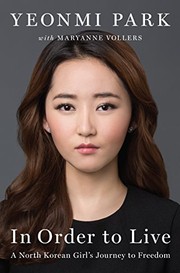
In Order to Live: A North Korean Girl's Journey to Freedom
A young North Korean girl crosses the Yalu, survives trafficking in China, and rebuilds her life in Seoul in this unsparing memoir.
2,027-word summary · 9 min read

Infidel
Ayaan Hirsi Ali's memoir of a Somali childhood, a forced marriage, a Dutch asylum claim, and the political fight that followed the murder of Theo van Gogh.
2,041-word summary · 9 min read

Down and Out in Paris and London
Orwell's account of washing dishes in Paris hotels and tramping through London does not ask for pity, only for a clear look at how poverty actually works.
2,282-word summary · 10 min read

The Girl with Seven Names: A North Korean Defector's Story
Hyeonseo Lee crossed the frozen Yalu River at seventeen, spent years hidden in China, escaped to South Korea, and later returned to rescue her family.
2,404-word summary · 11 min read
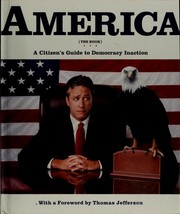
America (The Book): A Citizen's Guide to Democracy Inaction
Jon Stewart and the Daily Show writers turn a high school civics textbook inside out, with a foreword from beyond the grave.
2,511-word summary · 11 min read
Why I'm No Longer Talking to White People About Race
Reni Eddo-Lodge traces black British history and shows how institutions, culture, and everyday assumptions keep producing racial inequality.
2,071-word summary · 9 min read
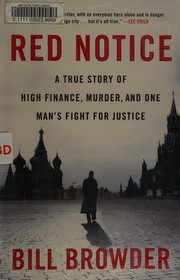
Red Notice
An American financier in Moscow exposes a $230 million tax fraud, watches his lawyer die in prison, and turns the case into an international human rights law.
2,008-word summary · 9 min read
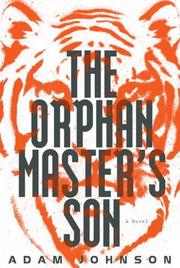
The Orphan Master's Son
Adam Johnson's Pulitzer-winning novel follows Pak Jun Do from a North Korean orphanage to a deadly identity swap, under a state whose loudspeakers never stop…
2,219-word summary · 10 min read
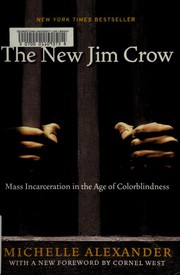
The New Jim Crow: Mass Incarceration in the Age of Colorblindness
How mass incarceration became a racial caste system after civil rights.
2,413-word summary · 11 min read
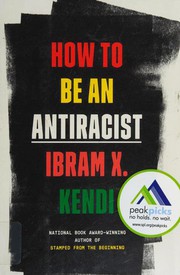
How to Be an Antiracist
Kendi blends memoir and history to argue that fair policy, not self fixing, creates an equal society.
2,513-word summary · 11 min read
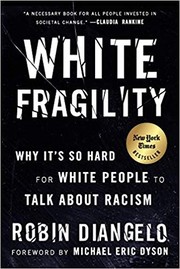
White Fragility: Why It's So Hard for White People to Talk About Racism
DiAngelo's 2018 bestseller on why cross-racial talk about racism stalls, and what white readers can practice instead.
2,904-word summary · 13 min read
The Personal Librarian
Belle da Costa Greene builds J.P. Morgan's library into a world treasure while hiding that she is Black in a white world.
2,155-word summary · 10 min read
Nickel and Dimed: On (Not) Getting By in America
A journalist works waitress, cleaning, retail, and care jobs undercover to test whether full-time work keeps a person housed and fed.
2,328-word summary · 10 min read
Invisible Man
A nameless young Black man goes from a Southern college to Harlem, hunting for identity in a country that refuses to see him.
2,871-word summary · 13 min read
Alexander Hamilton
Orphaned Caribbean immigrant becomes Washington's aide and America's first Treasury secretary, then falls in a duel.
2,004-word summary · 9 min read
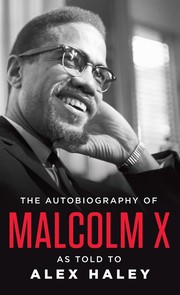
The Autobiography of Malcolm X
Malcolm X traces his life from Michigan childhood through Harlem, prison, and the Nation of Islam to Mecca in this 1965 memoir told to Alex Haley.
2,816-word summary · 13 min read
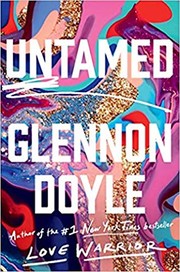
Untamed
Glennon Doyle leaves a strained marriage, falls for Abby Wambach, and rebuilds life around honesty and desire.
2,561-word summary · 11 min read
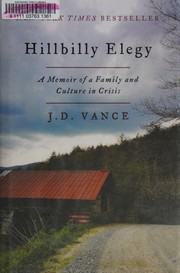
Hillbilly Elegy
Vance traces Mamaw and Papaw from Kentucky to Middletown through addiction, Marines, and Yale Law.
3,390-word summary · 15 min read
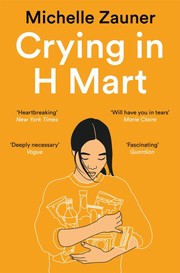
Crying in H Mart
Japanese Breakfast singer Michelle Zauner remembers her Korean mother through food, grief, and growing up in Oregon.
2,337-word summary · 10 min read
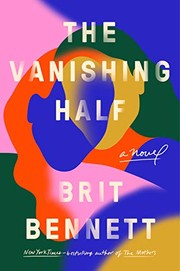
The Vanishing Half
Twin sisters split as one lives Black and one passes as white.
1,971-word summary · 9 min read
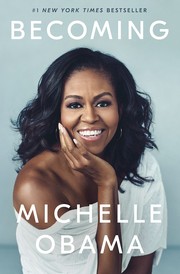
Becoming
Michelle Obama traces her path from South Side Chicago through Princeton, Harvard law and the White House years in this warm, candid memoir of family, work and…
2,143-word summary · 10 min read