
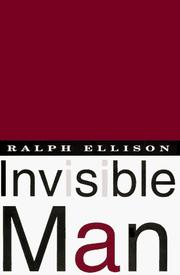
Invisible Man
2,871-word summary 13 min read 608 pages in the book
- First published
- 1952
- Publisher
- Random House
- Pages
- 608
- ISBN
- 9780679732761
Reading options
What's inside (8 sections)
I came to Invisible Man sideways, the way a lot of readers do. I kept mixing it up with the H. G. Wells story about the bandaged scientist, and a friend corrected me with some force. No, he said, this is the other one. The one about the Black kid in the South who goes north and ends up underground. The one that won the big prize. So I read it to settle the confusion, and the confusion turned out to be part of the point. Ralph Ellison first published the novel in 1952 with Random House, and it won the National Book Award for Fiction the next year. This summary follows the 608 page Vintage paperback, ISBN 9780679732761, which is the common modern reading text.
Here is the shape of it. A nameless young Black man tells his own story from a basement room off the grid in Harlem, lit by more than a thousand bulbs he has wired himself. He grew up in the South, won a scholarship to a Black college, got expelled, and rode north to New York full of letters and hope. In Harlem he found work, then politics, then a kind of fame as a speaker for a group called the Brotherhood. Then he watched that fame curdle, watched the streets catch fire, and fell down a hole. Everything in the book leads back to the hole and forward from it. He is not sleeping down there, he tells us. He is getting ready.
Fair warning the way I would give it to a friend. This is a long book and a loud one. People make speeches at every stop, some of them ten pages straight, and the plot keeps pausing so a symbol can walk onstage and introduce itself. If you want a clean thriller you will not get one. What you get instead is a voice that swings between comedy and fury, sometimes in the same paragraph, and scenes that stay with you for years. I found the middle heavy and the ending worth it.
A basement full of light
The prologue is one of the famous openings in American writing, and it earns it. The narrator lives in a forgotten basement section of a building, stealing power from the local electric company, and he has filled his hole with light. One thousand three hundred and sixty nine bulbs, he says, and he runs them all day because light proves he exists. He listens to jazz on the phonograph, he eats and smokes and thinks, and he explains his condition in plain terms:
I am an invisible man.
He does not mean magic. He means that white America refuses to see him as a person, so contact with him becomes contact with a phantom. People bump into him on the street and blame him for being in the way. He once beat a stranger nearly to death for calling him an insulting name in the dark, then stopped, horrified, because the man could not even see him to hate him properly. That mix of rage and shame sets the temperature for everything after.
Then he reaches back to his grandfather, a quiet man who on his deathbed surprised the family with strange advice. The old man told them to agree with white people to death, to smile and say yes while quietly working underneath. The narrator repeats the words like a riddle he has spent the whole book trying to solve. Was his grandfather counseling surrender, or treason, or both at once? The question never quite settles, and every later betrayal in the book echoes it. Each time someone powerful smiles at the narrator and hands him a gift, you hear the old man whispering underneath.
He also tells us he is in hibernation rather than sleep. Something about the hole is preparation, not surrender. Keep that in mind through the long middle. Every humiliation is being stored, every speech filed away, until the man underground has enough to speak back.
The battle royal
The story proper starts in the narrator's last year of high school in a small Southern town. He is the bright boy, the reader, the one the white leaders hold up as proof of progress. When he graduates as valedictorian, the leading white men of the town invite him to deliver his speech at a stag party at the big hotel. He imagines a lectern and applause. What he gets is a ballroom thick with smoke, a naked blonde woman dancing while the men shout and grab, and a canvas with a dozen other Black boys where he is told to fight blindfolded for the crowd's sport.
Ellison writes this scene without flinching and without letting anyone off. The boys swing at each other while the men laugh, drink, and poke them back into the ring. Then comes the entertainment's second half. Coins and bills are scattered across an electrified rug, and the boys dive for the money while the current knocks them flat. The narrator keeps crawling back for more, humiliated and greedy at once, which is exactly the transaction Ellison wants you to see. Afterward, bruised and sweating through his mouth, he gives his speech about humility and hard work in the style of Booker T. Washington, the famous Black leader his school admires. He slips once and says social equality instead of social responsibility, and the room goes cold until he corrects himself. Then they hand him a briefcase and a scholarship to the state college for Black students, and he walks home feeling he has stepped up in the world.
I hated this chapter and could not stop reading it. That is the intended effect, I think. The town rewards the boy for performing obedience inside a cage, and the boy is smart enough to feel the bars and hungry enough to take the prize anyway. Everything in his later life repeats this pattern at larger scale. Someone offers him advancement. The price is a small piece of his sight. He pays it, and pays it, until he cannot see at all.
One drive around the college
At the college the narrator settles into the role of model student. He drives for visitors, runs errands for the president, Dr. Bledsoe, and believes in the school's program of uplift through patience and craft. Then one day Bledsoe assigns him to drive Mr. Norton, a rich white trustee from the North, around the countryside. Norton is full of talk about his late daughter and his love for the race in the abstract. The narrator, eager to please, takes the back roads Norton asks for, and the day goes wrong in stages.
First they stop at the cabin of Jim Trueblood, a poor Black sharecropper who has become a local scandal by getting both his wife and his daughter with child. Trueblood tells his story to Norton in long, shameless detail, half confession and half performance, and Norton listens with a sick fascination while handing over money. The students and teachers despise Trueblood for shaming the race. White visitors keep rewarding him for it. The narrator watches this exchange and learns nothing from it yet, which is part of the pain.
Then the narrator stops at a roadhouse called the Golden Day, hoping to get Norton a drink and calm him down. The place is full of Black war veterans, some joking and some plainly broken, watched over by a huge attendant. A brawl breaks out, Norton faints in the chaos, and a veteran who used to be a brain surgeon takes charge of him. Left alone with the narrator for a few minutes, the vet drops the act and speaks plainly. He tells the boy that the college, the trustees, and men like Bledsoe are playing a game with him, and that he should learn to play it on his own terms instead of theirs. The narrator files this away as the babble of a madman. The reader files it as prophecy.
Bledsoe is furious when he hears about the day. In his office he drops the mask of the kindly educator and shows the narrator the machinery. The school survives by keeping white money happy, and the narrator has embarrassed the works. Bledsoe expels him on the spot, then softens the blow with a gift. He will give the boy sealed letters of introduction to important friends in New York, and after a year of work up north he can return. The narrator leaves campus glowing with gratitude toward the man who just ruined him. He does not open the letters. He should have opened the letters.
In New York the truth comes out through the son of one of the letter holders, a young white man who reads one aloud out of pity. The letters ask the recipients to keep the boy running, to give him work but never help, to let him learn his place far from school. The betrayal is total and almost funny in its neatness. The most powerful Black man the narrator knows has used the white postal system to mail him into exile.
White paint and shock treatment
Broke and cut loose, the narrator takes a job at Liberty Paints, a factory famous for its enamel called Optic White. The slogan says if it is Optic White it is the right white, and the foreman teaches him the open secret. The perfect white needs a few drops of black mixed in to cover properly. Ellison does not underline the joke. He does not need to. The narrator stirs black drops into white vats all day while the plant hums around him.
The section turns stranger from there. He clashes with Lucius Brockway, the old Black engineer who rules the boiler room and hates the union men. An argument over lunch and loyalty turns physical, pressure builds wrong in the system, and the machinery blows. The narrator wakes in a hospital with no memory of his name, strapped down while white doctors debate over him like a specimen. They treat him with electric shock, and he comes back to himself in pieces, each question from the doctors another small erasure. When they release him with a little money and papers, he is free in name and empty in fact.
Mary, a kind landlady in Harlem, takes him in and feeds him while he steadies himself. She is one of the few people in the book who asks for nothing, and the narrator loves her the way a drowning man loves a rope. He pays his way when he can and eats her cabbage and cornbread with thanks. But rest does not last. One winter day he passes an eviction on the street, an old Black couple thrown out with their belongings scattered in the snow, and something in him breaks open. He speaks to the gathering crowd, and the speech pours out of him, anger and scripture and history at once. A white man with an odd glass eye watches from the edge of the crowd. That is Brother Jack, and he has come to recruit.
The Brotherhood
The Brotherhood is Ellison's version of the organized left of the thirties and forties, never named outright but clear enough. It speaks of science, history, and the common struggle, and it wants the narrator as its voice in Harlem. He studies, he trains, he learns to shape a crowd, and he rises fast. New suit, new name in the papers, new apartment paid for by the movement. For a while it feels like the answer. Here at last is a group that sees him, that gives his gifts a purpose larger than survival.
The book keeps planting doubts, and one by one they sprout. An older member named Brother Tarp, just out of prison for standing up to racists years before, gives the narrator a link of the leg chain he wore for nineteen years, a keepsake of endurance. It moves the narrator deeply. It also starts to feel like a relic in a museum that has stopped fighting. The Harlem leader Ras, a West Indian nationalist who preaches Black pride and calls the Brotherhood thieves of Black energy, keeps confronting him in the street. Ras is violent and vain and often wrong, but his questions sting because the Brotherhood has no good answers for them.
Then comes Tod Clifton. Clifton is the golden boy of the Harlem branch, handsome and beloved, and one day he vanishes from his post. The narrator finds him on a corner in the rain selling dancing paper dolls, grinning Sambo figures that jiggle on strings while Clifton chants to the crowd. It is a collapse and a protest at once, and the narrator cannot decode it. When a white policeman moves Clifton along and Clifton resists, the cop shoots him dead in the street. The Brotherhood calls the death unstrategic and wants a quiet burial. The narrator disobeys and gives Clifton a great public funeral, marching thousands through Harlem behind the coffin. It is his finest hour in the movement and his last. From here the Brotherhood treats him as a problem.
Wandering the city in dark glasses and a hat, the narrator stumbles into his strangest lesson. People keep mistaking him for a neighborhood figure named Rinehart, a numbers runner and briber and lover and fixer who is everything to everyone. Rinehart wears the same disguise and moves through every world in Harlem with ease. The narrator sees in him a dizzying freedom and a warning at once. If nobody sees you, you can be anyone. If you can be anyone, you might end up being no one.
This stretch is where many readers stall, and I will be honest that I stalled too. The meetings, the doctrine talks, the rivalries among organizers, all of it runs long. But the length is doing work. Ellison wants you to feel how a movement can swallow a person meeting by meeting, how each small compromise of sight feels reasonable until the man in the mirror is a poster instead of a face.
The riot and the hole
The end comes fast after the slow middle. A senior member tells the narrator plainly that the Brotherhood is shifting its strategy and Harlem is being dropped. His work, his speeches, his funeral for Clifton, all of it is being written off as a local matter while history moves elsewhere. At the same time a white woman named Sybil, the wife of a Brotherhood member, pursues him with a fascination that treats him as an exotic object. He plays along for an evening, partly from desire and partly to learn what the leadership really thinks of him. What he learns is that they think of him as finished.
Then Harlem explodes. A shooting sets off a night of looting and burning, and Ras rides through it at the head of his men, hunting traitors to the race. The narrator tries to steer the chaos, then to escape it, and the two aims collapse together. Beaten and chased, he falls through an open manhole into a coal cellar and cannot climb out. Down in the dark he burns the contents of his briefcase for light. Diploma, letters, clippings, the chain link, the doll. Each paper flares and dies, and each one reads like a chapter of his life going up in smoke.
In the dark he dreams and argues with himself. He sees that Bledsoe and Norton and Jack and Ras, enemies on the surface, all needed him blind in their own way. He sees that even his grandfather's advice was a mask with a mask under it. And he decides to stay a while. Hibernation, he calls it. A hidden preparation for rejoining the world on new terms.
The last pages turn outward, toward the reader, and they land hard. The narrator says he has come to understand that his invisibility connects him to everyone, that the schemes built on denying sight fail in the end. He closes with a question aimed past the page:
Who knows but that, on the lower frequencies, I speak for you?
I finished the book with two feelings at once. Admiration, because the voice is huge and the best scenes are perfect. And fatigue, because Ellison never met a speech he wanted to cut. Some readers will also find the Sybil episode ugly on purpose and ugly anyway, and the Rinehart section a maze that pleases the author more than the audience. Fair points, all of them. But the core holds. A young man learns that every group offering him sight wants to borrow his eyes. He goes underground to get his own vision back. The book asks whether America can learn to see him before he comes back up, and it does not let the reader answer quickly.
If you have never read it, read it in order and out loud where you can. Let the funeral march roll. Let the paint factory shine. When you reach the hole, sit in it a while. Then ask yourself the closing question and notice how long it takes you to answer.
FAQ
When was Invisible Man published, and did it win any awards?
It was first published in 1952 by Random House in the United States. It won the National Book Award for Fiction in 1953. This summary follows the 608 page Vintage paperback, ISBN 9780679732761.
Is this the same book as H. G. Wells book The Invisible Man?
No. H. G. Wells wrote a science fiction novel called The Invisible Man in 1897 about a scientist who turns physically invisible. Ellison's 1952 novel is about social invisibility, and this site lists them under separate slugs.
Is Invisible Man a difficult read?
Yes, in the sense that it follows one young man's fall and recovery of sight across the South and Harlem and ends underground. It is long and full of speeches, so readers who want a fast plot may find the middle slow.
Similar books
James
Percival Everett retells Huckleberry Finn from Jim's side, giving him a library, a hidden school, and a voice the novel lets loose.
2,211-word summary · 10 min read
The Idiot
A Turkish-American freshman at Harvard falls in love through email with a Hungarian math student and spends a summer in Hungary trying to turn correspondence…
2,019-word summary · 9 min read

Revolutionary Road
A Connecticut couple who believe they are too good for the suburbs plan to move to Paris, and the plan slowly exposes everything they cannot say to each other.
2,085-word summary · 9 min read

Less Than Zero
Clay returns to Los Angeles for Christmas and drifts through parties, drugs, and old friends, including one who is selling himself to survive.
1,926-word summary · 9 min read

Unaccustomed Earth
Lahiri’s second story collection follows Bengali families in America and abroad, tracing the quiet distances between parents and children, spouses, and the…
2,333-word summary · 10 min read
Naked Lunch
Burroughs's banned 1959 collage novel follows Bill Lee through addiction, Tangier, and the nightmare bureaucracy of the Interzone.
2,082-word summary · 9 min read

Wide Sargasso Sea
Jean Rhys gives the first Mrs. Rochester a Caribbean childhood, a marriage built on money and suspicion, and a voice that Charlotte Bronte left in the attic.
2,021-word summary · 9 min read

This Is How You Lose Her
Yunior cycles through love affairs and betrayals in nine linked stories, tracing the damage he does and the family history behind it.
2,195-word summary · 10 min read
The Orphan Master's Son
Adam Johnson's Pulitzer-winning novel follows Pak Jun Do from a North Korean orphanage to a deadly identity swap, under a state whose loudspeakers never stop…
2,219-word summary · 10 min read
Native Son
Richard Wright's landmark novel follows Bigger Thomas through one panicked night in Chicago and the manhunt, trial and reckonings that follow, exposing the…
2,265-word summary · 10 min read
A Raisin in the Sun
Lorraine Hansberry's 1959 play follows the Younger family as a $10,000 insurance check, a house in a hostile neighborhood, and a stolen investment test their…
2,444-word summary · 11 min read
We Were the Mulvaneys
After a rape following a school dance, the Mulvaneys, a family that believed it was blessed, comes apart over fifteen years. Narrated by the youngest son.
2,094-word summary · 9 min read
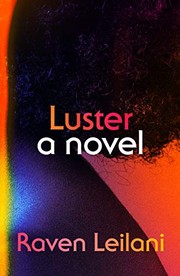
Luster
Edie, twenty-three and adrift in New York, falls into an affair with an older white archivist in an open marriage, and into the orbit of his wife and adopted…
2,049-word summary · 9 min read
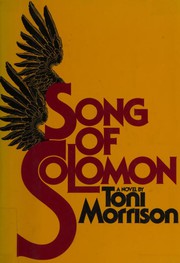
Song of Solomon
Milkman Dead leaves Michigan to hunt for family gold and finds instead the old song of his ancestor Solomon.
2,465-word summary · 11 min read
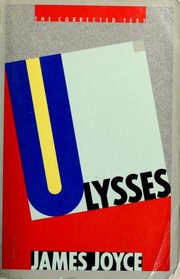
Ulysses
Bloom, Stephen, and Molly cross Dublin on June 16 1904 in parallel to Odyssey, from breakfast to night bed yes.
2,222-word summary · 10 min read
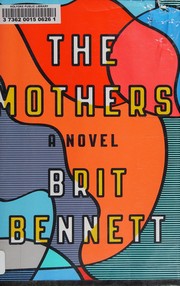
The Mothers
Nadia hides abortion from church Mothers while Luke and Aubrey circle for years.
2,078-word summary · 9 min read
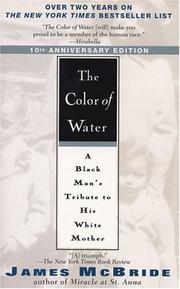
The Color of Water
A Black journalist presses his white mother about her hidden past, from a Virginia store to twelve college degrees.
2,457-word summary · 11 min read
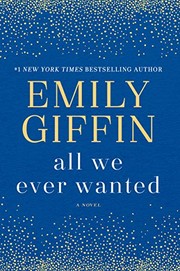
All We Ever Wanted
A Nashville photo of a drunk boy over a passed out girl splits three families along money and race lines.
2,278-word summary · 10 min read
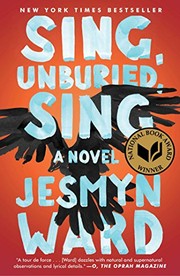
Sing, Unburied, Sing
A Mississippi family drives to Parchman prison while ghosts press close, and a dying grandmother holds the house together.
2,871-word summary · 13 min read

Kin
Two motherless friends from Honeysuckle, Louisiana drift apart and reunite after tragedy in Tayari Jones funny, warm Oprah and Kirkus Prize novel.
2,642-word summary · 12 min read

Finding Me
Viola Davis traces her path from poverty in Rhode Island to Oscar night with blunt honesty about race and family.
2,823-word summary · 13 min read
Giovanni's Room
An American in Paris stalls between his fiancee in Spain and an Italian bartender who loves him. Baldwin's brief tragedy still stings.
2,264-word summary · 10 min read
To the Lighthouse
On a Scottish island, the Ramsay family and their guests circle one postponed trip to a lighthouse across ten years of loss.
2,548-word summary · 11 min read
There There
Twelve Native characters converge on a powwow in Oakland in Tommy Orange's 2018 debut about identity, family, and survival.
2,157-word summary · 10 min read
The Sound and the Fury
A ruined Mississippi family seen through three brothers across four days, closing on Easter Sunday with their servant.
2,226-word summary · 10 min read

The Personal Librarian
Belle da Costa Greene builds J.P. Morgan's library into a world treasure while hiding that she is Black in a white world.
2,155-word summary · 10 min read
Steppenwolf
Harry Haller, half man and half wolf in his own mind, dances, loves, and enters a magic theatre in Hesse's strange 1927 novel.
3,181-word summary · 14 min read
Our Missing Hearts
In a fearful future America, twelve-year-old Bird crosses the country to find the poet mother who left him.
2,434-word summary · 11 min read

Interpreter of Maladies
Nine stories follow Bengali families split between Calcutta and New England, through marriage, grief, and arrival.
2,412-word summary · 11 min read