
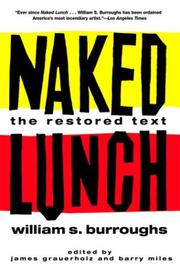
Naked Lunch
2,082-word summary 9 min read 289 pages in the book
- First published
- 1959
- Publisher
- Grove Press
- Pages
- 289
- ISBN
- 9780802140180
Reading options
What's inside (9 sections)
There is no useful way to summarize Naked Lunch as a story, because it is not built like one. It has characters who reappear, places that feel like the same bad dream, and scenes that end before they begin. The first time I read it, I kept waiting for a plot to arrive. The second time, I stopped waiting and started listening to the voice. That is when the book opened up: not as a novel with a beginning and an end, but as a sequence of routines, a performance in print, a man talking his way through a world he cannot escape.
Burroughs published it in Paris in 1959, through Olympia Press. Grove Press brought it out in the United States in 1962, and the book promptly became a legal problem. That history matters, but it can also get in the way. Naked Lunch is not interesting only because it was banned. It is interesting because of what it does to language, and because of how honestly it shows a mind caught in addiction.
The man behind the book
William Seward Burroughs was born in St. Louis in 1914, into a family with money and a famous name. His grandfather had invented an adding machine, and the family's comfort gave Burroughs room to drift. He went to Harvard, studied English, spent time in Europe, and came back to a series of jobs that never held him. He was gay in a period when that was dangerous, and he was drawn to drugs early. By the 1940s he was in New York, moving through a circle that included Allen Ginsberg and Jack Kerouac, reading and arguing and taking Benzedrine.
That circle became the Beat Generation, though Burroughs was always the strangest member of it. Kerouac wrote about motion and friendship. Ginsberg wrote about vision and protest. Burroughs wrote about control. His first book, Junky, came out in 1953 under a pen name and described heroin with a clinical flatness that was shocking for its time. Naked Lunch goes further. It takes the same subject and breaks the container.
The defining event of Burroughs's life came in Mexico City in 1951. He shot and killed his wife, Joan Vollmer, while attempting a William Tell act with a handgun. He said later that the accident pushed him toward writing, that he would not have become a writer without it. That claim is impossible to verify and easy to repeat. What is clear is that the death runs under everything he wrote afterward: the guilt, the obsession with control, the sense that language itself can be a weapon that goes off in your hand.
Tangier and the making of the book
Burroughs went to Tangier in the mid-1950s and lived in the International Zone, a place where currencies, laws, and identities were all a little loose. He was using drugs, writing fragments, and accumulating pages that did not look like a novel. Ginsberg visited in 1957 and found a mess of drafts. He helped type them up, and Kerouac is often credited with suggesting the title. The book that emerged was assembled, not composed in the usual sense. That matters for how you read it. The repetitions, the abrupt shifts, and the missing transitions are not failures of craft. They are the shape of the material.
The title itself is a joke with a knife in it. A naked lunch is what you see on the end of your fork, the thing stripped of decoration. Burroughs wanted to strip the world down to its appetites and its machinery. The book is full of meals that are really transactions, bodies that are really products, and institutions that are really digestion. Nobody eats innocently.
What actually happens
Bill Lee, a stand-in for Burroughs, moves through the book. He is an addict and a hustler, first in Mexico City and then in a place called the Interzone, which is Tangier rewritten as a paranoid cartoon. He is not a protagonist in the usual sense. He is a witness, a participant, and a voice. Around him are figures who feel like permanent residents of a bad administration: Dr. Benway, the bureaucrat-doctor who experiments on people and talks like a management consultant; Hassan, who runs a bar called Hassan's Rumpus Room; A.J., who throws parties; and a cast of agents, cops, and addicts who blur into one another.
The Interzone is ruled by competing factions, though the politics are deliberately incoherent. There are references to Islam Incorporated, the Interzone University, the Market, and a bewildering set of offices and committees. The point is not to map the power structure. The point is to make you feel what it is like to live inside one. Burroughs understood bureaucracy as a kind of body: it has openings, discharges, and a constant need to process people.
The most famous creatures in the book are the Mugwumps, beings whose bodies produce a substance called black meat. The Mugwumps are not explained in a tidy way. They are part of the book's private mythology, along with the Senders, the Controllers, and the various experimental technologies that show up without context. A reader who tries to build a glossary will spend a lot of time confused. A reader who lets the images accumulate will start to see the pattern: bodies are being harvested, managed, and consumed by systems that speak in the language of health and order.
There are also routines, long comic set pieces that are closer to stand-up than to fiction. Benway explaining his methods, a doctor describing a procedure, a salesman pitching a product, a bureaucrat justifying an atrocity. These passages are funny in a cold way. They work because the speakers are completely fluent in their own logic. Burroughs had an ear for the way authority talks, and he lets it run until it becomes obscene.
Style, cut-ups, and the refusal of comfort
Naked Lunch is often described as a cut-up novel, but that is not quite right. The cut-up method, which Burroughs developed with Brion Gysin around 1959 and used heavily in later books, involves slicing pages and rearranging them. Naked Lunch was assembled from routines and drafts, with some folding and splicing, but it is not a pure cut-up. Its disjunctions come from the material itself and from the editing process. The later trilogy, The Soft Machine, The Ticket That Exploded, and Nova Express, goes much further into collage.
Still, the book anticipates the method. Sentences collide. A scene changes without warning. A character appears, disappears, and returns with a different name or body. The effect is less like a puzzle to solve than a fever to endure. Burroughs is not trying to be difficult for the sake of it. He is trying to reproduce the way an addicted mind moves: fixated, associative, unable to hold a stable frame.
The prose is also strangely beautiful in places. Burroughs can write a clean, declarative sentence, and he can turn a phrase that stays with you. He is funny about sex, money, and death in ways that are not polite. The book's reputation for obscenity is deserved, but the obscenity is not the point. The point is the exposure. Burroughs wants to show you the machinery under the skin of ordinary life: the hospital, the prison, the border, the family.
What the book does not offer is comfort. There is no character to root for, no romance to soften the edges, no moral arc that rewards patience. Some readers will finish it and feel that they have been shouted at for two hundred pages. Others will finish it and immediately want to read it again. Both responses make sense. Naked Lunch is not a book you recommend casually. It is a book you survive and then argue about.
How to read it without hunting for a plot
The most practical advice is to treat the book as a set of performances rather than a sequence of chapters. Burroughs called these passages routines, and the word fits. A routine has a voice, a rhythm, and a punch line. It does not need to advance a story. It needs to hold the room. Once you start reading for the voice, the book's repetitions become less annoying. You notice how Benway's bureaucratic tone keeps returning, how the same images of control and consumption circle back, and how the humor is doing more work than the shock.
It also helps to read the book in short stretches. Two or three routines at a time is enough. The prose is dense, and the lack of continuity can wear you down if you try to push through it like a thriller. Burroughs wrote in fragments, and the book rewards a fragmented reading. Put it down, come back, let a passage sit. The images that matter will stay with you even when the transitions do not.
Finally, do not worry about decoding every reference. Some of the names and institutions are private jokes, some are political caricatures, and some are simply sounds that Burroughs liked. The book is not a puzzle with a solution. It is a mood, a diagnosis, and a performance. A reader who accepts that will get further than one who keeps a notebook and tries to reconstruct the Interzone's chain of command.
The trial and the afterlife
Grove Press published the American edition in 1962, and officials in Boston went after it. The resulting obscenity trial in 1965 became a landmark. Writers and critics testified about the book's literary value, and in 1966 the Massachusetts Supreme Judicial Court ruled that it was not obscene. The decision helped loosen censorship in the United States, though it did not end the battles over what could be printed.
It would be easy to make the trial the whole story: brave artist, repressive state, victory for free speech. That version is true enough, but it flattens the book. Naked Lunch is not a civil liberties pamphlet. It is a strange, ugly, often brilliant performance, and its legal victory made room for other strange books as much as it vindicated this one.
The book's influence is everywhere once you start looking. David Cronenberg's 1991 film takes the title and some of the imagery and turns it into a different kind of nightmare. The band Steely Dan took its name from a device in the novel. Generations of writers have borrowed Burroughs's attitude toward language, his interest in conspiracy, and his refusal to explain. He made it possible to write about the body and the state in the same sentence without sounding like a theorist.
Where it fails
The criticisms are not small. The book's treatment of women is brutal. Female characters are often bodies, victims, or jokes, and the violence against them is described with a detachment that can feel like cruelty. Burroughs's own history makes this harder to read, not easier. The novel also trades in racial and ethnic caricature, especially in its portraits of Tangier and its inhabitants. Some of it is satire aimed at colonial attitudes. Some of it is just the prejudice of its time, reproduced without enough distance.
The structure is another problem. The middle of the book can feel like a loop, and not in a productive way. The routines are uneven. For every passage that crackles, there is another that reads like a private joke. Burroughs's later work would refine the collage method, but Naked Lunch often feels like a first draft of a new kind of writing rather than a finished example of it.
And the shock can wear off. Once you understand the book's moves, some of its transgression becomes predictable. The Mugwumps, the black meat, the orgasm machines: they are startling the first time, and then they become part of the scenery. The book's defenders often talk about its subversive power, but subversion is not a permanent state. A reader who is not easily shocked may find the novel more interesting as a historical document than as a living experience.
None of this makes it a failure. It makes it a difficult book with a specific temperament. If you want plot, coherence, or a character to love, look elsewhere. If you want to see what happens when a brilliant, damaged writer refuses to make his pain tidy, Naked Lunch is essential. It is not a pleasant read. It is a memorable one.
FAQ
Does Naked Lunch have a conventional plot?
No. It is a sequence of routines and fragments rather than a linear story, though Bill Lee and the Interzone give it a loose continuity.
Why was Naked Lunch banned?
Its explicit drug use and sexual content led to a Boston obscenity trial in 1965. The Massachusetts Supreme Judicial Court ruled in 1966 that the book was not obscene.
Was Naked Lunch written with the cut-up method?
Not exactly. It was assembled from routines and drafts with help from Allen Ginsberg and Jack Kerouac. Burroughs developed the full cut-up technique later, with Brion Gysin.
Similar books
If on a Winter's Night a Traveler
You, the Reader, chase a defective novel through bookshops and translators while ten other novels keep interrupting. Calvino's famous puzzle about the act of…
2,173-word summary · 10 min read
The Crying of Lot 49
A California woman named executor of her ex-lover's estate follows a muted post horn into a possible centuries-old postal conspiracy, and Pynchon refuses to…
2,003-word summary · 9 min read

Revolutionary Road
A Connecticut couple who believe they are too good for the suburbs plan to move to Paris, and the plan slowly exposes everything they cannot say to each other.
2,085-word summary · 9 min read
Less Than Zero
Clay returns to Los Angeles for Christmas and drifts through parties, drugs, and old friends, including one who is selling himself to survive.
1,926-word summary · 9 min read
James
Percival Everett retells Huckleberry Finn from Jim's side, giving him a library, a hidden school, and a voice the novel lets loose.
2,211-word summary · 10 min read
Post Office
Chinaski drifts through postal shifts, cheap rooms, horse tracks and rough love in Bukowski's 1971 debut about work, drink and survival.
2,444-word summary · 11 min read
Breakfast of Champions
A Pontiac dealer breaks down while a broke sci-fi writer brings the book that tells him others are robots.
2,013-word summary · 9 min read
A Confederacy of Dunces
Ignatius J. Reilly, jobless and full of opinions in New Orleans, meets work, his mother, and the law in Toole's posthumous Pulitzer winner.
3,089-word summary · 14 min read
The Master and Margarita
Devil Woland visits 1930s Moscow while Master writes Pilate and Margarita bargains.
2,535-word summary · 11 min read
Fear and Loathing in Las Vegas
Raoul Duke and Gonzo binge Vegas covering Mint 400 and drug conference.
2,443-word summary · 11 min read
Catch-22
Yossarian tries to survive Pianosa bombing runs while the catch traps him.
3,764-word summary · 17 min read
Slaughterhouse-Five
Billy Pilgrim slips through time from Dresden to Tralfamadore in Vonnegut's short antiwar classic.
2,722-word summary · 12 min read
The Great Gatsby
The Great Gatsby through Nick Carraway: Gatsby's parties, the green light, Daisy and Tom, and why Fitzgerald's 1925 novel ends as a judgment on the American…
2,501-word summary · 11 min read
To Kill a Mockingbird
To Kill a Mockingbird through the eyes of Scout Finch: Maycomb's slow days, Atticus's defense of Tom Robinson, the Boo Radley mystery, and what Lee's 1960…
2,308-word summary · 10 min read
Silas Marner
A falsely accused weaver hoards gold in Raveloe until a stolen hoard and an abandoned child remake his narrow life.
2,699-word summary · 12 min read
Rosencrantz and Guildenstern Are Dead
Stoppard's 1966 play retells Hamlet from the wings, where two minor courtiers wait, joke, and walk toward a death they cannot see.
2,021-word summary · 9 min read

Howards End
Forster's 1910 novel follows two families, a house in Hertfordshire, and a burned note, asking whether money and feeling can ever be connected.
2,187-word summary · 10 min read

Sophie's Choice
A young Southern writer in 1947 Brooklyn befriends a brilliant, unstable couple and slowly learns the story of the Polish Catholic woman at the center of their…
2,798-word summary · 12 min read

Fathers and Sons
Arkady brings the nihilist Bazarov home to his father's estate, and a generational argument turns into love, a duel, and an early death.
2,192-word summary · 10 min read

The Chosen
A shattered pair of glasses in a 1944 Brooklyn softball game starts a friendship between a Hasidic boy and his Orthodox neighbor, and their fathers pull them…
2,443-word summary · 11 min read
Infinite Jest
A film that kills its viewers, a tennis academy, a halfway house for addicts, and a future America where corporations name the years, all tangled together.
2,084-word summary · 9 min read
The Lottery
In Jackson's 1948 story, a village draws lots to keep the corn heavy, and the chosen person is stoned by her neighbors.
3,080-word summary · 14 min read
The Dharma Bums
Ray Smith rides freight trains, climbs Matterhorn Peak and argues about Zen with the poet Japhy Ryder in Kerouac's 1958 road novel.
2,729-word summary · 12 min read

Ivanhoe
A disinherited Saxon knight, a great tournament, a besieged castle and a trial by combat. Scott's most famous novel, set in England in 1194.
2,834-word summary · 13 min read
Wide Sargasso Sea
Jean Rhys gives the first Mrs. Rochester a Caribbean childhood, a marriage built on money and suspicion, and a voice that Charlotte Bronte left in the attic.
2,021-word summary · 9 min read
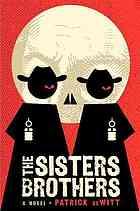
The Sisters Brothers
Two hired killers ride from Oregon to Gold Rush California to murder a prospector, and find their trade, their brotherhood, and the frontier myth coming apart.
2,095-word summary · 9 min read
The Last of the Mohicans
During the French and Indian War, Hawkeye and two Mohican warriors try to save two British sisters from a Huron chief whose revenge will end the Mohican line.
2,017-word summary · 9 min read
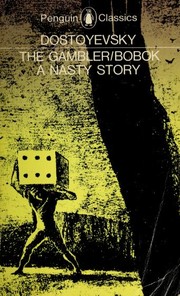
The Gambler
Dostoevsky's roulette novella: Alexei loses Polina, wins a fortune, loses everything, and promises himself one more bet tomorrow.
2,022-word summary · 9 min read
Orlando
A young Elizabethan nobleman becomes a woman and lives for centuries, moving through English history while writing a single poem about an oak tree.
2,030-word summary · 9 min read
Mother Night
Howard W. Campbell Jr., a Nazi propagandist and American spy, tells the story of his double life from an Israeli prison cell while waiting to be tried for war…
1,988-word summary · 9 min read