
The Lottery
3,080-word summary 14 min read 464 pages in the book
- First published
- 1948
- Publisher
- The New Yorker
- Pages
- 464
- ISBN
- 9781250239365
Reading options
What's inside (10 sections)
I read The Lottery on a train, which is the wrong place to meet a story about a village that can kill one of its own in about two hours. I read it again the same afternoon because I did not trust the first reading. Shirley Jackson published it in The New Yorker on June 26, 1948, and it has been anthologized, filmed for television three times, adapted for radio, staged as a ballet, and redrawn as a graphic novel. None of that has dulled it. The story is short enough to read in one sitting and it still does the thing it did in 1948: it puts a decent, ordinary person inside an ordinary crowd and lets the crowd do something monstrous, and it never once tells you that they are monsters.
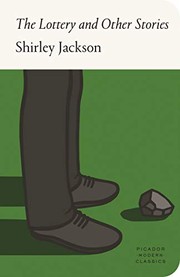
It helps to say what this is not. It is not a novel. It is a short story, and the reason to read it in a book is the collection: The Lottery and Other Stories, the only volume of stories Jackson ever published in her lifetime. The edition I have is the 2019 Picador Modern Classics reprint from Farrar, Straus and Giroux, 464 pages, twenty-five stories in all. The other twenty-four range from the very funny to the quietly unnerving, and having them in the same volume shows you the range Jackson had.
What I want to do here is walk through the story closely, because it is built like a machine and every part of it is load bearing, then sit with the argument it has been having with readers since 1948.
The square at ten in the morning
The story opens on a clear sunny morning, June 27th, in a village of about three hundred people. Because the village is small, the whole lottery takes about two hours, so it can begin at ten and still be finished in time for the villagers to get home for noon dinner. That sentence does a lot of work. It gives you the scale of the place, the killing squeezed between a morning and a meal, and a village that knows the schedule well enough to plan lunch around it.
The children gather first, since school is out. Bobby Martin has already stuffed his pockets with stones, and the other boys follow, picking out the smoothest and roundest ones. Bobby, Harry Jones and Dickie Delacroix, the villagers pronounce that name "Dellacroy", build a great pile of stones in one corner of the square and guard it against the other boys. The girls stand aside talking, the very small children roll in the dust. Then the men arrive, surveying their own children, talking of planting and rain, tractors and taxes. Their jokes are quiet, and they smile rather than laugh. The women come after them in faded house dresses and sweaters, exchanging gossip on the way.
Then Mr. Summers arrives carrying the black wooden box. He is round faced and jovial, he runs the coal business, and people are sorry for him because he has no children and his wife is a scold. Mr. Graves the postmaster follows with a three-legged stool. The stool goes in the center of the square, the box goes on the stool, and the villagers keep their distance.
The box is the oldest thing in the story and the strangest. The original lottery paraphernalia was lost long ago, and this one was already in use before Old Man Warner was born, made, according to local story, from pieces of the very first box. It is splintered badly along one side now, faded or stained in places, no longer completely black. Every year after the lottery, Mr. Summers starts talking about making a new one. Every year the subject is allowed to fade off without anything being done, because nobody wants to upset even as much tradition as the black box represents.
So the village has replaced the ritual with administration and kept the murder. Chips of wood gave way to paper slips when the population passed three hundred, because paper fits the box better. The old recitation has lapsed, and so has the ritual salute. All that remains of the form is that the official speaks to each person who comes up to draw.
Old Man Warner and the corn
Before the drawing, the village argues about whether it should still be doing this, which is one of the few genuinely modern things in the story.
"Some places have already quit lotteries," Mrs. Adams says. Old Man Warner snorts and calls them a pack of crazy fools, says there has always been a lottery, and complains that the young people think nothing is good enough for them. He mentions that a saying exists about the lottery and the corn: "Lottery in June, corn be heavy soon." He says that without it they would all be eating stewed chickweed and acorns. Later, when his own slip is called, he announces that this is the seventy-seventh year he has been in the lottery. Seventy-seventh time.
Notice how Jackson handles the argument. The defenders get the better lines. Warner is funny, and his cruelty is the kind you can laugh at across a hundred years. The abolitionist gets one flat sentence from Mrs. Adams and a shrug from the crowd. The story does not stage a debate, it stages a shrug, and by the time the drawing starts the question has been settled by exhaustion rather than agreement.
The corn matters too. This began as a fertility rite, and the village still half believes in it. Jackson never says outright that the sacrifice buys a good harvest, but she puts the belief in Warner's mouth and lets the children gather stones in a square in late June, exactly when you would be doing something else if the corn mattered to you.
The drawing
The lottery has three nested levels. First, heads of families draw, one slip per family. Then heads of households draw within the family. Then each member of the household draws. Every level is announced out loud, so the reader hears a roll call of the village's names: Adams, Allen, Anderson, Bentham, Clark, Delacroix, Dunbar, Harburt, Hutchinson, Jones, Martin, Overdyke, Percy, Summers, Warner, Watson, Zanini. It is a strange, lovely list, and it makes the place feel like a real town rather than a cast of types. Clyde Dunbar has broken his leg, so his wife Janey draws for him. A tall boy named Jack Watson draws for his mother and for himself, blinking nervously, and someone tells him not to be nervous.
Bill Hutchinson gets the marked slip in the first round. And here the story does something very sharp, because Tessie Hutchinson, his wife, immediately objects. She shouts to Mr. Summers that he did not give her husband time enough to take any paper he wanted, that she saw him, that it was not fair. Mrs. Delacroix calls her to be a good sport, and Mrs. Graves says that all of them took the same chance. Bill, embarrassed, tells his wife to shut up.
Then the second level. Tessie tries to pull her married daughter and son-in-law, Don and Eva, into the family draw, and Mr. Summers gently reminds her that daughters draw with their husbands' families. "I think we ought to start over," Mrs. Hutchinson says, as quietly as she can. Nobody restarts anything.
The last round is five slips: Bill, Tessie, and the three children, Bill Jr., Nancy and little Dave. Mr. Graves takes the toddler's hand and helps him into the box. Nancy is twelve and goes forward switching her skirt. Bill Jr. is red-faced with overlarge feet and nearly knocks the box over. Tessie hesitates, looks around defiantly, then sets her lips, snatches a paper and holds it behind her back. Bill reaches into the box and feels around.
Mr. Summers tells them to open the papers. The children's are blank. Bill's is blank. And then: "It's Tessie," Mr. Summers said, and his voice was hushed. The slip has a black spot on it, a spot Mr. Summers made the night before with a heavy pencil in the coal company office. The narrator does not narrate that making. The story does, in a single clause, in the middle of a paragraph about furniture. That is Jackson's whole method: she will not underline anything, but she will let you know exactly where the murder was planned.
Tessie Hutchinson
Here is the part I will not paraphrase.
"Although the villagers had forgotten the ritual and lost the original black box, they still remembered to use stones." Mrs. Delacroix selects a stone so large she has to pick it up with both hands and turns to Mrs. Dunbar, who has small stones in both hands and is gasping, saying she cannot run at all and will have to go ahead and catch up. The children already have stones, and someone gives little Davy Hutchinson a few pebbles. Tessie is in the center of a cleared space, holding her hands out desperately as the villagers close in. "It isn't fair," she says. A stone hits her on the side of the head. Old Man Warner is saying, "Come on, come on, everyone." Steve Adams is in the front of the crowd with Mrs. Graves beside him. "It isn't fair, it isn't right," Mrs. Hutchinson screamed, and then they were upon her.
That is the last line of the story. There is no aftermath, no moral, no explanation. Jackson ends on the verb.
The details do the accusing. Mrs. Delacroix, warm and friendly, whose name means of the cross, picks up the biggest stone in the village and hands it on. The toddlers get pebbles. Old Man Warner, who calls the lottery a joke and a burden, urges the crowd forward. The crowd is not inflamed. It is procedural. That is the horror in the plainest form I know: not frenzy but administration, not hatred but habit.
And the person who dies is the one person who said it was not fair. Read the names and the story gets sharper still. In a widely cited 1988 essay, Fritz Oehlschlaeger argues that "Tessie Hutchinson" points back to Anne Hutchinson, the Puritan dissenter excommunicated in 1638, so the name lands the village's violence on a body already marked for questioning authority. That is one reading, not the only one. But notice that Jackson gives the dissenter's name to the woman who objects, and the name of a martyr to the man who leads the crowd.
Jackson in 1948
In the summer of 1948 Shirley Jackson was thirty-one, living in North Bennington, Vermont, with her husband Stanley Edgar Hyman and their four children. The family had moved there the year the oldest was born, so that Hyman could teach at Bennington College. Her first novel, The Road Through the Wall, was published that same year by Farrar, Straus. It is a semi-autobiographical account of her California childhood, and it did not make her famous.
The Lottery did, and the fame arrived as harassment. The New Yorker received more mail about that story than it had ever received for a work of fiction, and Jackson regularly took ten to twelve forwarded letters home each day. Later, collecting the memory in Come Along with Me, she wrote that of the three hundred or so letters she received that summer she could count only thirteen that spoke kindly. Her mother scolded her in writing: "Dad and I did not care at all for your story in The New Yorker," and asked why she did not write something to cheer people up.
Jackson's own reply, printed in the San Francisco Chronicle on July 22, 1948, is the best short statement of what she was doing. Explaining what she had hoped the story would say was very difficult, she wrote, but she hoped, by setting a particularly brutal ancient rite in the present and in her own village, to shock the readers with a graphic dramatization of the pointless violence and general inhumanity in their own lives. North Bennington has since made June 27, the day the story takes place, a local holiday for her. The Union of South Africa banned the story, and Hyman later wrote that Jackson was always proud of that, because they at least understood it.
On her health I want to be careful, because the record for that exact summer is thin. What is documented is the pattern that would dominate the rest of her life: a heavy smoker with chronic asthma, later joint pain, exhaustion and fainting spells that doctors put down to a heart condition, and eventually severe anxiety that kept her housebound for long stretches, a diagnosis of colitis that made even short journeys hard, and prescriptions for barbiturates and amphetamines that seem to have made things worse. She died in her sleep in 1965, at forty-eight. It is not documented in detail that she was ill in 1948, and I will not pretend it was a happy year for her. A woman whose husband handled the household money, whose first novel had just come out that spring, and who was writing for a magazine while her readers wrote to complain about her, was not having an easy time.
Ritual, luck, and the box
The word "lottery" now means something specific: a state-run game of chance with a jackpot and a news conference. Jackson's readers wrote to her asking where these lotteries were held, and whether they could go there and watch. That question is the best review of the story ever written: it shows how completely the gap between the ordinary word and the ordinary practice had opened by 1948.
Inside the story the gap is already open. The rite has no priest, no prayer, no animal, no explanation anyone offers. It has a coal merchant with a list on a legal pad, a box, slips of paper, and a rule that a family draws first, then a household, then a person. The randomness is not sacred, it is clerical. That is what makes the ending worse than a lynching. A lynching has a rope and a mob and often a reason. The lottery has stationery.
The village protects its customs by never changing them. Summers proposes a new box every year and the proposal dies every year, because a new box would be a change, and a change would mean admitting that the arrangement is a choice rather than a law of nature. The same logic shows up in how the villagers talk about the lottery: it is not something they do, it is simply what has always been done. Warner's favorite phrase is that there has always been a lottery. That is the entire defense of an atrocity, and he gets to say it in a voice most readers will find reasonable.
The names and the arguments
The critical literature on the story is enormous and occasionally overconfident. Helen Nebeker's 1974 essay in American Literature, "The Lottery: Symbolic Tour de Force," argues that every major name carries a charge: Martin from a Middle English word for ape, Delacroix as of the cross, Adams as the progenitor and martyr of the Judeo-Christian story, Graves as the refuge at the end of it. She notes that it is Mrs. Delacroix, warm and friendly in her natural state, who selects the stone too large to lift with one hand. Patrick Shields, writing in 2004, sets the story beside the death penalty and compares the drawing to Achan in Joshua, where a marked man is singled out and stoned and the community suffers for it. Harold Bloom, who did not like Jackson, said her narration stays on the surface and that the story wounds you once and once only.
Every one of those readings has support in the text, though none of them is the only possible one, and Bloom was no neutral judge: readers who take his dismissal as settled have agreed with a critic who had already decided he did not like her.
The three readings that come up most often in classrooms are conformity, McCarthyism, and mid-century suburbia. The conformity reading is the safest and the strongest: no one in the village is a monster, and that is exactly the problem. The McCarthyism reading has real grounding. The Military Selective Service Act re-establishing the draft was signed into law on June 24, 1948, two days before Jackson's story appeared, and critics have compared the random selection of a young man to the conscription lottery of the war years. The story itself never mentions politics, and Hyman insisted that Jackson's work was an anatomy of the Cold War era rather than a topical allegory, so treat that reading as a well informed guess rather than a fact. The suburbia reading is loosest of the three, since Jackson's village is rural New England, not a housing development.
Why it stays
The reason the story keeps its power is the tone. Jackson writes about a murder in the register of a weather report. The villagers are nervous and excited at the same time. The lottery takes "only about two hours." When Tessie Hutchinson screams that it is not fair, the sentence sits between two details about the crowd's clothing. The prose never raises its voice, and the effect is unnerving in a way that raised voices never manage. I have read the story dozens of times and what stays with me is not the stoning. It is the box on the stool, waiting for the next year, with nobody willing to replace it.
Two responses to the story are worth knowing about. The 1951 NBC radio adaptation gave it a character who objects publicly and refuses to draw, and in 2016 Jackson's grandson Miles Hyman made an authorized graphic novel that pushes the horror forward visually.
If you have the chance, read it in print, in one sitting, with nothing else happening. It does not want your patience, it wants your attention. Then read Tessie's last two lines again and ask yourself how many people in the square would have raised their hand if somebody had said, out loud, in front of everyone, what the story had just shown you. Nobody would have. That is not a flaw in the story. That is the story.
FAQ
When was The Lottery first published?
Shirley Jackson's story appeared in The New Yorker on June 26, 1948. It was collected the following year in The Lottery and Other Stories, the only story collection she published during her lifetime.
Is The Lottery a novel or a short story?
A short story. The edition quoted here is the 2019 Picador Modern Classics printing of The Lottery and Other Stories from Farrar, Straus and Giroux, 464 pages with ISBN 9781250239365.
Why is The Lottery so often read as a story about conformity?
Because nobody in the village is a villain. Mr. Summers is a cheerful coal merchant and Old Man Warner only defends an old custom, so the horror comes from ordinary people following an ordinary procedure. Critics have also read it against McCarthyism and the draft, though that interpretation is debated.
Similar books
The Call of Cthulhu and Other Weird Stories
Seventeen tales from Dagon to Innsmouth, led by Cthulhu, the Colour, and the Whisperer, in S. T. Joshi careful Penguin edition with notes and corrected texts.
2,593-word summary · 12 min read
The Call of Cthulhu
A professor's papers link a sculptor's dreams, a Louisiana cult raid, and a sailor's voyage to a sleeping god under the sea.
2,530-word summary · 11 min read
The Legend of Sleepy Hollow
A lanky schoolmaster courts a farmer's daughter in a haunted Dutch valley until a midnight ride by the Headless Horseman ends at the bridge.
2,968-word summary · 13 min read
The Yellow Wallpaper and Other Stories
A young mother confined for her health fixates on yellow wallpaper, plus 39 other Gilman stories on marriage and work.
2,989-word summary · 13 min read
We Have Always Lived in the Castle
Merricat guards sister Constance after arsenic deaths, until cousin Charles invades and fire frees them.
3,011-word summary · 13 min read
Silas Marner
A falsely accused weaver hoards gold in Raveloe until a stolen hoard and an abandoned child remake his narrow life.
2,699-word summary · 12 min read

Revolutionary Road
A Connecticut couple who believe they are too good for the suburbs plan to move to Paris, and the plan slowly exposes everything they cannot say to each other.
2,085-word summary · 9 min read
Naked Lunch
Burroughs's banned 1959 collage novel follows Bill Lee through addiction, Tangier, and the nightmare bureaucracy of the Interzone.
2,082-word summary · 9 min read
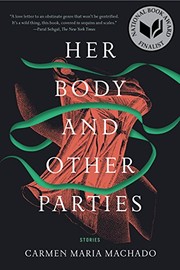
Her Body and Other Parties: Stories
Eight stories where bodies, medicine and old fairy tales get taken apart, with a green ribbon running through the whole book.
2,997-word summary · 13 min read
The Last of the Mohicans
During the French and Indian War, Hawkeye and two Mohican warriors try to save two British sisters from a Huron chief whose revenge will end the Mohican line.
2,017-word summary · 9 min read
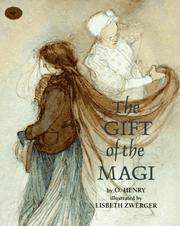
The Gift of the Magi
A young couple with almost no money each sells the thing they treasure most to buy a Christmas present for the other.
1,978-word summary · 9 min read
The Memoirs of Sherlock Holmes
Doyle's second Holmes collection gathers twelve Strand stories, including the early case of the Gloria Scott and the confrontation with Moriarty at Reichenbach…
2,390-word summary · 11 min read
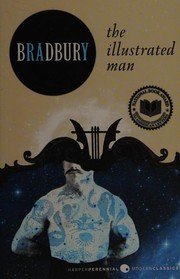
The Illustrated Man
A tattooed drifter's moving pictures retell eighteen Bradbury stories of children, rockets, Mars and the last night of the world.
2,791-word summary · 12 min read
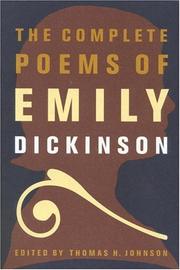
The Complete Poems of Emily Dickinson
Thomas H. Johnson's one-volume edition gathers all 1,775 of Emily Dickinson's poems in their restored texts, the standard reading edition since 1960.
2,191-word summary · 10 min read
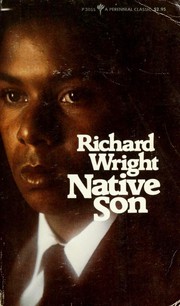
Native Son
Richard Wright's landmark novel follows Bigger Thomas through one panicked night in Chicago and the manhunt, trial and reckonings that follow, exposing the…
2,265-word summary · 10 min read
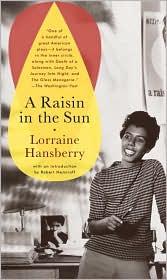
A Raisin in the Sun
Lorraine Hansberry's 1959 play follows the Younger family as a $10,000 insurance check, a house in a hostile neighborhood, and a stolen investment test their…
2,444-word summary · 11 min read
Everything's Eventual: 14 Dark Tales
Fourteen Stephen King stories shuffled by the deal of a card deck, from the haunted room of 1408 to quiet tales of grief that sting as much as the monsters.
2,000-word summary · 9 min read
The Day of the Triffids
Blinded survivors flee carnivorous plants after a meteor shower.
2,171-word summary · 10 min read
The Complete Fairy Tales
Mermaids, snow queens and tin soldiers in the full Andersen collection.
2,414-word summary · 11 min read

If It Bleeds
Holly Gibney faces an outsider plus three more tales of dread.
2,219-word summary · 10 min read
Haunted
Writers lock in for three months and trade worse stories as food runs out.
2,576-word summary · 11 min read
Full Dark, No Stars
Four novellas about revenge where ordinary people do terrible things and live with it.
2,646-word summary · 12 min read
Four Past Midnight
Four novellas about a plane lost in time, a writer haunted, and horrors small and large.
2,584-word summary · 11 min read
The Jungle Book
Mowgli, raised by wolves in the Seeonee Hills, learns the Law from Baloo and Bagheera while Shere Khan circles. Kipling's 1894 story collection.
2,799-word summary · 12 min read
The Island of Doctor Moreau
Shipwrecked Prendick finds Doctor Moreau shaping beasts into men by pain on lost island.
2,137-word summary · 9 min read
Skeleton Crew
King's 1985 collection pairs The Mist with The Jaunt, The Raft, and Survivor Type: 22 stories of Maine dread.
3,209-word summary · 14 min read
Dream Country
Four Sandman shorts on muses, cats, Shakespeare, and a veiled heroine.
2,001-word summary · 9 min read
Carmilla
Lonely Laura in Styria befriends beautiful Carmilla, whose night visits bring dreams, bites, and ancestral dread.
2,158-word summary · 10 min read
Aesop's Fables
Short animal tales of hares, foxes, ants, and wolves that still sting: old fables in plain modern English.
2,916-word summary · 13 min read
Something Wicked This Way Comes
Two boyhood friends meet a late October carnival that feeds on secret wishes, while Will's father learns how to fight it.
2,869-word summary · 13 min read