
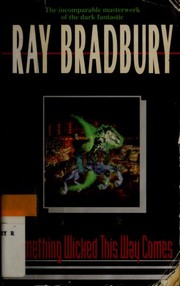
Something Wicked This Way Comes
2,869-word summary 13 min read 293 pages in the book
- First published
- 1962
- Publisher
- Simon & Schuster
- Pages
- 293
- ISBN
- 9780380729401
- Series
- Green Town (#2)
Reading options
What's inside (9 sections)
I picked this one up because October was coming and I wanted a book that felt like cold air and dry leaves. A friend had told me it was scary but sad, which sounded right. It was first published by Simon & Schuster in 1962. The Avon paperback I used runs 293 pages and keeps the same text most readers meet now. What pulled me in fast was the setup. Two boys on the edge of fourteen. A carnival that arrives late in the year. A father who works in the library and feels old among young son's friends. Ray Bradbury writes autumn the way some writers write summer, as a season that gets into your clothes.
Will Halloway and Jim Nightshade live in Green Town, Illinois. The town is Bradbury's stand in for Waukegan, where he grew up. Will was born one minute before midnight on October 30. Jim was born one minute after midnight on October 31. That small gap matters to them. Will sees himself as steady and liked. Jim sees himself as wild and held back. They run together, dare each other, and share books from the library. Will's father Charles is fifty-four and feels the distance. He shelves books, sweeps, and reads late. He loves his son but fears he is more watcher than player. That fear sits at the center of the book as much as any carnival tent.
The title comes from Macbeth. The witches say it when trouble walks in:
By the pricking of my thumbs, something wicked this way comes.
Bradbury earns that quote. His carnival does not arrive with noise in daylight. It comes by train at three in the morning.
October people
The book opens on October 23, with a strange charge in the air. A lightning rod salesman named Tom Fury walks the streets with his bag of copper rods. He tells Will and Jim a storm is coming, though the sky is only heavy. He gives Jim a lightning rod for his house and warns that one of their homes is in danger. The boys laugh, then do not laugh. That night the wind moves wrong. Paper blows down empty streets. The town barber and other neighbors sit on porches and feel restless. Charles Halloway sits in the library and feels it too.
Will and Jim sneak out to watch the carnival arrive. Most carnivals come in summer. This one, Cooger and Dark's Pandemonium Shadow Show, comes in late October. The train slides in without lights. The tents rise fast, as if clouds dropped and turned to canvas. The boys hear calliope music that sounds thin and wrong. They see the carousel folded like a dark flower. They see Mr. Cooger, red haired and quick, and Mr. Dark, tall and tattooed, with skin inked all over. Charles wakes at home and knows something has shifted. He tells himself he is too old for fairs. He goes anyway the next day, because fathers do.
This opening stretch is where Bradbury is best. He gives Green Town small habits. A cigar store, a library with green lamps, kids skipping rope. Dread builds through weather and small talk. Tom Fury wants to warn people, yet he also wants to see the poster promise of the Most Beautiful Woman in the World.
I liked how slow this part feels without stalling. Will wants care. Jim wants speed. Charles watches from a distance and wishes he could join their run. You learn the stakes before any clear magic shows up.
The carousel that runs both ways
The next day Will and Jim walk the grounds in daylight. They see the Mirror Maze, the Skeleton, the Dust Witch in her booth, and the carousel with an out of order sign. Their teacher Miss Foley seems dazed after she steps out of the mirrors. She looks pale and lost. Jim wants to stay after dark. Will agrees, though his stomach says no. They find Tom Fury's bag dropped and empty near the tracks. That empty bag lands hard. The salesman has already paid for a wish.
After dark they hide and watch. Mr. Cooger climbs on the carousel and rides it backward while the music plays backward too. When he steps off, he is twelve years old. The change is plain. His clothes hang loose. His face is smooth. His voice is high. Will and Jim follow him through town as he plays the part of Miss Foley's nephew, come for a visit she half remembers. She takes him in because she is lonely and the story fits a want she has carried for years. Jim is thrilled. He sees a way out of being a kid who waits. Will is sick with fear. He sees his friend leaning toward a ride that eats time.
Jim begs to ride. Will holds him back. They run to stop young Cooger, and the chase leads back to the midway. Cooger gets on again, this time to ride forward and grow older on purpose, to regain his adult shape. Will panics and jams the controls. The carousel spins fast forward. Cooger ages decades in a minute. His hair grays. His skin thins. His bones seem to shrink inside his suit. By the time the ride stops he is past one hundred, blind and gasping. The boys flee and bring police and an ambulance. When help arrives, Cooger is gone. In a side tent the boys find a new act instead, a twitching figure billed as Mr. Electrico, wired to a chair while sparks crawl on his skin. Mr. Dark smiles and tells the boys to come back tomorrow.
This is the most famous passage, and it still works. Back takes years off. Forward puts years on. The price is service to the show. Jim is well drawn here. He is not cruel. He is hungry for height and strength, brave in daylight and weak at night.
The girl under the tree and the parade
Morning brings a strange mercy and a new scare. Will and Jim find a little girl crying under a tree. She knows too much. She remembers being Miss Foley, fifty years old, a teacher who corrected their papers. Now she is eight or nine, with clear memory and no place to go. She cannot go home as a child. She cannot teach as a girl. The boys leave her briefly to check her house, and when they come back a parade has cut the street.
The parade is one of the great set pieces. The carnival marches through Green Town in daylight, drums and horns loud, freaks and townsfolk mixed so you cannot tell watcher from member. The Skeleton walks tall. The Dwarf stumbles. The Dust Witch rides with veiled eyes. They are hunting the boys, and they use noise to cover the hunt. Will and Jim dive under a storm drain grate in front of the cigar store. They lie in cold water and try not to breathe loud.
Charles finds them by luck. He sees their faces and understands at once. Mr. Dark steps up, polite and cold, and shows his hands. Tattooed faces move on his skin, one for each soul taken. He says two boys are missing and asks if Charles has seen them. Charles lies well. He says he is only the library janitor and knows nothing. The Dust Witch drifts near and sniffs the air for young life. Charles blows cigar smoke in her face until she chokes and pulls back. It is a small move, almost funny, and it saves them. The parade moves on. The boys climb out wet and shaking. For the first time Charles does not scold. He listens.
I love how fright mixes with town life here. Evil does not hide in a cave. It marches down Main Street and waves. Every victim becomes ink on Dark.
The library and the autumn people
That night they meet in the library. Charles has been reading. He has found old papers and posters showing the same carnival coming every twenty or thirty years, always in October, always with new names and the same show. Towns lose a teacher here, a barber there. People vanish after wishing to be young or new or loved. He has also copied a line about autumn people, folk who come when leaves fall and feed on the hollow places in others. He does not claim to grasp it all. He is a working man with books, not a scholar with answers. But he has enough to warn them. Do not accept gifts. Do not ride. Do not tell them your name true.
Mr. Dark walks in before they can leave. The library scene that follows is long and tense. Dark wants the boys' names for his hands. Charles stands between them with a heavy book cart and a sore heart. Dark crushes Charles hand to show strength. The Dust Witch comes with her blind eyes and her spells. She speaks low and tries to stop Charles heart by naming his fears. She tells him he is old, done, outside life. Will and Jim hide in the stacks and hear their father breathing hard.
Charles saves himself in a way I did not expect the first time. He laughs. He looks at the Witch and starts to laugh from deep down, not mocking but free. He laughs at death talk and at his own fear. The sound hurts her. She feeds on sorrow and want, so joy cuts her like light. She reels back. Dark loses his smooth manner. Charles keeps laughing, and the boys join for a second before fear takes them again. The three slip out while Dark holds his wrist where new ink itches.
This chapter made me like Charles more than any speech could. He is not strong in the usual way. He cannot outfight Dark. He can outlast him by refusing the terms. Bradbury gives him lines about libraries as places where people leave their best thoughts for strangers. It could feel preachy, and at times it does. Yet the image holds. A tired man among shelves, standing up because two boys need him to stand. That is more moving than any trick with mirrors.
Laughter as a weapon
Charles follows Dark to the carnival instead of running home. It is a bold choice for a man with a hurt hand and a weak heart. He takes Will with him because leaving the boy alone feels worse. Inside the main tent Dark and the Witch are doing a bullet act. Dark catches a marked slug between his teeth while the crowd gasps. Charles steps forward with a bullet of his own. He has cut the tip into a smile and marked it with joy. When the Witch tries to hold him with her mind, he thinks of silly things, bright mornings, boys running, and fires the smile into the act. The Witch breaks. Her power needs gloom to hold. Laughter starves it.
Will finds Jim in the Mirror Maze during this mess. The mirrors show Jim tall and handsome, then Will small and left behind. The maze plays their envy back at them until they want to smash the glass. Charles walks in laughing, pulling Will with him, and breaks mirror after mirror. He does not lecture. He hoots and shouts and makes faces until the spell thins. They run out with glass ringing behind them.
Outside they find Mr. Cooger again, or what is left of him. The freaks were carrying his dust dry body back to the carousel to renew him, and they dropped him. Wind takes him across the grass. It is a bleak and fitting end for a man who sold years like tickets. No speech marks it. The wind does the work.
The bullet and mirror scenes ask a lot. You have to accept that feeling can act like force. If you need hard rules for magic, this part may annoy you. I went with it because the book set the terms early. Want feeds the show. Gladness starves it. Charles cannot shoot straight or punch hard, so he uses what he has. Breath, voice, memory. It fits a library worker to win by story and sound rather than by strength.
The last ride
Jim is lost near the close, and that loss drives the hardest pages. Entranced by promise, he climbs on the carousel and rides forward. He wants to be twenty, tall enough to choose and be chosen. Will grabs his hand and is dragged along the boards while the ride turns. Charles pulls too. Jim is torn off at last, but he falls into a stupor close to death. His eyes are open and empty. His breath is thin. Will begs him to wake. Nothing moves.
A small boy comes through the wreck of the tents asking for help. He cries well. Charles sees through him. It is Mr. Dark, made young by one last spin, trying to beg his way back into trust. Charles holds the child tight and will not let go. He does not strike him. He holds him with pity and firmness while Dark squirms and threatens and pleads. Goodness here is not soft. It is grip and breath and refusal to trade. The boy shape fails. Dark withers as the tents sag and the calliope dies.
What saves Jim is not a trick. Charles tells Will to sing and dance and laugh with him, right there in the dust. They caper and shout and cry. They act foolish on purpose to call Jim back to common life. Their noise fills the tent where spells had lived. Jim stirs. Color comes back. He breathes deep and coughs. The three hold each other while the carnival falls apart around them. Freaks drop masks and run. Tents fold like tired lungs. By dawn the field is empty except for torn paper and bent grass.
The final run home is my favorite passage. Charles, fifty-four and sore, runs with two boys who are almost fourteen. He runs though his chest hurts. He laughs though tears cut his face. He finds he can keep pace for a while when joy carries him. Bradbury lets the prose lift without hiding the ache. The father is still old. The boys are still young. No one has cheated time. They have only refused to sell their hours for a wish.
What creaks and who should try it
No book this odd comes without flaws, and this one shows them plainly.
The style is the first test. Bradbury loves similes and heaps them high. Leaves like coins, night like velvet, wind like breath through teeth. Some images land and stay. Many blur together. In the middle, when Charles researches and the boys hide and plan, the plot slows while the sentences keep dancing. I skimmed a few pages where fear was told more than shown. A reader who likes lean prose may tire before the library fight pays off.
The women in the story are thin. Miss Foley gets fear and pity but little inner life beyond wish and loss. The Dust Witch is strong as a force and weak as a person. Will's mother is dead and barely named, so the book becomes fathers and sons with women at the edges. That focus gives Charles and the boys room to grow, yet it narrows Green Town. A modern teen may notice the gap fast.
Jim and Will can feel split too neatly at times. Jim wants age. Will wants home. Jim dares. Will warns. The pair works as a picture of early teen years, but real friends swap those roles more. Bradbury knows this and gives them a few swapped beats, like Will acting bold on the carousel controls. I wanted more of that mixing.
The close may feel quick after so much buildup. Dark falls fast once laughter takes hold. The carnival packs and leaves with scant trace. Some readers will want a harder cost for all that evil. I did not mind the speed as much on a second pass. The book is about refusal rather than revenge. Once refusal holds, the show has no food and must move on.
So who should try it. Readers who like autumn books will feel at home. Fans of Stephen King and Neil Gaiman will spot roots here, since both men have praised Bradbury and learned from his small town dread. Teens around thirteen and up often take to Will and Jim because the fears fit that age, fear of being left, fear of staying small, fear that a parent is fading. Library lovers will enjoy Charles, who may be the true lead. He starts apart and ends inside the run, laughing with his son at dawn.
If you read it, give it room. Read in the evening when the house is quiet. Keep the carousel rules, the tattoos, the smoke in the parade, and the smile on the bullet in mind. Those details carry the fight. When Charles laughs in the library, laugh with him if you can.
FAQ
Is Something Wicked This Way Comes part of a series?
Yes. It is the second book in the Green Town Trilogy after Dandelion Wine, published by Simon and Schuster in 1962. You can read it alone, but the town and the autumn mood mean more after the summer book.
How does the carnival carousel work?
Riding backward makes a rider younger and riding forward makes a rider older. The book shows Cooger riding back to age twelve while the calliope music plays in reverse, and later aging past one hundred when Will jams the ride forward.
Is this book okay for teens?
Yes, for most readers around thirteen and up. It is scary and sad in places, with a carnival that hunts lonely people, but it has little gore. The focus stays on friendship, fathers and sons, and facing fear.
Similar books
More from Green Town first, then related titles.
Dream Country
Four Sandman shorts on muses, cats, Shakespeare, and a veiled heroine.
2,001-word summary · 9 min read
Wizard and Glass
Stuck on a deadly train, Roland tells of Susan Delgado and how the tower took his youth.
1,938-word summary · 9 min read
Preludes & Nocturnes
Dream escapes a 70 year prison, hunts his lost tools, faces Hell, and learns care from Death.
2,047-word summary · 9 min read
The Drawing of the Three
Wounded on a beach, Roland pulls two strangers from New York through doors to survive and keep moving toward the Tower.
3,252-word summary · 14 min read
Fairy Tale
A grieving teen cares for a recluse and his old dog, then finds a shed well leading to Empis, a fading world at war.
3,203-word summary · 14 min read
The Green Mile
Guard Paul Edgecombe watches John Coffey show healing miracles on death row in 1932 Louisiana.
2,549-word summary · 11 min read
The Graveyard Book
A toddler escapes the murder of his family and is raised by ghosts in a graveyard, learning from the dead while the killer who hunts him waits outside.
2,786-word summary · 12 min read
The Gunslinger
Roland chases the man in black across desert to the tower, losing Jake and learning ka is a wheel.
2,071-word summary · 9 min read
The Tale of the Body Thief
Lestat trades bodies with a psychic thief for one day of mortality and ends up trapped, sick, and hunting his own vampire body.
2,069-word summary · 9 min read

Little Town on the Prairie
In the spring after the Long Winter, fifteen-year-old Laura sews shirts, studies for a teaching certificate, and helps send her blind sister Mary to college.
2,071-word summary · 9 min read
Chainsaw Man, Vol. 1: Dog and Chainsaw
A broke teenage devil hunter and his chainsaw dog get a second life, a government leash, and a fight that stops mid-swing in Fujimoto's horror comedy.
2,584-word summary · 11 min read

The Chosen
A shattered pair of glasses in a 1944 Brooklyn softball game starts a friendship between a Hasidic boy and his Orthodox neighbor, and their fathers pull them…
2,443-word summary · 11 min read
The Lottery
In Jackson's 1948 story, a village draws lots to keep the corn heavy, and the chosen person is stoned by her neighbors.
3,080-word summary · 14 min read
The Sword of Shannara
A young half-Elf and a company of companions set out to recover a magic sword before the Warlock Lord destroys the Four Lands.
2,474-word summary · 11 min read
The Borrowers
A family of tiny people live under the floorboards of an English house, borrowing what they need until a lonely boy and a suspicious housekeeper change…
2,164-word summary · 10 min read

Orlando
A young Elizabethan nobleman becomes a woman and lives for centuries, moving through English history while writing a single poem about an oak tree.
2,030-word summary · 9 min read
Magician: Apprentice
An orphan kitchen boy and a smith's son grow up in a frontier castle just as invaders from another world open a rift and begin a war that will change both of…
2,114-word summary · 9 min read
Locke & Key, Vol. 1: Welcome to Lovecraft
After their father is murdered, the Locke children move into a haunted family estate where keys unlock doors to ghosts, other places, and dangerous secrets.
2,019-word summary · 9 min read
In the Hand of the Goddess
Alanna, still disguised as a boy, survives war, court plots, and a death duel as the Goddess's chosen warrior in the second Song of the Lioness book.
2,018-word summary · 9 min read
House of Salt and Sorrows
Annaleigh Thaumas investigates her sister's death in a cursed island manor where the balls are illusions and the sea god is always listening.
2,025-word summary · 9 min read
The False Prince
A nobleman buys four orphans and tells them only one will survive to impersonate the missing prince. The narrator, a defiant thief named Sage, has other plans.
2,044-word summary · 9 min read
Harriet the Spy
Eleven year old Harriet Welsch fills notebooks with honest, often cruel observations about her neighbors, until her classmates read one and turn her spy route…
2,510-word summary · 11 min read
La Belle Sauvage
Philip Pullman's prequel to His Dark Materials follows eleven-year-old Malcolm Polstead as a secret message, a hunted baby, and the flood of the century carry…
2,530-word summary · 11 min read
The Sandman, Vol. 2: The Doll's House
Rose Walker dreams open as Dream hunts his missing creations and the Corinthian.
2,338-word summary · 10 min read
The Day of the Triffids
Blinded survivors flee carnivorous plants after a meteor shower.
2,171-word summary · 10 min read
The Complete Fairy Tales
Mermaids, snow queens and tin soldiers in the full Andersen collection.
2,414-word summary · 11 min read
I Capture the Castle
Cassandra journals six months of love and money trouble in a castle.
2,402-word summary · 11 min read
Ham on Rye
Henry Chinaski grows up rough in Depression Los Angeles and finds writing.
2,244-word summary · 10 min read

Anna Dressed in Blood
Ghost hunter Cas meets Anna, the ghost who kills back.
2,622-word summary · 12 min read
The Once and Future King
T.H. White retells Arthur from boyhood with Merlyn to Camelot's fall, mixing comedy, myth, and a hard look at war and power.
2,200-word summary · 10 min read