
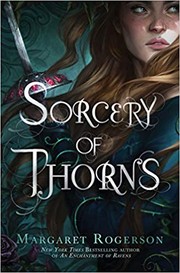
Sorcery of Thorns
2,926-word summary 13 min read 464 pages in the book
- First published
- 2019
- Publisher
- Margaret K. McElderry Books
- Pages
- 464
- ISBN
- 9781481497619
- Series
- Sorcery of Thorns (#1)
Reading options
What's inside (8 sections)
I came to Sorcery of Thorns because a friend left it on my kitchen table with a note that said you will like the angry library girl. She was right. Margaret Rogerson published it in 2019 with Margaret K. McElderry Books, a 464 page young adult fantasy that opens the Sorcery of Thorns series as book one. I expected light magic school fun. What I got was louder and stranger, a story about living books that bite, sorcerers who bargain years of life away, and a girl raised by librarians who has to decide which rules deserve keeping.
Elisabeth Scrivener is sixteen and certain about two things. She loves books with her whole chest. And sorcerers cannot be trusted.
She has reasons for both. She was left as a baby on the steps of Summershall, one of the Great Libraries of Austermeer, and the wardens raised her between the stacks. She learned to oil hinges, mend bindings, and speak softly around sleeping grimoires. She learned to duck when the chains rattle. Her best friend Katrien Quillworthy teases her and covers for her. Her guardian, Director Ermentrude, is stern in the way of people who care but do not say it plainly. Elisabeth spends her free hours practicing with a sword cut down for her height because she wants to swear as a warden, the armed librarians who guard books from people and people from books.
Rogerson writes Elisabeth as funny without trying too hard. She blurts things. She apologizes to books after she startles them. She has a temper, especially when someone treats a grimoire like furniture. Early on she spies on a visiting sorcerer with Katrien and crashes through a bookcase and lands in front of him. It is embarrassing and very true to who she is. She wants to be good. She also wants to be seen.
What makes her easy to root for is that her certainty cracks in useful ways. She was taught that all sorcerers are evil, full stop. The book lets her hold that belief into real situations where it stops fitting, and then it makes her sit with the discomfort instead of handing her a quick fix.
The Great Libraries and the people who guard them
Austermeer runs on a simple bargain. Centuries ago, sorcery nearly tore the country apart. Now six Great Libraries hold almost every grimoire under lock, chain, and warden watch. Wardens train to fight the books if they turn. Librarians catalog and copy and repair. The Magisterium governs sorcerers from Brassbridge, the capital. Ordinary people are told the system keeps them safe, and for the most part they believe it.
Summershall is the warmest of these places, at least in Elisabeth's eyes. It smells of paper dust and lamp oil. Apprentices sleep in narrow beds and wake to bells. There are vaults below for the dangerous texts, reading rooms above for approved study, and iron everywhere. Iron matters. It holds magic down the way a lid holds down a pot.
The wardens interest me most. They carry swords and greatkeys, and they swear to protect knowledge even at cost to themselves. Director Ermentrude embodies that older code. Mistress Wick at the Royal Library is pricklier, a career cataloger who trusts procedure. Director Hyde at Harrows, the fortress library in the north, is colder still, a man who follows orders because orders feel safer than questions. Rogerson does not paint them as villains. She paints them as tired people inside a rigid institution, which turns out to matter a lot when that institution starts failing.
Because the libraries are also a kind of prison. Grimoires are not allowed to leave. Apprentices are not allowed to ask certain questions. Sorcerers are not allowed inside without escort. Everyone accepts these limits as normal until someone starts breaking them on purpose.
One small criticism here. The opening chapters spend a lot of time explaining ranks and rules, warden versus librarian versus Magister versus Chancellor, and I had to reread two passages to keep the hierarchy straight. It pays off later. Still, the first sixty pages feel heavier than the rest.
Grimoires that whisper and the monsters they become
The magic system is the best part, and it is simple to picture. A grimoire is a book of spells that has soaked up enough magic to wake. It whispers on its shelf. It rattles its chain when it dreams. Treated with respect, it stays a book. Hurt it, read from it without protection, or leave it to rot, and it turns into a Malefict, a monster of ink and leather and teeth that bleeds black and hunts by hunger.
Low class texts become small horrors. High class texts become catastrophes. The Book of Eyes, locked deep in Summershall, is one of the worst. The Codex Daemonicus is worse in a different way, clever rather than loud. The Chronicles of the Dead, kept at Harrows, deals with death magic and is kept apart for good reason.
Rogerson loves libraries, and it shows in the physical details. Pages breathe. Bindings sweat. A grimoire that likes you might lean toward your hand. One that does not might snap at your fingers. Elisabeth can hear them more clearly than most people, though she does not understand why at first. She calms a restless text by talking to it the way you would talk to a spooked horse. She notices when a shelf sounds wrong.
Then sabotage hits Summershall in the night. An explosion in the vaults. The Director dead. The Book of Eyes loose and killing. Elisabeth grabs the Director's sword, Demonslayer, and does the brave thing she always imagined, except it is messy and terrifying and leaves her covered in ink and blood. By morning the Magisterium treats her as a suspect instead of a hero. Someone planned it that way.
This stretch moves fast. Doors slam. Bells ring. A monster made from a beloved object stalks people Elisabeth grew up with. I read these pages standing in my kitchen because I did not want to sit down. If you love books as objects, this section will get under your skin. It asks what we owe the things we keep.
Nathaniel Thorn and the demon who answers the door
Enter Nathaniel Thorn, eighteen, Magister, heir to a disgraced house, and completely annoying in the way only a clever teenager with power can be.
He arrives at Summershall in a thorn carved coach with a pale servant who never seems to blink. He is dramatic. He poses. He says grand things and then ruins them with a joke. Elisabeth decides at once that she hates him, which is fair, since she has been taught sorcerers steal life and lie for sport, and since he acts like the library is a curiosity shop built for his amusement.
The Magisterium puts Elisabeth in his custody for the trip to Brassbridge to answer questions. She has no better option. The road takes them through the Blackwald, and that journey is where the book shifts from mystery to something warmer and more tangled.
Nathaniel is not what the stories promised. Yes, he bargained with a demon for power. Yes, he can call green fire and shape it into a whip and raise storms when he loses control of his temper. But he is also lonely, grieving his family, and tired of being the Thorn boy everyone whispers about. His ancestor Balthasar Thorn did terrible things. Nathaniel has spent his short life trying not to repeat them while still using the power that name gives him. He flirts with danger because he feels he has already been judged.
Silas is Nathaniel's demonic servant, tall and white haired and perfect mannered, the kind of person who can serve tea during an argument and make the argument feel shabby. He drives the coach. He cleans boots that do not need cleaning. He also turns into a white cat when it suits him, which delights Elisabeth even as it unnerves her. In Austermeer, sorcerers gain power by binding demons and paying with years of their own lives. Nathaniel bound Silas when he was twelve, after his family died, because he could not stand to be alone in a large house. The price was twenty years. A silver streak in Nathaniel's hair marks the debt.
Silas steals every scene he is in. He speaks carefully, answers exactly what was asked, and lets silence do the rest. He is bound to obey, but he is old and strong and clearly thinking far more than he says. Elisabeth, who was taught demons are mindless hungers from the Otherworld, watches him fold napkins and protect Nathaniel at cost to himself and cannot make the lesson fit the person in front of her. Their slow move from suspicion to trust is handled with patience. She offers him kindness without demanding answers. He offers her protection without explaining why.
A note on the romance, since people ask. It builds slowly between Elisabeth and Nathaniel, mostly bickering and forced proximity at first. He teases. She scolds. Then the teasing thins when they see each other scared. I liked that Rogerson lets them stay young and awkward about it. My complaint is that the middle sags a little here. There are several coach and manor scenes in a row where the plot pauses so they can circle each other, and I started skimming dialogue to get back to the sabotage thread. Readers who want constant kissing will find this tame. Readers who want banter will be happy.
Chancellor Ashcroft and the pattern in the attacks
In Brassbridge, Chancellor Oberon Ashcroft receives Elisabeth with smooth public kindness. He is the head of the Magisterium, polished and reasonable, the man who gives speeches about safety. He clears her name in front of reporters. He offers to recommend her for warden training. For a few chapters I thought perhaps the real villain would be someone else, a jealous warden or a rogue sorcerer with a grudge.
Rogerson plays fair with the clues, though. More libraries are attacked after Summershall. Fettering suffers a breach. Each incident involves a high class grimoire turned loose. Each leaves deaths that look senseless until Katrien, who has a good head for maps and dates, helps Elisabeth see the order. The strikes move from library to library in a sequence that feels chosen rather than random.
Elisabeth stays as Ashcroft's guest and starts noticing wrong details. Servants who do not meet her eyes. A demon servant named Lorelei whose smile never reaches her eyes and whose glamour makes rooms feel soft at the edges. Books in Ashcroft's study that should not be there. A mirror that watches. When Elisabeth confronts him, he has her declared overwrought and sends her toward an asylum, which tells her she is close to something true. Powerful men do not bother crushing nobodies.
The truth, when it comes, reframes the whole system. The six Great Libraries were placed by Ashcroft's ancestor Cornelius as more than archives. Their positions form a vast diagram across Austermeer. Each time a high class Malefict is destroyed, it releases a pulse of demonic energy at that point. Linked together, those pulses can thin the barrier between worlds enough to call the Archon, a being of near godlike strength from the Otherworld. Ashcroft wants that summoning. He believes the Archon's power will let him remake humanity and gather all stored knowledge under his control. The sabotage, the deaths, the framing of a nobody apprentice, all of it was cover and fuel.
I guessed Ashcroft fairly early, and I suspect most readers will. He is too smooth, too interested in Elisabeth's strange affinity for books. The book knows this, I think, and spends less energy on surprise than on dread. The scary part is not who he is. It is how many decent people help him without knowing, because he speaks in the language of order and protection. Director Hyde at Harrows trusts the Chancellor's seal. Wardens follow written orders into disaster. That felt familiar in a way I did not love but could not dismiss.
Prendergast, the long dead sorcerer who wrote the Codex Daemonicus, adds the last piece. Elisabeth meets him inside the Codex itself, in a pocket space he built, and learns how the ritual was designed and what it costs. These chapters get intricate, with blood magic and borrowed years and teleportation that goes wrong, and I had to slow down to follow who paid what to whom. Keep an eye on the numbers. They matter for the ending.
How it ends and what it costs
Harrows is where everything collides. Stone fortress, snow, hostile Director, a vault holding the Chronicles of the Dead. Ashcroft arrives through possession and treachery, seizes the death book, and forces it to turn. What climbs out is huge and antlered and wrong, and it kills before anyone can form a line. Nathaniel calls lightning until his nose bleeds. Elisabeth uses Demonslayer and her greatkey and her voice, the same voice that used to soothe restless books at Summershall, now raised to rally them.
The chase back to Brassbridge is chaos in the best sense. Gargoyles wake. Statues step down from walls. Fiends pour through thinning places in the air. Wardens who spent their lives chaining books now fight beside them. Elisabeth finally understands her gift. She is not merely sensitive to grimoires. She is, in some old sense the libraries remember, one of their own, a child shaped by stored magic, able to ask rather than command. So she asks. Hundreds of books break chains and fly into battle. It is absurd and moving, and Rogerson commits to it without winking.
Ashcroft completes the summoning at the center of the pattern, in the Royal Library. What answers is the Archon, vast and burning and utterly uninterested in serving him. That is the point Rogerson has been building toward. You cannot bargain with something that large and expect to stay the master. Reality starts coming apart at the edges. Nathaniel, mortal and bleeding, cannot match it. Iron and fire are not enough.
What stops it is a choice about names and freedom. Silas has a true name, Silariathas, known only to a few. To speak a demon's true name with understanding is to loose its bonds. Elisabeth does this, not as a trick but as a release, giving up the protection his service gave them. Freed to his full strength, Silas chooses to stand between his friends and the Archon. He steps into the circle and drags the greater being back through the rift, closing it behind them. It reads as sacrifice rather than rescue, and it lands because the book spent hundreds of pages showing what their odd household meant to each of them.
The aftermath is quiet, which I appreciated. No coronation. No instant repair. Brassbridge counts its dead. Katrien transfers to the capital to train as an archivist, which suits her love of records. Elisabeth is reinstated and finally given a path toward the warden's oath she wanted since childhood, though she understands the oath differently now. Nathaniel lives, diminished in power, marked by what he paid and what was returned to him when Silas first fell. In the last pages Elisabeth lights candles and speaks a name into the quiet, hoping something kind is listening. It is hopeful without promising too much.
So who should pick this up. If you love sentient libraries, grumpy demons with perfect manners, and slow burn banter that earns its tender moments, you will have a good weekend. If you need hard military tactics or morally gray leads who stay gray, this may feel too tender for you. The prose is warm and propulsive rather than spare, and Rogerson explains magic at length when she could sometimes let image do the work. I forgave that because the images are so good, ink bleeding across pages, chains singing in the dark, a white cat watching from a windowsill while men plan murder.
For me the lasting point is small. Elisabeth starts by loving books as things to protect behind iron. She ends by loving them as voices to hear. That shift, from guarding to listening, changes how she treats sorcerers and demons too. It is a kind thought for a book full of monsters, and it stayed with me after I closed it.
Why it holds up on a second look
A week after finishing, I kept thinking about the price system. Sorcery here is not free cleverness. Every binding costs years. Every great working thins something. Nathaniel at eighteen already carries a debt that would frighten a man twice his age, and the book never lets you forget it. When he spends power to save Elisabeth, you feel the arithmetic behind the light show.
I also kept thinking about Katrien. She gets fewer pages than she deserves, but she does the unglamorous work, copying records, mapping attacks, sending letters that come back unopened, believing her friend when institutions do not. Stories like this often forget the friend who stays home and keeps the receipts. This one does not, quite.
The flaws are real but not fatal. The middle leans on travel and talk. Ashcroft's plan, once explained, has a lot of moving parts, and I could not hold all of it without flipping back. Still, the core trio carries it. Elisabeth's bluntness, Nathaniel's performance over grief, Silas and his careful loyalty, these feel specific rather than assembled.
FAQ
Is Sorcery of Thorns part of a series?
Yes. It is book one of the Sorcery of Thorns series, published in 2019 by Margaret K. McElderry Books. A shorter follow-up, Mysteries of Thorn Manor, continues Elisabeth and Nathaniel's story.
Who are Nathaniel Thorn and Silas?
Nathaniel Thorn is a young Magister sorcerer from a disgraced house. Silas is his demonic servant, bound as a child for twenty years of Nathaniel's life, who serves as driver, guard, and wary friend.
Is there romance in Sorcery of Thorns?
Yes, there is a slow burn romance between Elisabeth and Nathaniel built on bickering and shared danger. It stays fairly chaste and shares space with the library mystery and demon lore.
Similar books
More from Sorcery of Thorns first, then related titles.
An Enchantment of Ravens
Isobel, a mortal artist in the fairy town of Whimsy, paints a portrait of the autumn prince and falls in love with him, breaking the laws of her craft.
2,087-word summary · 9 min read

The Siren
Saved from a shipwreck in 1930, Kahlen becomes a siren who sings men to their deaths for the Ocean, until a boy in a college library makes her want a life she…
2,369-word summary · 11 min read

The Rose & the Dagger
Shahrzad is pulled from her Caliph husband and left in a desert camp of rebels, needing to break his curse and end a war before it ends her.
2,520-word summary · 11 min read

We Hunt the Flame
In a fractured Arabia-inspired world, a disguised huntress and a prince-assassin race to find a magic-restoring book and confront an ancient evil.
2,195-word summary · 10 min read

Blue Moon
Ever Bloom tries to save her immortal boyfriend, Damen, from a mysterious illness while a new student named Roman quietly takes control of her school and her…
1,998-word summary · 9 min read

The Indigo Spell
Sydney Sage hunts an aging witch, learns forbidden magic, and finally admits she loves Adrian, while the Alchemist tattoo on her cheek may be controlling her.
2,604-word summary · 12 min read

A Winter's Promise
Ophelia reads objects and is sent to marry Thorn on a cold ark.
2,502-word summary · 11 min read

The Golden Lily
Sydney Sage guards Jill at Amberwood Prep in Palm Springs, studies forbidden magic, favors Adrian over Brayden, and faces Alchemist custody in this second…
2,988-word summary · 13 min read
Daughter of No Worlds
A former slave with rare magic hires exiled warrior Max to train her for a daring rescue, sparking slow burn love and wider war in this big 520-page fantasy…
2,529-word summary · 11 min read
Strange the Dreamer
Orphan librarian Lazlo Strange joins a quest to the lost city of Weep, where blue-skinned godspawn haunt dreams.
2,221-word summary · 10 min read
Blood & Honey
Married witch Lou and hunter Reid flee church and coven while dark magic tempts Lou to save them.
2,280-word summary · 10 min read

The Young Elites
Adelina survives fever and execution to join a secret group of gifted malfettos plotting against the queen of Kenettra.
3,310-word summary · 15 min read
The Reckoning
Twin heirs survive trials and hazing at Zodiac Academy while the heirs start to split.
1,984-word summary · 9 min read
Burned
Zoey's soul hides in the Otherworld while Stark must die to fetch her and Stevie Rae burns secrets.
2,074-word summary · 9 min read

Poison Study
Sentenced to die, Yelena becomes the Commander's poison taster and learns survival in Ixia has a daily price.
2,501-word summary · 11 min read
To Kill a Kingdom
A siren princess turned human must steal a siren-hunting prince's heart to win back the sea.
2,248-word summary · 10 min read
The Shadows Between Us
Alessandra plans to woo the Shadow King, marry him, and kill him for his throne, then finds someone else wants him dead first.
2,571-word summary · 11 min read

Fire
A human monster who reads minds is pulled into war in the Dells and must decide how to use her power.
2,727-word summary · 12 min read
A Curse for True Love
Evangeline wakes married with no memory of Jacks while Apollo and Jacks hunt.
2,287-word summary · 10 min read
Finale
Sisters face waking Fates with debts due, loving princes, and choices that break immortal math.
1,995-word summary · 9 min read
The Ballad of Never After
Evangeline hunts four missing Arch stones with Jacks to free a cursed Apollo and learns what his rescue will cost.
3,690-word summary · 16 min read
Legendary
Tella enters a new Caraval in Valenda to pay a debt with Legend's name, while curses and waking Fates raise the cost.
2,886-word summary · 13 min read
Carry On
Simon Snow returns to Watford for his last year as a failing Chosen One, with his roommate Baz missing and the Humdrum wearing his face.
2,662-word summary · 12 min read
Once Upon a Broken Heart
Evangeline trades three kisses with the Prince of Hearts to stop a wedding and dooms herself instead.
2,839-word summary · 13 min read
Graceling
Katsa, Graced with killing, breaks from her uncle's use of her and follows a kidnapped prince toward a hidden king.
2,517-word summary · 11 min read
Siege and Storm
Alina hunts a second amplifier with Mal while the Darkling returns and Sturmhond offers a cunning alliance.
2,122-word summary · 9 min read
Caraval
Sisters Scarlett and Tella enter the game Caraval to escape a cruel father, where truth and show blur.
2,033-word summary · 9 min read
Shadow and Bone
Orphan Alina Starkov learns she is a Sun Summoner who may destroy the Shadow Fold, if the Darkling lets her.
2,284-word summary · 10 min read
Throne of Glass
Throne of Glass book 1 retold: Celaena out of Endovier, the contest, Dorian, Chaol, and the castle tests.
1,926-word summary · 9 min read
Crown of Midnight
Crown of Midnight, the second Throne of Glass book, follows Celaena as the King's Champion, a faked death, Nehemia's murder, and her return to Endovier.
2,255-word summary · 10 min read