

The Rose & the Dagger
2,520-word summary 11 min read 448 pages in the book
- First published
- 2016
- Publisher
- Penguin Books
- Pages
- 448
- ISBN
- 9780147513861
- Series
- The Wrath and the Dawn (#2)
Reading options
What's inside (9 sections)
I picked up The Rose & the Dagger the way you pick up a sequel you have already spoiled yourself about, mostly to see whether it can do what the first book did. I had just finished The Wrath and the Dawn and liked the parts of it that were about two people talking in a dark room. I did not expect much from the second volume, because the two people are not in the same place for most of it. I was right about the shape of the book and wrong about the prose, which is lush and strange and often better than it has any right to be. What I got was a slow, steamy, sometimes slack story that ends in a war and then hands that war to three women who finish it without asking permission. I keep thinking about it, which is not something I can say for every sequel I finish.
The Rose & the Dagger was first published in the United States on 26 April 2016 by G.P. Putnam's Sons Books for Young Readers. The edition I read is the 2017 Penguin paperback, which runs 448 pages and carries the ISBN 9780147513861. It is the second and final book in the Wrath and the Dawn series, following The Wrath and the Dawn. Ahdieh had planned a trilogy and her publisher talked her into two books instead, which is why this one has a curse, a war, a kidnapping, a siege and a new magic system all to carry.
After the storm
The book opens in the wreckage. Shahrzad's father, Jahandar, the magus whose book of spells has been the source of every rumor in the palace, has used it to raise a storm over the city of Rey as a diversion. It worked too well. The storm burned a good part of the capital, and when it is over Shahrzad is sent out of the city for her own safety, with her sister Irsa, while their father is left behind in a kind of trance, his body wrecked by the power he asked for. The two girls end up in a desert camp belonging to the Badawi, where the army of Tariq has been gathering against Khalid.
Jalal, the captain of the guard, is the one who sends her away. He meets the rebels in the stable, tells them to take her and go, and asks Tariq never to let her come back. That is the last time the two lovers are close to each other. In The Wrath and the Dawn she told stories to a boy who was killing her, and the telling bought them both time. Here she is in a tent in the desert, telling no stories to nobody, and the man she loves is in a wrecked city across a hundred miles of sand rebuilding what her father broke.
The set-up is brutal in the way these books are brutal. Shahrzad went with the rebels hoping to talk them out of the war, and she is never sure that was the right calculation. Every ally around her treats her as a traitor or a spy. The rebels want the Caliph dead. Her father, who is her family's shame and her only living source of magic, cannot be told anything. The reader watches her invent a way to survive a camp full of armed men who think she is sleeping with the enemy.
A camp full of enemies
Tariq is not the same boy she remembered. He has spent years gathering fighters for a rebellion and he has stopped listening to reasons. His uncle Reza, who is also the father of Shahrzad's dead friend Shiva, has quietly taken charge of that army, and Reza is not above dealing with the Sultan of Parthia behind his nephew's back. Tariq's closest friend Rahim is loyal, warm and honest, and the book's most painful death belongs to him rather than to anyone with a grudge.
Omar al-Sadiq is the sheikh of the Badawi, a man with eyes in the desert and a talent for seeing everything that is happening that everyone else would rather ignore. His wife Aisha is the one who warns him about the assassins moving through the camp. Irsa, Shahrzad's sister, has grown up in the background of the first book and now steps forward as a person, with her own fear and her own stubbornness. Watching the two sisters relearn each other is one of the better things here, and the moment when Irsa demands the truth as the price of her help is worth the whole setup.
There are other lives in the camp. Shahrzad's old servant Despina is not in Rey, which turns out to matter enormously. A mercenary tries to kill Shahrzad almost as soon as she arrives and gets close to Irsa, and nobody in the tent is sorry. An assassin belonging to the Fida'i moves through the camp with a scarab branded on his forearm, and the reader learns to be careful around him.
The book that holds the curse
The curse itself comes from the first book, and it is worth stating plainly because the second book changes what it means. Khalid's first wife killed herself. Her father blamed Khalid and laid a curse on him: take a bride and kill her at dawn, one hundred times over, or lose the city and the kingdom. That is the bargain Khalid has been keeping, and it is why his counselors say the brides are necessary and his own letters to the families of the dead ask forgiveness for a thing he could not stop doing.
In The Rose & the Dagger the shape of the curse changes, and that is the book's central reveal. Shahrzad goes looking for help and ends up at the Fire Temple, where Musa Zaragoza, the tutor who once knew Khalid as a boy, introduces her to Artan, a young man whose ancestor wrote the very book that is wrecking everything, and who rides a winged serpent. Artan's aunt is a sorceress called Isuke, and she lives in a fortress in the mountains. She tells them what nobody in Rey would say out loud: the curse is not in Khalid's blood, it is in the book. The manuscript Jahandar has spent years translating is an old and dark thing, and it holds the binding that has been killing brides. Destroy the book and the curse dies with it.
That is the twist I remember, and it works on two levels. It gives Shahrzad a goal she can act on, and it puts her father's life in the middle of it, because the book is his, and taking it from him means taking from the man who pulled her out of a burning city. The magic also gets bigger here in a way the first book never managed. Shahrzad can fly the carpet. She can do things to other people's magic that other people's magic does back. Isuke puts her in a trance and makes her walk her own memories. And when Khalid finally takes the book out into the desert and burns it, the pages make sounds that upset him with everything he has ever been, and he has to keep going anyway.
The arrow
Tariq shoots an arrow at Khalid in the dark, and Shahrzad steps into it. The shaft buries itself in her back and the scene that follows is ugly in the way this book is ugly at its best, with Khalid nearly killing Tariq while Irsa pulls him off and the two of them argue over whether she should have done what she did.
What I liked about this stretch is that the two men finally talk. Tariq asks Khalid why he killed Shiva, and Khalid gives him the truth about the curse. The grudge that has been holding half the book upright simply stops being true, and the reconciliation that follows is not a hug. It is two men in the desert with a bow and three arrows and an agreement not to shoot.
Parthia
The Sultan of Parthia, Khalid's uncle Salim, has been waiting for exactly this kind of damage. He moves on Khorasan while the capital smolders, and Reza, Tariq's uncle, opens the way for him by handing Shahrzad over. She wakes up in a palace in Parthia, a prisoner of the man who wants to unmake her husband.
The best twist in the book happens in that palace. The woman who appears at the Sultan's table, the girl he calls his daughter, is Despina, the handmaid who has been Shahrzad's closest companion since the first page of the first book. She is the Sultan's illegitimate child, bought and placed in Rey's palace years ago to spy for him. Shahrzad will not believe it, which is fair. Despina tells her the whole story, including that she came to prefer Rey, and that she was trying to help. The Sultan's acknowledged daughter, Yasmine, turns on her father as well, and between the two daughters and the stolen carpet, the Sultan loses his own war. Khalid, with Tariq and the Badawi at his back, besieges Amardha, and the Sultan ends up stripped of his throne, with his daughter ruling Parthia in his place.
Rahim dies in the fighting. Irsa grieves, and the reader grieves with her, because that romance was the warmest thing in the book. Vikram, the Rajput with the bad shoulder, survives to walk away with Despina and start a life somewhere else. The war does not end with a duel between two men. It ends with three women, and the Caliph, who was supposed to be the story, is not the one who settles it.
Breaking the curse
The climax is a family scene that turns into a catastrophe. Jahandar asks about his book, hears that Khalid burned it, and grabs his daughter's dagger. He slashes Khalid across the face and into the heart, and the Caliph of Khorasan goes down in front of the people he has just saved. Then Jahandar sees his daughter screaming, and he breaks. He touches Khalid's blood and spends the last of his magic taking his own death in place of his daughter's husband.
Reza dies too, killed by the Fida'i messenger who rides in to say the Sultan has surrendered, the same men he had paid to kill Shahrzad. It is an ending that has been waiting for him since he decided other people's daughters were acceptable losses.
The epilogue jumps five years. Shahrzad and Khalid are alive, and they have a son named Haroun. Irsa is studying medicinal herbs alongside Artan and may travel to Amardha, apparently to see the new Sultana. Shahrzad sits down with her boy and starts telling him a story about a magic carpet, and the book closes where the whole series began, on a voice.
What works and what drags
The prose is the first thing that works, and it works almost too well. Ahdieh writes heat and texture: tile and lamplight, cumin and pomegranate, a courtyard after rain. The palace and the desert camp are both so tangible that I could have walked through either. Her women are the best characters in the series. Shahrzad, Irsa, Despina and Yasmine each get their own kind of spine, and the book is at its best when it lets them use it.
The complaint I have is about length. This is a lush book, and it is also a very slow one, and the second half spends a lot of pages on a war whose outcome readers can guess early. The curse that drove the first book is dispatched in a handful of pages with very little ceremony, and one reader I found online said plainly that the resolution got no spotlight at all, which is close to how I felt. The lovers are also apart for so much of it that the book spends a long stretch on two people missing each other. The Romantic Times review of the series made the same point about the distance between them, and the Horn Book guide review noted that this conclusion is more about war than about romance. The storytelling that made the first volume sing is also the best writing in the whole series, and it is the thing this book hoards. A few short tales get told, and then the epilogue gives us one last magic carpet story as a wink. If the series has one great gift, it is Shahrzad's voice, and this volume is the one that keeps it locked away.
I also found the mixing of registers uncomfortable. Ahdieh writes the physical relationship between Shahrzad and Khalid with real heat, more than the young adult shelf usually allows, lingering on undressing and touch. That is fine on its own. What sits badly is the setting. The same book contains sword fights with a great deal of blood, a young man stabbed to death, an assault that is barely averted, a drugged and kidnapped heroine, and a father who murders his son-in-law in front of his daughter. Ahdieh puts the tenderness and the bloodshed side by side and asks the reader to hold both without comment. I could not always.
The epilogue is the weakest part. A reviewer I trust called it soppy, and I agree. After a book that spends its energy on a woman learning to rule, the last page has Shahrzad discussing her sister's marriage. It is a tidy bow on a story that deserved a less neat one.
Who is this for. Read it if you liked the first book's atmosphere, its women, and its willingness to be sensual. Read it if you want a magic carpet, a winged serpent, a sorceress in a mountain fortress and a war that three women quietly win. It is a fair choice for older teens and for adults who like romantic fantasy with a political spine. Skip it if you want the puzzle of The Wrath and the Dawn, because this one is mostly atmosphere and consequence, and if you are sensitive to graphic violence, look at a content guide first.
I finished it late and then went back to the first book, which is what I do with a duology I like. The thing I keep coming back to is Shahrzad learning to fly a carpet and then flying one into the middle of a siege, which is a ridiculous sentence that the book earns. The second book is not the equal of the first. It is slower, its villain is a bored old man with a grudge, and its last fifty pages are a family argument. But the two sisters on the road, the boy with the winged serpent, and a man in the desert burning a book that had been killing women for years are images I will keep. Shahrzad tells stories. In this one she mostly does not. The epilogue gives her back her voice and I am glad of it.
FAQ
Do I need to read The Wrath and the Dawn first?
Yes. The Rose & the Dagger opens with the city of Rey in ruins and the curse on Khalid already explained, so none of the setup from the first book is repeated.
Who are the main characters in The Rose & the Dagger?
Shahrzad, her husband Khalid, her sister Irsa, her father the magus Jahandar, and her childhood love Tariq. New faces include the sorceress Isuke, the boy Artan, and the Sultan of Parthia.
Is The Rose & the Dagger suitable for young adult readers?
It is sold as young adult fantasy romance, and the publisher lists it for readers aged twelve and up. It has sword fights with blood, a death by stabbing, a kidnapping, a near assault that is averted, and sex that focuses on kissing and touching.
Similar books
More from The Wrath and the Dawn first, then related titles.
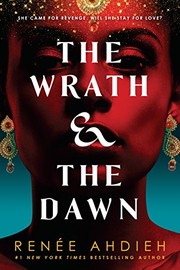
The Wrath and the Dawn
Shahrzad marries a king who executes each bride at dawn, hoping to stay alive through stories. A lush Arabian Nights retelling about grief, trust, and palace…
3,568-word summary · 16 min read

Vow of Thieves
Kazi and Jase return to Tor's Watch to find it occupied, and their marriage is tested by captivity, betrayal, and a war for the town of Hell's Mouth.
2,059-word summary · 9 min read

Lioness Rampant
Alanna searches for the Dominion Jewel with the Shang Dragon, then returns to Tortall to face Duke Roger at Jonathan's coronation.
2,478-word summary · 11 min read

The Queen of the Tearling
Nineteen-year-old Kelsea leaves the woods to take her throne, ends a shipment of human captives, and draws the Red Queen's revenge.
2,357-word summary · 10 min read

We Hunt the Flame
In a fractured Arabia-inspired world, a disguised huntress and a prince-assassin race to find a magic-restoring book and confront an ancient evil.
2,195-word summary · 10 min read
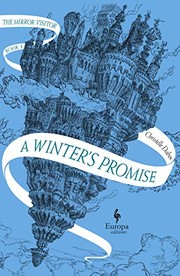
A Winter's Promise
Ophelia reads objects and is sent to marry Thorn on a cold ark.
2,502-word summary · 11 min read
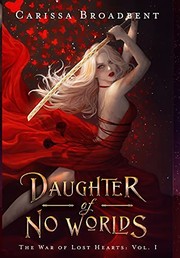
Daughter of No Worlds
A former slave with rare magic hires exiled warrior Max to train her for a daring rescue, sparking slow burn love and wider war in this big 520-page fantasy…
2,529-word summary · 11 min read
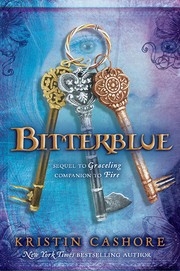
Bitterblue
Eighteen-year-old Queen Bitterblue sneaks out to learn why Monsea still suffers after Leck, facing court lies, ciphers, and trials in Cashore's rich third…
2,686-word summary · 12 min read
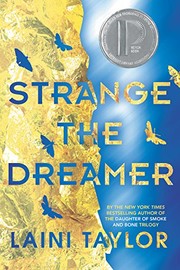
Strange the Dreamer
Orphan librarian Lazlo Strange joins a quest to the lost city of Weep, where blue-skinned godspawn haunt dreams.
2,221-word summary · 10 min read
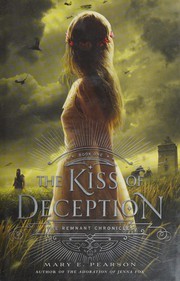
The Kiss of Deception
Princess Lia flees an arranged marriage and hides in a village, unaware one stranger is a prince and the other an assassin.
2,196-word summary · 10 min read
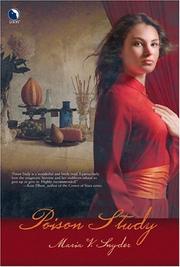
Poison Study
Sentenced to die, Yelena becomes the Commander's poison taster and learns survival in Ixia has a daily price.
2,501-word summary · 11 min read
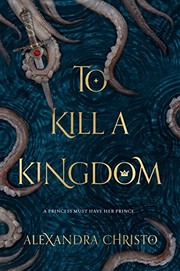
To Kill a Kingdom
A siren princess turned human must steal a siren-hunting prince's heart to win back the sea.
2,248-word summary · 10 min read
The Shadows Between Us
Alessandra plans to woo the Shadow King, marry him, and kill him for his throne, then finds someone else wants him dead first.
2,571-word summary · 11 min read

Fire
A human monster who reads minds is pulled into war in the Dells and must decide how to use her power.
2,727-word summary · 12 min read
Finale
Sisters face waking Fates with debts due, loving princes, and choices that break immortal math.
1,995-word summary · 9 min read
Graceling
Katsa, Graced with killing, breaks from her uncle's use of her and follows a kidnapped prince toward a hidden king.
2,517-word summary · 11 min read

Inkdeath
The final Inkworld novel sends Mo into the land of the dead, leaves Meggie choosing between two boys, and ends the Adderhead's immortality with three written…
2,062-word summary · 9 min read

Archenemies
Nova steals for the Anarchists while Adrian hides his Sentinel identity, and a serum that erases prodigy powers puts them both at risk.
2,485-word summary · 11 min read

The Siren
Saved from a shipwreck in 1930, Kahlen becomes a siren who sings men to their deaths for the Ocean, until a boy in a college library makes her want a life she…
2,369-word summary · 11 min read
Cruel Beauty
A girl raised to kill the demon prince who rules her cursed land instead falls in love with him, in a retelling that mixes Beauty and the Beast with Bluebeard…
2,669-word summary · 12 min read

The Golem's Eye
Two years after The Amulet of Samarkand, Nathaniel is a rising bureaucrat, Bartimaeus is his unwilling servant again, and something made of clay is tearing…
2,299-word summary · 10 min read

Fool's Errand
FitzChivalry Farseer has lived in exile for fifteen years. When Prince Dutiful vanishes before his betrothal, Fitz returns to Buckkeep to find him, with a wolf…
2,606-word summary · 12 min read
The Magician
Sophie and Josh flee to Paris with Nicholas Flamel, where John Dee, Machiavelli, and an awakened god close in on the missing pages of the Codex.
2,162-word summary · 10 min read
Stars Above: A Lunar Chronicles Collection
Nine Lunar Chronicles stories fill in the histories of Cinder, Wolf, Thorne, Cress, Winter, and Jacin, and end with a wedding after the war.
2,230-word summary · 10 min read

Lore
Lore Perseous, the last of a hunted bloodline, is pulled back into the Agon when a wounded Athena offers her revenge against the god who killed her family.
2,188-word summary · 10 min read
In the Hand of the Goddess
Alanna, still disguised as a boy, survives war, court plots, and a death duel as the Goddess's chosen warrior in the second Song of the Lioness book.
2,018-word summary · 9 min read

Blue Moon
Ever Bloom tries to save her immortal boyfriend, Damen, from a mysterious illness while a new student named Roman quietly takes control of her school and her…
1,998-word summary · 9 min read
An Enchantment of Ravens
Isobel, a mortal artist in the fairy town of Whimsy, paints a portrait of the autumn prince and falls in love with him, breaking the laws of her craft.
2,087-word summary · 9 min read
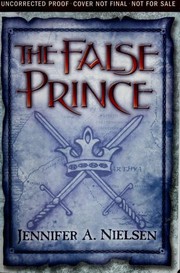
The False Prince
A nobleman buys four orphans and tells them only one will survive to impersonate the missing prince. The narrator, a defiant thief named Sage, has other plans.
2,044-word summary · 9 min read
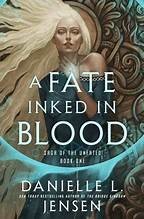
A Fate Inked in Blood
In Norse-inspired Skaland, a fish gutter hiding a goddess's blood is claimed by a jarl, bound by oath, and guarded by the son she cannot want.
1,971-word summary · 9 min read