

The Golem's Eye
2,299-word summary 10 min read 576 pages in the book
- First published
- 2004
- Publisher
- Miramax Books
- Pages
- 576
- ISBN
- 9781423101154
- Series
- Bartimaeus (#2)
Reading options
What's inside (10 sections)
- A boy with a new name
- Kitty Jones and the fire that misses her
- Queezle, the museum, and a word for it
- Gladstone's tomb, and the afrit inside it
- Prague, and the man who made it
- The trap, the arrest, and the Prime Minister
- The staff, the lie, and what it costs
- Middle book problems, and what it gets right
- Key takeaways
- FAQ
The first book ends with a boy promising a djinn that he will never summon him again. The second book begins two years later with the boy summoning him again. That is the joke, and it is also the whole moral problem of the series in one move. Nathaniel's word means nothing the moment it becomes inconvenient, and Bartimaeus, who has been alive for thousands of years, is not surprised.
This is the second of the Bartimaeus books, published in 2004, 576 pages, Miramax in the United States. It was a New York Times bestseller and an ALA Best Book for Young Adults. The first book was a revenge story with a boy and a demon in a London house. This one is bigger and more institutional: a Ministry, a Resistance, a police force, a Prime Minister, and a clay thing walking down a street at night.
I came to it sideways, having read the first book years earlier and remembered mainly the djinn's voice. What surprised me is how much of this one is about paperwork. Nathaniel's job is to write reports, attend meetings, and guess which superior is about to ruin him. The magic is impressive, but the office is where the book lives.
A boy with a new name
Nathaniel is fourteen now and calls himself John Mandrake. He works in the Ministry of Internal Affairs, hunting the anti-magician Resistance, wearing good clothes and speaking in the careful, threatening idiom of a junior official. He is good at it in the way that clever, frightened people are good at jobs that reward cruelty.
His birth name is the one thing Bartimaeus could use against him, and the two of them made a deal at the end of the first book: Nathaniel would never summon him again, and Bartimaeus would never speak the name. Now the Ministry wants results, and Nathaniel needs a spirit he can trust, which is a funny way to describe Bartimaeus. So he breaks the deal.
Bartimaeus is furious, theatrically so, and agrees to six weeks of service on one condition: he is kept out of the war in North America. It is a mercenary arrangement between two beings who dislike each other and understand each other completely. Stroud makes the summoning feel like a workplace grievance, which is the correct register. The djinn complains about the contract, the hours, the indignity, and then does the job because the alternative is worse.
The Ministry is one of Stroud's best inventions. It is a government of magicians, which means a government of people who have all made the same bargain: power now, in exchange for the permanent management of things that hate them. The corridors are full of rivals who smile at each other and keep files. Nathaniel is good at this world and also obviously a child in it, dressing the part, repeating the phrases, waiting to be found out. His flat is expensive and empty. He has no friends his own age, and the closest thing he has to a confidant is a spirit who would happily watch him drown.
Kitty Jones and the fire that misses her
Kitty Jones and her friend Jakob Hyrnek are attacked by a magician. Jakob is badly burned. Kitty is untouched. This is not luck. She has a natural resilience to magic, which the book treats as a rare and dangerous gift, and which the magicians would very much like to study.
She goes looking for justice and finds the usual wall. A commoner's complaint against a magician is not a case; it is an inconvenience. Then Mr. Pennyfeather approaches her. His wife was killed after she rejected a magician's advances, and he has turned his grief into recruitment. Kitty joins the Resistance and starts doing small jobs: thefts, vandalism, the kind of damage that annoys the government without threatening it.
The Resistance is not glamorous. It is a handful of amateurs with bad equipment and a cause, and Stroud is honest about how much of it is theater. Kitty is the most competent person in the room, which is why she is the one who keeps getting sent out at night.
Jakob's burns matter beyond the plot. He is disfigured, and the book does not let you forget it, because Kitty does not let herself forget it. Her anger is not abstract. It has a face and a scar and a friend who will never be the same. When Pennyfeather talks about the cause, Kitty is thinking about Jakob, and the gap between those two things is where her politics begin.
Then comes the night she sees the thing. An enormous creature, roughly human in shape and wrong in every proportion, marching down a street of magician-owned businesses. It leaves wreckage behind and dead Night Police officers. She gets away with her life and a piece of information nobody wants.
The police blame the Resistance. Of course they do. A rogue monster implies that the magicians cannot control their own magic, which is a much worse problem for the government than a few commoner bombers. So the city gets a crackdown: curfews, arrests, raids, and a public story that everyone in power repeats until it becomes policy.
This is the best political writing in the book. Stroud understands that institutions protect themselves first and investigate second, and that the people who suffer from a cover-up are rarely the people who ordered it.
Queezle, the museum, and a word for it
Bartimaeus investigates, and along the way he meets Queezle, a spirit he has known for a long time. She has learned something terrible about the creature: it can destroy spirits. Not banish them back to the Other Place, which is the ordinary risk of being a djinn on earth. Destroy them. Permanently.
Then the creature reappears and kills her. It is a short scene and it lands hard, because Stroud has spent just enough time making Queezle a person. Bartimaeus fights the thing at the British Museum, gets knocked out, and it escapes.
At a meeting of high-ranking magicians, Bartimaeus identifies the creature as a golem. Henry Duvall, chief of the Night Police, insists the Resistance is responsible. He is not interested in the evidence. He is interested in the Prime Minister giving him more power, and a golem is a very good argument for more power.
A golem is frightening because somebody made it. A person wrote the instructions, a person chose the target, and the thing itself has no malice at all. It walks where it is pointed. That means the monster in the street is also a piece of evidence, and the people with the most to lose from reading it correctly are the ones in charge of the investigation.
Gladstone's tomb, and the afrit inside it
Pennyfeather decides the Resistance needs a big score, so he organizes a raid on William Gladstone's tomb. The target is an artifact, Gladstone's staff. What they get instead is Honorius, a powerful afrit trapped in Gladstone's bones, and completely mad.
Honorius kills the grave robbers. Kitty escapes with the staff, and Honorius, who now has a focus and a grievance, vows to hunt her. This is what happens when amateurs handle a dead magician's leftovers: they do not steal a weapon, they open a door.
The tomb sequence is the best pure horror in the book. Stroud is good at ancient malice, at the idea that the great magicians of the past were not wise elders but dangerous people who arranged to remain dangerous after death.
It also changes Kitty's status. She goes in as a thief and comes out carrying a dead man's staff, with an afrit who has promised to find her. The staff turns out to be less a prize than a leash, and she spends the rest of the book attached to it.
Prague, and the man who made it
Nathaniel and Bartimaeus are sent to Prague, where the last known golem appeared a century earlier. They find Kavka, the magician who created it, with help from a high-ranking mole inside the British government.
Kavka is a broken man with one point of pressure: his children are in a British prison. Nathaniel promises to free them if Kavka identifies the traitor. It is a promise made by a boy who has already broken one promise to a spirit, and Stroud lets you feel the weight of that.
Then Verroq arrives, a bearded mercenary demanding the animating parchment. In the struggle the parchment is destroyed. No proof, no identification, nothing to bring home. Nathaniel's trip ends with a promise he may not be able to keep and a case he cannot close.
The Prague section is where the book sags. It is atmospheric and it matters to the plot, but it arrives at the point when the London story is at its most urgent, and the detour costs momentum. Stroud is setting up the third book, and you can feel the machinery.
It also contains the book's clearest moral test. Nathaniel could walk away from Kavka. He could report the failure and let the man rot. Instead he makes a promise he is not sure he can keep, which is either a flicker of conscience or a habit of buying time. Stroud leaves it ambiguous, and that ambiguity is more interesting than a clean redemption would have been.
The trap, the arrest, and the Prime Minister
Back in London, Nathaniel is panicking about Honorius. He discovers Kitty's involvement and she escapes. Bartimaeus forces Honorius into the Thames, which appears to finish him. Then Quentin Makepeace meets Nathaniel secretly with information about the Resistance, which is convenient in a way Nathaniel does not examine closely enough.
Bartimaeus captures Jakob to lure Kitty into a trap. The Night Police werewolves attack her. Nathaniel, who is not yet entirely lost, sends Bartimaeus to rescue her, and for that he is arrested.
His superiors abandon him immediately. This is the moment the book has been building toward: Nathaniel has spent two years being useful to an institution, and the institution discards him the first time he is a liability. He appeals to the Prime Minister, Rupert Devereaux, not out of idealism but because he has no other move left.
The staff, the lie, and what it costs
While they hide, Bartimaeus and Kitty talk. He appears in the form of Ptolemy, his old master, and explains the rise and fall of magical empires, the way each one enslaves spirits and commoners and then collapses. Kitty sees the parallel. The magicians treat commoners the way they treat djinn: as resources with no standing, whose labor makes the whole thing run.
Nathaniel is released and brings Jakob to Kitty. He offers her freedom in exchange for Gladstone's staff. Honorius reappears but is distracted by the golem. Honorius is destroyed. Nathaniel unlocks the staff's power and is knocked unconscious.
Kitty is the one who saves the city. She risks her life to pull the animating parchment out of the golem, which immobilizes it. Bartimaeus lets her and Jakob escape, then tells Nathaniel she was incinerated. It is a lie, and it is the only generous act in the book. It gives her a life.
It is also a judgment on Nathaniel. Bartimaeus does not lie to protect him. He lies because he knows what Nathaniel would do with the truth, which is hand her over and collect the credit. The djinn has spent the whole book watching the boy become a magician, and by the end he prefers the commoner he was ordered to catch.
The crumbling golem returns to its master: Duvall, who is arrested. Nathaniel doubts that Duvall acted alone, but he closes the case. Then, before releasing Bartimaeus, the djinn calls him John Mandrake. Nathaniel hears respect. What he is actually hearing is a spirit confirming that the boy he knew is gone.
Jakob leaves the country. Kitty stays, studying the history of magic, looking for a way to end the cycle. That is the ending Stroud chooses, and it is a better one than a victory.
Middle book problems, and what it gets right
The flaws are real. This is a middle book, and it behaves like one: it sets up a war, introduces a traitor, and then hands the actual resolution to the next volume. The Prague detour sags. Nathaniel is hard to like, deliberately so, and the book sometimes mistakes his unpleasantness for complexity. The golem plot is more interesting than its resolution, which arrives as an arrest and a closed file rather than a reckoning.
But Kitty is the moral center the series needed. Her arc, from a girl who wants justice for a burned friend to a woman who understands that the whole system is the crime, is the best thing Stroud has written. And the magic is an economy, not a spectacle. Every spell is somebody's labor, and the somebody is always a spirit who did not consent.
Bartimaeus carries the book. His voice is dry, vain, funny, and ancient, and the footnotes are still the best running joke in children's fantasy. Stroud does not overuse them here, which is wise. A little of that voice goes a long way, and the book knows it.
I came out of this one more impressed than entertained, and I do not mean that as a complaint. It is a 576-page middle volume that does the unglamorous work of making the finale mean something. The cost is a stretch in the middle where the plot waits for the next book to arrive. The reward is Kitty, and an ending that quietly closes a door on the boy the series started with.
FAQ
Do I need to read The Amulet of Samarkand first?
Yes. The Golem's Eye continues Nathaniel and Bartimaeus's story directly, and the broken promise that opens the book refers to the first novel's ending.
How old is Nathaniel in The Golem's Eye?
He is fourteen and working under the name John Mandrake at the Ministry of Internal Affairs, two years after the events of the first book.
Is The Golem's Eye the last Bartimaeus book?
No. It is the second of four, followed by Ptolemy's Gate and the prequel The Ring of Solomon.
Similar books
More from Bartimaeus first, then related titles.

The Amulet of Samarkand
Boy magician Nathaniel summons djinn Bartimaeus to steal the Amulet and stop Lovelace's coup in London.
2,350-word summary · 10 min read

Inkdeath
The final Inkworld novel sends Mo into the land of the dead, leaves Meggie choosing between two boys, and ends the Adderhead's immortality with three written…
2,062-word summary · 9 min read

Lioness Rampant
Alanna searches for the Dominion Jewel with the Shang Dragon, then returns to Tortall to face Duke Roger at Jonathan's coronation.
2,478-word summary · 11 min read

The Rose & the Dagger
Shahrzad is pulled from her Caliph husband and left in a desert camp of rebels, needing to break his curse and end a war before it ends her.
2,520-word summary · 11 min read

The Queen of the Tearling
Nineteen-year-old Kelsea leaves the woods to take her throne, ends a shipment of human captives, and draws the Red Queen's revenge.
2,357-word summary · 10 min read

We Hunt the Flame
In a fractured Arabia-inspired world, a disguised huntress and a prince-assassin race to find a magic-restoring book and confront an ancient evil.
2,195-word summary · 10 min read
The Magician
Sophie and Josh flee to Paris with Nicholas Flamel, where John Dee, Machiavelli, and an awakened god close in on the missing pages of the Codex.
2,162-word summary · 10 min read

Lore
Lore Perseous, the last of a hunted bloodline, is pulled back into the Agon when a wounded Athena offers her revenge against the god who killed her family.
2,188-word summary · 10 min read
In the Hand of the Goddess
Alanna, still disguised as a boy, survives war, court plots, and a death duel as the Goddess's chosen warrior in the second Song of the Lioness book.
2,018-word summary · 9 min read

The Bane Chronicles
Eleven stories across five centuries follow Magnus Bane from a ban in Peru to his first date with Alec in this illustrated Shadowhunter companion.
2,470-word summary · 11 min read
Furies of Calderon
Furyless Tavi defends Calderon Valley when the Marat return and lords scheme.
2,587-word summary · 11 min read
A Winter's Promise
Ophelia reads objects and is sent to marry Thorn on a cold ark.
2,502-word summary · 11 min read
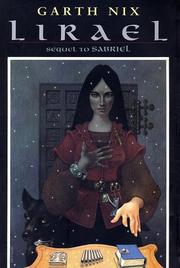
Lirael
A Sightless Clayr girl and a prince afraid of Death join the Dog and Mogget to stop necromancers from waking the Destroyer Orannis at the Red Lake while old…
2,692-word summary · 12 min read
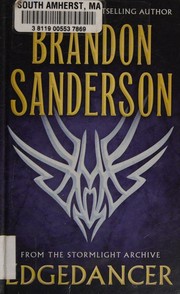
Edgedancer
Hungry street thief Lift and her vine-like friend Wyndle cross the Herald Nale in Tashikk when a child emperor shows Radiant signs and she refuses to step…
2,328-word summary · 10 min read
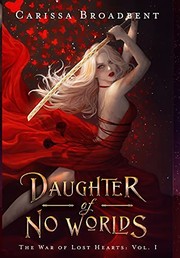
Daughter of No Worlds
A former slave with rare magic hires exiled warrior Max to train her for a daring rescue, sparking slow burn love and wider war in this big 520-page fantasy…
2,529-word summary · 11 min read
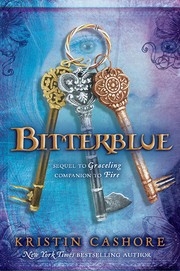
Bitterblue
Eighteen-year-old Queen Bitterblue sneaks out to learn why Monsea still suffers after Leck, facing court lies, ciphers, and trials in Cashore's rich third…
2,686-word summary · 12 min read
The Tombs of Atuan
Priestess Arha guards dark Tombs until wizard Ged comes to steal back ring.
2,043-word summary · 9 min read
Strange the Dreamer
Orphan librarian Lazlo Strange joins a quest to the lost city of Weep, where blue-skinned godspawn haunt dreams.
2,221-word summary · 10 min read
Inkspell
Meggie and Farid read themselves into the Inkworld, where Mo is wanted as the Bluejay and words can wound.
2,406-word summary · 11 min read
Alanna: The First Adventure
Twins swap roles so Alanna trains as boy page Alan for knighthood while Thom studies sorcery.
2,107-word summary · 9 min read
Abhorsen
Lirael as Abhorsen-in-Waiting must bind the Destroyer Orannis with Sam, Dog, and Mogget.
2,214-word summary · 10 min read
The Alchemyst
Twins Sophie and Josh learn their boss is Flamel as Dee steals the Codex minus two pages.
2,085-word summary · 9 min read

Poison Study
Sentenced to die, Yelena becomes the Commander's poison taster and learns survival in Ixia has a daily price.
2,501-word summary · 11 min read
To Kill a Kingdom
A siren princess turned human must steal a siren-hunting prince's heart to win back the sea.
2,248-word summary · 10 min read

Fire
A human monster who reads minds is pulled into war in the Dells and must decide how to use her power.
2,727-word summary · 12 min read

Children of Blood and Bone
White haired Zelie chases magic return with princess Amari hunted by Inan.
2,027-word summary · 9 min read
Finale
Sisters face waking Fates with debts due, loving princes, and choices that break immortal math.
1,995-word summary · 9 min read
Howl's Moving Castle
Cursed old by the Witch of the Waste, hatmaker Sophie Hatter talks her way into wizard Howl's moving castle and bargains with fire demon Calcifer to break the…
2,363-word summary · 11 min read
The Subtle Knife
Will finds a window to Cittagazze, meets Lyra, and both hunt the knife that cuts between worlds.
3,227-word summary · 14 min read
Inkheart
Bookbinder Mo reads characters alive and daughter Meggie is pulled into Capricorn's hunt for Inkheart.
2,910-word summary · 13 min read