
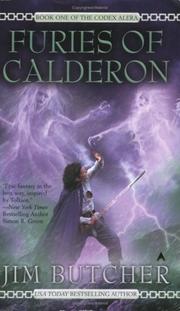
Furies of Calderon
2,587-word summary 11 min read 440 pages in the book
- First published
- 2004
- Publisher
- Ace Books
- Pages
- 440
- ISBN
- 9780441012688
- Series
- Codex Alera (#1)
Reading options
What's inside (8 sections)
I came to Furies of Calderon sideways. I had read a few Dresden Files books and liked how Jim Butcher writes a fight in close quarters, all elbows and bad decisions and last second tricks. A friend said his other series started with Roman legions plus spirit magic and a shepherd boy with no powers at all. First published in 2004 by Ace Books, about 440 pages in print, it is the first book of Codex Alera. I expected standard farm boy fantasy. What I found was stranger and more fun. The farm boy stays powerless for the whole book and still changes a battle by knowing sheep and rivers and where the wind cuts through a valley.
Alera is built like Rome dropped into a land full of spirits. Every Aleran except one can call on furies, wild spirits tied to earth and air and fire and water and wood and metal. A strong earthcrafter can shift stone and feel steps through soil. A watercrafter can heal and read feeling in a touch. A windcrafter can ride currents and carry messages fast. Firecrafters throw heat and light and fear. The great lords can do frightening things with combined crafting, lifting walls or calling storms. Society runs on this. Messages fly by wind. Crops lean on earth and water. Legions march with Knights of each element backing the line. To lack a fury here is to be deaf in a hall full of music.
A valley where everyone has a fury except one boy
Tavi is fifteen and lives at Bernardholt, a steadhold in Calderon Valley near the northern edge of Alera. The valley is broad farmland cupped by hills, dotted with holds that do not always like each other. Bernard, his uncle, holds Bernardholt with his wife Isana. Bernard is a big man, quiet, strong with earth. He can sense movement through ground and raise stone when pressed. Isana, Tavi's aunt by marriage, works water with rare skill. She can soothe wounds and calm a panicked room with a damp cloth and a steady hand.
Tavi has no fury. Nobody can explain it. In a school lesson he would be the boy left watching while others lift pebbles or call breezes. At home it means extra chores to make up for what he cannot do with crafting. He herds sheep, mends fences, runs messages between holds on foot while others send wind whispers. He is quick and observant because he has to be. He knows which ford floods after rain. He knows how sheep move when dogs press left. He knows how to stay warm with one blanket and how to talk a nervous holder into lending grain.
Butcher does a nice job making the lack feel daily rather than tragic every page. Boys mock Tavi for being furyless. A girl he likes treats him kindly and still looks past him toward stronger boys. Bernard worries in the way of a guardian who hides it with work. Isana worries openly and checks his health with watercraft that finds nothing wrong. Tavi answers by being useful. He studies the valley the way other boys study crafting forms. That choice pays off later in ways that feel earned rather than lucky.
The opening chapters move slow on purpose. Sheep get loose. A neighbor argues about grazing. Tavi races a storm home. If you want battles from page ten, you will fidget. I fidgeted a little. Then I realized Butcher was laying track. Every path Tavi runs, every gully and bridge and dense wood, gets used when people start dying. The valley is the second main character, and Butcher walks you through it before he burns parts of it.
The Cursor from the capital
The plot kicks when Tavi finds a half drowned woman in the river. Amara is a Cursor, a trained agent of First Lord Gaius Sextus, the old ruler in the capital city of Alera Imperia. Cursors carry messages and judge loyalty and sometimes kill for the Crown. Amara is young and skilled with wind, able to veil herself in air and move fast and hear at distance. She was chasing news of a plot against the Crown when she was betrayed by her own teacher, Fidelias, a senior Cursor who has turned.
She crashes into valley life with a broken cover and a desperate need to reach the nearest Legion garrison. Tavi pulls her out, hides her in a sheep wagon, lies badly to men hunting her. Bernard and Isana take her in because that is what steadholders do, then learn fast that sheltering a Cursor brings war to the door. Amara cannot call for help by wind because Fidelias reads those currents. She must move on foot through country she does not know, with a boy who knows every trail and a wounded shoulder slowing her.
Fidelias is the cold center of this thread. He taught Amara how to listen and how to lie still. Now he hunts her for the other side, working with High Lord Aquitainus Attis of Aquitaine, a powerful and popular lord who wants the throne as Gaius ages without a clear heir. Fidelias is polite and tired and ruthless. He kills without show. He uses windcraft to mimic voices and to smother sound. His presence turns travel scenes tense. Every inn might hold his men. Every wind shift might carry his listening.
What I liked here is how small the spy story stays. No grand council debate yet. Just a hurt woman, a furyless boy, an uncle with an axe and earth sense, an aunt who can ease pain but cannot mend a torn plot. Amara learns to trust Tavi because he shows up with dry clothes and a plan to cross a flooded creek using sheep ropes. Tavi learns that capital politics are not distant stories. They bleed. When Amara tells Bernard that a Marat horde is moving toward the valley with Aleran help, the book tilts from chase to siege.
The Marat return
The Marat are the people beyond the northern border. Pale skinned and white haired, they bond with beasts. One takes a bird or a horse or a great wolf as a partner for life, sharing senses and strength. They fought Alera years before in a bloody valley war remembered as the Second Calderon, where Aleran legions bled to hold the line. Since then an uneasy quiet held. Now a large horde under a war chief named Atsurak moves south again, with thousands of warriors and bonded birds darkening the sky and herds trampling grass flat.
Butcher makes them more than targets. Through Doroga, a strong Marat chief who questions Atsurak, we see trials by combat and debates about omens and honor. The Marat do not hate Alerans in a simple way. Some want land and plunder. Some want to test strength. Some follow because refusing the horde means death. Doroga is huge and canny and funny in a dry way. His talks with Bernard, half threats and half respect, were among my favorite pages. They show two leaders who would rather trade sheep than sons.
The valley is thinly held. The local Legion garrison under a young captain and a veteran centurion has too few men. The holds distrust each other. One holder hoards grain. Another refuses to send sons to the wall. Messengers sent for aid may not get through because Fidelias and his allies cut wind lanes and kill riders. Bernard calls a council at Bernardholt and gets shouting instead of a plan. Isana tries to heal old feuds with food and calm words and partly succeeds. Tavi runs between holds with warnings, counting spears and bows, noting who can shoot and who will run.
The dread builds well because Butcher shows preparation in concrete detail. Ditches dug where the ground allows. Carts chained to block a lane. Sheep moved south so they cannot be taken. Water barrels filled. Children sent to a fortified hold with old guards. Women who can craft set to healing stations. Men who cannot fight set to carry. I believed this valley could be lost. That belief made Tavi's later tricks matter. He was not saving a map. He was saving people who had just argued about fences.
A battle fought with sheep and wind
When the horde hits, Butcher lets Tavi be clever rather than strong. He cannot throw fire or lift stone. He can do what he has done since childhood. Move animals fast. Read water. Use the wind that funnels through a cut in the hills.
One sequence I will not spoil in full involves a flock turned into a weapon. Tavi and his friends drive panicked sheep across a dry riverbed at dusk to raise dust and hide movement, then use oiled wool and firecraft lent by an ally to make a line the Marat horses will not cross. Another uses a millpond dam and Isana's water sense to flood a gully at the right minute, slowing a charge long enough for Legion shields to lock. Amara, still hurt, takes to the sky in short bursts to spot and to scatter bonded birds with sudden gusts. Bernard holds a gate with earth, feeling steps through soil and dropping stone where the press is worst.
The Legion parts feel Roman in a good way. Shields overlap. Orders stay short. A veteran named Giraldi keeps his men steady with jokes and curses. Knights Aeris lift scouts for a look. Knights Terra break a wedge when it forms. Knights Ignus throw fire in controlled bursts that cost them dearly in heat and breath. Wounds are ugly. Healing by watercraft helps but leaves crafters pale and shaking. Butcher does not let magic erase cost. Every big working takes strength and leaves someone open.
Tavi moves through all this as runner and watcher and liar. He pretends to be a captain on a wall to steady recruits. He leads a Marat tracking party into boggy ground he knows from herding. He talks fast to buy minutes. He gets hurt and keeps moving because stopping means others die. None of this requires a fury. All of it requires the valley knowledge the slow opening taught. I finished these chapters admiring the design. A powerless boy in a powered world could have been a gimmick. Here it forces the book to solve fights with terrain and timing rather than bigger blasts.
There is loss. Holds burn. Good people die in mud. A brave holder who refused help early pays for pride in a way that stung me. Butcher does not shield young readers from consequence, though the tone stays adventure rather than grim. Blood is present. Cruelty is present. Despair is not allowed to sit long. Someone always finds a task for the next hour.
Lords playing a longer game
While the valley burns, the capital plot keeps humming underneath. Gaius Sextus is old and ill and immensely strong, holding rival lords in check by presence and by Cursors. Aquitaine wants his seat and has built roads and debts and loyalty among officers. Another high lord, Kalarus, schemes at the edge with his own forces and strange new troops. Fidelias feeds them valley news and kills to keep the Legion blind. His duel of wits with Amara, student against teacher, gives the spy thread a sad edge. He respects her and still plans to end her.
Butcher cuts between valley and capital in short jumps. Some readers will find the jumps choppy. I did at first. One chapter ends with Tavi waist deep in river water. The next opens with Gaius coughing over maps. Once I settled, the contrast worked. The valley fight is immediate and muddy. The lord game is patient and clean, fought with letters and postings. Both are about who gets to claim loyalty when the old order cracks.
Amara carries much of this weight. She is not a love interest tucked in. She is a working agent who fails and adapts. She misreads Fidelias early and pays for it. She misreads valley holders too, expecting Legion discipline where she finds farmers. She learns to ask Bernard how holds think rather than order them. Her windcraft scenes are vivid without turning showy. Veiling in air to slip past sentries. Borrowing a thermal to gain height. Landing hard and vomiting from the strain. Power with nausea attached feels more real than power as light show.
By the end the two plots join. What happens in Calderon Valley will be used in the capital as proof or as warning. Tavi, who started the book counting sheep, ends it noticed by great people. Gaius offers patronage that could take Tavi to the Academy in the capital, a school for young crafters where a furyless boy will stand out painfully. It is a smart hook for book two. Survival earned attention, and attention brings new danger.
Where the debut creaks
For all the momentum late, the start is crowded. Butcher introduces Tavi and Bernard and Isana and Amara and Fidelias and Gaius and Aquitaine and Kalarus and Doroga and Atsurak and half a garrison within a short span. Names blur. Holds blur. I kept a scrap of paper with who held what and who wanted which throne. The book helps by keeping valley scenes tactile, but the capital names float until they attach to faces much later.
The crafting lessons can read like manuals. A paragraph will pause a chase to explain how wind veiling bends light or how earth sensing reads pressure. The detail pays off in fights, but the pauses break tension. Twice I skimmed water healing theory while a wounded woman waited. I wanted hands moving, not explanation.
Tone wobbles too. At times this reads as young adult adventure, with Tavi's crushes and schoolroom teasing and brave speeches. At other times Marat blades open throats and Legion men die choking on mud and the text does not look away. I did not mind the mix, but readers who want steady grimness or steady coziness may feel jerked. Tavi also succeeds very often for a boy with no powers. Butcher justifies it with preparation and help, yet I started expecting narrow escapes.
Female characters get more to do than in many early 2000s epics, and still fall into familiar slots. Isana heals and soothes and worries. Amara runs and fights and still gets described through male eyes at times. A valley girl who likes Tavi gets little beyond kindness. None are decoration, which counts. All could be sharper. Fidelias and Doroga, both men, get the best conversations.
Who should pick this up. If you like legion maneuvers and elemental magic with clear costs, plus a young hero who wins by knowing ground rather than by unlocking hidden power, this will please you. Readers who came from Dresden will recognize the voice in the jokes and the underdog tricks, though the setting is fully epic fantasy. If you need lean prose and a small cast, or you dislike school age heroes carrying adult battles, start elsewhere. I closed the 440 page book wanting the next one, not because every chapter sang, but because Tavi earned his place in a world built to exclude him. A furyless boy holding a valley with sheep and rivers and stubborn neighbors is a story I had not read before. I want to see what he does in a city where stone and wind answer every hand except his.
FAQ
Is Furies of Calderon the first Codex Alera book?
Yes, it is book 1 from 2004, published by Ace Books, and introduces Tavi, Bernard, Isana, and Amara in Calderon Valley.
Does Tavi have a fury in Furies of Calderon?
No, he is famously furyless through this volume and relies on wits, speed, and knowledge of the valley to help defend Bernardholt.
Do I need to like military fantasy to enjoy it?
It helps, since legion marches and a valley siege drive much of the plot, but the heart is Tavi growing up and earning trust.
Similar books
More from Codex Alera first, then related titles.
The Queen of the Tearling
Nineteen-year-old Kelsea leaves the woods to take her throne, ends a shipment of human captives, and draws the Red Queen's revenge.
2,357-word summary · 10 min read
Edgedancer
Hungry street thief Lift and her vine-like friend Wyndle cross the Herald Nale in Tashikk when a child emperor shows Radiant signs and she refuses to step…
2,328-word summary · 10 min read

The Blinding Knife
Kip trains to join the Blackguard while the Prism hides his true identity, loses his colors, and fights a war against a rogue drafter who wants to birth a god.
2,049-word summary · 9 min read

Inkdeath
The final Inkworld novel sends Mo into the land of the dead, leaves Meggie choosing between two boys, and ends the Adderhead's immortality with three written…
2,062-word summary · 9 min read
Lioness Rampant
Alanna searches for the Dominion Jewel with the Shang Dragon, then returns to Tortall to face Duke Roger at Jonathan's coronation.
2,478-word summary · 11 min read

The Golem's Eye
Two years after The Amulet of Samarkand, Nathaniel is a rising bureaucrat, Bartimaeus is his unwilling servant again, and something made of clay is tearing…
2,299-word summary · 10 min read
Magician's Gambit
Garion and his companions cross haunted Maragor and the caves beneath Rak Cthol to recover the Orb of Aldur.
2,391-word summary · 11 min read
Homeland
Drizzt Do'Urden is born into the cruel drow city of Menzoberranzan, where his father teaches him to fight and to doubt everything his family believes.
2,303-word summary · 10 min read
Enchanters' End Game
Garion marches toward Torak while Ce'Nedra leads the West's army in the final Belgariad volume, where prophecy and war meet.
2,557-word summary · 11 min read

The Rose & the Dagger
Shahrzad is pulled from her Caliph husband and left in a desert camp of rebels, needing to break his curse and end a war before it ends her.
2,520-word summary · 11 min read
Fool's Errand
FitzChivalry Farseer has lived in exile for fifteen years. When Prince Dutiful vanishes before his betrothal, Fitz returns to Buckkeep to find him, with a wolf…
2,606-word summary · 12 min read

We Hunt the Flame
In a fractured Arabia-inspired world, a disguised huntress and a prince-assassin race to find a magic-restoring book and confront an ancient evil.
2,195-word summary · 10 min read
The Sword of Shannara
A young half-Elf and a company of companions set out to recover a magic sword before the Warlock Lord destroys the Four Lands.
2,474-word summary · 11 min read
The Magician
Sophie and Josh flee to Paris with Nicholas Flamel, where John Dee, Machiavelli, and an awakened god close in on the missing pages of the Codex.
2,162-word summary · 10 min read
Magician: Apprentice
An orphan kitchen boy and a smith's son grow up in a frontier castle just as invaders from another world open a rift and begin a war that will change both of…
2,114-word summary · 9 min read
In the Hand of the Goddess
Alanna, still disguised as a boy, survives war, court plots, and a death duel as the Goddess's chosen warrior in the second Song of the Lioness book.
2,018-word summary · 9 min read
The Tower of the Swallow
Ciri flees as a bandit while Geralt gathers allies to find her.
2,580-word summary · 11 min read

The Emperor's Soul
Forger Shai must stamp a new soul for the dying emperor in 100 days.
2,313-word summary · 10 min read
Shadow's Edge
Kylar fakes death as a king killer while Vi hunts him for the Godking.
2,245-word summary · 10 min read
Pawn of Prophecy
Farm boy Garion learns sorcerers watch him as an old Orb wakes.
2,331-word summary · 10 min read
New Spring
Moiraine and Lan hunt the newborn Dragon before the Black Ajah finds him.
2,475-word summary · 11 min read

A Winter's Promise
Ophelia reads objects and is sent to marry Thorn on a cold ark.
2,502-word summary · 11 min read

Stone of Tears
After the veil tears, Richard seeks training from the Sisters while Kahlan holds a fracturing Midlands and Zedd hunts the missing Stone.
2,483-word summary · 11 min read
The Farthest Shore
Archmage Ged and Prince Arren sail to the far west to stop Cob, whose bid for endless life drains magic across Earthsea in Le Guin's sad 1972 third volume.
2,800-word summary · 12 min read
Lirael
A Sightless Clayr girl and a prince afraid of Death join the Dog and Mogget to stop necromancers from waking the Destroyer Orannis at the Red Lake while old…
2,692-word summary · 12 min read
Dragons of Autumn Twilight
Old friends reunite at the Inn of the Last Home, guard a glowing Blue Crystal Staff, face black dragon Khisanth, and free slaves at Pax Tharkas in this 1984…
2,803-word summary · 12 min read
Daughter of No Worlds
A former slave with rare magic hires exiled warrior Max to train her for a daring rescue, sparking slow burn love and wider war in this big 520-page fantasy…
2,529-word summary · 11 min read
Bitterblue
Eighteen-year-old Queen Bitterblue sneaks out to learn why Monsea still suffers after Leck, facing court lies, ciphers, and trials in Cashore's rich third…
2,686-word summary · 12 min read
The Tombs of Atuan
Priestess Arha guards dark Tombs until wizard Ged comes to steal back ring.
2,043-word summary · 9 min read
The Eyes of the Dragon
In the kingdom of Delain, a jailed prince and his younger brother face a magician whose long plot for the throne turns on a napkin clue.
2,018-word summary · 9 min read