
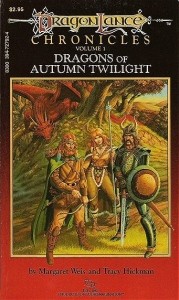
Dragons of Autumn Twilight
2,803-word summary 12 min read 448 pages in the book
- First published
- 1984
- Publisher
- TSR
- Pages
- 448
- ISBN
- 9780880381734
- Series
- Dragonlance: Chronicles (#1)
Reading options
What's inside (8 sections)
I borrowed Dragons of Autumn Twilight from a friend who kept his dice in a Crown Royal bag and swore this was the book that taught him how a party should feel. We were teenagers, reading on carpet with character sheets sliding under the couch, and I opened it expecting a rulebook with dialogue. What I found instead was a tavern in a tree, a scared plains couple holding a glowing staff, and a half elf trying to keep six old friends alive through one bad night after another. Margaret Weis and Tracy Hickman published the novel in November 1984 with TSR, and the edition cited here runs 448 pages. It opens the Dragonlance Chronicles as book one, built from Dungeons and Dragons game modules yet written to stand as a story. That origin shows on every road and in every fight, for better and worse, and I still have a soft spot for how hard it tries to make a table full of archetypes feel like kin.
The world is Krynn, on the continent of Ansalon, in a tired age after the true gods seem to have gone silent. The Seekers preach in the gap, local priests who promise answers while serving fear. Armies gather under dragon wings. Old songs speak of Bearskin kings and lost prayers. Into this weather walk the Companions, friends who parted five years earlier to find proof of the gods and return with news. They agreed to meet again at the Inn of the Last Home. Almost all of them keep the promise.
Tanis Half-Elven leads, or tries to. He is long lived and weathered, caught between human and elven blood, still carrying feelings for the swordswoman Kitiara Uth Matar, who sends only a note instead of coming herself. Flint Fireforge is an old dwarf, gruff and loyal, knees aching on stairs, heart fully in the work. Tasslehoff Burrfoot is a kender, small and bright and unable to leave other people belongings alone, brave in the way of those who do not quite grasp danger. Sturm Brightblade holds to the Measure of the Knights of Solamnia even when the order has rotted around him. Caramon Majere is big and warm, sword arm of the group, endlessly protective of his twin. Raistlin Majere is thin and coughing, gold skinned from his Test, hourglass eyes that see time sliding away from everyone, already feared by his friends. They are joined quickly by Goldmoon and Riverwind of the Que-Shu plains, she carrying a Blue Crystal Staff that hums with old power, he scarred from defending her and her faith. Tika Waylan, red haired barmaid at the Inn, rounds out the circle with more nerve than training.
Five years gone and the Inn of the Last Home
The reunion opens in Solace, a town built in vallenwood trees with walkways swaying in autumn wind. The Inn of the Last Home sits high among branches, smelling of potatoes and ale, run by Otik Sandath. Tanis arrives first in spirit if not on the page, taking in the familiar stairs and voices. Flint complains about heights. Tas has already pocketed something that is not his. Sturm sits straight as a pole. Caramon laughs too loud. Raistlin watches from shadow with a thin smile that does not reach his eyes. Kitiara absence hangs over the table. Her note is short. Do not look for me.
The talk turns serious fast. The town has changed. The Seekers, led locally by men like Hederick, preach against old faith and feed names to higher powers. Goblins and draconians, the reptilian soldiers grown from corrupted eggs, move openly on the roads. An old friend named Fizban shows up with a mysterious hat and a habit of surviving fires he probably started. He calls himself a wizard and acts more like weather. Before the night ends, Goldmoon steps forward in the common room and heals a Seeker with the Blue Crystal Staff, light pouring blue and white across tables. The room erupts. Hederick cries witchcraft. Soldiers close in. Otik shouts for sense. Tika grabs a frying pan and picks a side.
I love this opening because it gives each Companion a small job in the chaos. Tanis decides. Sturm holds the door. Caramon lifts a bench. Raistlin speaks a word that bends air. Flint curses and swings. Tas vanishes and reappears where he should not be. Riverwind stands over Goldmoon with a spear that has seen exile. The party flees Solace as the Inn burns behind them, out into rain and mud with the staff glowing through cloth. For readers who played the modules, the rails show early. A quiet meeting, a public miracle, a forced flight. For new readers, the pace forgives a lot. We learn the group by what they carry for each other.
The Blue Crystal Staff and flight from Solace
On the road the book slows to explain what the staff may be. Goldmoon tells her tale in pieces. Her tribe turned from the old gods to ancestor worship. Riverwind went on a quest to prove the true gods lived. He returned half dead with the staff and was stoned for heresy. She picked it up and lived. Since then both have been hunted. They do not preach. They endure. Goldmoon voice stays level while she speaks of exile, and Riverwind watches tree lines while she talks. Their love feels grown up beside the bickering of old friends, and it steadies the middle of the flight.
The Companions learn quickly that the staff burns evil that touches it. A Seeker who grabs it screams. A draconian that snatches it dies. When draconians fall in this world, their bodies twist in strange ways, stone or acid or lightning, so every fight leaves a hazard behind. That detail, kept from the game table, makes even small ambushes tense. You cannot loot cleanly. You cannot stand where you killed. Raistlin notes these facts with dry interest while Caramon hauls his brother out of fumes. Tanis keeps count of arrows and tempers.
They are driven into the woods of Darken Wood, where the dead walk and the trees seem to listen. Here the book leans into old forest dread. Undead hands rise from leaf mold. Fear tries to split the party along old cracks. Sturm prays to gods he is not sure hear him. Goldmoon lifts the staff and sings, or prays, the line between the two happily blurred. Then a centaur crashes through, and wit returns with hoofbeats. The forest lets them pass with a warning that sounds like wind. I remember reading this at night and feeling the modules working as intended. One set piece per session, each with a trick. Undead that fear faith. Woods that test resolve. A guide who points to the next map.
The guide points to Xak Tsaroth. The staff came from old faith, and old faith left records. The Disks of Mishakal, the goddess of healing, lie in the ruined city, and with them perhaps proof that the gods are not gone. The Companions argue about detours and supplies, the way real parties do. Flint wants solid stone underfoot. Tas wants to see a dragon, preferably from nearby. Raistlin wants books. Tanis wants time he does not have. They go because Goldmoon asks and because staying means chains.
Xak Tsaroth, the Disks, and Khisanth
The journey to the swamp city runs long across the 448 pages, with pegasi flights, draconian patrols, and gully dwarves who steal the scene without meaning to. The gully dwarves are small, ragged survivors living in cracks of the fallen city, speaking in tangled loops, worshiping odds and ends. Bupu, one of their number, takes a shine to Raistlin after he shows her a scrap of kindness. She leads the party through flooded streets and broken temples where green water hides steps. Tas befriends everyone. Flint insults architecture. Caramon carries Raistlin when his lungs fail.
In the sunken temple waits Khisanth, a great black dragon coiled around old gold, wings folded like wet sails. The fight that follows is the book first true boss room, and Weis and Hickman stage it with smoke and falling stone. Khisanth speaks with contempt. She has guarded this place for years and eaten better parties than this. The Companions spread out. Sturm advances because honor demands it. Tanis tries to buy seconds. Raistlin reads. Goldmoon steps into the open with the Blue Crystal Staff raised, no armor but faith.
What happens next defines her arc. The staff flares, the temple shakes, Khisanth screams and dies in holy fire, and Goldmoon is taken up in the same light and presumed lost. The party digs through rubble in silence. Caramon weeps openly. Even Raistlin looks shaken. Then they find her below a statue of Mishakal, alive, marked, changed, the staff now resting against stone. She has seen the goddess in some form words cannot hold. She returns with the Disks and with true clerical power, able to heal in the gods name rather than by accident of touch. Bupu presses an old spellbook on Raistlin, once tied to the dark wizard Fistandantilus, and he takes it with hands that tremble for reasons beyond weakness. Elistan, a Seeker they meet among captives, will later receive the Disks from Goldmoon hands and become the first cleric of Paladine in this new age, but that transfer waits for safer ground.
This is the section I reread most. It earns its awe without long sermons. Goldmoon fear does not vanish. She shakes after. Riverwind holds her while she cries. Faith here is not armor against feeling. It is a choice made while shaking. If the module roots show, a dungeon crawl with a dragon at the bottom and treasure that is really lore, the emotion covers the seams.
Captured road to Qualinesti and Laurana
Victory costs them their freedom. On the return road the party is taken by Dragonarmy forces and chained in a slave caravan with other prisoners, including Gilthanas, an elven prince of Qualinesti. The march chapters are grim and strong. Dust, thirst, draconian whips, Tas picking locks he should not be able to reach, Flint keeping count of insults to stay awake, Sturm giving his bread to weaker captives. Raistlin conserves strength and watches. Tanis trades words with guards to buy small mercies and hates himself for the ease with which he plays prisoner politics.
Rescue comes through Porthios, Gilthanas brother, and the party is led into Qualinesti, an elven land of light and tall trees that feels like a held breath after swamp rot. Here Tanis history rises. Laurana Kanan, elven princess and his childhood friend, still loves him and speaks of marriage with open hope. She is young by elven count, sheltered, radiant in the way of those who have not yet been refused by life. Tanis, who loves Kitiara memory and fears his own divided blood, tells her he cannot give what she asks. He handles it badly, blunt where he means to be kind. Gilthanas, who already despises the half elf for his blood and his hold on his sister, turns colder. The elven king Solostaran listens to the Companions with courtesy and sends them on with a hard request.
Qualinesti cannot stand aside while neighboring lands bleed. Pax Tharkas, the great fortress mine, holds hundreds of slaves under the Dragon Highlord Verminaard, priest of the dark goddess Takhisis, served by the red dragon Ember. The elves ask the Companions to lead a strike to free those captives. It is a desperate plan, the kind commanders give to people they do not expect to see again. The Companions accept because the alternative is watching the war swallow everyone they met on the road.
Laurana follows them in secret, trading silk for armor, determined to prove she is more than a childhood promise. Tanis finds her on the trail and scolds her like a child, which she is not, though she acts rashly. Their quarrel stings because both have points. He fears she will die for romance. She fears he will never see her as grown. Tika, watching nearby, says little and learns a lot about what war does to tenderness.
Pax Tharkas and the fall of Verminaard
The Pax Tharkas chapters run like a long game night remembered fondly. The party slips through a hidden underground passage, maps memorized, torches low. They find Elistan among the suffering, near death, and Goldmoon heals him in a quiet scene that lands harder than the dragon fire. He rises changed, takes the Disks with reverent hands, and begins to speak of Paladine with the steadiness of a man who has been given back his spine. Slaves gather. Hammers become weapons. Plans are drawn in dust.
Laurana earns her place here. She fights on the walls with a bow, covers a retreat, drags a wounded man clear when no one orders her to. The text, which earlier dressed her as beautiful first and brave second, finally lets action lead. Tika fights too, pan in early chapters giving way to sword, staying beside Caramon with stubborn courage. Sturm holds a narrow stair because someone must, living the Measure line by line. Flint curses engineers who built ceilings too low. Tas disappears into vents and reappears with keys. Tanis makes ugly calls about who goes first through doors that may hide spears.
Verminaard arrives with Ember, armored and certain, preaching Takhisis while his dragon beats the air to flame. The battle breaks into noise and smoke. Then Flamestrike, a red dragon driven mad by grief and captivity, turns on Ember in a tangle of claws and fire that lights the fortress like a furnace. In the confusion the Companions close on Verminaard. He falls to their combined attack, not cleanly, not alone, but truly. The slaves pour through broken gates into cold free air, carrying children and tools and the Disks in guarded wagons. A strange figure called the Everman watches the celebration from the edge and slips away before questions find him. The book closes not with peace but with a road opening toward winter and need. Dragons of Winter Night waits, and the war is far from done.
What drags and what still flies
Across 448 pages the module rails never fully vanish, and honest talk should name that. The party moves from set piece to set piece, tavern to woods to dungeon to prison to elven court to fortress, with guides arriving exactly when hope thins. Random encounters sometimes feel scheduled. Puzzles solve because a character remembers a spell at the right hour. Readers who never touched dice may still feel the invisible hand moving miniatures. Readers who did will smile at the same moments and forgive faster.
The women draw the shortest straws early. Goldmoon begins as symbol more than person, patient and pure while men debate her staff. Laurana enters as the beautiful princess who loves the hero, and only late earns interior weight. Tika gets barmaid banter and pining before she gets skill. Later books deepen all three, Goldmoon into a leader who doubts, Laurana into a commander who pays, Tika into a fighter who chooses, but here they orbit Tanis and his guilt more than their own aims. I felt that thinning most in Qualinesti, where Laurana heartbreak serves Tanis arc first.
The prose can run purple when dragons fill the sky. Eyes burn like coals. Wings blot out moons. Evil speaks in rolling titles. Weis love of Raistlin, which even the authors joke about, gives him the best lines and the sharpest scenes while others get summaries. He carries long stretches because his hunger is specific where some companions stay general. Sturm honor, Flint grumble, Caramon worry, Tas curiosity, these are true but narrow in book one. Tanis brooding about Kitiara versus Laurana can loop. I wanted to shake him during the Qualinesti quarrel and tell him to listen.
And yet the book flies where it counts. The party feels like a party. They share food, argue about watches, tease Tas while checking their pouches, carry Raistlin up stairs without comment. The faith plot avoids easy triumph. Goldmoon healing costs her. Elistan rising costs him his old certainties. Sturm keeping his oath costs sleep and safety. Verminaard defeat does not end the war, which respects readers enough to promise harder roads. For November 1984 TSR fiction, written fast to launch a world, that mix of warmth and cost was rare. It turned game night into myth for many of us, kender pockets, draconian traps, vallenwood stairs and all, and it still reads as an invitation. Gather your friends. Bring light into a dark temple. March out with freed slaves into snow that has not yet fallen.
FAQ
When was Dragons of Autumn Twilight published?
TSR published it in November 1984. The edition cited here runs 448 pages with ISBN 9780880381734, opening Dragonlance Chronicles as book one.
Is it based on game modules?
Yes. It grows from Dungeons and Dragons modules, so taverns, dungeons, and fortress assaults follow a quest chain, though the novel adds character scenes.
Does the story end here?
No. Verminaard falls and slaves go free, but war spreads and the Companions march on toward Dragons of Winter Night.
Similar books
More from Dragonlance: Chronicles first, then related titles.
The Farthest Shore
Archmage Ged and Prince Arren sail to the far west to stop Cob, whose bid for endless life drains magic across Earthsea in Le Guin's sad 1972 third volume.
2,800-word summary · 12 min read
The Eyes of the Dragon
In the kingdom of Delain, a jailed prince and his younger brother face a magician whose long plot for the throne turns on a napkin clue.
2,018-word summary · 9 min read

The Blinding Knife
Kip trains to join the Blackguard while the Prism hides his true identity, loses his colors, and fights a war against a rogue drafter who wants to birth a god.
2,049-word summary · 9 min read

Secrets of the Dragon Sanctuary
Kendra is replaced by a plant copy and held by the Society, while Seth steals a unicorn horn so the family can enter a dragon sanctuary.
2,590-word summary · 12 min read

Magician's Gambit
Garion and his companions cross haunted Maragor and the caves beneath Rak Cthol to recover the Orb of Aldur.
2,391-word summary · 11 min read

Homeland
Drizzt Do'Urden is born into the cruel drow city of Menzoberranzan, where his father teaches him to fight and to doubt everything his family believes.
2,303-word summary · 10 min read
Enchanters' End Game
Garion marches toward Torak while Ce'Nedra leads the West's army in the final Belgariad volume, where prophecy and war meet.
2,557-word summary · 11 min read

Grip of the Shadow Plague
A plague turns Fablehaven's creatures of light into shadows while Kendra hunts an artifact in Arizona and Seth races to find the cause.
2,131-word summary · 9 min read

The Queen of the Tearling
Nineteen-year-old Kelsea leaves the woods to take her throne, ends a shipment of human captives, and draws the Red Queen's revenge.
2,357-word summary · 10 min read
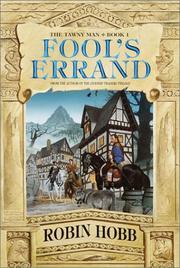
Fool's Errand
FitzChivalry Farseer has lived in exile for fifteen years. When Prince Dutiful vanishes before his betrothal, Fitz returns to Buckkeep to find him, with a wolf…
2,606-word summary · 12 min read
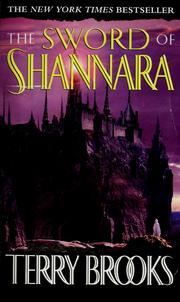
The Sword of Shannara
A young half-Elf and a company of companions set out to recover a magic sword before the Warlock Lord destroys the Four Lands.
2,474-word summary · 11 min read
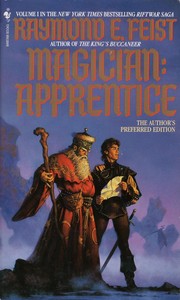
Magician: Apprentice
An orphan kitchen boy and a smith's son grow up in a frontier castle just as invaders from another world open a rift and begin a war that will change both of…
2,114-word summary · 9 min read

When the Moon Hatched
An assassin who hears air takes a job that throws her to dragons and a hunter.
2,083-word summary · 9 min read
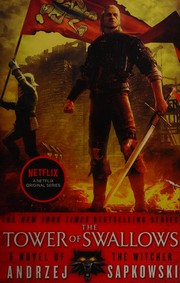
The Tower of the Swallow
Ciri flees as a bandit while Geralt gathers allies to find her.
2,580-word summary · 11 min read
The Emperor's Soul
Forger Shai must stamp a new soul for the dying emperor in 100 days.
2,313-word summary · 10 min read
Shadow's Edge
Kylar fakes death as a king killer while Vi hunts him for the Godking.
2,245-word summary · 10 min read
Pawn of Prophecy
Farm boy Garion learns sorcerers watch him as an old Orb wakes.
2,331-word summary · 10 min read
New Spring
Moiraine and Lan hunt the newborn Dragon before the Black Ajah finds him.
2,475-word summary · 11 min read
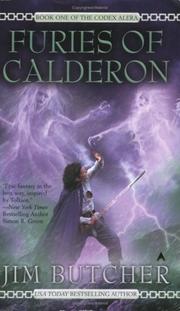
Furies of Calderon
Furyless Tavi defends Calderon Valley when the Marat return and lords scheme.
2,587-word summary · 11 min read

Stone of Tears
After the veil tears, Richard seeks training from the Sisters while Kahlan holds a fracturing Midlands and Zedd hunts the missing Stone.
2,483-word summary · 11 min read
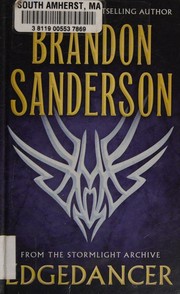
Edgedancer
Hungry street thief Lift and her vine-like friend Wyndle cross the Herald Nale in Tashikk when a child emperor shows Radiant signs and she refuses to step…
2,328-word summary · 10 min read
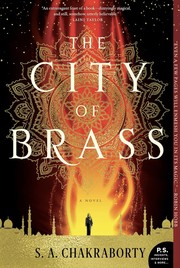
The City of Brass
Cairo con artist Nahri summons djinn Dara and is drawn to Daevabad where Ali questions pureblood rule.
1,993-word summary · 9 min read
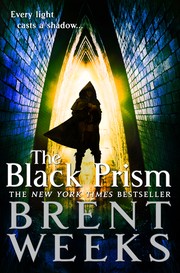
The Black Prism
Dying Prism Gavin Guile hides a secret son while war brews over color magic in the Seven Satrapies.
2,169-word summary · 10 min read
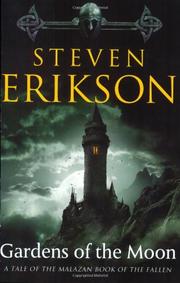
Gardens of the Moon
Empire, gods, and mages collide over Darujhistan as Bridgeburners bleed for Empress Laseen.
2,188-word summary · 10 min read

Crossroads of Twilight
Rand cleansed saidin and the whole world felt it. Book ten follows each faction as they react, stall, and choose sides.
2,264-word summary · 10 min read
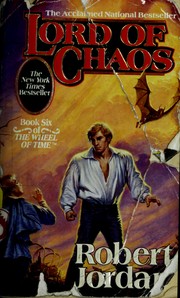
Lord of Chaos
Rand offers amnesty to men who can channel while Egwene is raised Amyrlin in exile. Book six of The Wheel of Time builds toward rescue and reckoning at Dumai's…
2,255-word summary · 10 min read
A Crown of Swords
After Dumai's Wells, Rand holds Cairhien while Egwene besieges Tar Valon and Elayne and Nynaeve hunt relief in Ebou Dar. Book seven crowns kings and queens at…
2,828-word summary · 13 min read
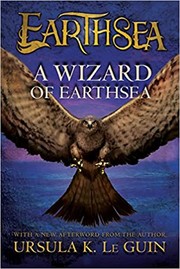
A Wizard of Earthsea
A proud goatherd becomes the wizard Ged, looses a shadow at Roke, and must hunt it across Earthsea to name it. Le Guin's lean 1968 series opener.
2,972-word summary · 13 min read
The Hero of Ages
Vin and Elend face ash, mist, and Ruin itself as the prophecies fail and Sazed searches old faiths for answers.
2,559-word summary · 11 min read
Eldest
Eragon trains with Oromis in Ellesmera while Roran defends Carvahall and Nasuada leads the Varden toward war.
2,652-word summary · 12 min read