
Demian
2,510-word summary 11 min read 109 pages in the book
- First published
- 1919
- Publisher
- S. Fischer Verlag
- Pages
- 109
- ISBN
- 9780486414133
Reading options
What's inside (8 sections)
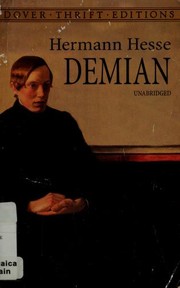
I picked up Demian because it is short enough to read in a weekend and strange enough that people keep arguing about it. My copy is the Dover Thrift paperback, the one cited here at 109 pages, and it fits in a coat pocket. That small size is misleading. The book first appeared in 1919 in German, published by S. Fischer Verlag under the name Emil Sinclair, and it carries the weight of a much longer novel. Hesse later put his own name to it, but he left the narrator named Emil Sinclair too, which tells you something about how personal this story was for him.
What surprised me on this reread was how plain the start feels before it turns odd. Sinclair remembers a childhood house with polished floors, his father telling Bible stories in the evening, his sisters playing in a sunlit hall. Then just outside that house there is another life with stable boys, gossip, punishments, and secrets. I recognized that split at once. Most children learn early that home has one set of rules and the street has another. Hesse just gives those two sides names and lets them pull Sinclair apart.
The Dover edition I used runs 109 pages, so nothing here is wasted. Scenes arrive quickly, break off, and return years later in a new form. If you want plot in the usual sense, you will find it thin in places. If you want the feeling of growing up and finding that the old explanations no longer hold, it is all here.
Two worlds and Franz Kromer
Sinclair opens with his theory of two worlds. There is the world of light, his family home, with love, clean rooms, prayer, and good manners. Then there is the dark world outside, with servants and workmen, with sin and noise and stories that adults do not repeat at table. He loves the first world and he spies on the second. That division will shape everything that follows.
The trouble starts with a lie about stolen apples. Sinclair, wanting to sound brave in front of older boys, claims he stole apples from a garden near the mill. Franz Kromer, a tough boy a few years older, overhears him and sees an opening. Kromer tells Sinclair he knows the owner of that orchard and that the fine will be large. Unless Sinclair pays, Kromer says, he will tell.
What follows is the best written part of the early book. Sinclair has no money. He steals small coins from home, hands them over in alleys, and waits for the next demand. He stops sleeping. He feels sick at meals. He starts to believe he belongs to Kromer in some fixed way. Hesse captures the logic of blackmail from a child's point of view. It is not the amount that crushes Sinclair. It is the sense that one false story has moved him out of the light world for good.
Rescue comes from an unlikely place. Max Demian, a new boy in school, calm and older than his years, notices what is happening. He does not fight Kromer. He takes a walk with Sinclair, tells him a different reading of the story of Cain and Abel, and then arranges for Kromer to leave Sinclair alone. We never learn exactly what Demian says to Kromer in private. We see only the result. Kromer stops. He crosses the street when he sees Sinclair. The threat ends, but Sinclair is changed. He has learned that cleverness and nerve can redraw the line between guilt and safety.
Max Demian and the mark of Cain
Demian is the figure Sinclair circles for the rest of the book. He is rich, polite, distant, and interested in ideas that make teachers uneasy. In class, when the Bible lesson presents Cain as a villain with a mark of punishment, Demian suggests the opposite. Perhaps Cain was stronger or more gifted than others, and the mark was a sign of distinction that frightened weaker people. The teacher dismisses this. Sinclair cannot forget it.
That scene matters because it gives Sinclair permission to doubt received readings. At home he has been taught that good and bad are fixed and clear. Demian treats them as labels that powerful people put on those who stand out. Sinclair does not fully agree, but he feels relief. If Cain can be reread, perhaps his own fall with Kromer can be reread too. Perhaps he is not ruined.
The boys grow closer in a wary way. Demian talks about fate and about finding the path that belongs to one person alone, even if it looks wrong from outside. He tells Sinclair the story of a bird fighting its way out of an egg, with the egg as the old world that must be broken. Sinclair writes the image down and carries it for years. At this point Demian leaves school for a time, and Sinclair is left to test these ideas without a guide.
School life goes on. Sinclair drinks with classmates, gets into debt, feels empty after nights of forced fun. He tries to live like the others and finds it false. Demian returns briefly, looks at him with that steady attention, and says little. The message is plain without being spoken. Sinclair is trying to borrow a life instead of finding his own.
One detail I liked is how Hesse handles power here. Demian never brags. He does not need to. He pays attention, he remembers what people fear, and he acts once. Kromer senses that and backs off. Teachers sense it and leave him alone. Sinclair wants that steadiness and mistakes it at first for coldness. Only later does he see it as a form of care.
Beatrice and the bird fights its way out
When Sinclair is older, perhaps sixteen, he falls into a restless period of drinking and showing off. Then he sees a girl in a park, older than he is, pretty in a serious way, and he gives her a secret name. Beatrice. He never really speaks to her at length. She becomes an ideal to him, a reason to clean himself up.
This is where the book turns inward. Sinclair stops drinking so much. He starts painting, or trying to. He paints a face he half remembers from a dream, which slowly starts to look like Demian and also like himself. He writes the bird and egg saying on a page and puzzles over it. The egg is the safe home, the school rules, the wish to be approved. The bird is whatever in him wants to live by its own sense.
Beatrice herself stays distant. That is the point and also the weakness. She improves him without knowing it, then fades from the story. I found those pages moving in a youthful way and also a little easy. Love from far away asks nothing. It lets Sinclair adore purity while avoiding real contact. Hesse knows this, I think, but he lets Sinclair enjoy the phase because it pulls him out of bars and back toward books and walks.
There is a fine scene where Sinclair watches wild doves or sparrows in a garden and feels both lonely and oddly full. He goes home and tries to draw the dream face again. The lines come out wrong. He keeps the bad drawing anyway. That habit, keeping the failed attempt and looking at it again, becomes his method for the rest of the book. He learns to treat dreams and slips and stray thoughts as mail from himself.
Demian is mostly absent in this stretch, but his influence sits behind it. Sinclair remembers the Cain talk and applies it to his own shame about drink and debt. Perhaps his bad months were not proof that he is lost. Perhaps they were proof that the common road does not fit him. That rereading does not excuse him. It steadies him enough to change course.
Pistorius and learning to listen inward
At around seventeen or eighteen Sinclair meets Pistorius, an organist at a local church, a man who lives among books and old music and talks about Abraxas. Abraxas, in Pistorius telling, is a god who holds both good and bad together, light and dark in one figure. For Sinclair, raised on clear divisions, this is both shocking and familiar. It names what Demian had hinted at with Cain.
Pistorius becomes a second teacher. Where Demian is spare and sure, Pistorius is talkative and searching. He plays Bach on the organ, then speaks about dreams, about old rites, about the need to stop asking priests and parents for answers and to listen for the voice inside. Sinclair spends long evenings with him, walking home through dark streets feeling larger than before.
The friendship peaks and then breaks. Sinclair begins to see that Pistorius talks well but lives narrowly. He repeats the same ideas, drinks too much, and leans on Sinclair for admiration. One evening Sinclair tells him so, not cruelly but plainly, and they part. It is a sad, honest scene. Sinclair thanks him and leaves. I liked that Hesse allows this. Teachers can give you what you need and still be unable to live it themselves.
The middle of the book slows here. There are many talks about dreams and signs and inner voices, with less action to hold them. On a first read I skimmed a little. On a second read I saw the purpose. Sinclair is learning a practice. He notes a dream, draws it, sits with it, and waits to see what it points to. Sometimes it points to Demian. Sometimes to a woman he has not yet met. The slowness is the training. Still, Hesse lingers a bit long, and readers who want scenes may grow restless.
What stays with me from Pistorius is the organ loft itself. Dust in the light, the pedals thumping under his feet, Sinclair sitting on a bench while chords fill the small church. The talk about Abraxas could have felt dry. In that setting it feels earned, tied to breath and wood and sound.
Frau Eva and a new kind of love
Sinclair later finds Demian again and through him meets Demian mother, Frau Eva. She is beautiful, calm, older, and treats Sinclair with a mix of maternal warmth and frank attention that confuses him. He dreams about her before he meets her, then recognizes her at once when they are introduced. For a while she becomes the center of his inner life the way Beatrice once was, but closer and more adult.
Frau Eva listens. She tells Sinclair not to force love or to beg for it, but to hold himself open and to respect what comes. She does not flatter him. When he acts young and eager, she smiles and waits. When he speaks with care, she answers in kind. Their bond stays chaste in the usual sense, yet it is charged. Hesse presents her as both a real woman and a figure of Sinclair inner future, the self he hopes to grow toward.
The circle around Frau Eva includes Demian and a few friends who talk late into the night about the old Europe breaking apart and about people who carry a mark, a quiet sign that they belong to a coming time. Sinclair feels chosen without quite knowing for what. He paints, he writes, he walks with Eva in her garden. He learns to accept affection without clutching at it.
This is also where my criticism sharpens. Frau Eva, like Beatrice, is more ideal than person. She has almost no flaws, no chores, no money worries, no past that resists Sinclair view of her. She exists to confirm and to bless. Hesse gives men like Demian and Pistorius odd edges and failures. The women glow at a distance. A modern reader will notice this quickly. It does not ruin the book, but it narrows it.
And yet some scenes with Eva are tender in a way that redeems the idealizing. She teaches Sinclair to sit still when he is agitated. She places a hand on his shoulder and tells him to breathe and to say what he actually wants. He tries, fails, tries again. Those small lessons feel true even if Eva herself feels shaped for a purpose.
War, farewell and what stays with me
The last part moves fast. Europe slides toward the First World War, and the talk among Demian circle turns from dreams to history. Sinclair feels the outer break matching an inner break. The old forms, school, church routine, family rules, no longer hold him. He is called up, trained, sent toward the front. Demian serves as well.
Sinclair is wounded. In a night scene near the fighting, confused by pain and noise, he senses Demian close by. They speak briefly or Sinclair imagines they do. Demian tells him they are linked, that Sinclair will no longer need him as a separate guide, that the image of Eva will stay with him and that he must now follow his own lead. There is a farewell kiss or touch on the mouth in some readings, a passing of closeness rather than romance. Then Demian is gone.
Sinclair closes with the claim that he has learned to listen to himself and that Demian lives on inside him. The egg is broken. The bird is out. Whether the reader trusts that claim is another matter. War has a way of cutting short the long work of becoming. Hesse leaves the ending open enough to feel both hopeful and mournful.
Stepping back, the faults are clear. The book can turn abstruse when it talks about Abraxas and fate without tying them to action. The middle with Pistorius drags if you are waiting for plot. The women read as ideals more than equals. At times the tone takes on youthful pretension, as if suffering at boarding school and hearing Bach in a loft were proof of election. Readers who want social detail or humor will find little of either.
I still value it. The Kromer blackmail chapters are exact about shame. The Cain rereading gives a young reader a tool for doubt that is fair rather than cheap. The Beatrice months show how an imagined love can lift a person out of a rut even if the person loved stays unknown. The break with Pistorius models how to leave a teacher with thanks. The farewell in wartime lands because Hesse does not explain it away.
If you read it, read it in order and slowly, a chapter at a time. Note where Sinclair lies to himself and where he tells the truth. Watch how often Demian says little and Sinclair hears much. This is a short book that asks to be reread. The Dover Thrift at 109 pages makes that easy. First published in 1919 in German by S. Fischer Verlag, it still reads like a letter to anyone caught between the home they came from and the life they suspect is theirs.
FAQ
Is Demian hard to read for a first-time Hesse reader?
The plot is simple and the Dover Thrift paperback runs only 109 pages, but the ideas about Abraxas and inner voices take time. Read slowly and let the Kromer and Cain scenes carry you.
Do I need to know Jung or Gnosticism to follow Abraxas?
No. Pistorius explains Abraxas in the book as a figure holding good and bad together. Outside context helps, but Sinclair learns it through dreams, talks and paintings.
Which edition matches the 109 pages cited here?
The 109 pages refer to the Dover Thrift paperback of Demian. The book itself was first published in 1919 in German by S. Fischer Verlag under the name Emil Sinclair.
Similar books
Siddhartha
A Brahmin son leaves home to find peace beyond teachers and rules.
1,933-word summary · 9 min read

The Dharma Bums
Ray Smith rides freight trains, climbs Matterhorn Peak and argues about Zen with the poet Japhy Ryder in Kerouac's 1958 road novel.
2,729-word summary · 12 min read
Ham on Rye
Henry Chinaski grows up rough in Depression Los Angeles and finds writing.
2,244-word summary · 10 min read

The Fall
A fallen Paris lawyer confesses in an Amsterdam bar, tracing guilt from Paris success to a bridge he failed to face.
2,220-word summary · 10 min read
The Celestine Prophecy
A restless American chases a missing manuscript through Peru and learns Nine Insights about coincidence, energy, and how people vie for attention.
2,599-word summary · 12 min read

One Day in the Life of Ivan Denisovich
One freezing day with prisoner Shch-854 in a Soviet camp: roll call, bricklaying in the cold, bread rations, and small wins that let Shukhov call the day…
2,668-word summary · 12 min read
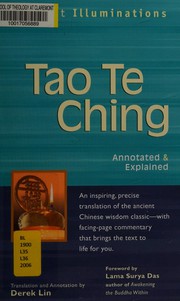
Tao Te Ching: Annotated & Explained
Eighty one brief verses on the Way and effortless action, with Lin's translation and facing notes.
2,140-word summary · 10 min read

Sophie's World
Sophie gets philosophy lessons by mail, then finds she is fiction in a father birthday book for Hilde.
2,013-word summary · 9 min read
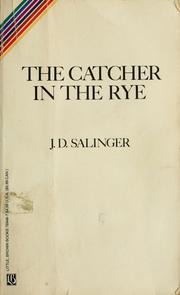
The Catcher in the Rye
J. D. Salinger's The Catcher in the Rye explained: Holden's weekend in New York, the phony adults, Phoebe's carousel, and why readers keep coming back to him.
2,477-word summary · 11 min read

The Alchemist
The Alchemist from start to finish: Santiago's dream, the Personal Legend, the crystal merchant, the desert, and the treasure that was never where he thought.…
2,166-word summary · 10 min read
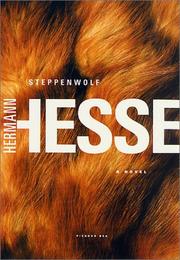
Steppenwolf
Harry Haller, half man and half wolf in his own mind, dances, loves, and enters a magic theatre in Hesse's strange 1927 novel.
3,181-word summary · 14 min read
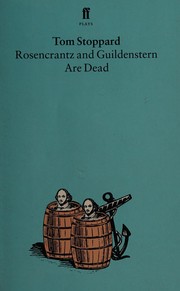
Rosencrantz and Guildenstern Are Dead
Stoppard's 1966 play retells Hamlet from the wings, where two minor courtiers wait, joke, and walk toward a death they cannot see.
2,021-word summary · 9 min read

Little Town on the Prairie
In the spring after the Long Winter, fifteen-year-old Laura sews shirts, studies for a teaching certificate, and helps send her blind sister Mary to college.
2,071-word summary · 9 min read

The Diamond Age: Or, A Young Lady's Illustrated Primer
A stolen nanotech primer raises a poor girl in 22nd-century Shanghai, and Neal Stephenson turns her education into an argument about class, freedom, and who…
2,055-word summary · 9 min read

Fathers and Sons
Arkady brings the nihilist Bazarov home to his father's estate, and a generational argument turns into love, a duel, and an early death.
2,192-word summary · 10 min read

The Chosen
A shattered pair of glasses in a 1944 Brooklyn softball game starts a friendship between a Hasidic boy and his Orthodox neighbor, and their fathers pull them…
2,443-word summary · 11 min read

The Road Less Traveled: A New Psychology of Love, Traditional Values and Spiritual Growth
M. Scott Peck argues that maturity begins with accepting difficulty, then builds discipline, love, and spiritual growth through honest, often painful work.
2,200-word summary · 10 min read

Out of the Silent Planet
A Cambridge philologist is kidnapped and taken to Mars, where the natives are civilized and the humans are the dangerous invaders.
2,612-word summary · 12 min read
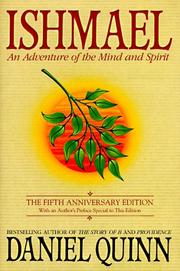
Ishmael: An Adventure of the Mind and Spirit
A gorilla named Ishmael teaches a disillusioned man that civilization is a story, and that humans may compete but must not wage war on other species.
2,015-word summary · 9 min read

Hearts in Atlantis
Five linked stories follow Bobby Garfield, Carol Gerber, and their friends from a haunted childhood in 1960 to the long aftermath of Vietnam.
2,402-word summary · 11 min read
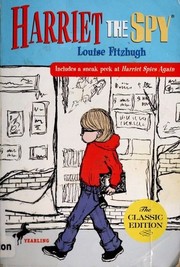
Harriet the Spy
Eleven year old Harriet Welsch fills notebooks with honest, often cruel observations about her neighbors, until her classmates read one and turn her spy route…
2,510-word summary · 11 min read

Beyond Good and Evil: Prelude to a Philosophy of the Future
A guide to Friedrich Nietzsche's Beyond Good and Evil: its attack on moral prejudice, the will to power, master and slave morality, and the philosopher of the…
2,597-word summary · 12 min read
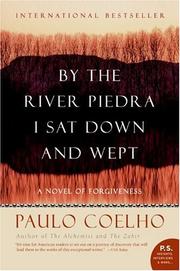
By the River Piedra I Sat Down and Wept
Pilar, 29, meets her childhood friend again in Madrid and finds a rumored miracle worker. One winter week through the Pyrenees to the river Piedra, and the…
2,845-word summary · 13 min read

The Swiss Family Robinson
Shipwrecked Robinsons build treehouses and tame island beasts.
2,400-word summary · 11 min read
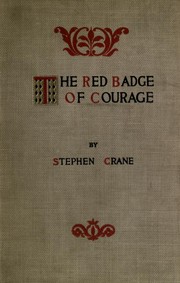
The Red Badge of Courage
Henry Fleming runs at Chancellorsville, then returns to stand.
2,486-word summary · 11 min read


Stories of Your Life and Others
Eight stories about language, time and choice, including the tale behind Arrival.
2,402-word summary · 11 min read
Leaves of Grass
Free verse songs of self, America, bodies and democracy.
2,240-word summary · 10 min read
I Capture the Castle
Cassandra journals six months of love and money trouble in a castle.
2,402-word summary · 11 min read
Anne's House of Dreams
Newlyweds Anne and Gilbert start in a seaside house with kind neighbors.
2,465-word summary · 11 min read