
Reading options
What's inside (8 sections)
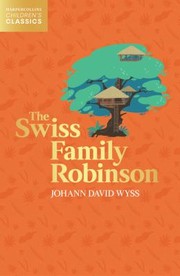
I came to The Swiss Family Robinson the way many readers do, through half remembered images of a treehouse and a brave mother firing a pistol, without knowing who wrote it or when. First published in 1812, in the edition I read from HarperCollins Publishers at 528 pages, it is a long adventure by Johann David Wyss, a Swiss pastor who told the story to his sons and later saw it shaped for print. A Swiss family bound for a new life is shipwrecked on an uncharted island and must build everything from shelter to faith from salvaged crates and island plenty. I read it over two weeks, a chapter most nights, alternating between admiration for its ingenuity and disbelief at its luck. That push and pull is the book in miniature.
The opening moves fast. William, the sensible father and narrator for much of the book, his wife Elizabeth, and their four boys, Fritz, Ernest, Jack, and Franz, survive a storm that drives their ship onto rocks. The crew abandons them. The family prays, fashions flotation from barrels, and ferries themselves and useful animals ashore. What follows is less a single plot than a sequence of projects, each chapter a problem solved. Tent, food, fire, boat, bridge, cave, farm. Wyss was writing partly to teach his children natural history and moral conduct, so the father pauses often to explain plants, animals, tools, and proper behavior. Modern readers will feel that teaching purpose on every page. It gives the book its charm and its weight.
Shipwreck and first days ashore
The wreck chapters show Wyss at his best as a storyteller of practical detail. The family does not panic for long. William leads, Elizabeth steadies, Fritz the eldest proves strong and quick, Ernest thoughtful and observant, Jack bold and restless, little Franz earnest and eager to help. They inventory the ship with remarkable calm, hauling boards, nails, tools, guns, powder, seeds, and livestock. A pair of dogs, Turk and Juno, become scouts and guards. The boys rescue chickens, goats, sheep, and a donkey. Reading now, the competence feels bracing. No one waits to be saved. They sort, dry, count, and plan. I found myself making mental lists alongside them, water first, then shelter, then fire.
Their first camp is a tent by the shore, exposed and buggy, and Wyss uses discomfort to teach priorities. Find fresh water. Learn tides. Keep powder dry. Mark paths. The family explores a short way inland and discovers gourds, sugar cane, and strange trees. Elizabeth worries sensibly about safety and cleanliness while the boys race ahead. William mediates, praising courage but insisting on prayer, rest, and order. The rhythm of danger then lesson then meal repeats. A jackal attack becomes a talk on vigilance. A lobster feast becomes a talk on gratitude. Some readers will find the sermons heavy. I did at times. Yet they also give the book its period voice, a father who believes survival depends on character as much as skill.
What strains belief, even early, is abundance. The island conveniently holds plants and creatures from many climates, as if a museum spilled. The ship conveniently holds almost every tool they need. Storms spare exactly what the plot requires. Wyss was not aiming for realism as we mean it. He was building a classroom island where a curious boy could meet every useful species in one walk. If you accept that premise, the early chapters delight. If you demand plausibility, you will argue by page fifty. I learned to read it as a fable of resourcefulness rather than a manual. Enjoy the clever barrel boat. Do not plan a voyage by it.
The treehouse and Falconhurst
The move inland to the giant trees marks the book's most famous stretch. Tired of the damp shore, the family builds an aerial home in massive limbs, reached by ladders and stocked with a library of salvaged goods. They name it Falconhurst, and the naming matters. Throughout the book they name places, Tentholm, Shark Island, Prospect Hill, as if claiming by language. For a child reader this is pure joy. For an adult it reads as colonial habit, the empty land waiting for European labels. Both reactions can be true at once. I felt the thrill of the platform in the branches while also noticing who is absent from the map.
Construction scenes show the Wyss method. William describes each step, measuring, sawing, roping, testing weight, with the boys as apprentices. They build tables, benches, a fireplace of sorts, storage for fruit. Elizabeth organizes kitchen and linen, sews hammocks, keeps accounts of stores. The division of labor is fixed by age and sex in ways that will frustrate modern readers. The mother cooks, mends, and moralizes from the margins while father and sons engineer. Elizabeth is brave and capable, she shoots, climbs when needed, saves the day more than once, but the narration rarely centers her interior life. I kept wanting a chapter in her voice, tired, funny, observant. We do not get it.
Still, daily life at Falconhurst carries real warmth. Meals of fish, fruit, cassava bread, and goat milk. Evenings of reading aloud, repairing tools, planning next projects. The boys squabble and make up. Franz learns to carve. Jack adopts a monkey. Fritz trains an eagle. These domestic touches save the book from becoming a mere catalog. You believe these people love each other. When a storm batters the treehouse or illness passes through, the fear feels earned because the home feels lived in. My favorite small scene is not an invention but a pattern, Elizabeth quietly mending by lamplight while the boys describe the day's finds, William listening and turning each find into tomorrow's work. That lamp side order is the book's emotional engine.
Animals tamed and talents tested
No summary can avoid the menagerie. Over 528 pages the Robinsons collect, tame, or eat an astonishing parade, kangaroos, flamingos, ostriches, wild boars, parrots, turtles, and more, often in combinations no single island could support. They ride an ostrich, hitch a buffalo to a sledge, train a monkey to pick nuts, use dogs to hunt. For young readers this is the magic. Each chapter promises a new creature and a clever use. For adult readers it raises the book's hardest questions. Animals appear as tools or meat with little sense of ecology or restraint. Dogs tear, guns fire, traps close. Elizabeth sometimes urges mercy, and William sometimes agrees to release or spare, but the overall ethic is dominion. Take what you need, thank God, waste little.
The sons develop along set lines that help keep a long book clear. Fritz, the eldest, is strong, handy with guns, and romantic in the older sense, eager for daring. Ernest is bookish and slow to act, but observant about nature and useful in identifying plants. Jack is impetuous, funny, quick to leap and quick to laugh when it fails. Franz is young enough to be shaped, moving from frightened to competent across the years. Wyss rewards each boy in turn with a discovery or rescue so no one feels forgotten. I liked Ernest more than I expected. His caution reads as sense rather than cowardice once you have seen Jack's bruises. Parents reading aloud may find useful talk here about different kinds of courage.
The fair criticism is repetition plus ease. Almost every hunt succeeds. Almost every planting takes. Accidents injure pride more than bodies. Readers who love Robinson Crusoe for its grinding scarcity may find this island too generous. I did by the middle. Tension drops when you know the next crate will hold exactly the nails required. Wyss compensates with variety and pace, new cove, new beast, new building, but after three hundred pages the pattern shows. Skimming becomes tempting during long how to passages on dyeing cloth or making candles. Those passages thrilled its first audience of boys learning trades. Now they read like footnotes that ate the story. Take them in small doses.
Caves, farms, and ten years of work
Midway through, the family outgrows Falconhurst for part of the year and builds Rockhouse, a cave dwelling secured against weather and animals, with store rooms, a chapel corner, and workshops. This second home lets Wyss show long term settlement rather than camp craft. They lay out fields, plant wheat and maize from salvaged seed, graft fruit trees, dam a stream, build a mill, smoke meat, make pottery. Time passes in seasons and anniversaries rather than days. Franz grows taller. Tools wear and are reforged. Clothes are patched until patching becomes tailoring. I found these chapters quietly moving. Survival turns into inhabitation. The question shifts from will we live to how shall we live.
Religion threads through this section more openly. Morning and evening prayers, Sunday rest, thanks before meals, long talks about providence when plans fail. Wyss was a pastor, and William voices his convictions without irony. Modern secular readers can read past the doctrine to the function, ritual steadies fearful children and tired adults. It also enforces obedience. The boys rarely challenge their father on matters of faith or command, and when they do, correction follows swiftly. Elizabeth supports this order. Readers who value questioning will notice how little space the book leaves for dissent. That is historically honest to its 1812 origins and pedagogical aim, but it narrows the emotional range.
The colonial frame hardens here too and needs plain naming. The island is treated as empty and given, its riches open to European improvement. Apes are routed in battle scenes played for amusement. Natives, when they appear late in many versions, are cast as threats to be repelled or souls to be pitied. The HarperCollins Publishers text I read does not hide this. Parents and teachers should not hand the book to children without context. Talk about whose land stories like this erase, how real Pacific and Caribbean islands were inhabited, how taming everything is not care. Those conversations do not ruin the adventure. They make it usable. My own reading improved once I stopped excusing and started noting, enjoying the dam building while naming the entitlement around it.
Perils that still thrill
For all its preaching and plenty, the book can still quicken the pulse. A boa constrictor coils near a path. Sharks circle the shallows where the boys swim. A storm tears at roofs and drowns fields. A fire threatens stores. These set pieces work because Wyss understands competence under pressure. He slows time, lists options, shows hands shaking then steadying. Fritz holding aim while Ernest reloads. Elizabeth barring a door and counting children. William shouting orders he hopes sound calmer than he feels. I read the shark chapter late at night and felt the old serialized thrill. Danger reminds you what the cozy building was for.
The late arrival of other people reframes everything. A ship in distress, messages in strange places, captives to free, and finally the question of rescue versus home. Without spoiling the exact turns, which vary across editions and abridgments, the final third asks whether the family still wants to leave. Some sons dream of Europe, others of the island as inheritance. William and Elizabeth weigh age, duty, and love of the life they built. I found this the most human part of the long narrative. After years of labor, leaving feels like loss, staying feels like exile. Wyss resolves it in keeping with his moral plan, rewarding virtue and punishing vice a little too neatly, but the ache underneath is real. Home is where your work stands.
Adaptations have amplified these thrills and softened the lectures, from stage versions to films with expanded mother roles and added neighbors. Readers who saw a movie first may be surprised by how much of the 528 pages is farming and making. That is not a flaw so much as a difference in taste across centuries. The 1812 audience wanted useful knowledge inside a story. We want momentum. A good compromise is to read the unabridged text in stretches, skipping nothing but allowing yourself to skim a candle making passage to reach the storm. The book forgives that. Its pleasures are episodic. Miss a dye recipe and you still follow the hunt.
Why it endures and where it troubles
The endurance is easy to explain. Few books promise children so completely that ingenuity will be rewarded. Build well, observe closely, obey willingly, and the island provides. That promise spoke to nineteenth century boys learning trades and speaks still to kids who love projects, forts, maps, and animals. The family itself comforts. Competent parents, distinct siblings, shared work, forgiveness after mishaps. In a literature full of orphans, the intact Robinsons offer a different fantasy, not escape from family but adventure with family intact. I felt that pull even while arguing with the book. Who has not dreamed of a workshop cave and a table full of people you love.
The troubles are equally clear and should close any honest account. The science is jumbled, the geography impossible, the hunting ethic hard to defend, the gender roles fixed, the colonial gaze unexamined. The prose in translation can feel flat, with long explanations where a scene should breathe. Some editions cut or rewrite hardest passages, which helps young readers but hides history. I prefer the fuller text with conversation around it. At 528 pages this HarperCollins Publishers edition gives room to see both the craft and the blind spots. Do not assign it as a manual. Assign it as a window into 1812 ideas about family, faith, and empire, wrapped in a genuinely fun castaway tale.
So who should try it now. Confident readers around ten and up who love adventure and making will find months of play in it, especially if an adult reads alongside to explain tools and to challenge assumptions. Fans of island stories, animal stories, and treehouse dreams will feel at home. Readers sensitive to hunting, strict preaching, or slow instructional stretches should sample first or choose a skilled abridgment. I closed my copy with sawdust in my imagination and arguments in my notebook, which seems the right outcome for a classic. The Swiss Family Robinson does not need our approval to keep sailing. It needs our attention, our craft knife curiosity, and our willingness to say what it gets wrong while we admire what it built.
FAQ
When was The Swiss Family Robinson first published?
It was first published in 1812. The edition cited here is the HarperCollins Publishers edition at 528 pages.
What is the basic story?
A Swiss family bound for a new life survives a storm and builds shelters, farms, and workshops on an uncharted island.
Is it still suitable for children?
Yes for many, with context. The hunting, strict roles, and colonial view of an empty island need open discussion with young readers.
Similar books
The Borrowers
A family of tiny people live under the floorboards of an English house, borrowing what they need until a lonely boy and a suspicious housekeeper change…
2,164-word summary · 10 min read
The Red Badge of Courage
Henry Fleming runs at Chancellorsville, then returns to stand.
2,486-word summary · 11 min read
Charlie and the Great Glass Elevator
Charlie and Wonka overshoot Earth in the glass elevator, meet alien Knids, then risk age pills and Minusland.
2,514-word summary · 11 min read
The Prince and the Pauper
Tom Canty and Prince Edward swap clothes in Tudor London and live each other's lives, from palace dinners to prison cells, until a hidden seal decides the…
2,979-word summary · 13 min read
The Jungle Book
Mowgli, raised by wolves in the Seeonee Hills, learns the Law from Baloo and Bagheera while Shere Khan circles. Kipling's 1894 story collection.
2,799-word summary · 12 min read
The Boxcar Children
Four Alden orphans run from a bakery, settle in an old boxcar in the woods, and learn to live on work, berries, and each other.
2,892-word summary · 13 min read
Mrs. Frisby and the Rats of NIMH
A widowed mouse races the spring plow to save her sick son Timothy, and finds help from the intelligent rats of NIMH hiding under the rosebush.
3,159-word summary · 14 min read
Pippi Longstocking
A super-strong nine-year-old lives alone in Villa Villekulla, upending school, circus and town rules with neighbors Tommy and Annika.
3,115-word summary · 14 min read
The Wind in the Willows
Mole, Rat, Badger, and Toad mess about in boats, lose themselves in the Wild Wood, and retake Toad Hall.
2,033-word summary · 9 min read
The Neverending Story
Bastian steals a book about Fantastica dying and learns he must name and wish to save it.
1,941-word summary · 9 min read
From the Mixed-Up Files of Mrs. Basil E. Frankweiler
Claudia and Jamie run away to the Met, chase whether a 225 dollar Angel is a Michelangelo, and trade secrets with Mrs. Frankweiler.
2,774-word summary · 12 min read
The Silver Chair
Eustace and Jill retold: four signs, a lost prince, Puddleglum the Marsh-wiggle, giants at Harfang, and the Lady below.
2,940-word summary · 13 min read

The Phantom Tollbooth
A bored boy drives a toy car through a magic tollbooth into the Kingdom of Wisdom and learns to care about words, numbers and time.
2,765-word summary · 12 min read
The Last Battle
Lewis ends Narnia: Shift ape false Aslan, King Tirian last stand, Jill and Eustace at Stable Hill, and a morning beyond the world.
3,037-word summary · 13 min read

The Horse and His Boy
Shasta and Bree flee Calormen to Narnia with Aravis and Hwin.
2,594-word summary · 12 min read

Peter Pan
Wendy, John and Michael fly to Neverland with Peter, face Hook, and learn what growing up costs.
2,502-word summary · 11 min read
The Witches
A boy and his grandmother face the Grand High Witch's plan to turn England's children into mice.
2,738-word summary · 12 min read
The Wonderful Wizard of Oz
Dorothy is carried to Oz by a cyclone and walks the yellow brick road with Scarecrow, Tin Woodman, and Lion.
3,297-word summary · 15 min read
The Voyage of the Dawn Treader
Lewis sends Lucy, Edmund and Eustace aboard Caspian's Dawn Treader to find seven lost lords, past dragon gold, dark dreams and the world's edge.
2,330-word summary · 10 min read
Prince Caspian
The Pevensies return to ruins at Cair Paravel and help Caspian take back Narnia from Miraz.
2,304-word summary · 10 min read
James and the Giant Peach
Lonely James escapes two cruel aunts inside a giant peach with huge insect friends, rolling to the sea and floating on gulls to New York City.
2,384-word summary · 11 min read
The Magician's Nephew
C. S. Lewis's Narnia origin story retold: Digory and Polly, the Wood between the Worlds, the waking of Jadis in Charn, Aslan's singing creation, and the apple…
2,528-word summary · 11 min read
The Adventures of Tom Sawyer
Tom Sawyer skips school, chases Becky Thatcher and sees Injun Joe kill in a graveyard on the Mississippi.
3,439-word summary · 15 min read
The Lion, the Witch and the Wardrobe
C. S. Lewis's Narnia opener retold: four Pevensies, the White Witch's winter, Aslan's sacrifice, and the crowning at Cair Paravel.
2,502-word summary · 11 min read
The Alchemist
The Alchemist from start to finish: Santiago's dream, the Personal Legend, the crystal merchant, the desert, and the treasure that was never where he thought.…
2,166-word summary · 10 min read

Make Way for Ducklings
A pair of mallards raise eight ducklings on the Charles River and lead them across Boston to the Public Garden, with a little help from a friendly policeman.
2,044-word summary · 9 min read
The Field Guide
Three siblings move into a creepy Maine estate, anger a brownie, and find a forbidden guide to the fairy world in the first Spiderwick book.
2,033-word summary · 9 min read

Little Town on the Prairie
In the spring after the Long Winter, fifteen-year-old Laura sews shirts, studies for a teaching certificate, and helps send her blind sister Mary to college.
2,071-word summary · 9 min read

Amelia Bedelia
A literal-minded housekeeper follows her employer's list to disastrous and funny effect in the 1963 picture book that made wordplay a children's staple.
2,038-word summary · 9 min read
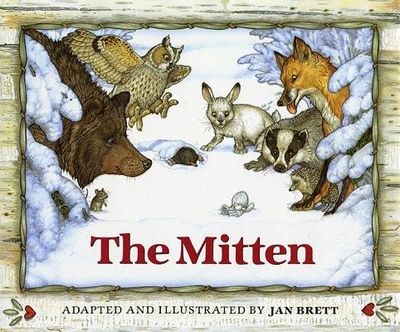
The Mitten
Jan Brett retells a Ukrainian folktale about a boy, a lost white mitten, and the woodland animals that crowd inside until a bear sneezes.
2,609-word summary · 12 min read