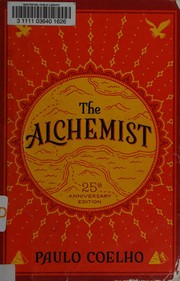
The Alchemist
2,166-word summary 10 min read 197 pages in the book
- First published
- 1988
- Publisher
- HarperOne
- Pages
- 197
- ISBN
- 9780062315007
- Original title
- O Alquimista
Reading options
What's inside (11 sections)
- The boy, the sheep, and the dream
- The crystal merchant and the economics of staying put
- The desert, the Englishman, and the woman at the well
- The alchemist's lessons
- What the book argues, underneath the story
- Why it endures
- What the fable asks of you
- Why people give this book to other people
- The ending, and why the circle matters
- Key takeaways
- FAQ
The Alchemist is a short book that has sold more copies than most novels three times its length. Paulo Coelho published it in Brazil in 1988 as O Alquimista, and the English translation by Alan R. Clarke appeared in 1993. Since then it has been translated into dozens of languages and become a fixture of airport shelves and graduation gifts. I came to it skeptical of anything that popular and finished it with a different feeling. It is not a novel in the usual sense. It is a fable, a road story dressed as a fairy tale, and it works if you accept the terms on which it is written.
The plot, stripped bare, is simple enough to tell in a paragraph. A young Andalusian shepherd named Santiago keeps dreaming about treasure at the Egyptian pyramids. A mysterious old man named Melchizedek tells him about Personal Legends, the thing you are meant to pursue. Santiago sells his sheep, crosses the sea, gets robbed, works for a crystal merchant, joins a caravan, falls in love in the desert, studies with an alchemist, and finally reaches the pyramids, where he learns that the treasure was buried back home under a tree where he first had the dream. Then he goes home and digs it up.
That ending spoils the map but not the book. The point of The Alchemist is never the treasure. It is the instruction manual disguised as a quest.
The boy, the sheep, and the dream
Santiago begins as a contented person who is being nudged out of contentment. He likes his flock, he likes the towns he walks through, and he has a recurring dream that he cannot shake. Coelho takes care to show us that Santiago is not miserable. He is just unfinished. That distinction matters, because the Personal Legend in this book is not an escape from a bad life. It is a response to a quiet itch inside a good one.
Melchizedek, the king of Salem, appears as a somewhat abrupt life coach. He talks about the Soul of the World, about omens, about the fear of suffering being worse than suffering itself. He takes a tenth of Santiago's sheep as a fee, which is the kind of detail a fable can get away with and a realist novel could not. The transaction makes the point: guidance has a cost, and you pay it by giving up what you already have.
From the start, the book is interested in a single question. When you feel pulled toward something you cannot fully explain, do you follow it? Coelho's answer is yes, always, and the rest of the narrative is an extended demonstration of what that yes costs and what it returns.
The crystal merchant and the economics of staying put
The time Santiago spends working for the crystal merchant in Tangier is the most grounded section of the book, and my favorite. The merchant is a man who once had a dream of going to Mecca. He never went. Instead he kept his shop, grew old behind the counter, and uses the idea of the pilgrimage as a reason to keep living without taking the risk. When Santiago suggests small improvements, selling tea in crystal glasses, opening earlier, the merchant resists and then, reluctantly, admits the ideas work. Business improves. Money accumulates. And the merchant becomes more unhappy, because prosperity makes the abandoned dream sharper.
This is Coelho's critique of the dream deferred, delivered through commerce rather than philosophy. The merchant is not a villain. He is careful, respectful, afraid. His fear is that once the goal is reached, there will be nothing left to hope for. Santiago, watching him, decides that he would rather be robbed of his earnings again than become a man who rehearses his pilgrimage in his head forever.
The crystal shop chapter also does something structurally useful. It proves that the Personal Legend path is not naive. Santiago earns, saves, and plans. He does not drift on faith alone. The fable allows for practical intelligence and still insists that practical intelligence in service of the wrong story is just sophisticated stagnation.
The desert, the Englishman, and the woman at the well
Once Santiago joins the caravan, the book opens into landscape. Coelho writes the desert the way some writers write the sea: as a character that strips things away. There are bandits. There are tribal wars on the horizon. There are long silences in which the caravan's scholar, the Englishman, buries himself in books about alchemy while Santiago talks to the wind, the sun, and the silence.
The Englishman is the counterpoint. He has read everything and learned nothing he can feel. He searches for the alchemist's house with indexes and maps. Santiago finds the same information by asking, listening, and paying attention to omens. Coelho is not anti-intellectual exactly, but he is clear about which kind of intelligence this story rewards. Knowledge that does not change how you live is furniture.
Then there is Fatima, the woman at the well in the oasis. Santiago falls in love, and the book pauses to let him almost abandon the quest. Fatima herself refuses to be the reason he stays. She tells him she is a woman of the desert and that if he leaves now for her, he will spend his life resenting her. Love, in this fable, does not cancel the Personal Legend. It waits for it. This is either deeply romantic or slightly suspicious, depending on your temperament, and Coelho does not pretend the choice is easy.
The alchemist's lessons
The figure of the alchemist is the book's teacher-of-last-resort. He speaks in riddles and tests, which is what spiritual mentors do in fables. He tells Santiago that when you want something, all the universe conspires in helping you to achieve it, a line that has been printed on posters and also, fairly, mocked for sounding too neat. The surrounding chapters complicate that optimism. Santiago is nearly killed, nearly turned to wind during a moment of extreme danger, forced to watch violence he cannot stop. The universe conspires, but the conspiracy includes fear, delay, and the possibility of death.
The legend of the boy who wants to become the wind is the strangest set piece in the book, a piece of pure myth in the middle of the journey. It does not advance the plot in any practical way. It does reinforce the book's underlying claim: that the boundary between the ordinary and the miraculous is thinner than we assume, and that a person who has come far enough can, briefly, act as if the rules bend.
The final instruction is the simplest: find the treasure where you started. The pyramid, Santiago learns, only pointed him home. He returns to the abandoned church in Andalusia, digs under the sycamore where he first told his dream, and finds a chest of Spanish gold. The circle closes. He can now go back to Fatima with the story complete.
What the book argues, underneath the story
Strip the desert and the gold and The Alchemist is making a handful of claims. The first is that listening to your own desire is a moral act, not a selfish one. The second is that the journey changes you more than the destination does, a claim that would be a cliche if Coelho did not keep showing the cost of the journey in concrete terms: lost sheep, lost money, lost time, nearly lost life. The third is that the world communicates in signs, and that attention is a form of prayer.
Whether you buy the metaphysics is separate from whether the story works. As a narrative, it has the inevitability of a parable. Every scene points at the same lesson from a different angle. Readers who want moral ambiguity, unreliable narrators, and the mess of real human relations will find this thin. Readers who want a clean, kind, provoking story about risk will find it exactly right.
I will admit the prose can drift toward greeting-card territory in places, and the supporting characters sometimes speak in slogans rather than voices. The Englishman and the alchemist are types more than people. Santiago himself is almost too receptive, a vessel for lessons rather than a stubborn, contradictory kid. These are the prices of the form. Fables do not trade in psychological realism.
Why it endures
Part of the answer is timing. The Alchemist found English-language readers in the early 1990s, when self-help and spirituality were mixing freely in bookstores, and it offered something both genres wanted: permission. Permission to want something specific, to leave the flock, to trust the itch. Oprah recommending it accelerated the climb, but the book was already moving on its own power in countries far from any talk-show audience.
The deeper answer is that the book takes desire seriously. Most of us are taught, early and often, to be reasonable. Reasonable is useful. It also, occasionally, is a polite way of saying afraid. Coelho's shepherd gives up everything reasonable for a dream he cannot prove, and the universe of the book, which is a stubbornly hopeful universe, does not let him become a cautionary tale. He becomes the cautionary tale's opposite.
If you decide to read it, read it slowly and in sittings. It is not a book that rewards rushing, because the rhythm is part of the argument. And if the famous line about the universe conspiring makes you roll your eyes, keep going. The crystal merchant is waiting a few pages later to show you what it looks like when the universe does not get the chance.
What the fable asks of you
Every scene in The Alchemist is doing double duty. The sheep are freedom and also a ceiling. The crystal shop is security and also a warning. Fatima is love and also a test of whether love has to cancel purpose. The Englishman is study without transformation. Coelho stacks these figures like lesson plans, and if you resist the sermonizing you can still watch the structure working.
The prose style matches the form. Short sentences. Repeated refrains. Dialogue that sounds like proverb rather than speech. Readers who want texture will find the desert more convincing than the people, and that is a fair complaint. Santiago is less a character than a channel through which decisions flow. What saves him from blandness is his willingness to act. He sells the sheep. He learns a trade. He keeps walking when the sensible thing is to stop.
Why people give this book to other people
I have watched The Alchemist get handed to graduates, to people quitting jobs, to anyone standing at a crossroads. That social life explains a lot of its fame. It is short enough to finish in a weekend and clean enough to quote without context. The famous line about the universe conspiring does the heavy lifting on gift tags.
The deeper reason is permission. Most of us are trained to want things quietly, as if desire were embarrassing. Coelho treats desire as information. The dream of treasure at the pyramids is not presented as greed. It is presented as a message, and ignoring it is presented as a kind of slow death.
Whether the universe actually conspires is a metaphysical claim I cannot verify. Whether a life organized around a clear want, tested against obstacles and revised by reality, produces more aliveness than a life organized around risk avoidance: that part I believe, and I believe it partly because this thin little book keeps arguing it with a shepherd, a crystal shop, and a tree where the dream began.
The ending, and why the circle matters
Santiago returning home is the move that separates this fable from a plain adventure story. Most quest narratives end at the monument. Coelho ends at the tree. The pyramids are a decoy, almost a joke, and the real chest has been under the sycamore the whole time, which means every mile of the journey was necessary anyway. Without the journey he would never have known to dig.
That structure is why the book frustrates readers who want surprise and delights readers who want pattern. The pleasure is not in the discovery of where the gold is. The pleasure is in watching a person become someone who can find it. The boy who left with sheep returns with a language of omens, a scar, a love waiting at a well, and the knowledge that fear of suffering is usually worse than the suffering.
I would not call The Alchemist profound in the way a dense philosophy book is profound. It is profound in the way a good proverb is profound: portable, slightly stubborn, easy to misuse, and still true enough to change a decision. Give it a quiet afternoon. Let the desert do its work. Then notice which of your own sheep you have been reluctant to sell.
FAQ
What is a Personal Legend in The Alchemist?
Coelho's term for the thing you are meant to pursue. The book argues that when you commit to it, the world conspires to help, though the path still costs something.
Is The Alchemist based on a true story?
No. It is a philosophical fable. Some places are real, but the plot is allegorical rather than historical.
Why do people love or hate this book?
Readers who want a clean parable about purpose tend to love it. Readers who want moral complexity or realistic character work often find it too neat.
Similar books
More like The Alchemist →
War and Peace
Pierre, Natasha, and Andrei search for meaning amid the Napoleonic wars.
2,536-word summary · 11 min read
The Trial
Josef K. is arrested one morning on an unknown charge and pulled into an endless court he can never leave.
2,318-word summary · 10 min read

The Three Musketeers
Young dArtagnan joins Athos, Porthos and Aramis to recover the queens diamonds and face Milady.
2,569-word summary · 11 min read

The Prince
Machiavelli advises Lorenzo on rule through fear and love, fortune, cruelty and mercy.
2,204-word summary · 10 min read
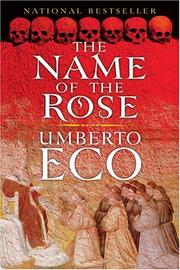
The Name of the Rose
Friar William and Adso investigate 1327 abbey deaths amid library labyrinth.
2,580-word summary · 11 min read

The Karamazov Brothers
Dmitri, Ivan, and Alyosha Karamazov face their father, murder, faith, and doubt in Dostoevsky's final novel.
2,512-word summary · 11 min read