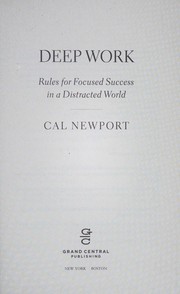
Deep Work: Rules for Focused Success in a Distracted World
2,138-word summary 10 min read 304 pages in the book
- First published
- 2016
- Publisher
- Grand Central Publishing
- Pages
- 304
- ISBN
- 9781455586691
Reading options
What's inside (12 sections)
- Deep work versus shallow work
- The cost of switching
- Four philosophies of depth
- Rituals, locations, and grand gestures
- Social media and the "any benefit" mindset
- Drain the shallows
- Criticisms and limits
- What I changed after reading it
- The rules that actually stick
- A fair objection and a narrower truth
- Key takeaways
- FAQ
Cal Newport is a computer science professor who writes about attention with the mild exasperation of someone who watches students and colleagues drown in notifications and cannot understand why the lifeboat is controversial. Deep Work, published in 2016, made his argument famous: focused, distraction-free work on cognitively demanding tasks is becoming both rarer and more valuable, and most of us are doing almost nothing to protect it.
I picked the book up after realizing that my best writing days had a pattern. Long stretch, no phone, one document open. Everything else was negotiation, interruption, and the strange fatigue that comes from switching contexts forty times before lunch. Newport's book named that pattern and then gave it a program. Whether you agree with every rule, the diagnosis is hard to unsee.
Deep work versus shallow work
Newport opens by defining two kinds of professional activity. Deep work is cognitively demanding effort performed in a state of distraction-free concentration: writing a proof, drafting a chapter, coding a difficult system, preparing a high-stakes argument. Shallow work is everything logistical and logistical-adjacent: email, scheduling, status updates, formatting slides, meetings that could have been a paragraph.
The claim is not that shallow work is evil. It is that the economy is quietly sorting people into two groups. Those who can concentrate and produce non-obvious value are becoming hard to replace. Those whose work can be fragmented into constant replies are easy to automate, offshore, or overload. Newport points to a familiar split in offices: a small number of people who make the important decisions and a large number who keep the machine of communication running.
He cites research on deliberate practice and on the history of creative achievement to show that quality work tends to happen in long sessions. The examples range from Carl Jung retreating to a tower by Lake Zurich to Peter Higgs working in near isolation before his Nobel-winning physics, to J. K. Rowling checking into a hotel to finish a Harry Potter manuscript away from family noise. The common thread is subtraction. These people did not add more inputs. They removed them.
The economics angle matters too. Newport argues that as tools make shallow collaboration frictionless, the default state of a knowledge worker becomes continuous partial attention. The person who fights that default with rigid blocks of focus becomes an outlier, and outliers, in a market, can charge for scarcity.
The cost of switching
A chapter on attention residue, building on work by Sophie Leroy, explains why constant switching hurts more than the minutes it consumes. When you jump from email to a hard problem and back, a residue of the previous task stays on your attention, the way soap film stays on glass. You are present in the meeting and half present in the unfinished reply. Multiply that by a day and you get the specific tiredness of people who were busy all day and cannot name one thing they finished.
Newport is good on the hidden geometry of a modern calendar. A meeting is not sixty minutes. It is sixty minutes plus the recovery time on either side, plus the anxiety of the unfinished work you had to postpone. Once you price that in, a day of scattered meetings is not a day of moderate productivity. It is a day with very little room for anything deep at all.
He also pushes back on the idea that distraction is a moral failing of weak individuals. His point is structural. Distraction is a byproduct of tools that make interruption free for the interrupter and expensive for the interrupted. If the office rewards responsiveness, responsiveness is what you will get, along with everything responsiveness costs.
Four philosophies of depth
The middle of the book offers four ways to organize a working life around deep work, presented as philosophical choices rather than one-size rules.
Monastic philosophy: eliminate or radically reduce shallow obligations. This is for people with unusual freedom, like bestselling authors or researchers with protected funding. Newport admits most of us cannot live this way and should not pretend we can.
Bimodal philosophy: split time into long deep stretches (days or weeks) and shallower periods for everything else. The example of novelist Neal Stephenson's availability habits and the academic conference model fits here. You are unreachable for a stretch, then fully available for a stretch. The rule is communicated so people are not left guessing.
Rhythmic philosophy: same time, every day, no negotiation. The classic image is a writer who pages first thing each morning before the day can make claims. Newport likes this one for its simplicity. It converts willpower into schedule.
Journalistic philosophy: fit deep work into whatever gaps appear. This requires skill and a tolerance for starting hard things in noisy conditions. It is for people who have trained the muscle. Beginners should not begin here.
Most readers will land on rhythmic, with occasional bimodal retreats when a project needs a wall around it. Newport does not pretend the choice is permanent. The point is to pick deliberately instead of letting the inbox choose for you.
Rituals, locations, and grand gestures
Newport takes environment seriously. He describes the research on how small cues prime the mind: a dedicated desk, a specific chair, a fixed start sequence. The habit of sitting in the same place and beginning the same way reduces the friction of starting, which is where most deep sessions actually die.
The grand gesture chapter is fun. He tells the story of J. K. Rowling finishing Deathly Hallows in a hotel suite because home had become a museum of interruptions, and he mentions Bill Gates's famous think weeks at a cabin. The point is not that you need a hotel. It is that sometimes the correct engineering response to a polluted environment is to leave it entirely, at real cost, rather than to try to think pure thoughts through a door with a window in it.
He also argues for a shutdown ritual at the end of the workday: a checklist, a final glance at the inbox, a spoken phrase that marks the boundary. The ritual does not magically close your tabs. It tells your brain that the open loops have been acknowledged, which reduces the background hum that follows knowledge workers into the evening.
Social media and the "any benefit" mindset
This is the chapter that generated the most pushback, and it is worth reading carefully rather than judging from quotes. Newport's argument is that asking whether a tool brings any benefit is the wrong question. Almost everything brings some benefit. The right question is whether this tool substantially supports the core goals of your professional life, and for a surprising number of knowledge workers, the honest answer for Twitter, Instagram, or LinkedIn is no.
He walks through case studies of people who quit or radically limited social media and found their focus improved without their careers collapsing. The tone is not anti-technology in general. He is a computer scientist who likes tools. He is anti-default. Letting an algorithmic feed colonize the gaps in your day is a decision. Making it consciously is different from making it by inertia.
Readers who use social media as their primary professional channel will feel targeted. The useful move is to separate the identity argument from the scheduling argument. Even if you keep the accounts, treating them as scheduled shallow work rather than as ambient background changes how much of your day they own.
Drain the shallows
The final section gets practical about email, meetings, and the fantasy of inbox zero. Newport proposes a few principles. Process emails by outcome rather than by clear-out: decide what decision or action the message needs, send that, and stop. Give people a clear sense of your availability so they do not need to ping you to find out. Batch the low-stakes messages into scheduled windows.
He is harsher on meetings than on email. A meeting should have a clear agenda, a small number of people, and a concrete deliverable. If a problem can be solved by two people talking for ten minutes in a hallway or a quick call, it does not need a recurring calendar invite that swallows six people's afternoon.
The closing chapters argue for a fixed-schedule productivity approach: set the end of your workday and let the constraint force better prioritization. When the evening is non-negotiable, the day stops pretending that everything is equally urgent. Newport's own academic output, papers and books alongside teaching, is his running proof of concept.
Criticisms and limits
The book is strongest as a diagnosis and thinner as a universal prescription. Not everyone has the job structure to demand bimodal focus. Customer support, emergency medicine, parenting, and a hundred other realities do not bend to a deep work manifesto. Newport acknowledges this in places, but the examples skew toward writers, programmers, researchers, and executives, which can make the advice feel aimed at a narrow room.
There is also a tension between the ideal of solitude and the reality that many breakthroughs happen in conversation, workshops, and teams. Newport is not against collaboration. He is against collaboration as a default that never lets individual concentration happen. Still, readers in heavily collaborative cultures may need to translate his rules into their own terms rather than import them wholesale.
The social media chapter has aged in an interesting way. Some of the platforms he dismissed as frivolous have become job markets. Some of the ones he respected have become noise. The underlying question, what does this tool do to my attention, ages better than any specific verdict about any specific app.
What I changed after reading it
I did not adopt the full system. I started with two pieces. First, a daily block of ninety minutes with the phone in another room and one task open, protected on the calendar like a meeting with a person who will be annoyed if I cancel. Second, a shutdown check at the end of the day so I could stop rehearsing unfinished work while trying to sleep.
Both changes were small and both stuck, because Newport's real insight is not productivity hacks. It is that attention is a finite resource with an opportunity cost, and that modern work culture is optimized to spend it badly. Once you believe that, the rituals stop feeling like discipline and start feeling like accounting.
If you read Deep Work, take the four philosophies seriously and the anecdotes lightly. Pick the rhythm you can defend on your worst week, not your best one. The book's own advice applies to itself: the goal is not to finish it with highlights. The goal is to walk away with one constraint you will still be following in a month.
The rules that actually stick
Beyond the philosophy, Newport offers a handful of concrete rules that survive contact with a messy calendar. One is the shutdown check: at the end of the workday, review what was completed, capture open loops, and say some version of the day is done. It sounds theatrical. It works because unfinished tasks keep a low-grade claim on working memory, and a captured task can be released.
Another is the core questions: what am I trying to achieve, and how will I know I succeeded? Applied to a project, it cuts the difference between motion and progress. Applied to a tool or a meeting, it is a small bomb. If nobody can answer both questions, the activity is probably shallow work wearing a costume.
He also argues for productive meditation: walking without a phone while holding one hard problem in mind. The point is not fitness. It is practicing the muscle of staying with a single thread when nothing is feeding you new input. In a feed-shaped attention economy, that practice feels almost eccentric, which is a sign of how rare it has become.
A fair objection and a narrower truth
The strongest objection to Newport is that deep work is a luxury good. Not every job allows long uninterrupted blocks. Not every caregiver or responder can mute the world. The book acknowledges this unevenly, and readers in high-interruption roles may need to translate rather than import.
Even so, the narrower truth holds almost everywhere: most people protect far less focused time than their real work requires, and the calendar, not the will, is usually where that protection fails. You do not need a monastic retreat to believe that. You need one defended hour and the willingness to let something less important wait.
That is the version of Deep Work I kept. Not a purity contest. An accounting practice for attention, done daily, with enough honesty to admit what the day actually cost.
FAQ
Who is Deep Work for?
Writers, programmers, researchers, students, and anyone whose job rewards non-obvious output from sustained concentration. It is less useful if your day is mostly reactive meetings and ticket queues.
What is the main idea of Deep Work?
Focused, distraction-free work on cognitively demanding tasks is becoming both rarer and more valuable, so protecting long blocks of attention is a career skill, not a luxury.
Does Newport hate social media?
No. He argues that asking whether a tool brings any benefit is the wrong test. The right question is whether it substantially supports your core professional goals.
Think and Grow Rich
Hill teaches desire, faith and autosuggestion, distilling lessons from Carnegie interviews into thirteen principles for success.
2,458-word summary · 11 min read

Who Moved My Cheese?
A tiny parable about two mice and two little people hunting cheese in a maze, and why adapting to change beats waiting for old days to return.
2,533-word summary · 11 min read
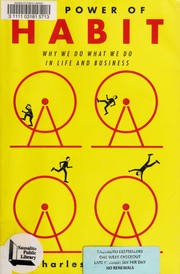
The Power of Habit
Why we do what we do: the cue routine reward loop, keystone habits, and how companies and movements use the same science, from toothpaste to the bus boycott.
2,207-word summary · 10 min read

The Tipping Point: How Little Things Can Make a Big Difference
How tiny shifts push ideas and products past a tipping point into epidemics.
2,014-word summary · 9 min read

Outliers: The Story of Success
Success comes from practice, timing, and hidden chances more than talent alone.
1,934-word summary · 9 min read

Atomic Habits
A practical walkthrough of Atomic Habits: why tiny changes compound, how identity shapes behavior, and the four laws Clear uses to build good habits and break…
2,170-word summary · 10 min read