
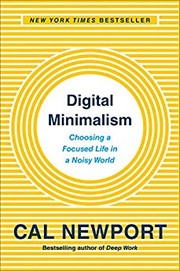
Digital Minimalism: Choosing a Focused Life in a Noisy World
2,701-word summary 12 min read 304 pages in the book
- First published
- 2019
- Publisher
- Portfolio
- Pages
- 304
- ISBN
- 9780525536512
Reading options
What's inside (9 sections)
I came to this book skeptical. I had read Newport's Deep Work and agreed with its diagnosis, but I had also watched a lot of people read that book, nod hard, and go straight back to the same habits the next morning. Digital Minimalism, published in 2019, is his second attempt at the same problem, and it is more demanding in a specific way: it asks you to change your environment rather than merely your intentions. Newport is a computer science professor at Georgetown University, and that training shows. He does not write like a life coach. He writes like an engineer who has looked at the system and concluded that the average person has no chance against it using willpower alone. By the end I was partly converted and partly irritated, which I have come to think is the correct response.
The arms race nobody agreed to join
Newport opens by describing what he calls a lopsided arms race. On one side are companies like Google and Facebook, whose business depends on what he calls "eyeball minutes." He argues that extracting those minutes has become more lucrative than extracting oil. These companies employ large teams of engineers whose entire job is to make their products harder to put down, testing small changes in buttons and feeds and notifications until they find the version that keeps you a few seconds longer. On the other side is you, sitting at home at night, deciding yet again that tonight you will only check one thing.
That is the asymmetry. There is no contest. Newport is careful not to paint the executives as villains in a cartoon. He points out that these are rational businesses responding to incentives, and that the people building the tools are often the people most vulnerable to them. But the result is a marketplace optimized against the user's own goals, and the user is told that the problem is a lack of discipline. It is not. The deck is stacked, and the phrase "just use it in moderation" is exactly what the system wants you to believe, because moderation still produces the minutes the system sells.
I found this framing more honest than most writing about technology. A lot of self help treats your phone as a harmless tool that you are simply failing to manage well. Newport treats it as an engineered environment with a purpose that is not yours. That shift matters, because it changes what a solution has to look like. If the problem is inside your head, you need more willpower. If the problem is in the design of the thing, you need to change your relationship with the thing.
What digital minimalism actually asks
Newport defines his term precisely, and the definition is worth quoting because everything else in the book hangs off it:
A philosophy of technology use in which you focus your online time on a small number of carefully selected and optimized activities that strongly support things you value, and then happily miss out on everything else.
There are three ideas buried in that sentence. The first is that clutter is costly, that a hundred small online habits each take a little time and a little attention and together add up to a life you did not choose. The second is that optimization matters, that once you decide a tool serves something you value, you should use it as deliberately as a professional would, rather than drifting through it. The third is that intentionality is satisfying, that there is a particular pleasure in knowing exactly why a thing is in your life and being able to name what it is for.
He illustrates this with a man he calls Tyler, who joined social media for the standard reasons: to help his career, to stay connected, and to be entertained. Once Tyler thought like a minimalist, he realized that his compulsive scrolling offered only minor help with any of those goals and was not the best way to achieve any of them. So he quit social media entirely and went after those three things more directly. Newport meets him about a year later and finds a man who has started volunteering near his home, exercises regularly, and is reading several books a month. Tyler is not presented as a saint. He is presented as someone who took the same goals seriously enough to change the method.
This is the part of the book I found most persuasive. Newport is not arguing that technology is bad or that you should live in a cabin. He is arguing that most of us never ask the question "what is this for?" and that when we finally do, the honest answer is often "nothing I would choose on purpose." The minimalist standard is brutal and clarifying: a tool must strongly support something you already value. Not weakly. Not occasionally. Strongly. Under that test, a surprising amount of a normal digital life fails.
The thirty day declutter
Newport knows that reading about this is easy and doing it is hard, so he proposes a reset. He calls it the digital declutter, and the rules are simple. Set aside thirty days. During those thirty days, take a break from every optional technology in your life. Not the tools you need for work or for managing a household, but the ones you use by choice. Then, during the break, go find other things to do. Walk, read, talk to people face to face, sit outside. At the end of the thirty days, reintroduce the optional tools from a blank slate, one at a time, and for each one ask what value it serves and exactly how you will use it to serve that value.
He tested this in the early winter of 2018 with more than 1,600 volunteers who agreed to do the declutter and report back. The book draws on their accounts, and this is where it stops being a thesis and becomes a manual. Participants describe the first week as uncomfortable, the strange emptiness of reaching for a phone that is not there, and then the gradual return of things they had stopped noticing. Newport's description of the process as a jarring reset is accurate. You enter as what he calls a frazzled maximalist and leave, if it works, as an intentional minimalist.
He also explains why he rejects the gentle approach. He argues that gradually cutting back does not work, because the pull of the attention economy and the convenience of the tools keep wearing down your resolve until you slide back to where you started. Change has to be fast enough and firm enough to stick. This is good advice for some people and terrible advice for others. I know people for whom a thirty day break would be a genuine relief, and people for whom it would be a setup for a spectacular relapse. Newport acknowledges that the experiment is demanding, but he is more confident than I am that one size fits.
Learning to be alone again
The fourth chapter, "Spend Time Alone," is the one I would hand to a skeptical friend first. It is less about gadgets and more about a capacity that Newport thinks we are losing. He borrows a definition from Raymond Kethledge and Michael Erwin: solitude is a subjective state in which your mind is free from input from other minds. It is not about being physically alone. You can be alone in a room with your phone and never be solitary at all, because other people's thoughts are pouring in.
Newport's evidence here is historical and practical. He describes Abraham Lincoln's habit of retreating to a cottage away from the White House, and cites research suggesting that the quiet reflection it allowed may have helped him make sense of the traumas of the Civil War. He describes the federal judge Raymond Kethledge writing his opinions at a plain pine desk in an unrenovated barn with no internet connection. He quotes Blaise Pascal on the human inability to sit quietly in a room alone, and Benjamin Franklin calling solitude an agreeable refreshment to a busy mind. He names the three things solitude provides: new ideas, an understanding of yourself, and closeness to other people.
The condition he worries about is what he calls solitude deprivation, spending almost no time alone with your own thoughts and free from other people's input. He quotes a college student at a residential anxiety treatment center who said that social media had become a thing they could not live without and that it was making them crazy. Newport's claim is that we have systematically removed a basic human need without noticing, and that the effects show up as anxiety and a loss of direction.
The practices in this chapter are refreshingly physical. Leave your phone at home, he says, pointing to the Alamo Drafthouse cinema in Austin, which bans phone use during films and means it. Take long walks alone, and preferably without a phone. He notes that Nietzsche walked up to eight hours a day and wrote that only thoughts reached by walking have value, while Thoreau claimed he could not preserve his health and spirits without hours of daily "sauntering." Write letters to yourself, he adds, as a way of thinking on paper. Newport says his own walks are when he works through math proofs and book outlines, and that he is noticeably happier and more productive when he walks regularly. I tried the walking recommendation while reading, and the odd thing is how quickly it stopped feeling like advice and started feeling like a fact.
Don't click like
Chapter five makes a claim I expected to dislike and ended up finding hard to dismiss. Newport argues that clicking "like" and leaving little comments on social media quietly teaches your mind that connection is an acceptable substitute for conversation. He wants you to stop doing both. Ever. No "so cute," no "so cool," no thumbs up. Keep the accounts if you must, but use them as a phone book, and then call the person.
The evidence is the social media paradox: the more time people spend "connecting" on these platforms, the more isolated they report being. Newport cites studies that found correlations between heavy use and perceived isolation and poorer physical health. His explanation is that online interaction is cheap and fast, while conversation costs more energy, and humans reliably choose the cheaper option even when it is worse for them. So we text a sibling instead of calling, and we like a photo of a friend's new baby instead of going to see the baby. The small reward of the click cannot compensate for the large loss of the visit.
He offers a philosophy he calls conversation-centric communication. Under it, only actual conversation, face to face or by video or phone, counts toward maintaining a relationship. Connection gets demoted to logistics: arranging the conversation or passing along practical information. This is a demanding rule and Newport is honest about the cost. You will end up with fewer active relationships. He notes that the idea of keeping up with hundreds of weak ties is mostly a recent invention, and quotes an academic who simply says that people were not meant to stay in touch with so many others. A related practice is to keep the phone in Do Not Disturb mode by default so that texts arrive without interrupting you.
I want to register a fair objection here. For some people, especially those with family far away or communities that gather mostly online, a blanket ban on likes and comments would cut real ties rather than fake ones. Newport's rule works best for people whose online life is mostly noise. I also noticed that the chapter's certainty occasionally outruns its evidence, since correlation is not causation and the studies he cites cannot prove that clicking a button made anyone lonely. His argument is strong as a personal discipline and weaker as a universal prescription.
Leisure that asks something of you
The sixth chapter moves from what to stop doing to what to do instead. Newport's worry is that if you remove the low quality distractions without putting something in their place, the empty time will pull you straight back. He turns to Aristotle, who argued that the best and pleasant life is the life of the intellect, and that a good life requires activities done for the satisfaction they generate rather than for some further payoff. This is not a plea to be productive in your free time. It is a plea to be engaged in it.
He tells the story of a man named Pete who owns no television, subscribes to no streaming services, and gets his satisfaction from making things: carpentry, weight training, writing, instruments, lists and the execution of them. Pete says that inactivity leads to a kind of depressive boredom. Newport calls the underlying idea the Bennett Principle and draws the first lesson from it: prioritize demanding activity over passive consumption. He points to Theodore Roosevelt, who boxed until a blow detached his retina, practiced jujitsu, swam in the Potomac, and read a book a day, and to a woman named Liz who found that clearing trails could feel more rewarding than scrolling Twitter. Newport is not romanticizing hard work here. He is making a narrower claim, that the mind wants change and challenge more than it wants rest, and that passive entertainment often leaves us emptier than we were.
His compromise is sensible. Schedule the low quality leisure deliberately. If you want to spend an evening binge watching a show while scrolling, do it in a bounded window that you chose in advance, and stay offline the rest of the time. This is the most usable idea in the book for people like me who resist rigid rules. It admits that sometimes you want junk and that wanting junk is not a moral failure. The point is to make it a choice rather than a default.
The attention resistance, and what the book gets wrong
The final chapter, "Join the Attention Resistance," introduces a loose movement of people who use technical tools and strict procedures to take what they want from the attention economy without being consumed by it. Newport's practical list is concrete: delete social media from your phone, since mobile versions pose the greatest risk, turn your devices into single purpose computers, use social media the way a professional would, embrace slow media, and dumb down your smartphone. The governing equation is blunt, your time is their money.
I liked the ending less than the middle. The resistance framing gives the book a hint of tribal swagger, and some of the practices read like projects for people who enjoy configuring their tools more than using them. There is also a tone problem that runs through the whole book. Newport keeps insisting that the minimalist standard is not about denial but about choosing what you value, and then he keeps writing as though there is a correct answer and most people are getting it wrong. Readers who want permission to keep a few messy, half hearted habits will not find it here. The claim that you should "happily miss out on everything else" is harder than it sounds, because missing out is not always happy, and some of what we miss is a real part of a life.
Still, the book did something to me that Deep Work did not. It moved the argument from the mind to the environment. I came away less convinced that I should throw away my accounts than that I should stop pretending my phone is a neutral object. Newport's best insight is not that technology is harmful. It is that a tool designed by people who want your attention will get your attention, and that the only reliable defense is to decide in advance what your attention is for. That is a modest claim, and a useful one, and it is the reason this book is worth reading even if you reject half of it.
FAQ
What is the digital declutter?
It is a thirty day break from optional technologies, after which you add tools back one by one and define the specific value each will serve. Newport tested the process with more than 1,600 volunteers in 2018.
Does Newport say everyone should quit social media?
He offers a personal standard rather than a universal rule. His harshest advice is to stop clicking like and leaving comments, and to treat social accounts as a way to arrange real conversations instead of a substitute for them.
Is this a sequel to Deep Work?
It tackles the same attention problem from a different angle, focusing on your digital environment and daily habits rather than on focused work alone. Portfolio published it in 2019.
Similar books
The Power of Your Subconscious Mind
Joseph Murphy argues that the subconscious accepts whatever the conscious mind repeats, so worry and confidence quietly grow into very different lives.
2,259-word summary · 10 min read
The Miracle Morning
Hal Elrod argues that the first hour of the day sets its tone, and offers six short practices, silence, affirmations, visualization, exercise, reading and…
2,240-word summary · 10 min read

Ikigai: The Japanese Secret to a Long and Happy Life
Two Spanish writers explain the Japanese idea of a reason for being, drawing on Okinawan centenarians, flow, friendship and the acceptance of imperfection.
2,030-word summary · 9 min read
Flow: The Psychology of Optimal Experience
Csikszentmihalyi's 1990 study of optimal experience asks when people feel most alive and finds the answer in a balance of challenge and skill. Drawing on…
3,073-word summary · 14 min read
Everything is F*cked: A Book About Hope
Manson argues that hope, built on control, values, and community, keeps despair at bay, then takes apart the stories and diversions we use to sustain it.
2,789-word summary · 12 min read

The Courage to Be Disliked: The Japanese Phenomenon That Shows You How to Change Your Life and Achieve Real Happiness
A philosopher and an angry young man argue over five nights about Adlerian psychology, trauma, approval, and the freedom to be disliked.
2,054-word summary · 9 min read

Four Thousand Weeks: Time Management for Mortals
Oliver Burkeman turns the whole productivity project on its head, arguing that a human lifespan of roughly four thousand weeks is not a problem to optimize…
2,447-word summary · 11 min read
The Road Less Traveled: A New Psychology of Love, Traditional Values and Spiritual Growth
M. Scott Peck argues that maturity begins with accepting difficulty, then builds discipline, love, and spiritual growth through honest, often painful work.
2,200-word summary · 10 min read
How to Stop Worrying and Start Living
Carnegie offers day-tight routines for worry built from interviews and worker stories.
2,505-word summary · 11 min read
Essentialism
McKeown argues for less but better: discern the vital few, refuse the trivial many, and use buffers, small wins, and steady routines so key work gets done well…
2,421-word summary · 11 min read
The Untethered Soul
Singer names the noisy inner voice and shows how watching thoughts, loosening old hurt, and keeping the heart open through surrender can ease daily suffering…
2,752-word summary · 12 min read
The Art of Happiness
The Dalai Lama and psychiatrist Howard Cutler link lasting happiness to training the mind, human warmth, compassion, and basic spiritual values for daily life.
3,394-word summary · 15 min read
A New Earth
Tolle maps ego pain and shows how presence can loosen roles, thoughts, and suffering.
1,909-word summary · 8 min read
12 Rules for Life
Twelve essays on responsibility from posture to truth to petting cats.
2,045-word summary · 9 min read
Deep Work: Rules for Focused Success in a Distracted World
Cal Newport's Deep Work in full: what focused work actually is, why shallow busyness wins by default, and the four philosophies he recommends for protecting…
2,138-word summary · 10 min read
The Defining Decade: Why Your Twenties Matter - and How to Make the Most of Them Now
A clinical psychologist argues that the twenties are not a holding pattern and urges readers to build skills, ties, and commitment now.
2,443-word summary · 11 min read
How to Change Your Mind
Pollan blends the history of psychedelic research, his own guided trips, and current neuroscience to ask what these drugs reveal about consciousness.
2,466-word summary · 11 min read

Wild at Heart: Discovering the Secret of a Man's Soul
Why do men feel bored and tame? John Eldredge argues a man's heart is wild by design, and that recovering it means facing the wound and the question of whether…
2,289-word summary · 10 min read
The Art of Loving
Fromm argues that love is an art requiring care, responsibility, respect and knowledge, not a feeling we simply fall into. A short, stern classic of 1950s…
3,175-word summary · 14 min read
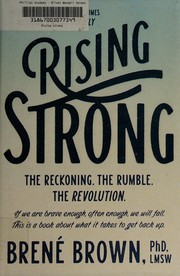
Rising Strong: The Reckoning. The Rumble. The Revolution.
Brené Brown's 2015 book asks what happens after we fall, and argues that examining the stories we invent about failure and heartbreak is the path to getting…
2,271-word summary · 10 min read
Getting to Yes: Negotiating Agreement Without Giving In
Fisher and Ury propose negotiating on interests rather than positions, using fair standards and a clear alternative if no deal is reached.
2,231-word summary · 10 min read
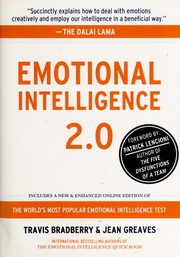
Emotional Intelligence 2.0
Bradberry and Greaves turn emotional intelligence into four learnable skills, a self-assessment and dozens of strategies, while their headline numbers rest on…
3,276-word summary · 15 min read
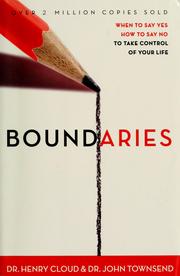
Boundaries: When to Say Yes, How to Say No to Take Control of Your Life
A Christian self-help book that treats a boundary as a personal property line and applies the idea to family, friendship, marriage, work and the self.
2,047-word summary · 9 min read

Atlas of the Heart: Mapping Meaningful Connection and the Language of Human Experience
Brené Brown maps 87 emotions and experiences into thirteen 'places we go,' arguing that precise language changes what we can ask for and how we connect.
2,491-word summary · 11 min read
The Obstacle Is the Way: The Timeless Art of Turning Trials into Triumph
A 2014 Stoic self-help book arguing that perception, action and will can turn setbacks into fuel, told through historical anecdotes.
2,669-word summary · 12 min read
As a Man Thinketh: A book that will help you to help yourself
In seven short chapters, James Allen argues that character and circumstance grow from thought, and that changing how you think is the practical route to…
2,673-word summary · 12 min read
What Happened to You?
Oprah Winfrey and psychiatrist Bruce Perry explain how early experience shapes the brain, and why asking what happened to someone works better than asking what…
2,238-word summary · 10 min read

Moonwalking with Einstein: The Art and Science of Remembering Everything
A journalist spends a year training for the U.S. Memory Championship and discovers that extraordinary memory is mostly technique, attention, and a lot of…
2,027-word summary · 9 min read
The Total Money Makeover: A Proven Plan for Financial Fitness
Dave Ramsey lays out seven Baby Steps, from a $1,000 starter fund to a paid-off house, with the debt snowball at the center.
2,663-word summary · 12 min read
Don't Sweat the Small Stuff ... and It's All Small Stuff: Simple Ways to Keep the Little Things from Taking Over Your Life
Richard Carlson’s 1997 bestseller offers one hundred short chapters on lowering the volume on daily irritations, and it is more pragmatic than its title…
2,502-word summary · 11 min read