
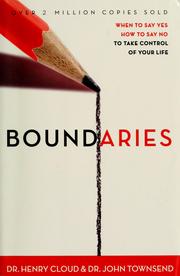
Boundaries: When to Say Yes, How to Say No to Take Control of Your Life
2,047-word summary 9 min read 304 pages in the book
- First published
- 1992
- Publisher
- Zondervan
- Pages
- 304
- ISBN
- 9780310585909
Reading options
What's inside (7 sections)
The property line
The central premise of this book is that a boundary is a personal property line. It marks the things for which you are responsible and the things you are not. The authors argue that clear boundaries are essential to a healthy, balanced life, and that they affect every area of it. This is a self-help book built on a single, extendable metaphor, and its strength is that the metaphor keeps producing useful distinctions.
Physical boundaries determine who may touch you and under what circumstances. Mental boundaries give you the freedom to hold your own thoughts and opinions. Emotional boundaries let you deal with your own emotions and disengage from the harmful, manipulative emotions of others. Spiritual boundaries distinguish God's will from your own and, in the authors' phrase, give you renewed awe for your Creator.
The book was first published in 1992 by Zondervan, the denominational press of the Christian and Missionary Alliance. It was written specifically for Christians who focus so heavily on being loving and unselfish that they forget their own limits. That audience matters. The authors are not writing about boundaries as a secular therapeutic technique. They are writing for people whose faith has been used to make them feel guilty for saying no.
The authors are careful to insist that a boundary is not a wall. A wall shuts people out. A boundary marks where one person ends and another begins, which is a different thing. That distinction runs through every chapter and prevents the book from becoming a manual for avoidance. The goal is not less contact with people. It is contact in which both people know who is responsible for what.
The four kinds of boundaries are worth separating because the book gets more specific as it goes. A physical boundary might be about touch or privacy. A mental boundary lets you think for yourself in a family or a workplace where everyone expects agreement. An emotional boundary keeps you from taking on a mood that belongs to someone else. A spiritual boundary, in the authors' framing, lets you belong to God without confusing your own wishes with God's.
I picked it up because it is one of those books that has escaped its original audience. The word "boundaries" is now common vocabulary in workplaces and families, and much of that usage traces back to this book. It is worth seeing where the idea came from.
The questions
The opening framing questions are direct. Can I set limits and still be a loving person? What are legitimate boundaries? What if someone is upset or hurt by my boundaries? How do I answer someone who wants my time, love, energy or money? Aren't boundaries selfish? Why do I feel guilty or afraid when I am considering them?
Those questions are the book's engine. The authors assume the reader has been taught that a good Christian says yes, and that any refusal is a failure of love. They spend the early chapters showing that this is a misunderstanding, and that a person who cannot say no is not loving but unavailable.
Part One, called What Are Boundaries?, opens with a vignette titled A Day in a Boundaryless Life. The famous first line is that the alarm jangled. The reader is dropped into a day run entirely by other people's demands, and the chaos is immediate. Chapters follow on what a boundary looks like, the problems that come from not having one and how boundaries are developed. The authors' claim is that limits are normal and learnable, not a sign of selfishness.
A chapter called Ten Laws of Boundaries sets out governing principles for ownership, responsibility and choice. I will not list them here, because the summary I consulted was built from the table of contents rather than the full text, and a faithful account of the laws would require the book in front of me. It is enough to say that they are the book's most quoted section and that they turn the metaphor into a system.
Common Boundary Myths answers the expected objections: that boundaries are unloving, that they are selfish and that they are a failure of Christian charity. That chapter is where the book speaks most directly to its original audience. It is not enough to tell a person they may say no. You have to tell them that saying no does not make them bad.
The relationships
The book's opening vignette is worth describing because it does more work than a list of principles. A man wakes to an alarm, and before the day has really begun he is already answering other people's demands. The prose is deliberately flat, and the accumulation is what makes it effective. Nothing dramatic happens. He simply never has a moment that belongs to him. By the end of the chapter, the reader understands why the authors think a boundary is a form of freedom rather than a form of refusal.
The closing chapter replays that day with limits in place. The same alarm rings, and the difference is that the man can decide which demands are his. That symmetry is one of the book's best pieces of construction. It shows change as a difference in response rather than a difference in circumstances, which is a more honest account of what self-help can do.
Part Two applies the model to specific relationships. Boundaries and Your Family covers limits with parents and relatives, which is where many readers will recognize their own lives. Boundaries and Your Friends addresses saying no without guilt and distinguishing genuine need from manipulation. Boundaries and Your Spouse argues for maintaining individual identity and mutual limits inside marriage. Boundaries and Your Children covers teaching kids limits and allowing them to own the consequences of their choices.
Boundaries and Work applies limits to time, workload and authority in the office. Boundaries and Your Self turns inward: self-control, honesty and responsibility for one's own feelings and behavior. This is the most important chapter for understanding the book's argument. The authors do not present boundaries as a weapon against other people. They present them as a way of knowing what is yours to manage.
Boundaries and God handles the spiritual dimension, arguing that personal will should be submitted to God's will rather than using religion as a way to avoid limits altogether. That chapter is the book's theological foundation and the one that most clearly separates it from secular self-help.
Part Three is called Developing Healthy Boundaries. It begins with Resistance to Boundaries, which warns that people who benefited from your lack of limits will push back when you change. That is one of the book's most practical observations. A family that has always relied on you to absorb everything will not congratulate you for stopping. They will call it selfish, and you need to be ready for that.
How to Measure Success with Boundaries reframes progress as gradual growth in freedom and responsibility rather than instant transformation. The closing chapter, A Day in a Life with Boundaries, deliberately replays the opening vignette, showing a similar day lived with limits. That symmetry is the book's best structural decision. The reader gets to see the same alarm jangle in a life that no longer belongs entirely to other people.
The authors and the legacy
Henry Cloud earned a PhD in clinical psychology from Biola University in 1987. He and John Townsend co-directed the Minirth-Meier Clinic West in Newport Beach, California, and later ran Cloud-Townsend Resources together. That combination of clinical training and pastoral writing is exactly what the book's argument requires. They are not offering advice from the pulpit alone, and they are not offering therapy stripped of moral context.
The book sold roughly two million copies and grew into a five-part series, including Boundaries with Kids, Boundaries in Marriage, Boundaries in Dating and Beyond Boundaries. An updated and expanded edition appeared in 2017. The fact that the series grew in those directions shows what readers wanted: the original idea applied to the specific relationships where they were struggling.
I should note a small bibliographic wrinkle. Open Library has two conflicting 1992 records, one giving 304 pages and another giving 400. The 304-page record is the one attached to the canonical first-edition ISBN and is the figure used here. Subtitle punctuation also varies between editions, with some catalogs rendering it as How to Say No, to Take Control and others as When to Say No to Take Control.
The chapter on children is worth singling out. The authors argue that teaching a child limits and allowing them to own the consequences of their choices is a form of love, not a failure of it. That idea has become common in parenting books, and this book helped make it common. The chapter on work is similarly practical about time and authority, though its examples are firmly rooted in the office culture of the early 1990s.
I also want to note how the book treats guilt. The authors do not tell readers that guilt is always false or that they should ignore it. They ask readers to examine what the guilt is telling them. If a person feels guilty because they have genuinely failed someone, that guilt is information. If they feel guilty because someone else is uncomfortable with their limit, that is a different situation. That distinction is one of the book's most durable contributions.
One thing the book does better than many of its successors is admit that the process is slow. How to Measure Success with Boundaries refuses to present change as a single dramatic confrontation. The authors describe growth in freedom and responsibility as gradual, which matches what most people actually experience. A person does not wake up one morning and become able to say no. They get a little better at it over years, and they fail often along the way.
What I think
The book's central idea has become so common that it is easy to underestimate how useful it was. A person who has never thought of their responsibilities as having an edge can be transformed by the simple suggestion that there is a line and they are allowed to draw it. The chapters on resistance and on measuring success are still genuinely helpful. The book is honest about the fact that changing your boundaries will make other people uncomfortable.
The weaker parts are the ones most tied to the 1990s Christian market. Some of the illustrations feel dated, and the framing assumes a reader who shares the authors' theological commitments. Readers outside that tradition will find the spiritual chapters less useful, though the relational ones translate easily. The book also risks making boundaries sound like a technique for managing difficult people rather than a way of understanding your own limits. The chapters on the self are the corrective.
The title has aged well. "When to Say Yes, How to Say No" puts the two choices side by side, which is fair. The book is not about refusing everything. It is about discovering that a yes which is not freely given is not really a yes. That is the idea underneath all the property-line language, and it is the reason the book outlasted its original moment.
The first edition appeared from Zondervan in November 1992, and the canonical paperback runs to 304 pages. An updated and expanded edition was published in 2017. The book remains in print because its central idea, that a person is allowed to decide what they are responsible for, keeps finding new readers.
The book's most useful contribution may be its distinction between guilt that is information and guilt that is a habit. The authors ask readers to examine what a feeling of guilt is telling them. If it points to a real failure, it deserves attention. If it arises because another person is uncomfortable with a limit, it may simply be the cost of growing up. That distinction is more useful than any list of rules, and it is the part of the book that readers still quote decades later.
FAQ
Who are the authors of Boundaries?
Henry Cloud and John Townsend, clinical psychologists who co-directed the Minirth-Meier Clinic West and later ran Cloud-Townsend Resources together. The title page credits both.
Is the book a Christian book?
Yes. It was published by Zondervan in 1992 and includes a chapter on boundaries and God. Its relational advice has traveled well outside that audience.
Are there sequels?
Yes. The book grew into a five-part series including Boundaries with Kids, Boundaries in Marriage, Boundaries in Dating and Beyond Boundaries. An updated edition appeared in 2017.
Similar books
The Defining Decade: Why Your Twenties Matter - and How to Make the Most of Them Now
A clinical psychologist argues that the twenties are not a holding pattern and urges readers to build skills, ties, and commitment now.
2,443-word summary · 11 min read
The Miracle Morning
Hal Elrod argues that the first hour of the day sets its tone, and offers six short practices, silence, affirmations, visualization, exercise, reading and…
2,240-word summary · 10 min read
Rising Strong: The Reckoning. The Rumble. The Revolution.
Brené Brown's 2015 book asks what happens after we fall, and argues that examining the stories we invent about failure and heartbreak is the path to getting…
2,271-word summary · 10 min read

Ikigai: The Japanese Secret to a Long and Happy Life
Two Spanish writers explain the Japanese idea of a reason for being, drawing on Okinawan centenarians, flow, friendship and the acceptance of imperfection.
2,030-word summary · 9 min read
Flow: The Psychology of Optimal Experience
Csikszentmihalyi's 1990 study of optimal experience asks when people feel most alive and finds the answer in a balance of challenge and skill. Drawing on…
3,073-word summary · 14 min read

Atlas of the Heart: Mapping Meaningful Connection and the Language of Human Experience
Brené Brown maps 87 emotions and experiences into thirteen 'places we go,' arguing that precise language changes what we can ask for and how we connect.
2,491-word summary · 11 min read

The Courage to Be Disliked: The Japanese Phenomenon That Shows You How to Change Your Life and Achieve Real Happiness
A philosopher and an angry young man argue over five nights about Adlerian psychology, trauma, approval, and the freedom to be disliked.
2,054-word summary · 9 min read
Don't Sweat the Small Stuff ... and It's All Small Stuff: Simple Ways to Keep the Little Things from Taking Over Your Life
Richard Carlson’s 1997 bestseller offers one hundred short chapters on lowering the volume on daily irritations, and it is more pragmatic than its title…
2,502-word summary · 11 min read
Four Thousand Weeks: Time Management for Mortals
Oliver Burkeman turns the whole productivity project on its head, arguing that a human lifespan of roughly four thousand weeks is not a problem to optimize…
2,447-word summary · 11 min read
Attached
A psychiatrist and a psychologist explain adult attachment styles and show how anxious, avoidant, and secure patterns shape dating, conflict, and the search…
2,157-word summary · 10 min read
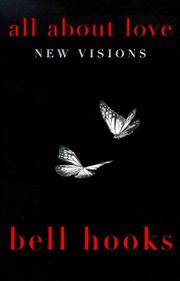
All About Love: New Visions
bell hooks borrows a definition of love as an action rather than a feeling, then spends thirteen chapters showing how hard it is to practice.
2,385-word summary · 11 min read
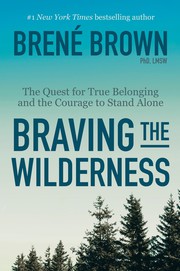
Braving the Wilderness: The quest for true belonging and the courage to stand alone
Belonging to yourself first lets you stand alone and still stay close to others.
2,004-word summary · 9 min read
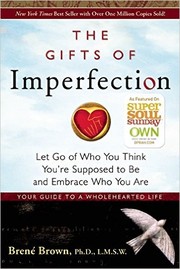
The Gifts of Imperfection
Shame research turned into ten guideposts for dropping perfectionism and living with courage and connection.
2,799-word summary · 12 min read
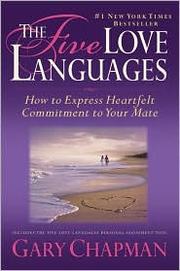
The Five Love Languages
Chapman maps words, time, gifts, service, and touch through counseling stories and the empty love-tank idea.
3,122-word summary · 14 min read
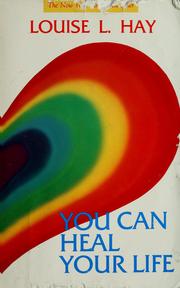
You Can Heal Your Life
Louise Hay's 1984 bestseller argues that thoughts and beliefs shape the body, pairing a mirror-and-affirmation workbook with an A to Z list of ailments and…
3,672-word summary · 16 min read
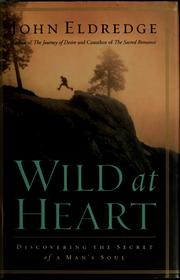
Wild at Heart: Discovering the Secret of a Man's Soul
Why do men feel bored and tame? John Eldredge argues a man's heart is wild by design, and that recovering it means facing the wound and the question of whether…
2,289-word summary · 10 min read
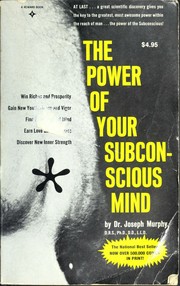
The Power of Your Subconscious Mind
Joseph Murphy argues that the subconscious accepts whatever the conscious mind repeats, so worry and confidence quietly grow into very different lives.
2,259-word summary · 10 min read
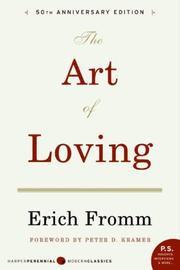
The Art of Loving
Fromm argues that love is an art requiring care, responsibility, respect and knowledge, not a feeling we simply fall into. A short, stern classic of 1950s…
3,175-word summary · 14 min read
My Utmost for His Highest
A posthumous collection of 366 daily devotional readings assembled from Oswald Chambers's sermons, built around surrender, discipleship and the gap between…
2,015-word summary · 9 min read
Getting to Yes: Negotiating Agreement Without Giving In
Fisher and Ury propose negotiating on interests rather than positions, using fair standards and a clear alternative if no deal is reached.
2,231-word summary · 10 min read
Emotional Intelligence 2.0
Bradberry and Greaves turn emotional intelligence into four learnable skills, a self-assessment and dozens of strategies, while their headline numbers rest on…
3,276-word summary · 15 min read
Digital Minimalism: Choosing a Focused Life in a Noisy World
Cal Newport argues that willpower cannot beat an attention economy designed against you, and offers a thirty day reset to rebuild your digital habits around…
2,701-word summary · 12 min read
The Light We Carry: Overcoming in Uncertain Times
Michelle Obama's follow-up to Becoming offers ten practical habits for meeting fear, self-doubt and uncertainty, told through stories of her family,…
2,327-word summary · 10 min read

Everything is F*cked: A Book About Hope
Manson argues that hope, built on control, values, and community, keeps despair at bay, then takes apart the stories and diversions we use to sustain it.
2,789-word summary · 12 min read
As a Man Thinketh: A book that will help you to help yourself
In seven short chapters, James Allen argues that character and circumstance grow from thought, and that changing how you think is the practical route to…
2,673-word summary · 12 min read

What Happened to You?
Oprah Winfrey and psychiatrist Bruce Perry explain how early experience shapes the brain, and why asking what happened to someone works better than asking what…
2,238-word summary · 10 min read

Moonwalking with Einstein: The Art and Science of Remembering Everything
A journalist spends a year training for the U.S. Memory Championship and discovers that extraordinary memory is mostly technique, attention, and a lot of…
2,027-word summary · 9 min read

The Total Money Makeover: A Proven Plan for Financial Fitness
Dave Ramsey lays out seven Baby Steps, from a $1,000 starter fund to a paid-off house, with the debt snowball at the center.
2,663-word summary · 12 min read

Made to Stick: Why Some Ideas Survive and Others Die
The Heath brothers break down why some ideas vanish on contact while others lodge in memory, tracing six traits that make a message stick.
2,527-word summary · 11 min read
The Road Less Traveled: A New Psychology of Love, Traditional Values and Spiritual Growth
M. Scott Peck argues that maturity begins with accepting difficulty, then builds discipline, love, and spiritual growth through honest, often painful work.
2,200-word summary · 10 min read