
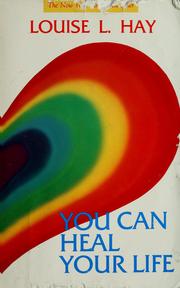
You Can Heal Your Life
3,672-word summary 16 min read 272 pages in the book
- First published
- 1984
- Publisher
- Hay House
- Pages
- 272
- ISBN
- 9780937611012
Reading options
What's inside (10 sections)
- The claim at the center of the book
- The life Hay brought to the page
- The mirror, the shoulds, and the three-year-old
- Willingness, resistance, and the work of forgiving
- Planting the new: affirmations and daily practice
- Money, work, love, and the rest of the wheel
- The body and the alphabetical list
- What held up and what did not
- Key takeaways
- FAQ
I nearly put this one down in the first chapter, and I am glad I did not. It has a reputation that does it no favors. The title sounds like a promise, and the culture that grew up around it has flattened that promise into a sticker. What is actually between the covers is stranger and more specific than the sticker. It is part memoir, part workbook, part New Thought sermon, and part alphabetical reference guide linking feelings to physical complaints. Published by Hay House in 1984 and still sold as a 272-page paperback, it is the book that made its author famous and the seed of the publishing company that carries her name. Reading it now, I found myself arguing with almost every page and copying lines onto scraps of paper at the same time. That combination seems worth taking seriously, so I want to walk you through what is really here, in the order Hay lays it out.
The claim at the center of the book
Hay's premise is blunt. She writes that what we think about ourselves becomes the truth for us, and that we are responsible for everything in our lives, "the best and the worst." Because mind and body are connected, she argues, an illness in the body has its roots in emotional and spiritual patterns in the mind. She calls these patterns "dis-ease," and she insists that the way to change the body is to change the thought. Modern medicine treats symptoms with drugs and surgery. Her approach is to hunt down the belief underneath the symptom and replace it.
The mechanism she keeps returning to is simple enough to state in a sentence. A thought is the only thing we ever actually deal with, and a thought can be changed. Whatever we choose to believe becomes true for us. She sums up her whole system in a line that sounds like a children's rhyme: life is really very simple, what we give out, we get back. The subconscious mind, in her telling, is an obedient servant that accepts whatever we hand it, and a Universal Power reflects our beliefs without judging them. If you walk through life assuming people are out to get you, you will find evidence. If you assume people are helpful, you will find that instead. She is not being subtle about it, and the repetition can feel like a drumbeat after a while.
The innermost belief she says she finds in nearly everyone is "I'm not good enough." Everything else grows from that seed. Her remedy is loving the self, which begins, she says, with never criticizing ourselves for anything. That is the spine of the book. The rest is a long, practical, sometimes odd exploration of how a person might actually get there.
The life Hay brought to the page
You cannot read this book honestly without knowing whose life is behind it, because Hay uses her own history as evidence again and again. She was born Helen Vera Lunney in Los Angeles in 1926. Her mother was poor and remarried a violent man who physically abused both of them. When she was about five, a neighbor raped her. She dropped out of high school at fifteen, became pregnant, and gave up her baby daughter for adoption on her sixteenth birthday. She moved to Chicago for low-paying work, then to New York in 1950, where she changed her first name and found success as a fashion model, working for Bill Blass, Oleg Cassini, and Pauline Trigère. She married the businessman Andrew Hay in 1954. After fourteen years he left her for another woman, and she describes the collapse that followed.
Out of that collapse came the search that shapes the book. She found the First Church of Religious Science on 48th Street in New York and studied the New Thought writers Florence Scovel Shinn and Ernest Holmes, who taught that thought could change both circumstances and the body. In the early 1970s she became a Religious Science practitioner, leading people in spoken affirmations, and she also studied Transcendental Meditation with Maharishi Mahesh Yogi. Her teacher Raymond Charles Barker gave her a line she quotes with obvious affection: when there is a problem, there is not something to do, there is something to know.
Then came the episode that gives the book its title. In 1977 or 1978 she was diagnosed with what doctors called incurable cervical cancer. She concluded that holding on to resentment over her childhood abuse and rape had helped bring it on. She refused conventional treatment and turned to forgiveness, therapy, nutrition, reflexology, and occasional colonic enemas. She said the cancer disappeared. She also admitted, in a 2008 New York Times interview, that she had outlived every doctor who could have confirmed the story. I mention that not to settle the question, which cannot be settled now, but because the tension belongs in any honest account of the book. A claim this large rests on a story that cannot be checked.
Before this book she had written a small guide called Heal Your Body, which began as a pamphlet in the 1970s and listed ailments alongside their "probable" metaphysical causes. You Can Heal Your Life expands that idea into a full program. She founded Hay House the same year the book came out.
The mirror, the shoulds, and the three-year-old
The early chapters work like a therapy session you can read. Hay starts with what clients tell her when they arrive, certain they know what is wrong: their body, their relationships, their money, their life in general. She says these are only the outer effects of inner thought patterns. She watches the words people use, their posture, the way their faces move, because she believes thoughts and words create future experience.
One exercise asks clients to finish the sentence "I should" five or six times, read the answers aloud, and then ask why. The answers come back as "My mother said I should," "Because I am afraid not to," and "Because I have to be perfect." She calls "should" one of the most damaging words in the language because it implies wrongness, and she asks people to trade it for "could." If I really wanted to, I could. That small swap exposes how many of our duties were never our own desires at all.
Then there is the mirror. She asks a client to pick up a small mirror, look into their own eyes, say their name, and add, "I love and accept you exactly as you are." She reports that almost nobody does this calmly. Some people cry. Some get angry. Some pick apart their features or insist they cannot do it. She tells of one man who threw the mirror across the room. In her reading, the reaction is the point, because it surfaces the real problem, which is not loving the self. She pairs this with cases where the obvious trouble is not the real one: a woman preoccupied with her looks and her teeth, a minister with terrible breath that masked anger and jealousy, an overweight client for whom excess weight is fear and a need for protection. She is blunt about diets, saying the only one that works is a mental diet. A fifteen-year-old with Hodgkin's disease who wanted fame is another of her examples, and she says he recovered as he learned self-acceptance. That story is the kind of thing that made her both beloved and criticized, and I think readers should hold both reactions at once.
When she traces where the belief came from, Hay uses the image of a rose, always beautiful, always perfect, always changing, and the image of cleaning a room. You examine every belief, polish the ones that serve you, repair what can be repaired, and discard the rest. There is no need to get angry in order to clean a room. The "Negative Messages" exercise asks readers to list what their parents said was wrong with them, then to keep going with relatives, teachers, friends, authority figures, and church. She then asks you to picture a three-year-old in the room and compare shouting at that child with offering encouragement. Each of us has a three-year-old inside, she says, and most of us spend our time yelling at it.
Some of her own examples stick. A fifth-grade teacher told her she was too tall to be a dancer, and she believed it. Other children called her "lunatic" because of her surname, Lunney. She also warns that blaming family is one of the surest ways to stay stuck, because blame hands away power. She argues that parents could not teach what they did not know, that we are all victims of victims, and that we choose our parents for lessons we need. That last claim is presented as faith, not argument, and it is one of the places where the book asks for more belief than I was willing to give.
The chapter called "Is It True?" turns the whole thing into a set of questions. Is it true for me now? Where did that belief come from? Would I be better off if I dropped it? Some childhood rules stay useful, like looking both ways before crossing the street. Others outlive their purpose, like "don't trust strangers," which can harden into adult isolation. She gives the example of "boys don't cry" and "girls don't climb trees," and of a rainy day that is not lousy, only wet. Her point is that the moment is always a new beginning and the point of power is now. She would rather we stop a negative sentence halfway through than wrestle with it later, and she compares thoughts to dishes on a cafeteria line that we can choose or refuse.
Willingness, resistance, and the work of forgiving
Once the problem and its origin are named, Hay moves to the decision to change, and she is honest that this is harder than it sounds. Her exercise is to go to a mirror, say "I am willing to change," touch the throat, which she calls the energy center where change takes place, and then say ten times, "I am willing to release all resistance." She calls mirror work the quickest way to get results with affirmations, because as children most of us received our negative messages from people looking us straight in the eye, sometimes shaking a finger. Looking back at yourself and saying something kind is a direct reversal of that old scene.
A whole chapter catalogs the ways we resist. There are nonverbal tells, like changing the subject, leaving the room, arriving late, getting sick, procrastinating, and filling the time with busy work. There are assumptions that it will not do any good, and beliefs that spiritual people do not get angry. There is the category she calls "them," where power goes to someone else: my doctor does not want me to, or they have to change first. There are self-concepts of being too old, too fat, or too dumb, along with delays, denial, and fear, which she calls by far the largest category. Impatience, she says, is only another form of resistance. I found this section more useful than I expected, because it reads like someone describing a room I have sat in.
Her cases have a rough comic edge. A woman in severe pain after three separate car accidents arrives late and then fusses with her contact lenses and bathroom trips through the session. An actor and mime boasts about cheating institutions, yet is always broke and in pain, and insists he cannot stop the behavior until something good comes along. Hay says he has to stop first. A seventy-nine-year-old singing teacher starts a commercial career after someone tells her to do it for the fun of it. Through all of it Hay insists the problem has nothing to do with willpower or discipline, and that self-criticism misses the mark, because the person being scolded is that three-year-old who needs comfort.
The chapters on how to change are the most practical in the book. She names three things to nurture: willingness to let go, some control over the mind, and forgiveness of self and others. She warns that when a pattern starts to move, life can look worse for a bit. You lose a wallet while working on prosperity, pick a fight while working on relationships, or catch a cold while working on health. In her reading that is a sign the situation is loosening, not proof that the method failed.
Her long smoking example shows how the layers work. You affirm willingness to release the need for cigarettes, and uncomfortable relationships surface, revealing that smoking was a smoke screen. You release the need for those relationships and discover a need to be criticized. You trace that to childhood criticism and eventually reach forgiveness, until cigarettes no longer pull and the critics drift away. It is tidy on the page, and I suspect real lives are messier. Still, the sequence shows what she means by getting underneath the symptom.
She offers physical release too. Scream in the car, beat the bed, kick pillows, play tennis, go for a run. She tells of a shoulder pain that led her to ask what she was feeling, of recognizing a burning sensation as anger, of beating pillows, and of the shoulder being fine the next day. Forgiveness, she says, is the answer to almost everything, and she gives four exercises: Emmet Fox's theater visualization in which you picture good things happening to the person you resent, a revenge exercise for people who need to get that out first, a spoken forgiveness exercise naming the person and the offense, and a visualization in which you comfort your child self, your mother as a little girl, and your father as a boy, then place all three in your heart.
Planting the new: affirmations and daily practice
Hay is clear that fighting the negative does not automatically create the positive. What you put your attention on grows and becomes permanent, she writes, so you have to build the new on purpose. Statements like "I don't want to be fat" and "I don't want to be broke" keep the unwanted in view. She rewrites them as "I am slender" and "I am prosperous." An affirmation, for her, is any statement you make, and it has to be in the present tense, because the subconscious is such an obedient servant that "I want" or "I will have" parks the desire permanently in the future.
She does not pretend this comes easily. She admits she once slapped her own face, and that when people showed her affection her first thought was that they would not say such things if they knew what she was really like inside. She started by hunting for small good qualities in herself, and she says her health improved as she did. The "I Approve of Myself" exercise asks for three or four hundred repetitions a day for a month. It deliberately brings up opposition, and the instruction is to let those thoughts pass without giving them weight. She argues that our differences are our individuality and that nature never repeats itself.
The metaphor I keep coming back to is a tomato plant. The seed is the affirmation, the soil is the subconscious, water and sunshine are repeated affirmations and positive thoughts, and weeds are negative thoughts. When the first shoot appears, the instruction is not to stomp on it but to say, oh boy, here it comes. There is also an "I Deserve" mirror exercise to test whether you will allow good things to arrive. She closes this stretch with a map of body, mind, and spirit options and a warning that no single method or teacher has all the answers, which is a more humble note than the rest of the book often strikes.
Daily work, she says, is a skill learned by practice, like walking, driving, or typing. It becomes automatic through repetition. This is the least flashy part of the book and probably the most defensible. Whatever you think of the larger claims, telling someone to watch their thoughts and practice a new habit every day is not bad advice.
Money, work, love, and the rest of the wheel
The later chapters apply the same method to ordinary parts of life. In relationships, she says the way we relate to others mirrors how we relate to ourselves, so trust and self-love have to be healed inwardly first. In work, she lists the familiar complaints people bring into the office: I can't stand this job, I hate my boss, they don't appreciate me. She calls this negative, defensive thinking that approaches the problem from the wrong end. Her remedy is to bless the building, the elevators, the rooms, the furniture, the bosses, co-workers, and customers, and to affirm that you always work for the most wonderful bosses, that they treat you with respect, and that they are generous. I winced at this. It asks a person in a genuinely bad workplace to reinterpret the situation rather than change it, and that is a real limit of the book.
On success she redefines failure as simply something that did not turn out the way you hoped, and she says the law of experience is always perfect, because we outpicture our inner beliefs. Her success affirmations include lines about Divine Intelligence supplying ideas, everything you touch being a success, there being plenty for everyone, and being a magnet for Divine Prosperity. Prosperity, she says, begins with feeling good about yourself and is never an amount of money but a state of mind. She lists the money beliefs she thinks block people: money is filthy, rich people are crooks, artists have to struggle, I don't deserve, a penny saved is a penny earned, a depression could come at any moment. She also advises cleaning out refrigerators and closets, because cluttered closets mean a cluttered mind. Some of this is practical, some of it is magical thinking, and the book does not help the reader tell them apart.
The body and the alphabetical list
The last stretch is where the book earns its critics. Hay writes that she believes we create every so-called illness in our body, that the body is a mirror of our inner thoughts and beliefs, and that it is always talking to us if we take time to listen. The final section is an A to Z reference of probable mental patterns behind named conditions, each paired with a new thought pattern to replace it, carried over from Heal Your Body. Long-held resentment is set beside cancer, chronic criticism beside arthritis, guilt beside pain, and fear beside ulcers, baldness, and sore feet. Headaches come from invalidating the self, she writes, and she says migraine sufferers are people who want to be perfect and pile pressure on themselves, with suppressed anger involved.
This is the part I would set aside. Medical researchers and writers in evidence-based medicine have called these correspondences groundless, and the headache passage is not a harmless metaphor when it tells people their pain is a failure of attitude. The criticism goes further. Hay's support groups for people with HIV and AIDS in West Hollywood, which grew from a handful of people in her living room to hundreds and then to more than eight hundred at a time, offered comfort to people who were being abandoned elsewhere. But she also suggested that people with AIDS were causing their own illness through mental attitude and argued for decades that a positive outlook could defeat the disease. Critics including the writer David Groff have described that stance as a brutal dismissal of real people and a form of spiritual pseudoscience that harmed a generation of gay men. Whatever comfort the groups gave, that claim cannot be defended, and it sits inside the same book that tells readers to love themselves.
What held up and what did not
The book's reach is undeniable. After Hay appeared on The Oprah Winfrey Show and Donahue in the same week in March 1988, it went onto the New York Times bestseller list. More than 35 million copies were in print by 2008, later estimates passed forty million, and it appeared in over thirty languages. A documentary bearing the same name followed. Few self-help books have had that kind of life, and the reason is not only marketing. Hay gives readers something to do with their hands: a mirror, a sentence, a list of beliefs to question. That is more than many books in the genre offer.
I would hand this to a reader who can take the useful parts without swallowing the whole system. The practice of catching a self-critical thought and asking where it came from is genuinely valuable, and the three-year-old image has helped me notice how I talk to myself. The mirror exercise is awkward and a little theatrical, but it makes self-attacks visible in a way that quietly reading about them does not. The daily repetition of a chosen sentence is a plain, old-fashioned habit, and it does not require you to believe that resentment causes cancer.
I would be careful with a reader who is sick, or who is looking for a medical explanation. The book's central diagnostic claim, that specific emotions cause specific diseases, is not supported by evidence, and its worst passages turn that claim onto people who are already suffering. The honest way to read it is as a workbook for the inner sentence you say to yourself, and a period piece of the New Thought and New Age moment that produced it. Take the mirror. Keep the questions about belief. Leave the diagnosis to doctors.
FAQ
What is mirror work in You Can Heal Your Life?
Hay asks readers to look into a mirror, say their own name, and add 'I love and accept you exactly as you are.' She says the discomfort or tears the exercise produces reveal the self-rejection she wants readers to examine.
Does the book claim that thoughts can cure illness?
Yes. Hay argues that specific mental patterns cause specific diseases and that changing belief can heal the body, an idea critics describe as groundless and, in her writing about AIDS, harmful. Readers should treat those medical claims as personal belief rather than established fact.
When was You Can Heal Your Life published and how successful was it?
Hay House published it in 1984 as a 272-page paperback. After Hay appeared on Oprah and Donahue in March 1988 it became a New York Times bestseller, and it has sold in the tens of millions in over thirty languages.
Similar books
As a Man Thinketh: A book that will help you to help yourself
In seven short chapters, James Allen argues that character and circumstance grow from thought, and that changing how you think is the practical route to…
2,673-word summary · 12 min read
The Defining Decade: Why Your Twenties Matter - and How to Make the Most of Them Now
A clinical psychologist argues that the twenties are not a holding pattern and urges readers to build skills, ties, and commitment now.
2,443-word summary · 11 min read
The Power of Your Subconscious Mind
Joseph Murphy argues that the subconscious accepts whatever the conscious mind repeats, so worry and confidence quietly grow into very different lives.
2,259-word summary · 10 min read
The Miracle Morning
Hal Elrod argues that the first hour of the day sets its tone, and offers six short practices, silence, affirmations, visualization, exercise, reading and…
2,240-word summary · 10 min read
Rising Strong: The Reckoning. The Rumble. The Revolution.
Brené Brown's 2015 book asks what happens after we fall, and argues that examining the stories we invent about failure and heartbreak is the path to getting…
2,271-word summary · 10 min read
My Utmost for His Highest
A posthumous collection of 366 daily devotional readings assembled from Oswald Chambers's sermons, built around surrender, discipleship and the gap between…
2,015-word summary · 9 min read

Ikigai: The Japanese Secret to a Long and Happy Life
Two Spanish writers explain the Japanese idea of a reason for being, drawing on Okinawan centenarians, flow, friendship and the acceptance of imperfection.
2,030-word summary · 9 min read
Flow: The Psychology of Optimal Experience
Csikszentmihalyi's 1990 study of optimal experience asks when people feel most alive and finds the answer in a balance of challenge and skill. Drawing on…
3,073-word summary · 14 min read
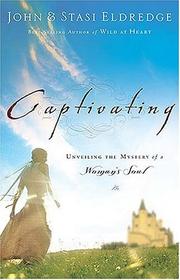
Captivating: Unveiling the Mystery of a Woman's Soul
A Christian companion to Wild at Heart in which John and Stasi Eldredge argue that women carry three God-given desires that wounds can bury. Warm, scriptural…
2,722-word summary · 12 min read
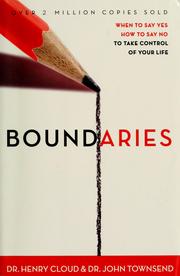
Boundaries: When to Say Yes, How to Say No to Take Control of Your Life
A Christian self-help book that treats a boundary as a personal property line and applies the idea to family, friendship, marriage, work and the self.
2,047-word summary · 9 min read
The Prayer of Jabez: Breaking Through to the Blessed Life
A tiny 2000 devotional built on two verses in Chronicles became a publishing phenomenon and a lightning rod for criticism.
2,296-word summary · 10 min read
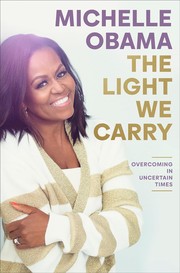
The Light We Carry: Overcoming in Uncertain Times
Michelle Obama's follow-up to Becoming offers ten practical habits for meeting fear, self-doubt and uncertainty, told through stories of her family,…
2,327-word summary · 10 min read

The Courage to Be Disliked: The Japanese Phenomenon That Shows You How to Change Your Life and Achieve Real Happiness
A philosopher and an angry young man argue over five nights about Adlerian psychology, trauma, approval, and the freedom to be disliked.
2,054-word summary · 9 min read
Don't Sweat the Small Stuff ... and It's All Small Stuff: Simple Ways to Keep the Little Things from Taking Over Your Life
Richard Carlson’s 1997 bestseller offers one hundred short chapters on lowering the volume on daily irritations, and it is more pragmatic than its title…
2,502-word summary · 11 min read

Four Thousand Weeks: Time Management for Mortals
Oliver Burkeman turns the whole productivity project on its head, arguing that a human lifespan of roughly four thousand weeks is not a problem to optimize…
2,447-word summary · 11 min read
Breath: The New Science of a Lost Art
Journalist James Nestor investigates how modern humans learned to breathe badly, and what researchers, athletes, and breathwork practitioners have found about…
2,011-word summary · 9 min read
The Road Less Traveled: A New Psychology of Love, Traditional Values and Spiritual Growth
M. Scott Peck argues that maturity begins with accepting difficulty, then builds discipline, love, and spiritual growth through honest, often painful work.
2,200-word summary · 10 min read
The Artist's Way: A Spiritual Path to Higher Creativity
A twelve week course with morning pages and artist dates to recover creativity.
2,345-word summary · 10 min read
10% Happier
An ABC newsman panics on air, then finds meditation without losing his edge.
2,590-word summary · 12 min read
Braving the Wilderness: The quest for true belonging and the courage to stand alone
Belonging to yourself first lets you stand alone and still stay close to others.
2,004-word summary · 9 min read
The Untethered Soul
Singer names the noisy inner voice and shows how watching thoughts, loosening old hurt, and keeping the heart open through surrender can ease daily suffering…
2,752-word summary · 12 min read
The Power of Positive Thinking
Peale's 1952 guide to faith, affirmations, picturing success, prayer, and worry control, retold chapter by chapter with stories, limits, and small daily habits…
2,742-word summary · 12 min read
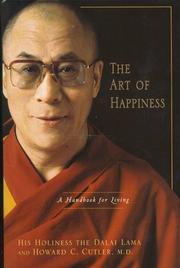
The Art of Happiness
The Dalai Lama and psychiatrist Howard Cutler link lasting happiness to training the mind, human warmth, compassion, and basic spiritual values for daily life.
3,394-word summary · 15 min read
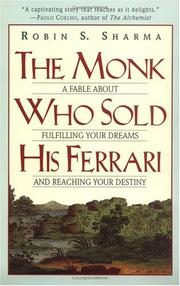
The Monk Who Sold His Ferrari
A burned-out lawyer learns seven Sivana virtues in the Himalayas, from mind gardens to purpose, time, and service.
2,881-word summary · 13 min read
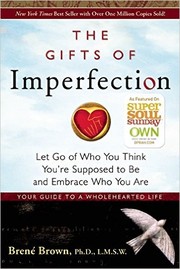
The Gifts of Imperfection
Shame research turned into ten guideposts for dropping perfectionism and living with courage and connection.
2,799-word summary · 12 min read
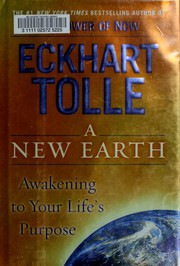
A New Earth
Tolle maps ego pain and shows how presence can loosen roles, thoughts, and suffering.
1,909-word summary · 8 min read
The Purpose Driven Life
Rick Warren's 40-day guide to Christian purpose, from worship and fellowship to growth, service and mission.
2,846-word summary · 13 min read
The Power of Now
Tolle argues pain comes from mind chatter and peace from full attention to now.
2,354-word summary · 10 min read
The Secret
Byrne argues like attracts like and teaches ask, believe, and receive for money, health, and love.
3,228-word summary · 14 min read
The Four Agreements
Don Miguel Ruiz offers four Toltec agreements for personal freedom: impeccable word, detachment, curiosity, and effort.
2,289-word summary · 10 min read