
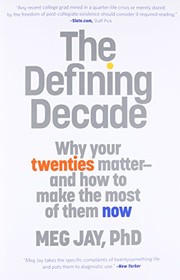
The Defining Decade: Why Your Twenties Matter - and How to Make the Most of Them Now
2,443-word summary 11 min read 272 pages in the book
- First published
- 2012
- Publisher
- Twelve
- Pages
- 272
- ISBN
- 9780446561754
Reading options
What's inside (8 sections)
I had heard Meg Jay's TED talk before I read the book, so I thought I knew the argument. Young people are told that thirty is the new twenty, she says, and that message does real damage. It encourages a decade of drift that people later regret. The book, published in 2012 by Twelve and running roughly 272 pages in the edition I read, makes that case at greater length and with more evidence. What surprised me was how specific it gets. This is not a book about the general importance of growing up. It is a set of arguments about how to spend particular years, backed by the cases of the twentysomethings Jay saw in her clinical practice.
Jay is a clinical psychologist, and that background shapes everything here. She writes about people in their twenties who came to her office with problems they could not quite name: a job that felt temporary, a relationship that never quite committed, a sense that real life was about to begin somewhere else. The book is built from those conversations. It does not read like a study, and it does not pretend to be one. It reads like a therapist who has noticed the same pattern in enough patients that she finally wrote it down.
The big lie about the twenties
Jay's central target is a cultural story. She calls it, in effect, the idea that the twenties are a holding pattern, a time to explore without consequences before the serious business of adulthood begins in earnest at thirty. Sociologists have given this extended adolescence a name, emerging adulthood, and Jay does not think much of it. She knows why it is appealing. There is freedom in not having to decide, and the freedom feels especially sweet after years of school and structured time.
The problem, as she sees it, is that the years between twenty and thirty are not neutral. They are a period in which people make choices about work, love, and family that shape what comes later. Brain development continues into the mid twenties, which means the capacity for long term planning is still coming online while the decisions are already being made. Jay's clients often arrive at twenty nine or thirty with a resume that has not grown and relationships that never solidified, then discover that the clock they thought they could ignore has been running the whole time.
One of her sharper observations is what she calls the mismatch. Ask people what they want at twenty and they describe one set of things. Ask people what they actually have and value at twenty nine and the list looks completely different. The things that seemed important early, like keeping every option open, give way to things like stability, skill, and a partner who is really committed. The mismatch means that twenty year olds are often optimizing for a version of life they will not want by the time they reach it. Jay wants readers to close that gap sooner.
This argument can sound scolding in summary, and sometimes it is. Jay is frank about the costs of waiting. But she is writing to people she clearly likes, and she is not arguing that a twenty year old should have a five year plan carved in stone. She is arguing that saying you will figure it out later is itself a decision, and usually a costly one.
Identity capital
The first major idea in the book is identity capital, a term Jay borrows from the sociologist James Côté. It means the collection of assets a person builds up over time, the things that become part of who they are. Some of it is easy to see on a resume: degrees, jobs, scores, clubs. Some of it is harder to measure, like the way a person speaks, where they come from, how they solve problems, and how they handle themselves with strangers. Jay's point is that all of it counts, and that twentysomethings should be actively accumulating it.
Her practical version of this is simple. When choosing between jobs, take the one with the most identity capital. A position that teaches you something, puts you near people you can learn from, or gives you a story you can tell is worth more than a slightly larger paycheck that leaves you unchanged. This is not the same as chasing prestige. Jay is interested in what a role makes of you, not what it says on the letterhead.
She gives an example of a young person who might spend a year traveling instead of starting work immediately. On paper that is a year of lost income and lost experience. Jay's argument is that the ability to connect with people, to tell stories, and to navigate unfamiliar situations is itself a form of capital that pays out over a whole career. The decision only looks wasteful if you count money and nothing else. I found this more persuasive than some of her other examples, because it takes seriously the idea that a life can be an education without being a resume line.
Identity capital also explains her advice about telling a good story. In your twenties, she notes, you have more potential than proof. You are evaluated on what you seem likely to become, because you do not yet have a long record of achievements to point to. The ability to say clearly who you are and what you want is not spin. It is one of the few tools you actually control at that age, and people who cannot do it are judged by default. This is one of the more useful and more uncomfortable chapters in the book.
Weak ties
The second big idea comes from the sociologist Mark Granovetter's work on weak ties. Jay's summary is that information and opportunity travel farther through acquaintances than through close friends. Your close friends move in many of the same circles you do, so they mostly know what you already know. The person you had one conversation with at a conference or an old classmate you ran into at a company can connect you to a network you had no access to.
Jay describes weak ties as bridges you cannot see all the way across. That is a good image, because it captures both the value and the discomfort. A weak tie is useful precisely because it is not comfortable. When you are with people who know you well, you can rely on shorthand. With an acquaintance you have to explain yourself from the beginning: what you do, what you want, why it matters. Jay argues that this act of explanation is itself valuable. It forces you to be specific about your own life, and that clarity tends to produce opportunity.
She pairs this with the Ben Franklin effect, the observation that someone who has done you a small favor is more likely to do you another. Asking a new acquaintance for a modest, reasonable favor is not manipulation in her telling. It is a way of beginning a relationship on terms that let the other person invest in you. Combined with the weak ties argument, it becomes a practical method for building the network that identity capital alone does not give you.
The chapter on weak ties is the one I have seen readers push back on hardest, and I understand why. It can sound like a recipe for instrumental friendships. Jay's defense is that the ties are real relationships, just less dense ones, and that people genuinely like being asked for help. Still, if you are the sort of person who finds networking a grim performance, this part of the book may rub you the wrong way even if the underlying research is sound.
Work, goals, and the tyranny of shoulds
Jay is not interested in the standard advice to follow your passion. She is more concrete than that. She wants twentysomethings to notice which choices add to their identity capital and which ones merely keep them busy. Internships, difficult assignments, and jobs that stretch you all count, even when the money is poor. The safer choice that teaches you nothing is often the more expensive one in the long run.
One of the best passages in the book is about the difference between goals and shoulds. Goals, she writes, direct us from the inside. Shoulds are judgments from outside, the obligations we think we are supposed to meet because of what our parents, our peers, or our culture expects. Shoulds create a false choice between meeting an impossible ideal and being a failure. They turn ordinary decisions into referendums on your worth. Goals feel like dreams because they are yours; shoulds feel like weight because they are not.
That distinction leads naturally into her discussion of mindset. Jay draws on the idea that abilities can grow with effort, and she applies it to the way young people interpret criticism. When a boss questions your work, the twentysomething reaction is often to personalize it: why did she say that, does he not like me, what did I do wrong. The energy goes into replaying the conversation rather than improving the work. A person who expects to improve sees the same comment as information. This is not a new idea, but Jay makes it specific to the age group she is addressing, and the examples are recognizable.
She also warns about what happens when people keep an old story about themselves too long. If your sense of who you are comes from conversations you had as an adolescent, you may keep dating or working down to that earlier self. The story only changes through new conversations and new experiences, which is another way of saying that you have to put yourself in places where the old script stops working. This connects back to weak ties and to the broader argument that wandering is not the same as exploring.
Love, cohabitation, and the clock
The second section of the book turns to relationships, and it is here that Jay's clinical voice is most useful. She writes about the mismatch in love: what people say they want in a partner at twenty is often not what they report wanting and valuing at twenty nine. The person who seems exciting early may not be the person who builds a life with you. Because the mismatch exists, she argues, it is a mistake to treat early twenties dating as purely exploratory with no thought about where it leads.
Her advice on cohabitation is blunt and, for some readers, unwelcome. Couples who move in together before they have made a clear mutual commitment tend to report poorer communication and lower stability later. Living together is a reasonable test of compatibility only if both people already understand that the relationship is heading somewhere. Doing it to save rent, or to see what happens, tends to produce the opposite of clarity. Jay is describing a pattern from her practice rather than announcing a moral rule, but the phrasing can sound like one.
There is also a hard chapter about fertility and the biological clock. Jay does not soften it. She tells women to do the math about their reproductive years instead of assuming that science will solve the problem later. This is the part of the book that has drawn the most criticism, and some of it is fair. The advice can read as pressure, especially when it sits beside a general argument about being intentional. Readers who have watched the same expectations land differently on men and women will notice the imbalance. Jay is reporting a biological reality as she understands it, but the social advice built on top of it is not neutral.
On a related note, her discussion of neuroticism draws on the well established finding that a tendency toward anxiety, criticism, and moodiness predicts relationship unhappiness more reliably than simple personality difference. Two people who differ in interests can do fine. Two people who treat every difference as evidence of a problem are in trouble. It is a useful point, and it is more generous than it sounds, because it suggests that how you respond to difficulty matters more than which difficulties you have.
Connection and the case for intentionality
The last part of the book widens out from work and romance to friendship, family, and the people who make up a life. Jay returns to weak ties here, not only as career tools but as sources of novelty and change. Close friends confirm who you are. Acquaintances introduce you to who you might become. Both are necessary, and the twenties are a period when it is easy to let the wider set wither without noticing.
The closing argument is a call to claim adulthood rather than wait for it to be handed over. Jay writes that the future is not written and that there are no guarantees, then tells readers to be intentional, to get to work, to pick their family, to make their own certainty. It is a rousing passage, and it explains why the book has had such a long life beyond its first publication. An updated edition appeared years later, which suggests the message kept finding new readers.
For all its usefulness, the book has real limits. The case studies are drawn from Jay's practice, which means they are vivid but not a representative sample. The tone sometimes tips from concerned into prescribing, and a reader who is already doing the best they can with limited options may hear the advice as blame. There is also an assumption of stability in the background, a world where choosing the right job and the right partner is actually available to everyone. Plenty of twenty year olds are managing circumstances that make intentionality a luxury.
I still think the central correction is worth hearing. Jay is right that a decade of postponement has costs, and she is right that the people who drift through their twenties often do so because no one ever told them the years counted. She is at her best when she is describing a specific person in a specific bind and at her weakest when she turns that description into a rule. Read it for the cases and the concepts, especially identity capital and weak ties, and take the sterner parts with a grain of salt. The point is not to feel guilty about being young. It is to notice that the time is passing while you are deciding what to do about it.
FAQ
When was The Defining Decade published?
It was first published in 2012 by Twelve, an imprint of Grand Central Publishing. An updated edition appeared later.
Who is Meg Jay?
She is a clinical psychologist who worked with twentysomethings in her practice, and the book draws on those cases. She also gave a widely viewed TED talk on the subject.
Is the book only for people in their twenties?
It is written for twentysomethings, but the ideas about identity capital and weak ties are useful to anyone thinking about how opportunities and relationships develop.
Similar books
Boundaries: When to Say Yes, How to Say No to Take Control of Your Life
A Christian self-help book that treats a boundary as a personal property line and applies the idea to family, friendship, marriage, work and the self.
2,047-word summary · 9 min read
The Miracle Morning
Hal Elrod argues that the first hour of the day sets its tone, and offers six short practices, silence, affirmations, visualization, exercise, reading and…
2,240-word summary · 10 min read
Rising Strong: The Reckoning. The Rumble. The Revolution.
Brené Brown's 2015 book asks what happens after we fall, and argues that examining the stories we invent about failure and heartbreak is the path to getting…
2,271-word summary · 10 min read

Ikigai: The Japanese Secret to a Long and Happy Life
Two Spanish writers explain the Japanese idea of a reason for being, drawing on Okinawan centenarians, flow, friendship and the acceptance of imperfection.
2,030-word summary · 9 min read
Flow: The Psychology of Optimal Experience
Csikszentmihalyi's 1990 study of optimal experience asks when people feel most alive and finds the answer in a balance of challenge and skill. Drawing on…
3,073-word summary · 14 min read
Atlas of the Heart: Mapping Meaningful Connection and the Language of Human Experience
Brené Brown maps 87 emotions and experiences into thirteen 'places we go,' arguing that precise language changes what we can ask for and how we connect.
2,491-word summary · 11 min read
The Courage to Be Disliked: The Japanese Phenomenon That Shows You How to Change Your Life and Achieve Real Happiness
A philosopher and an angry young man argue over five nights about Adlerian psychology, trauma, approval, and the freedom to be disliked.
2,054-word summary · 9 min read
Don't Sweat the Small Stuff ... and It's All Small Stuff: Simple Ways to Keep the Little Things from Taking Over Your Life
Richard Carlson’s 1997 bestseller offers one hundred short chapters on lowering the volume on daily irritations, and it is more pragmatic than its title…
2,502-word summary · 11 min read
Four Thousand Weeks: Time Management for Mortals
Oliver Burkeman turns the whole productivity project on its head, arguing that a human lifespan of roughly four thousand weeks is not a problem to optimize…
2,447-word summary · 11 min read
Attached
A psychiatrist and a psychologist explain adult attachment styles and show how anxious, avoidant, and secure patterns shape dating, conflict, and the search…
2,157-word summary · 10 min read
All About Love: New Visions
bell hooks borrows a definition of love as an action rather than a feeling, then spends thirteen chapters showing how hard it is to practice.
2,385-word summary · 11 min read
Braving the Wilderness: The quest for true belonging and the courage to stand alone
Belonging to yourself first lets you stand alone and still stay close to others.
2,004-word summary · 9 min read
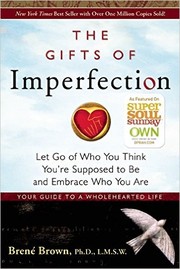
The Gifts of Imperfection
Shame research turned into ten guideposts for dropping perfectionism and living with courage and connection.
2,799-word summary · 12 min read

You Can Heal Your Life
Louise Hay's 1984 bestseller argues that thoughts and beliefs shape the body, pairing a mirror-and-affirmation workbook with an A to Z list of ailments and…
3,672-word summary · 16 min read
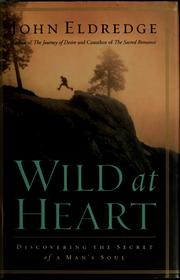
Wild at Heart: Discovering the Secret of a Man's Soul
Why do men feel bored and tame? John Eldredge argues a man's heart is wild by design, and that recovering it means facing the wound and the question of whether…
2,289-word summary · 10 min read
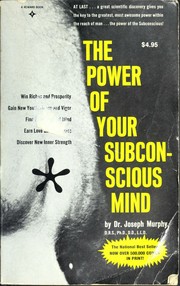
The Power of Your Subconscious Mind
Joseph Murphy argues that the subconscious accepts whatever the conscious mind repeats, so worry and confidence quietly grow into very different lives.
2,259-word summary · 10 min read
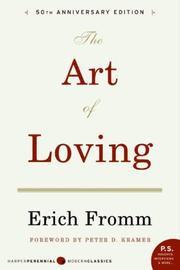
The Art of Loving
Fromm argues that love is an art requiring care, responsibility, respect and knowledge, not a feeling we simply fall into. A short, stern classic of 1950s…
3,175-word summary · 14 min read
Getting to Yes: Negotiating Agreement Without Giving In
Fisher and Ury propose negotiating on interests rather than positions, using fair standards and a clear alternative if no deal is reached.
2,231-word summary · 10 min read
Emotional Intelligence 2.0
Bradberry and Greaves turn emotional intelligence into four learnable skills, a self-assessment and dozens of strategies, while their headline numbers rest on…
3,276-word summary · 15 min read
Digital Minimalism: Choosing a Focused Life in a Noisy World
Cal Newport argues that willpower cannot beat an attention economy designed against you, and offers a thirty day reset to rebuild your digital habits around…
2,701-word summary · 12 min read
The Light We Carry: Overcoming in Uncertain Times
Michelle Obama's follow-up to Becoming offers ten practical habits for meeting fear, self-doubt and uncertainty, told through stories of her family,…
2,327-word summary · 10 min read
Everything is F*cked: A Book About Hope
Manson argues that hope, built on control, values, and community, keeps despair at bay, then takes apart the stories and diversions we use to sustain it.
2,789-word summary · 12 min read
As a Man Thinketh: A book that will help you to help yourself
In seven short chapters, James Allen argues that character and circumstance grow from thought, and that changing how you think is the practical route to…
2,673-word summary · 12 min read
What Happened to You?
Oprah Winfrey and psychiatrist Bruce Perry explain how early experience shapes the brain, and why asking what happened to someone works better than asking what…
2,238-word summary · 10 min read
Moonwalking with Einstein: The Art and Science of Remembering Everything
A journalist spends a year training for the U.S. Memory Championship and discovers that extraordinary memory is mostly technique, attention, and a lot of…
2,027-word summary · 9 min read
The Total Money Makeover: A Proven Plan for Financial Fitness
Dave Ramsey lays out seven Baby Steps, from a $1,000 starter fund to a paid-off house, with the debt snowball at the center.
2,663-word summary · 12 min read
Made to Stick: Why Some Ideas Survive and Others Die
The Heath brothers break down why some ideas vanish on contact while others lodge in memory, tracing six traits that make a message stick.
2,527-word summary · 11 min read
The Road Less Traveled: A New Psychology of Love, Traditional Values and Spiritual Growth
M. Scott Peck argues that maturity begins with accepting difficulty, then builds discipline, love, and spiritual growth through honest, often painful work.
2,200-word summary · 10 min read
How to Stop Worrying and Start Living
Carnegie offers day-tight routines for worry built from interviews and worker stories.
2,505-word summary · 11 min read
Dare to Lead
Research on courage shows how leaders build trust through vulnerability and clear values.
2,442-word summary · 11 min read