
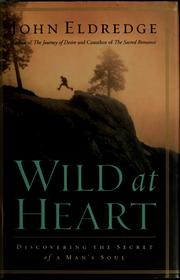
Wild at Heart: Discovering the Secret of a Man's Soul
2,289-word summary 10 min read 223 pages in the book
- First published
- 2001
- Publisher
- Thomas Nelson
- Pages
- 223
- ISBN
- 9780785268833
Reading options
What's inside (9 sections)
I picked this up because a friend kept saying it had given him permission to stop being "a good boy." That phrase stuck with me. The subtitle promised the secret of a man's soul, which is a bold thing to put on a cover, and I wanted to know what kind of secret could fit inside a book published by Thomas Nelson in 2001 that runs just over two hundred pages in the first hardcover. What I found was stranger and more interesting than the reputation suggests. It is part memoir, part teaching manual, and part call to adventure, and it became one of the most widely read and most argued-about books in modern American evangelicalism.
Eldredge writes as a counselor and an outdoorsman, and the book is built out of his own hunting trips, stories about his family, and a great deal of pop culture. He leans on Braveheart, James Bond, Gladiator and Indiana Jones, and he quotes song lyrics, to make his case about what men want. The central claim is that men have been tamed, that the church and the culture have taught them to be nice and safe when they were made for something rougher and more alive. The title is not decoration. Eldredge means that a man's heart is wild by design, and that recovering that wildness is the work of a lifetime.
A wild God and a question men cannot shake
The book opens by arguing that everything about a man, down to his desires, reflects God. Eldredge calls this being made in the image of God, and he pushes it further than most Christian writers do. He insists that God himself is wild, that the God who made men is not a tame, safe, Sunday-school figure but something closer to a lion in the forest. This is where the book gets its energy. If God is wild, then a man's longing for risk and danger and beauty is not a childish thing to be outgrown. It is evidence of who made him.
Out of that idea comes what Eldredge calls the question that haunts every man. He says the deep masculine question is "Do I have what it takes?" It is not the first thing most men would say is on their minds, but once he names it, it is hard to unsee. He argues that men hear the question early and spend their lives trying to answer it, usually in the wrong places. They measure themselves by their jobs, their salaries, their bodies, their ability to provide or to win. The question comes back no matter how much a man achieves, because it was never really about achievement.
I found this section the most persuasive part of the book. Eldredge is good at describing the way a man can be successful by every outside measure and still feel that something in him is asleep. He writes about men who have the house and the career and the respectable life and yet feel bored, tempted by risk, unable to pay attention to their own deepest wants. The diagnosis is not that these men are ungrateful. It is that they have been answering a question of the heart with the tools of a resume.
The wound, the Poser, and the voice of a father
The second movement turns darker, and it is where the book does its most serious psychological work. Eldredge says every man carries a wound, and that the wound lands exactly on the spot of that deep question. A man who wonders whether he has what it takes has usually been hurt in precisely that place, often by a father who was absent, critical, distant, or simply unable to give him what he needed. The wound is not a minor event in the past. It is a live thing that shapes how a man sees himself decades later.
To survive the wound, Eldredge says, a man builds a false self. He calls this false self the Poser. The Poser looks strong and confident and courageous from the outside. He performs competence. He hides the fear and the cowardice underneath. Eldredge is not writing about actors here, he is writing about ordinary men in church and at work who have learned to appear fine while quietly believing they are not. The Poser is a protection, but it is also a prison, because the man behind it never has to be known.
One of the recurring ideas is the voice of the father. Eldredge argues that a man's identity is shaped powerfully by the voice he grew up hearing, whether that voice affirmed him or broke him down. He also talks about the voice of God the Father as the voice a man most needs to hear, the sense of being a beloved son, of being told that he is enough. The healing he describes is not a self-help exercise in positive thinking. It is a spiritual claim, that a man's wound can be met by God, that the answer to his question can come from outside himself.
I have mixed feelings about this part. On one hand, the idea of the Poser gave me a useful vocabulary for something I had seen in a lot of men, including myself. On the other hand, the book sometimes treats the father wound as a near-universal explanation, and that felt too neat. Not every man's pain traces back to the same source, and reducing a complicated life to one original injury can flatter the reader with a sense of having found the key.
Answering the question with Jesus
Having named the wound, Eldredge spends the rest of the second movement describing what he sees as the way of healing. His answer is Jesus, but not the gentle, tame Jesus of the stained-glass window. The Jesus he wants back is the wild one, the carpenter who cleared the temple, the man who lived in the wilderness and called people to follow him at cost. Eldredge argues that the church has handed men a softened version of Jesus and then wondered why men drift away.
The journey he describes is one of bringing the wounded parts of yourself into the presence of God and letting him speak to them. He writes about prayer and solitude and about learning to hear what he calls the Father's voice. There is a strong emphasis on being known and loved rather than merely forgiven. In his telling, a man is healed when he stops performing for God and starts believing he is wanted.
This is sincere work, and I think it will land powerfully for readers who have never heard masculinity talked about in a spiritual register before. It is also where the book's confidence can tip into overstatement. Eldredge writes with such certainty about what all men feel and need that a reader who does not recognize himself in the pattern may feel talked at rather than understood. There is little room here for the man whose experience does not fit the mold.
A battle to fight
The third movement is where the book becomes a call to arms. Eldredge says a man's heart contains three core desires, and the first is a battle to fight. He believes every man has a warrior in him, and that the Christian life is a real spiritual conflict rather than a polite religious hobby. He draws on the language of spiritual warfare, on the armor of God in Ephesians, and on the idea that there is an enemy who wants to deceive and destroy.
The battle, in his telling, is fought mostly in the heart. The enemy's strategy is to get a man to believe lies about himself and about God, to keep him small and safe and ashamed. God's strategy, Eldredge says, is to reveal himself, to send his Son, to win a man's heart back. This is why the earlier sections about the wound matter. You cannot fight a battle you do not know is happening, and you cannot resist a lie you have mistaken for the truth about yourself.
I appreciated the honesty of the warfare language. A lot of contemporary Christian writing smooths over the idea that following Jesus involves conflict and sacrifice, and Eldredge refuses to do that. The risk is that the warrior frame can be heard as a license for aggression, and some readers have indeed heard it that way. Eldredge means a fight against spiritual deception and against the false self, but the imagery of enemies and battles is powerful and can be turned to other ends.
An adventure to live, and a beauty to rescue
The other two desires round out his picture of the masculine heart. The adventure to live is the call to risk and exploration and creativity. Eldredge thinks men are made for a life that has edge to it, and he argues that safety and comfort have become idols in the church. He wants men to recover the sense that life with God is an adventure rather than a set of rules to follow. The outdoor stories work hardest here, because he is clearly writing from experience when he talks about being in nature and taking risks.
The third desire, a beauty to rescue, is the most disputed page in the book. Eldredge points to the damsel in distress in story after story, the woman held by a dragon or a wicked stepmother or by fear itself, and says that men long for something or someone worth fighting for. He means this as a picture of love and protection, and he explicitly says he is not teaching that women are inferior or that they need to be subdued. Still, the language of rescuing beauty has caused real offense, and I understand why. It can sound like a script that casts women as prizes and men as heroes in a story neither of them asked to be in. Critics such as Philip Duncan argued that the book nurtures a kind of voyeurism and sexism, and that charge cannot be waved away.
The pop-culture references serve this section well and badly at the same time. Braveheart and Gladiator give Eldredge vivid examples of men who fight and sacrifice, and Indiana Jones gives him the explorer. These are the stories he thinks men already carry in their heads. They make the book lively and readable. They also narrow its imagination to a particular kind of heroic maleness, one that is physical, decisive and solitary, and that leaves a lot of men out.
The reception, and where the book stumbles
Wild at Heart became a large bestseller and changed the conversation about men in the church. Chuck Swindoll called it the best book he had read in five years, and plenty of men have said it woke something up in them that had been asleep for years. I believe those testimonies. The book is at its best when it is simply telling a man that his heart matters and that he was made for more than a comfortable, forgettable life.
It also drew sharp criticism from the start. Some reviewers in Christian circles called it spiritual junk food, and Tim Challies and others objected to its methods and its claims. Douglas LeBlanc wrote about it in Christianity Today under a headline that asked whether it was too wild. Philip Duncan's later critique focused on what he saw as sexism and a glorification of violence. The most disturbing footnote in the book's history is that the Mexican drug cartel La Familia, which called its killings divine justice, reportedly required members to read Wild at Heart and circulated Eldredge's writings. Eldredge publicly denounced the cartel, and no serious reading of the book endorses such violence, but the episode shows how easily a theology of wild men and holy battles can be misheard by people who want permission to be cruel.
For me the main weakness is not any single claim but the book's total confidence. It explains a great deal and admits almost nothing. The man it describes is universal only if you accept a fairly narrow definition of manhood, and the solutions are all variations on the same answer. The wound is real, but so are a hundred other things that shape a man, and the book has room for only one story. The prose can also run hot with generalization, and the long list of things all men supposedly want started to feel less like insight and more like a sales pitch.
Writing the next chapter
The final chapter calls the reader to live out what he has learned, to pass it on to his sons, and to stop settling for the tamed life. It is an urgent, warm ending, and it fits the rest of the book. Eldredge is not writing a detached study of masculinity. He is writing a proposal for how to live, and he wants the reader to say yes to it.
I would hand this book to a man who feels that his faith has become flat and safe, and who has never been invited to ask what he actually wants. I would be careful with a reader who is looking for a careful, balanced account of gender or who bristles at military metaphors for the spiritual life. Read it with the same discernment the book asks you to bring to everything else. The parts about the heart, the wound, and the desire for a life with some danger in it have stayed with me. The parts that claim to speak for all men have not aged as well.
FAQ
Is Wild at Heart a novel?
No. It is a nonfiction book of Christian teaching and memoir, published by Thomas Nelson in 2001, built around the author's outdoor stories, family anecdotes and Scripture.
What are the three desires Eldredge says every man has?
He says a man longs for a battle to fight, an adventure to live, and a beauty to rescue, which he treats as the core desires of the masculine heart.
Why is Wild at Heart controversial?
Critics have objected to its sweeping claims about all men, its warrior imagery, and its language about rescuing beauty, which some have read as sexist. Eldredge also publicly denounced the Mexican cartel that reportedly required members to read it.
Similar books
Captivating: Unveiling the Mystery of a Woman's Soul
A Christian companion to Wild at Heart in which John and Stasi Eldredge argue that women carry three God-given desires that wounds can bury. Warm, scriptural…
2,722-word summary · 12 min read
My Utmost for His Highest
A posthumous collection of 366 daily devotional readings assembled from Oswald Chambers's sermons, built around surrender, discipleship and the gap between…
2,015-word summary · 9 min read
The Prayer of Jabez: Breaking Through to the Blessed Life
A tiny 2000 devotional built on two verses in Chronicles became a publishing phenomenon and a lightning rod for criticism.
2,296-word summary · 10 min read
Blue Like Jazz
Donald Miller leaves youth group faith in Texas for Portland and Reed College, where a confession booth and shared house life reshape his view of Christian…
2,366-word summary · 11 min read
The Case for Christ
An atheist journalist cross-examines scholars on the Gospels, the tomb, and the resurrection to test the evidence for Jesus.
2,882-word summary · 13 min read
The Defining Decade: Why Your Twenties Matter - and How to Make the Most of Them Now
A clinical psychologist argues that the twenties are not a holding pattern and urges readers to build skills, ties, and commitment now.
2,443-word summary · 11 min read
The Pursuit of God: The Human Thirst for the Divine
Ten short chapters on wanting God rather than merely knowing about him, from a pastor who wrote the book in a single night on a train.
2,014-word summary · 9 min read
The Power of Your Subconscious Mind
Joseph Murphy argues that the subconscious accepts whatever the conscious mind repeats, so worry and confidence quietly grow into very different lives.
2,259-word summary · 10 min read
The Miracle Morning
Hal Elrod argues that the first hour of the day sets its tone, and offers six short practices, silence, affirmations, visualization, exercise, reading and…
2,240-word summary · 10 min read
Rising Strong: The Reckoning. The Rumble. The Revolution.
Brené Brown's 2015 book asks what happens after we fall, and argues that examining the stories we invent about failure and heartbreak is the path to getting…
2,271-word summary · 10 min read

Ikigai: The Japanese Secret to a Long and Happy Life
Two Spanish writers explain the Japanese idea of a reason for being, drawing on Okinawan centenarians, flow, friendship and the acceptance of imperfection.
2,030-word summary · 9 min read
Getting to Yes: Negotiating Agreement Without Giving In
Fisher and Ury propose negotiating on interests rather than positions, using fair standards and a clear alternative if no deal is reached.
2,231-word summary · 10 min read
Flow: The Psychology of Optimal Experience
Csikszentmihalyi's 1990 study of optimal experience asks when people feel most alive and finds the answer in a balance of challenge and skill. Drawing on…
3,073-word summary · 14 min read
Emotional Intelligence 2.0
Bradberry and Greaves turn emotional intelligence into four learnable skills, a self-assessment and dozens of strategies, while their headline numbers rest on…
3,276-word summary · 15 min read
Digital Minimalism: Choosing a Focused Life in a Noisy World
Cal Newport argues that willpower cannot beat an attention economy designed against you, and offers a thirty day reset to rebuild your digital habits around…
2,701-word summary · 12 min read
Boundaries: When to Say Yes, How to Say No to Take Control of Your Life
A Christian self-help book that treats a boundary as a personal property line and applies the idea to family, friendship, marriage, work and the self.
2,047-word summary · 9 min read
Atlas of the Heart: Mapping Meaningful Connection and the Language of Human Experience
Brené Brown maps 87 emotions and experiences into thirteen 'places we go,' arguing that precise language changes what we can ask for and how we connect.
2,491-word summary · 11 min read
The Book of Mormon: Another Testament of Jesus Christ
A religious scripture first published in 1830, presented as a record of ancient peoples in the Americas and a second witness to Jesus Christ in the Latter Day…
2,390-word summary · 11 min read
Have a Little Faith: a True Story
Asked to deliver his childhood rabbi's eulogy, Albom interviews the man and a Detroit pastor serving the homeless, and finds two very different models of faith.
2,339-word summary · 10 min read
Everything is F*cked: A Book About Hope
Manson argues that hope, built on control, values, and community, keeps despair at bay, then takes apart the stories and diversions we use to sustain it.
2,789-word summary · 12 min read
What Happened to You?
Oprah Winfrey and psychiatrist Bruce Perry explain how early experience shapes the brain, and why asking what happened to someone works better than asking what…
2,238-word summary · 10 min read
The DaVinci Code: A Quest for Answers
A short 2006 dialogue in which three friends test Dan Brown's claims about Jesus, Mary Magdalene, Nicaea, and the canon.
2,088-word summary · 9 min read
The Courage to Be Disliked: The Japanese Phenomenon That Shows You How to Change Your Life and Achieve Real Happiness
A philosopher and an angry young man argue over five nights about Adlerian psychology, trauma, approval, and the freedom to be disliked.
2,054-word summary · 9 min read
Moonwalking with Einstein: The Art and Science of Remembering Everything
A journalist spends a year training for the U.S. Memory Championship and discovers that extraordinary memory is mostly technique, attention, and a lot of…
2,027-word summary · 9 min read
The Total Money Makeover: A Proven Plan for Financial Fitness
Dave Ramsey lays out seven Baby Steps, from a $1,000 starter fund to a paid-off house, with the debt snowball at the center.
2,663-word summary · 12 min read
Don't Sweat the Small Stuff ... and It's All Small Stuff: Simple Ways to Keep the Little Things from Taking Over Your Life
Richard Carlson’s 1997 bestseller offers one hundred short chapters on lowering the volume on daily irritations, and it is more pragmatic than its title…
2,502-word summary · 11 min read
Made to Stick: Why Some Ideas Survive and Others Die
The Heath brothers break down why some ideas vanish on contact while others lodge in memory, tracing six traits that make a message stick.
2,527-word summary · 11 min read
Four Thousand Weeks: Time Management for Mortals
Oliver Burkeman turns the whole productivity project on its head, arguing that a human lifespan of roughly four thousand weeks is not a problem to optimize…
2,447-word summary · 11 min read
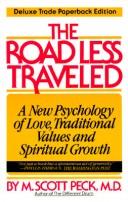
The Road Less Traveled: A New Psychology of Love, Traditional Values and Spiritual Growth
M. Scott Peck argues that maturity begins with accepting difficulty, then builds discipline, love, and spiritual growth through honest, often painful work.
2,200-word summary · 10 min read
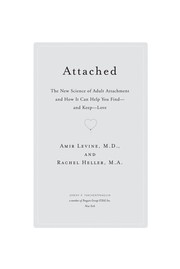
Attached
A psychiatrist and a psychologist explain adult attachment styles and show how anxious, avoidant, and secure patterns shape dating, conflict, and the search…
2,157-word summary · 10 min read