
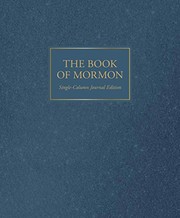
The Book of Mormon: Another Testament of Jesus Christ
2,390-word summary 11 min read 736 pages in the book
- First published
- 1830
- Publisher
- Deseret Book
- Pages
- 736
- ISBN
- 9781629726939
Reading options
What's inside (8 sections)
I am reading this as scripture, not as a novel, and it helps to say that plainly at the start. It is the central religious text of the Latter Day Saint movement, first published in 1830. The facts attached to this page point to a specific modern printing: the 2019 Deseret Book Reader's Journal Edition, ISBN 9781629726939, 736 pages. The book being described, though, is the 1830 work printed by E. B. Grandin in Palmyra, New York. Grandin's shop put it on sale on March 26, 1830, after a first run of about 5,000 copies. The original title page called it An Account Written by the Hand of Mormon upon Plates Taken from the Plates of Nephi. I mention all of that because the history here is half the story, and because a summary like this should be descriptive rather than devotional or dismissive.
The account of origins
According to Joseph Smith's own account, the story began in 1823, when he was seventeen. He said that an angel named Moroni appeared to him and told him of ancient writings buried in a hill near his home in what is now Manchester, New York. The writings were said to be engraved on golden plates by ancient prophets, and to describe a people God had led out of Jerusalem to the Western Hemisphere around six centuries before the birth of Jesus. Smith said he was allowed to take the plates in 1827 and was instructed to translate them into English. He described translating by a miraculous gift, using stones he called the Urim and Thummim, and in later accounts a seer stone he used in similar fashion.
The English text was produced by scribes writing down Smith's dictation over many sessions. Martin Harris was the first scribe, and Oliver Cowdery and others followed. The surviving book was dictated in somewhere between fifty three and seventy four working days during 1828 and 1829, a speed that believers cite as evidence of divine help and that critics cite as evidence of a human author drawing on a well stocked memory. Smith described the physical plates in detail but described the translation process itself only in vague terms in public. He also said that a portion of the original manuscript was lost by Martin Harris, the famous lost 116 pages, an episode that believers and skeptics have both used to argue their cases.
Eleven men later signed statements about the plates. Three said an angel showed them the plates, and eight said Smith let them handle and examine the plates. These witnesses remain a central piece of LDS apologetics, and also a target of criticism, since the men were friends, family, and associates of Smith and some of them later broke with him. Smith said he returned the plates to Moroni after the book was published.
A different account of the book's origin is held by most independent scholars. In this view, Smith composed the text himself, drawing on the Bible, on nineteenth century ideas about ancient Israel and the Americas, and on the religious arguments of his own time. I am not going to settle that argument here. What matters for a reader is that the book itself never argues for its origin. It simply presents itself as a record, and leaves the claim of how it arrived to the reader.
How the book is put together
The volume is not one continuous story. It is a collection of fifteen smaller books, most named for the people said to have written them: First Nephi and Second Nephi, Jacob, Enos, Jarom, Omni, Words of Mormon, Mosiah, Alma, Helaman, Third Nephi and Fourth Nephi, the Book of Mormon, Ether, and Moroni. In most editions these are divided into chapters and verses. The prose deliberately imitates the King James Version of the Bible, with its "and it came to pass" cadence, its genealogies, and its long speeches.
The framing device is a record kept on plates. The text claims that Nephi began a record on small plates, that laterkeepers added to it, and that a prophet and historian named Mormon abridged a much larger record onto plates of his own. Mormon's son Moroni finished the work and buried it, which explains why the final books read like a man writing alone at the end of a collapsed world. This layered structure is one of the book's more interesting features even for a reader who does not accept the claim behind it. The narrative keeps stopping to explain who copied what, which plates are which, and why one account was preferred over another.
The subtitle is worth a note of its own. For most of its history the book was published simply as The Book of Mormon. In 1982 the church added "Another Testament of Jesus Christ" to its official editions, a change meant to signal that the volume stands alongside the Bible as scripture. That is why many modern LDS printings carry the longer title, even though the specific Deseret Book edition cited in this post's metadata is labeled a Reader's Journal Edition. The words on the cover are relatively new; the text underneath them is not.
The long narrative
The story begins around 600 BCE in Jerusalem. A man named Lehi receives warnings and leads his wife Sariah and their sons out of the city and into the wilderness. The sons are Nephi, Laman, Lemuel, and Sam. Nephi is the faithful one, and Laman and Lemuel complain and rebel. The family obtains a set of brass plates from a man named Laban, a episode that includes Nephi killing Laban after being commanded to do so, one of the most discussed and most troubling passages in the book. They also build a ship and sail to the Americas, guided by a device called the Liahona.
Early in the record Nephi has a vision of a tree of life and a rod of iron, an image that recurs throughout the book. The family eventually splits into two peoples, the Nephites and the Lamanites, and the rest of the narrative is a long cycle of righteousness, prosperity, apostasy, war, and repentance. There are cities with names like Zarahemla and Nephihah, kings and judges, and an almost endless series of battles.
Some of the set pieces are genuinely memorable. Abinadi preaches to King Noah and is put to death, and a young priest named Alma the Elder escapes and starts a separate community of believers. Alma the Younger, after a dramatic conversion, becomes a missionary and a judge. Ammon, a Nephite missionary, goes to the Lamanites and ends up in the court of King Lamoni, where his teaching leads to a wholesale conversion of a people who bury their weapons. Captain Moroni, a military leader, raises a title of liberty and rallies his people around a covenant to defend their families and their faith. The two thousand stripling warriors, young sons who go to war at the request of their fathers and are said to be preserved because of their mothers' faith, are perhaps the best known story in the whole book and the one most often retold to children.
The center of the volume, though, is Third Nephi. The text describes a period of destruction and darkness, followed by an appearance of Jesus Christ in the Americas after his resurrection. He teaches the people, heals the sick, institutes ordinances, and delivers a long sermon that parallels and in places reworks the Sermon on the Mount. He also tells them that other sheep he has not yet brought will hear his voice, a line that believers read as a reference to other ancient peoples. This is the event the LDS Church treats as the book's central claim, and the reason the subtitle calls it a second witness to Christ.
After that visit there is a brief golden age in Fourth Nephi, then another collapse into wickedness. Mormon writes in the knowledge that his people are doomed, and Moroni closes the record with warnings to future readers. Tacked onto the end is the Book of Ether, a separate account of an earlier people called the Jaredites who crossed the sea and eventually destroyed themselves in civil war, and the Book of Moroni, which gives instructions about baptism, fasting, prayer, and church organization.
What the text teaches
Strip away the plates and the geography and what you have is a nineteenth century work of religious argument with a very specific set of concerns. It teaches that God is a personal being, that Jesus Christ is the Son of God and the redeemer of all humanity, and that the fall of Adam and Eve was a necessary step in a plan that makes redemption possible. It stresses agency, the idea that people are free to choose and are responsible for those choices. It has a great deal to say about baptism by immersion, the laying on of hands for priesthood authority, and the danger ofPriestcraft, which it defines as preaching for money or personal power.
Two themes run through almost every book. The first is the great apostasy, the claim that the original Christian church fell into error and that a restoration was therefore necessary. The second is the gathering of Israel and the building of a promised land in the Americas. The text repeatedly frames its own people as a new Israel and its land as a place of refuge and covenant.
The book is also direct about money. It condemns pride, greed, and the accumulation of wealth at the expense of the poor, and it insists that a community is judged by how it treats the stranger, the widow, and the orphan. Those passages are part of why the text has been read as a resource for social criticism as well as devotion. The prophet Samuel the Lamanite is introduced preaching against the wickedness of the Nephite cities, and Alma's work among the poor receives as much attention as the arguments of the learned. A reader coming only for the claim about ancient plates may miss how much of the book is taken up with ordinary ethical instruction.
Modern readers will notice that the book also contains passages about skin color and about the status of the Lamanites that have been used to defend racist readings in the past, and that LDS leaders have since repudiated. Those passages are part of the text and cannot be wished away.
The style is worth mentioning because it affects the experience of reading. The echo of the King James Bible is constant, including archaic verbs and a habit of repeating key phrases almost word for word. Long genealogies, lengthy war accounts, and repeated warnings make parts of the book slow going for a newcomer. The Book of Alma in particular runs for dozens of chapters and circles back to the same arguments about law, judges, and apostasy. Readers who expect a tight narrative will be surprised. Readers who approach it as scripture tend to find the repetition meditative rather than tedious.
The argument about historicity
Here is where a plain summary has to be plain about disagreement. LDS teaching holds that the Book of Mormon is a record of actual history and, in the church's own language, the keystone of the faith. Believers point to the witnesses, to the detailed narrative, to the coherence of the text, and to the speed of its production as signs that Smith could not have written it alone. Many Latter Day Saints read it devotionally, as a source of spiritual guidance and a second witness to Christ, whether or not they expect archaeologists to confirm every city.
Independent archaeology, genetics, and linguistics have found little evidence for the civilizations the book describes. The text mentions horses, chariots, steel, and a system of writing and metals that do not fit easily with what is known about pre Columbian America. Its language and its theological concerns match the eighteen thirties far more closely than they match an ancient Near Eastern record carried to the Americas. The King James phrasing, the debates about slaves and masters, and the arguments about priesthood and revelation all sound like the world Joseph Smith lived in. scholars who take this view read the book as a remarkable work of religious imagination rather than a translated ancient record.
Both readings have consequences. If the book is literal history, then every apparently failed detail matters and apologists spend a great deal of energy explaining anachronisms. If it is a nineteenth century composition, then its power lies elsewhere, in the way it builds a sacred world out of familiar materials and gives a young American church a scripture to call its own. The book does not answer the question. It simply keeps telling its story and leaves the verdict to whoever is reading.
Reading it now
For all the argument around it, the Book of Mormon has had an enormous life. It has been translated fully or in part into more than a hundred languages. It is read daily by millions of Latter Day Saints, memorized in parts, preached from, and printed in editions ranging from pocket-sized paperbacks to study volumes with footnotes and maps. The 2013 edition of the LDS text, with updated chapter summaries, is the one most modern printings follow.
My own fair criticism is that the book asks a lot of a reader who is not already committed. The middle books repeat themselves, the battles blur together, and the KJV register creates a distance that can be hard to cross. The claim of ancient origin is presented without argument inside the text, so a skeptical reader has to supply both the skepticism and the context. That can make the experience feel like being handed a conclusion rather than invited into a case.
But it is also easy to underestimate what the book accomplishes. It builds a whole moral universe, with covenants, prophets, wars, conversions, and a dramatic claim about Christ appearing in a hemisphere the Bible does not mention. Whether you read that as sacred history or as nineteenth century invention, it is a serious piece of writing with a shape and an argument, and it deserves to be read on its own terms before anyone decides what it is.
FAQ
When and where was The Book of Mormon first published?
It was first published in 1830 in Palmyra, New York, by printer E. B. Grandin, who put it on sale on March 26 after printing about 5,000 copies.
What edition do the page count and ISBN on this page refer to?
They refer to the 2019 Deseret Book Reader's Journal Edition, ISBN 9781629726939, 736 pages. The year in the metadata is 1830, the date of the original edition.
Do scholars consider The Book of Mormon historical?
Most independent scholars regard it as a nineteenth-century composition by Joseph Smith, citing its language and lack of archaeological support. Latter Day Saints generally treat it as scripture and a record of ancient peoples.
Similar books
The Case for Christ
An atheist journalist cross-examines scholars on the Gospels, the tomb, and the resurrection to test the evidence for Jesus.
2,882-word summary · 13 min read

Wild at Heart: Discovering the Secret of a Man's Soul
Why do men feel bored and tame? John Eldredge argues a man's heart is wild by design, and that recovering it means facing the wound and the question of whether…
2,289-word summary · 10 min read
My Utmost for His Highest
A posthumous collection of 366 daily devotional readings assembled from Oswald Chambers's sermons, built around surrender, discipleship and the gap between…
2,015-word summary · 9 min read
Captivating: Unveiling the Mystery of a Woman's Soul
A Christian companion to Wild at Heart in which John and Stasi Eldredge argue that women carry three God-given desires that wounds can bury. Warm, scriptural…
2,722-word summary · 12 min read
The Prayer of Jabez: Breaking Through to the Blessed Life
A tiny 2000 devotional built on two verses in Chronicles became a publishing phenomenon and a lightning rod for criticism.
2,296-word summary · 10 min read
The DaVinci Code: A Quest for Answers
A short 2006 dialogue in which three friends test Dan Brown's claims about Jesus, Mary Magdalene, Nicaea, and the canon.
2,088-word summary · 9 min read

The Chosen
A shattered pair of glasses in a 1944 Brooklyn softball game starts a friendship between a Hasidic boy and his Orthodox neighbor, and their fathers pull them…
2,443-word summary · 11 min read

Blue Like Jazz
Donald Miller leaves youth group faith in Texas for Portland and Reed College, where a confession booth and shared house life reshape his view of Christian…
2,366-word summary · 11 min read
The Holy Bible: King James Version
The 1611 King James Bible in a 1,472-page Thomas Nelson edition: from Genesis to Revelation, law, prophets, Gospels, and letters.
2,904-word summary · 13 min read
The Pursuit of God: The Human Thirst for the Divine
Ten short chapters on wanting God rather than merely knowing about him, from a pastor who wrote the book in a single night on a train.
2,014-word summary · 9 min read

Oranges Are Not the Only Fruit
An adopted girl in a strict Pentecostal household learns to read the Bible, preach sermons and love women, then faces her church and mother for it.
2,384-word summary · 11 min read
Hiroshima
In 1946 John Hersey followed six ordinary people through the atomic bombing of Hiroshima and its aftermath, using a plain style that made the reporting feel…
2,991-word summary · 13 min read
Hawaii
Michener tells the history of the Hawaiian islands in six sweeping sections, from volcanic origins to statehood, through the lives of those who arrived.
2,295-word summary · 10 min read
A Grief Observed
In four raw notebooks written after his wife Joy died, C. S. Lewis records grief as fear, anger and doubt, then slowly learns to live without easy consolation.
3,692-word summary · 16 min read

Preacher, Volume 1: Gone to Texas
A faithless Texas preacher bonded with Genesis sets out to find God, joined by Tulip O'Hare and an Irish vampire named Cassidy.
2,414-word summary · 11 min read
Have a Little Faith: a True Story
Asked to deliver his childhood rabbi's eulogy, Albom interviews the man and a Detroit pastor serving the homeless, and finds two very different models of faith.
2,339-word summary · 10 min read
Out of the Silent Planet
A Cambridge philologist is kidnapped and taken to Mars, where the natives are civilized and the humans are the dangerous invaders.
2,612-word summary · 12 min read

Exodus
Leon Uris's sweeping 1958 novel follows Jewish refugees, Haganah fighters, and Holocaust survivors from Cyprus to the founding of Israel and the 1948 war.
2,529-word summary · 11 min read
The Fire Next Time
Baldwin writes his nephew and faith on race in America.
2,463-word summary · 11 min read
God Is Not Great
Hitchens argues religion poisons life across history and texts.
2,545-word summary · 11 min read
A Canticle for Leibowitz
After nuclear war, monks save books across centuries while the world rebuilds and falls again.
2,381-word summary · 11 min read
Twelve Years a Slave
Free violinist Solomon Northup tells how Brown and Hamilton lured him south into twelve years of Louisiana bondage until Bass letters brought rescue in January…
2,931-word summary · 13 min read
Brideshead Revisited
At Oxford Charles Ryder befriends Sebastian Flyte and falls into the Catholic Marchmain family, from Brideshead summers to Julia's affair and Lord Marchmain's…
2,353-word summary · 10 min read
The Book of Longings
In first-century Galilee, Ana marries Jesus of Nazareth and fights to write women's stories in a world set against her voice.
2,368-word summary · 11 min read
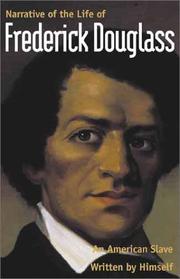
Narrative of the Life of Frederick Douglass
Douglass names names from Maryland slavery to his 1838 escape, showing how literacy, wages, and faith were policed, then answers with defiance.
2,630-word summary · 12 min read

The Story of My Life
Deafblind Keller learns water at pump through Sullivan finger spelling.
2,149-word summary · 10 min read
The Pilgrim's Progress
Christian flees the City of Destruction for the Celestial City through sloughs, fairs, and giants in Bunyan's plain and sturdy allegory.
2,988-word summary · 13 min read
Thus Spoke Zarathustra
A prophet comes down from ten years alone to preach the overman after the death of God.
1,983-word summary · 9 min read
A Portrait of the Artist as a Young Man
Stephen Dedalus grows from schoolboy to exile choosing art over church and nation.
2,072-word summary · 9 min read
The Communist Manifesto
Marx and Engels trace class struggle from bourgeoisie to proletarians, review rival socialisms, and close with a call to opposition parties. Notes on the 1848…
2,570-word summary · 11 min read