
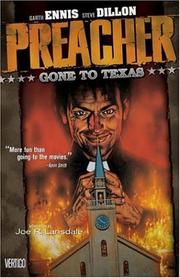
Preacher, Volume 1: Gone to Texas
2,414-word summary 11 min read 198 pages in the book
- First published
- 1996
- Publisher
- Vertigo
- Pages
- 198
- ISBN
- 9781563892615
- Series
- Preacher (#1)
Reading options
What's inside (9 sections)
I came to this book expecting a broad, loud send up of American religion, and I found something stranger and more deliberate. This is the first collected volume of Preacher, the comic book series written by Garth Ennis and drawn by Steve Dillon, gathering issues number 1 through 7. The edition I read is the 1996 Vertigo trade paperback from DC Comics, 198 pages, ISBN 9781563892615, with a short foreword by Joe R. Lansdale. The whole series ran from 1995 to 2000, sixty six regular issues plus specials, and won the Eisner Award for Best Continuing Series in 1999. This volume is only the opening movement, but it contains the premise, the three leads, and the engine that drives everything afterward.
The collected edition is a slim object for how much it contains. There are seven issues here, a foreword by Joe R. Lansdale, and no backup features padding the count. Vertigo was at its peak as a label for comics that did not fit the mainstream superhero mold, and Preacher was one of the titles that defined what that freedom could look like. The collection appeared in 1996, in the middle of the series' run, and it has stayed in print in one form or another ever since. Later books would repackage the same issues in thicker volumes, but this is the one that introduced the story to a wide audience.
A preacher with nothing left to believe
Jesse Custer is a preacher in the small Texas town of Annville. He is tough, principled, and, at the start of the story, completely empty inside. He has lost his faith but keeps standing in the pulpit because the town expects it of him and because he has not worked out what else he is supposed to do. That combination of anger and honesty is what makes him interesting. He is not a cynical fraud using the church, and he is not a true believer either. He is a man who knows the words by heart and no longer knows whether they mean anything.
The premise arrives in the form of an accident. Genesis, a supernatural entity described as the offspring of an angel and a demon, escapes from Heaven and comes to Annville. It has no conscience and no clear will of its own, but it is made of pure goodness and pure evil at the same time, which means its power may rival God's. It merges with Jesse during a religious service, lodged in his mind in a kind of supernatural symbiosis. The people in the church do not survive the event. Jesse is left alive with something inside him that he did not ask for and cannot control.
Annville is drawn as a place where everyone knows everyone and the preacher is expected to be a certain kind of man. Jesse fills that role the way a man fills a coat that no longer fits. He can deliver a sermon, but the performance has hollowed out. Ennis spends real time on the town before the accident, which makes the loss afterward more than a plot device. The people in that church are neighbors with habits and grievances, and their absence is never treated as a statistic.
What Genesis gives him is knowledge and a tool. Through it, Jesse learns that God has left Heaven and abandoned the job He was supposed to do. He also discovers that he can speak with what the comic calls the Word of God, printed in red letters on the page as a nod to the way Jesus's words are marked in some Bibles. When Jesse uses the Word, any being who hears and understands him cannot help but obey, fully and immediately. It is a command that bypasses argument, fear, and loyalty. It also raises the obvious problem that a man with an irresistible command has very little need for anyone else's opinion.
The red lettering is a small formal choice that does a lot of work. It makes the Word visually distinct on the page, so the reader can tell the difference between Jesse speaking and something speaking through him. It also quietly makes the case that this is a book about language and authority, about who gets to issue commands and who has to live with obeying them. Jesse's anger is not the loudest thing in the book, but it is the most persistent. He asks questions in a flat voice and does not let a subject go once he has it.
A quest with a blunt target
Jesse decides to find God. Not a sign of God, not a feeling about God, but God in person, so He can be made to answer for walking away. That is the whole quest of the series stated in a sentence, and it is audacious in a way comics rarely are. Ennis strips the search down to a physical journey across America. There is no holy object to assemble, no prophecy to decode, no council to persuade. One angry man with the voice of authority sets out to track down the absentee creator of the universe and hold Him accountable.
The first volume spends its time getting that journey started. It shows Jesse testing what the Word actually does and learning the limits of what he knows. Genesis is not a friendly passenger. It offers insight but not comfort, and the things Jesse sees through it are not the things a person would choose to see. His loss of faith before the possession becomes a useful counterweight to the power after it: he has no investment in being right about God, which frees him to be furious instead.
The texture of the book comes from how ordinary the surroundings are. Diners, bars, cheap rooms, and long stretches of highway sit beside the cosmic material. Ennis writes the small talk of people who are scared and the banter of people who are avoiding being scared, and the contrast is the point. A being that might outmatch God ends up in the back of a car with three people who are tired, broke, and annoyed with one another.
Tulip and Cassidy
Jesse does not travel alone for long. Tulip O'Hare is his former girlfriend, and she has spent a long time believing that he abandoned her. She arrives with her own history and her own grudges, and she is not interested in being cast as the supportive woman at the side of a man on a mission. Her anger gives the early chapters their best friction. She has a claim on Jesse that predates Genesis and God and the Word, and she refuses to let the new situation erase it.
Cassidy completes the trio. He is a hundred year old Irish vampire who would rather sit in a pub with a pint than feed on the innocent, and that choice defines him more than the fangs do. He is funny, drink sodden, and careful about the people he allows close. He knows Jesse from before and he knows Tulip from before, which makes him the only one who can speak plainly to both of them. He also provides a running commentary on the absurdity of what they are doing, which keeps the book from taking its own grand premise too seriously.
Cassidy's age is easy to forget because he behaves like the least solemn person in any room. He drinks, makes poor decisions, and changes the subject when a conversation gets close to something real. Dillon draws him with a looseness that suits the character, all long limbs and slouched shoulders, and the contrast with Jesse's square, contained posture does narrative work before anyone speaks. Tulip, meanwhile, is written as a person with a temper and a plan. She is not waiting to be persuaded.
The three of them head to New York City first. The choice is practical and a little comic: if a person wanted information about God's whereabouts, a city full of people who claim to have inside knowledge would be a reasonable place to start. Cassidy introduces Jesse and Tulip to a friend of his, a freelance journalist named Si Coltrane, who says he has some insight into where God might be. The meeting is the first real lead in the story, and it demonstrates how much of this quest depends on chasing rumors supplied by people who are not entirely trustworthy.
Heaven sends a solution
While Jesse is on the ground following leads, the situation in Heaven is falling apart. A quorum of angels gathers and decides that the situation cannot be allowed to continue. They send the Saint of Killers to Earth with orders to recapture Genesis at whatever cost. The Saint is an immortal, unstoppable killing machine, and the phrasing matters: he is not a detective or a missionary. He is a weapon pointed at a single target, and the angels who deploy him are frightened enough not to care what he damages getting there.
That decision is the second engine of the volume. The pursuit is not about justice or forgiveness. It is about containment, and the people who make the decision are the same people whose absence Jesse is going to demand an accounting from. The book sets up a collision between a man who can command any being and a being who was built to ignore everything except its orders. Ennis plants that confrontation without rushing it. The Saint is introduced as a presence and a threat first, which gives the early chapters a low, steady sense of dread underneath the jokes.
What makes the structure work is that both sides are acting rationally from their own point of view. Jesse has been abandoned and wants an explanation. The angels have been abandoned too, in a sense, and want the problem put back in its box. Nobody in this opening volume is especially wise. They are all responding to a mess that someone else made, and the comedy comes from how serious they are while doing it.
The angels in these pages are not wise or kind. They are functionaries who have been left to manage a catastrophe and have decided that a blunt instrument is better than no instrument. That choice gives the volume its moral unease. The institution Jesse wants to hold responsible is the same institution that sends a killer after him, and neither action is presented as especially holy. Ennis does not bother to make the heavenly hierarchy sympathetic, which is both the book's sharpest satirical point and the source of its occasional overreach.
The tone, and the cost of it
Preacher built its reputation on dark humor and religious satire, and both are on display here from the first pages. Ennis is willing to go somewhere ugly for a joke, and he is willing to let a scene stay uncomfortable after the punch line has landed. The dialogue has a hard, regional music to it, full of insults and interruptions and people talking over one another. Steve Dillon's art is clean and unusually expressive with faces. His characters carry themselves differently from panel to panel, and he is very good at the small pauses that let a line of dialogue sit with the reader.
The rough edges are real. The volume can feel like a collection of setup rather than a complete story, because it is. The episodic rhythm of the original monthly issues shows, and some chapters end on a beat that feels manufactured to make the next issue seem essential. The provocation is sometimes its own reward. There are moments where the shock appears to be the entire point of the scene, and the satire flattens into a dare aimed at whoever might be offended. Readers who want their blasphemy to come with a careful argument behind it will not always find one.
The violence is another dividing line. This is a book for adults, and it uses that freedom freely. Blood, cruelty, and casual cruelty appear without much ceremony, and the tone swings from broad comedy to genuine horror inside a few pages. That volatility is part of the series identity, but it can be exhausting in a single sitting. The graphic novel format helps, because a page lets you pause in a way a film would not, but the accumulation still lands hard.
The book's place in the series
Preacher ended up mattering well beyond its own run. IGN ranked it among the best Vertigo comics ever published, and Empire placed Jesse Custer high on its list of great comic book characters. Stephen King said his Dark Tower comic The Gunslinger Born was influenced by it, and Brian K. Vaughan gave a Preacher reference to Y: The Last Man. A television adaptation eventually aired on AMC from 2016 to 2019, long after the comic had finished, which introduced the characters to a new audience that sometimes came to the book with the show in mind. None of that is in these seven issues, but the scale of the later reaction makes sense once you see how cleanly the premise is laid out here.
What it sets in motion
By the end of these seven issues, the essential pieces are in place. Jesse has the Word and a destination. Tulip has rejoined his life on her own terms. Cassidy has attached himself to the quest for reasons he would not state plainly. The angels have released the Saint of Killers, which means the chase has begun. The wider series will go on to bring in Jesse's brutal family, a secret organization called the Grail, the enforcer Herr Starr, the gunfighter known as the Saint, and eventually God Himself, but none of that is resolved here. This volume is the door opening, not the room.
That is the honest way to recommend it. If you want a self contained graphic novel with a beginning, middle, and end, this will feel like an incomplete meal. If you want to understand why Preacher became one of the most talked about comics of its decade, it is the most efficient place to start. The premise is stated plainly, the three leads are given room to argue and breathe, and the final pages leave you with a clear sense of the scale Ennis is aiming at. The series would get stranger, crueler, and more ambitious from here. This first book is where it learns to walk.
FAQ
Is Preacher, Volume 1 a complete story?
No. It collects issues number 1 through 7 of the 1995 to 2000 series, so it sets up the quest and the main characters but leaves the larger conflicts for later volumes.
What is Genesis in Preacher?
Genesis is a supernatural being born of an angel and a demon. It bonds with Jesse Custer, gives him insight into God's absence, and lets him issue commands that cannot be resisted.
Who are the main characters in this volume?
Jesse Custer, his former girlfriend Tulip O'Hare, and Cassidy, a hundred year old Irish vampire, plus the Saint of Killers sent from Heaven to recapture Genesis.
Similar books
More from Preacher first, then related titles.
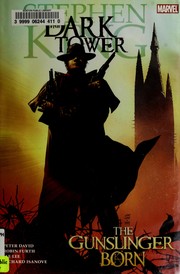
The Gunslinger Born
A Marvel graphic novel adapting the flashback of Wizard and Glass: a fourteen-year-old Roland earns his guns, loves Susan Delgado and first sees the Dark Tower.
2,010-word summary · 9 min read

Wild at Heart: Discovering the Secret of a Man's Soul
Why do men feel bored and tame? John Eldredge argues a man's heart is wild by design, and that recovering it means facing the wound and the question of whether…
2,289-word summary · 10 min read
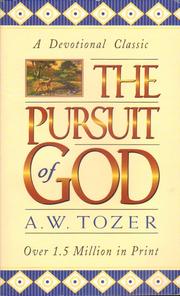
The Pursuit of God: The Human Thirst for the Divine
Ten short chapters on wanting God rather than merely knowing about him, from a pastor who wrote the book in a single night on a train.
2,014-word summary · 9 min read
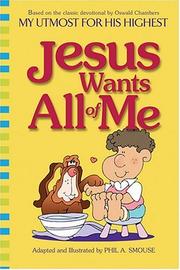
My Utmost for His Highest
A posthumous collection of 366 daily devotional readings assembled from Oswald Chambers's sermons, built around surrender, discipleship and the gap between…
2,015-word summary · 9 min read
Memnoch the Devil
In the fifth Vampire Chronicles novel, Lestat is taken by the Devil on a tour of Heaven and Hell and asked to serve as God's adversary.
2,619-word summary · 12 min read
Captivating: Unveiling the Mystery of a Woman's Soul
A Christian companion to Wild at Heart in which John and Stasi Eldredge argue that women carry three God-given desires that wounds can bury. Warm, scriptural…
2,722-word summary · 12 min read
A Grief Observed
In four raw notebooks written after his wife Joy died, C. S. Lewis records grief as fear, anger and doubt, then slowly learns to live without easy consolation.
3,692-word summary · 16 min read
The Prayer of Jabez: Breaking Through to the Blessed Life
A tiny 2000 devotional built on two verses in Chronicles became a publishing phenomenon and a lightning rod for criticism.
2,296-word summary · 10 min read
The Book of Mormon: Another Testament of Jesus Christ
A religious scripture first published in 1830, presented as a record of ancient peoples in the Americas and a second witness to Jesus Christ in the Latter Day…
2,390-word summary · 11 min read
Have a Little Faith: a True Story
Asked to deliver his childhood rabbi's eulogy, Albom interviews the man and a Detroit pastor serving the homeless, and finds two very different models of faith.
2,339-word summary · 10 min read

Ms. Marvel, Vol. 1: No Normal
Kamala Khan, a Jersey City teenager and Carol Danvers fan, gains shapeshifting powers and has to decide what kind of hero she wants to be.
2,579-word summary · 11 min read

The Chosen
A shattered pair of glasses in a 1944 Brooklyn softball game starts a friendship between a Hasidic boy and his Orthodox neighbor, and their fathers pull them…
2,443-word summary · 11 min read
The Sisters Brothers
Two hired killers ride from Oregon to Gold Rush California to murder a prospector, and find their trade, their brotherhood, and the frontier myth coming apart.
2,095-word summary · 9 min read

God Is Not Great
Hitchens argues religion poisons life across history and texts.
2,545-word summary · 11 min read

Blue Like Jazz
Donald Miller leaves youth group faith in Texas for Portland and Reed College, where a confession booth and shared house life reshape his view of Christian…
2,366-word summary · 11 min read

Blankets
Craig Thompson recalls sharing a bed with brother Phil, falling for Raina at church camp, losing his faith, and keeping art through Michigan winters.
2,586-word summary · 11 min read
The Book of Longings
In first-century Galilee, Ana marries Jesus of Nazareth and fights to write women's stories in a world set against her voice.
2,368-word summary · 11 min read

Adulthood Is a Myth
Andersen's debut Sarah's Scribbles collection jokes about staying in, bad bras, awkward dating, and the strange comfort of pajamas.
2,424-word summary · 11 min read
The Case for Christ
An atheist journalist cross-examines scholars on the Gospels, the tomb, and the resurrection to test the evidence for Jesus.
2,882-word summary · 13 min read

Fables, Vol. 1: Legends in Exile
Exiled fairy tales hide in New York, and sheriff Bigby Wolf must solve Rose Red's bloody disappearance.
2,984-word summary · 13 min read
Batman: The Dark Knight Returns
A 55-year-old Bruce Wayne ends ten years of retirement to face gangs, the Joker, and Superman.
2,249-word summary · 10 min read

Batman: The Killing Joke
The Joker shoots Barbara Gordon and tortures Jim Gordon to prove madness is one bad day away from anyone.
2,016-word summary · 9 min read
Batman: Year One
Honest cop Gordon and returning Bruce Wayne start at the bottom of rotten Gotham in endless rain.
1,993-word summary · 9 min read

The True True Story of Raja the Gullible (and His Mother)
A gay philosophy teacher in Beirut revisits six decades of Lebanese history, family trauma, and his thorny bond with his mother.
2,274-word summary · 10 min read
The Sandman, Vol. 4: Season of Mists
Dream travels to Hell and is handed the key to its gates, then every god and demon arrives to argue who should rule.
2,351-word summary · 10 min read

The Pelican Child
Twelve short stories by Joy Williams, where talking dogs, bleak comedy, and the nearness of death mark a late-career stylist at work.
2,415-word summary · 11 min read
The Gashlycrumb Tinies
Edward Gorey's 1963 alphabet book marches twenty-six children through a series of very bad endings, in thirteen rhyming couplets and a handful of unnervingly…
2,200-word summary · 10 min read

Revelations
Schuyler is pulled into the Force household as Silver Bloods rise, and a Conclave gathering in Rio ends in bloodshed.
2,166-word summary · 10 min read

My Roommate Is a Vampire
A struggling artist takes a cheap room in Chicago and discovers her polite, nocturnal roommate is a vampire with a proposition.
2,502-word summary · 11 min read

John Dies at the End
Two slacker friends, a drug called soy sauce, and a portal to something that wants every universe.
2,382-word summary · 11 min read