
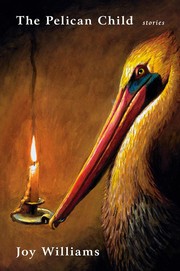
The Pelican Child
2,415-word summary 11 min read 176 pages in the book
- First published
- 2025
- Publisher
- Alfred A. Knopf
- Pages
- 176
- ISBN
- 9780525657583
Reading options
What's inside (9 sections)
I opened it because of the title
I picked up The Pelican Child mostly because the title lodged in my head. Pelican, child. Two plain words that together sound like the beginning of a fable someone started telling and then forgot to make comforting. That turned out to be a fair introduction to what Joy Williams does on the page. The book arrived in November 2025 from Alfred A. Knopf, a slim 176 pages, and it picked up a longlisting for the 2025 National Book Award along the way. I had known Williams by reputation long before I read this, mostly as a writer with a very particular frequency, the kind whose sentences you recognise after a paragraph. I wanted to see what that frequency sounded like at eighty-one, late in a career that has never much cared about being liked for the right reasons.
What I found was not a novel and not a memoir. It is a collection of twelve short stories, and the first thing worth saying about it is that there is no single plot to chase. If you come looking for a cast of characters to follow from chapter to chapter, you will not find one. The stories are standalone pieces that appeared earlier in a range of journals, with the oldest of them dating back to 2010. That spread of years matters. These are not twelve movements of one argument written in a burst; they are the gathered output of a writer working the same narrow, strange seam for a decade and a half, refining a set of habits until they became something close to a signature.
A collection with no center to hold it
The lack of a through line is both a feature and a small frustration, and I felt both. On the feature side, a short story collection lets a writer put a dozen different kinds of failure on the table without having to reconcile them. Williams can be bleak in one piece, almost tender in the next, and absurd in a third, and none of those moods has to answer to the others. Each story gets its own weather. You can open the book at almost any point and get a complete, self-contained experience, which is a real virtue in a collection this short.
On the frustration side, the absence of a center means the book never builds the kind of momentum a novel would. Critics mostly dealt with this by talking about the collection's recurring preoccupations and about Williams's late-career standing, rather than about anything that happens in a conventional plot sense. I understand why. When a book is held together by tone and obsession instead of story, the honest way to describe it is to name the obsessions. That is what nearly everyone who wrote about the book ended up doing, and I will do the same. It is not a dodge. It is simply the shape of the thing.
The stories are short, and Williams uses that brevity the way a good comic uses a short setup. She gets in, establishes a world with a few strokes, lets the dialogue go somewhere uncomfortable, and gets out before the reader can settle. Very little is explained. You are expected to keep up, or to enjoy not quite keeping up. This is the sort of book that assumes you have read a fair amount and can tolerate being left alone with a few details.
Death is in the room the whole time
The theme that reviewers kept naming, almost in unison, is mortality. Publishers Weekly gave the collection a starred review, and singled out Williams's dialogue while noting that death is a consistent presence across the stories. Consistent is the right word. Death is not an event that arrives at the end of these pieces to tie things off. It is more like a condition the characters are already living inside, the way a person lives inside a room with a low ceiling and stops noticing the height.
That is a hard trick to pull off without becoming heavy handed, and Williams manages it largely by refusing to be solemn. Her characters talk about the end of things the way people actually talk about it when they are tired or distracted or trying to make a joke land. The dialogue is doing a great deal of work here. It is in the gaps between what people say that the fear lives. A line that sounds like a throwaway remark can carry the whole weight of a story once you notice what nobody in the room is willing to say directly.
I should be honest that this can feel relentless. Reading twelve short fictions in which death keeps appearing, in one form or another, has a cumulative effect. By the later stories I found myself bracing for it, which may or may not be the intended response. There is a difference between a writer who wants you to feel the pressure of mortality and a writer who wants you to feel it and then feel clever for having noticed. Williams, to her credit, mostly stays on the right side of that line. The bleakness is a property of the world she is showing you, not a badge she is wearing.
The dogs talk, and the people do not
The most distinctive recurring device, and the one that drew the most comment, is the arrival of talking dogs. They turn up in several of the stories, and the New York Times, in a more qualified notice than most of the others, called the collection uneven and pointed specifically at these dogs, as well as at what its headline described as the spirit of Sontag. I have thought about that headline a good deal. It is a clever bit of shorthand, and it captures something real about the book's appetite for ideas and its slightly severe intelligence, even if it also tells you more about the newspaper's framing than about Williams's intentions.
Talking animals are nothing new in Williams's work. Bleak comedy and a fascination with the absurd are characteristic of her earlier books, and these stories extend those preoccupations rather than breaking away from them. The dogs are funny, and they are also a way of making a point about the humans. When an animal can speak and the people around it cannot say what they mean, the imbalance becomes visible in a way that a purely human scene would not manage. Williams is very interested in the failure of human beings to understand one another. She is interested in the small cruelties of that failure, and in the loneliness that follows from it, and in the fact that most of us go on talking anyway.
Putting the words in a dog's mouth lets her say the blunt things without the scene turning into a lecture. A dog in these stories does not have the same social obligations a person does. It can be direct in a way that a friend, a spouse, or a stranger at a bus stop cannot. That freedom is the joke and also the machinery of the thing. The humans stumble around their own evasions while the animal says the quiet part out loud, and the comedy comes from how badly the humans take it.
This will not work for everyone. If the idea of talking dogs strikes you as a cute gimmick, the stories that lean on it will feel like a gimmick, and the New York Times was not wrong to flag the unevenness. A few of the pieces seem to run out of the energy that got them started. That is a fair criticism of any collection assembled over fifteen years. The journal in which a story first appeared is not always the same as the book in which it now sits, and a few of these pieces read as if they were written for a very specific moment that has passed. Most of them, though, are sharper than that, and the dogs are rarely there just to be funny.
What the critics argued about, and mostly agreed on
The reception was strongly positive, with one notable exception, and the range of praise is itself interesting. David L. Ulin, writing in Alta, called the collection an expansion of themes from Williams's previous work. That is a modest, accurate way to put it. This is not a writer reinventing herself. It is a writer pressing further into territory she has been mapping for decades, and Ulin's point is that the expansion is real even if the direction is familiar.
Gideon Leek, in the Los Angeles Review of Books, took a hotter view. Under the title Our Reigning Prophet of Doom, Leek found the stories bleaker than ever and compared Williams favourably to Bret Easton Ellis and Carson McCullers. That is a striking pair of names to put beside hers, and I can see the logic from both directions. The Ellis comparison makes sense if you are thinking about the cool, flat register in which terrible things get said. The McCullers comparison makes sense if you are thinking about the loneliness and the freakishness of the characters, the sense that everyone in the room is reaching for everyone else and missing. Williams has always had a bit of both.
Jake Cline, writing in the Washington Post, argued that at eighty-one Williams is as good as she has ever been. He called the book her best since The Quick and the Dead and complimented her character descriptions. That last point deserves attention, because character is where a collection like this either lives or dies. With no plot to rely on, a short story has to give you people you can recognise in a few sentences. Williams has a way of describing someone that is both exact and slightly sideways, so that you see the person and also see them distorted, the way you might see someone you have not met in years. It is a skill that rewards rereading.
Kirkus was laudatory, praised the prose, and suggested that Williams is next in line for the Nobel Prize in Literature. Booklist was positive as well. I mention all of this not to pile on approval but because the consistency of the notice tells you something about where Williams stands. This is an author whose reputation is secure enough that a short, difficult, funny, death-haunted collection can be treated as an event. The NYT's more qualified notice, with its unevenness charge and its Sontag headline, is the lone cooler voice, and even it seemed to admire the ambition while balking at some of the results.
The warmth hiding in the bleakness
Here is the thing I did not expect, and the thing that has stayed with me. For all the talk of doom, the book is not without warmth. The critical consensus, reading the reviews together, is that the volume consolidates a career-long preoccupation with mortality and the absurd while adding a fresh, sometimes startling strain of warmth and humour. That startled me too when I first read it in that context, because warmth is not the word most people reach for with Williams. Yet it is there. It shows up in the comedy, in the odd tenderness of the animal scenes, and in the sheer pleasure of hearing sentences this well made go by.
The book adds up to a portrait of a distinctive American stylist working at the top of her powers. Short, darkly funny fictions. Animals that speak. Human beings who fail to understand one another. Death never far away. If you have read Williams before, none of that will be new, and the pleasure is in the execution rather than the discovery. If you have not, this is a strange but reasonable place to begin, precisely because it is so concentrated. There is no fat here. A hundred and seventy-six pages is enough room for twelve stories, and every one of them is about what it is about.
There is a generosity in the humour that I do not think the doom label captures. Williams is not laughing at her characters from a safe distance. She is inside the scenes with them, even when the scenes are ridiculous or cruel. The dogs are not there to make the humans look foolish so much as to make the whole situation visible, people and animals together, caught in the same small room with the same unspoken things. That is a warmer project than the headlines suggest, and it is the part of the book I would point a new reader toward first.
Who should read it, and how
I would hand this to someone who already loves short fiction, particularly the kind that trusts the reader and refuses to tidy up. It is a good book for a reader who enjoys dialogue that goes somewhere surprising, and for anyone who likes their comedy dark and their endings unresolved. It is less suited to someone looking for a story to get lost in over a weekend, or to a reader who wants the comfort of a narrator who explains what everything means. Williams explains almost nothing, and she seems to prefer it that way.
The honest caveat is the one the Times raised: the collection is uneven. A handful of these stories do not reach the level of the best ones, and the talking dogs, for all that they are the book's signature, will not charm every reader. But the highs are high enough that I would not let the dips turn me away. At its best, this is writing that makes you stop and read a sentence twice, partly to see how it was built and partly because it said something you had been trying to say yourself.
I closed The Pelican Child with the sense of having spent time with a writer who knows exactly what she is doing and has no interest in doing it any other way. That is a rare thing at any age, and more rare at eighty-one. The title still sounds to me like the start of a fable that goes wrong. After reading the book, I think that is exactly the point. The fable goes wrong, the dog says something true, somebody dies, and everybody keeps talking anyway. Williams finds that funny, and by the last page I did too.
FAQ
Is The Pelican Child a novel?
No. It is a collection of twelve standalone short stories by Joy Williams, first published by Alfred A. Knopf in 2025. The oldest of the stories dates back to 2010.
What is the main theme of The Pelican Child?
Mortality is the preoccupation reviewers named most often. Death appears across the stories as a condition the characters live inside, paired with bleak comedy and the absurd.
Why do dogs talk in these stories?
Talking dogs appear in several stories and are a hallmark of Williams's earlier work as well. Their blunt speech highlights how poorly the human characters manage to say what they mean.
Similar books
Still Life with Woodpecker
An environmentalist princess and an outlaw bomber fall in love, then argue about freedom, sacrifice, and a pack of Camel cigarettes.
2,061-word summary · 9 min read
Dead Souls
A charming stranger buys the rights to serfs who have died but remain on the census rolls, and a whole province turns against him.
2,255-word summary · 10 min read
A Long Way Down
Four strangers meet on a London rooftop on New Year's Eve, each planning to jump, and end up making a pact to stay alive until Valentine's Day.
2,145-word summary · 10 min read
The True True Story of Raja the Gullible (and His Mother)
A gay philosophy teacher in Beirut revisits six decades of Lebanese history, family trauma, and his thorny bond with his mother.
2,274-word summary · 10 min read
The Rest of Our Lives
A law professor drives his daughter to college, then heads west instead of home, testing a private promise he made twelve years ago.
2,238-word summary · 10 min read
The Nix
A stalled novelist and community college professor goes looking for the mother who left him and finds a radical activist whose rock thrown at a governor made…
2,214-word summary · 10 min read
The Gashlycrumb Tinies
Edward Gorey's 1963 alphabet book marches twenty-six children through a series of very bad endings, in thirteen rhyming couplets and a handful of unnervingly…
2,200-word summary · 10 min read
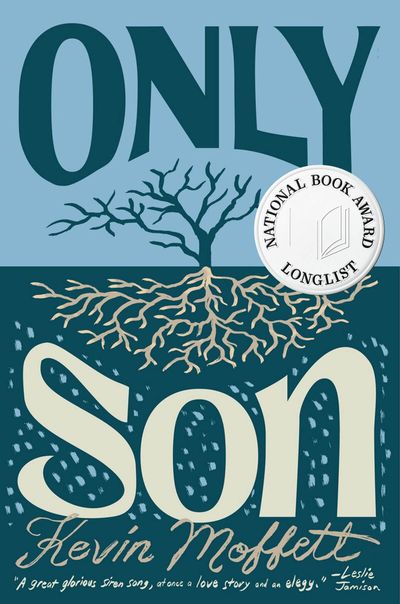
Only Son
A brief, funny, melancholy debut about a boy whose father dies in 1982 Florida, and the man he becomes, still trying to read the mystery of that loss.
2,170-word summary · 10 min read
John Dies at the End
Two slacker friends, a drug called soy sauce, and a portal to something that wants every universe.
2,382-word summary · 11 min read
Three Days in June
A Baltimore mother loses her job, and her ex-husband turns up with a rescue cat, in Anne Tyler's short, funny novel about the three days around her daughter's…
2,867-word summary · 13 min read
The Vacationers
A New York family's two-week stay in Mallorca turns into a comedy of exposed secrets when a magazine editor's affair and a son's debts come to light.
2,324-word summary · 10 min read
The Rachel Incident
A funny, sharp novel about two twenty-somethings in recession-era Cork whose bookshop friendship, tangled romance and a married professor's lie leave a secret…
2,346-word summary · 10 min read
The Collected Regrets of Clover
A death doula who writes down the last words of strangers keeps her own heart locked away, until a new neighbor, a dying photojournalist and a road trip to…
3,055-word summary · 14 min read
Soul Music
A harpist from Llamedos brings rock music to Ankh-Morpork, and a primordial force takes hold of the city, pulling Susan Sto Helit and Death into a fight over…
2,406-word summary · 11 min read
Not Quite Dead Yet
A drifting twenty-seven-year-old is told she will die within a week and decides to solve her own attempted murder instead of taking surgery with a ten percent…
2,010-word summary · 9 min read
Endling
A Ukrainian scientist breeds endangered snails from her van and funds the work by posing as a mail-order bride, until a kidnapping plot meets the outbreak of…
3,041-word summary · 14 min read
American Fantasy
Newly divorced and feeling replaceable at work, Annie takes a Boy Talk reunion cruise alone and finds buried feelings stirring.
2,403-word summary · 11 min read
The Idiot
A Turkish-American freshman at Harvard falls in love through email with a Hungarian math student and spends a summer in Hungary trying to turn correspondence…
2,019-word summary · 9 min read
Unaccustomed Earth
Lahiri’s second story collection follows Bengali families in America and abroad, tracing the quiet distances between parents and children, spouses, and the…
2,333-word summary · 10 min read
Naked Lunch
Burroughs's banned 1959 collage novel follows Bill Lee through addiction, Tangier, and the nightmare bureaucracy of the Interzone.
2,082-word summary · 9 min read
Infinite Jest
A film that kills its viewers, a tennis academy, a halfway house for addicts, and a future America where corporations name the years, all tangled together.
2,084-word summary · 9 min read
Hogfather
Death fills in for a missing Father Christmas, Susan Sto Helit hunts the Hogfather, and the twentieth Discworld novel turns Santa into a management problem.
2,871-word summary · 13 min read
Her Body and Other Parties: Stories
Eight stories where bodies, medicine and old fairy tales get taken apart, with a green ribbon running through the whole book.
2,997-word summary · 13 min read
Eligible
Austen's Bennet sisters move to modern Cincinnati, where marriage is a reality show and the house is losing its value.
2,293-word summary · 10 min read

Big Swiss
A transcriptionist for a sex coach falls for one of his clients, the tall Swiss gynecologist she calls Big Swiss, in a funny novel about work and secrets.
2,523-word summary · 11 min read
This Is How You Lose Her
Yunior cycles through love affairs and betrayals in nine linked stories, tracing the damage he does and the family history behind it.
2,195-word summary · 10 min read
The Sisters Brothers
Two hired killers ride from Oregon to Gold Rush California to murder a prospector, and find their trade, their brotherhood, and the frontier myth coming apart.
2,095-word summary · 9 min read
Olive, Again
Elizabeth Strout returns to Crosby, Maine, as Olive Kitteridge marries Jack Kennison, confronts her son, and faces old age, grief, and small-town judgment.
2,333-word summary · 10 min read
The Bane Chronicles
Eleven stories across five centuries follow Magnus Bane from a ban in Peru to his first date with Alec in this illustrated Shadowhunter companion.
2,470-word summary · 11 min read
If on a Winter's Night a Traveler
You, the Reader, chase a defective novel through bookshops and translators while ten other novels keep interrupting. Calvino's famous puzzle about the act of…
2,173-word summary · 10 min read