
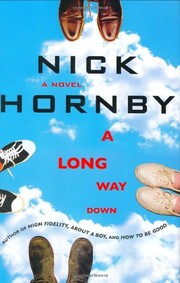
A Long Way Down
2,145-word summary 10 min read 352 pages in the book
- First published
- 2005
- Publisher
- Riverhead Books
- Pages
- 352
- ISBN
- 9781573223027
Reading options
What's inside (10 sections)
Four people try to kill themselves on the same roof on the same night, and the joke is that they interrupt each other. That is the premise of Nick Hornby's 2005 novel, and it is a premise that could go wrong in about six different ways. It could be tasteless. It could be sentimental. It could turn suicide into a quirky meet-cute. Hornby knows this, and the book spends most of its length trying to earn the right to be funny about something that is not funny at all.
It mostly succeeds. A Long Way Down was published by Riverhead Books in the United States and Penguin in the UK, and the edition cited here runs 352 pages. It is told in rotating first-person chapters by four narrators, each with a distinct voice and a distinct reason for being on the roof of Toppers House in London on New Year's Eve.
The four
Martin Sharp is a former television presenter. He was famous, he had a wife named Cindy and two daughters, and then he slept with a fifteen-year-old girl and went to prison. He has been out for a while. He is articulate, self-pitying, and convinced that the world has been unfair to him. He is the novel's most difficult character because he is charming enough to make you forget how bad he is.
Maureen is fifty-one, a single mother, and the primary caregiver for her son Matty, who has severe disabilities. She works, she cares for Matty, and she has no life of her own. Her chapters are quiet and painful. She is not dramatic about her suffering. She simply describes a day, and the day is unbearable.
Jess is eighteen, rude, impulsive, and the daughter of a government minister. Her sister Jen disappeared years ago, and the loss has hollowed out the family. Jess is the one who talks the others out of jumping, or into delaying, depending on how you look at it. She is also the one who creates most of the mess.
JJ is an American, thirty-five, a failed musician who delivers pizzas in London. His band almost made it. His girlfriend left. He is grieving a life that did not happen, and he is self-aware enough to know how ordinary that grief is. His chapters are the funniest and the saddest.
The four voices are the book's main pleasure. Hornby writes them as four different kinds of denial. Martin denies that he did anything wrong. Maureen denies that she has a self. Jess denies that her sister is gone. JJ denies that his music was never going to work. Each denial is a survival strategy, and each one is also a lie.
Maureen and Matty
The character who stays with me is not Martin, though Martin is the most vivid. It is Maureen, because her chapters do not have jokes in them. She gets up, she washes Matty, she feeds him, she takes him to a day center, she works, she collects him, she puts him to bed, and then she sits in a chair until it is late enough to sleep. The routine is not a metaphor. It is a description.
Matty is never seen directly. He is a presence in her narration, a body that needs lifting, a person who cannot be left alone. Hornby avoids the trap of making him saintly or symbolic. He is just a young man with severe disabilities, and his mother is tired. The novel does not ask you to pity her. It asks you to notice how much of her life has been spent on tasks that nobody sees.
Maureen's reason for being on the roof is not dramatic. She is not grieving a great love or a ruined career. She is grieving the fact that her life has narrowed to a single room and a single obligation, and that she cannot see a future in which it widens. That is a quieter kind of despair than Martin's, and it is more common.
Her arc is also the most honest. She does not get a miracle. She gets a small amount of help, a few friends who are not really friends, and a decision to keep going. When she considers putting Matty in a home, the novel does not treat the thought as a betrayal. It treats it as a reasonable question that a exhausted woman is allowed to ask.
The pact
They do not jump. They make a pact instead: they will stay alive until Valentine's Day, and they will help each other. Jess's condition is that they help her find her ex-boyfriend Chas. So they leave the roof, get in a taxi, and go to a party, which is where the book announces that it is going to be a comedy about depression rather than a tragedy about it.
The pact is a fragile thing, and the novel is honest about how fragile. None of them are cured. They are four strangers who have agreed to postpone a decision, and the postponement gives them a reason to keep talking. That is all. Hornby does not pretend it is therapy. He does not pretend it is friendship, at least not at first. It is a deal, and deals can be broken.
The group's first outing is a disaster in the way that most forced social occasions are disasters. They do not like each other. They judge each other. Martin is condescending. Jess is cruel. Maureen is uncomfortable. JJ is stoned. The comedy comes from the mismatch, and the pathos comes from the fact that they have no one else.
The angel
Jess tells a reporter that they saw an angel on the roof, and that the angel looked like Matt Damon. The lie is not planned. It comes out of her need to make the story mean something, and it immediately becomes a media event. The group is offered money, interviews, and a slot on Martin's old television network.
This section is the novel's sharpest satire. The press does not care whether the angel is real. It cares whether the story sells. Martin, who has been a media person his whole life, recognizes the machine and hates it, and then participates in it anyway because he wants his career back. The others go along because they are curious, or broke, or bored.
The television appearance is a disaster. Martin is humiliated. Jess admits on air that the angel was a lie. The group becomes a joke, and the joke exposes the fact that they were never a support group. They were four people with a shared secret, and the secret has been sold.
Hornby is good at this kind of social comedy. He understands the way television eats people and then asks them to thank it. He also understands that the people being eaten are often willing participants. Martin is not a victim of the media. He is a man who wants to be famous again, and the book does not let him off.
Tenerife
The middle section takes the group to Tenerife for a holiday, paid for by the newspaper money. It is a strange interlude. They lie by a pool, they drink, they fight, and they almost become friends. Jess sees a girl who looks like her sister Jen and nearly gets arrested. JJ sleeps with a woman who remembers his band. Martin leaves the hotel after a fight and spends a night alone, thinking.
That night is the book's best chapter. Martin decides that he has made no mistakes. His life has been ruined by other people: the girl, the press, his wife, the public. The rationalization is so complete and so self-serving that it becomes almost impressive. Hornby lets him have the thought without correcting it. The reader can see the delusion, and Martin cannot, and that gap is the character.
The holiday also shows how thin the group's bond is. They are not a family. They are four people who met in a crisis and have been unable to walk away. When the trip ends, they make a plan to meet again on Valentine's Day, mostly because none of them can think of anything better to do.
The roof again
They return to Toppers House on Valentine's Day. While they are talking, a young man comes onto the roof and jumps. They do not stop him. They try, but they are too far away, or too slow, or too surprised. The death is sudden and unglamorous, and it changes the tone of everything that came before.
The scene is the novel's answer to its own premise. Suicide is not a philosophical position. It is a body on the pavement. The group has spent months treating their own survival as a negotiation, and the young man's death shows them what the negotiation is actually about. They are shaken. They go home. They agree to meet again.
It is also the moment where Hornby risks sentimentality and mostly avoids it. The group does not learn a lesson. They do not decide that life is precious. They are simply frightened, and the fear is more convincing than any speech about hope. The young man is not given a backstory. He is a stranger who dies, and the strangers who live have to carry the image.
The rest of the book is aftermath. Martin tries to reconnect with his daughters and fails. Maureen considers putting Matty in a home and cannot do it. Jess keeps looking for her sister. JJ keeps delivering pizzas. None of them are fixed. The novel ends with the group still meeting, still alive, still uncertain, and the last line refuses to promise that any of them will be okay.
That refusal is the book's integrity. A lesser novel would have ended with a wedding, a baby, or a sunrise. Hornby ends with four people who have decided to keep meeting because the alternative is worse. It is not a happy ending. It is a temporary arrangement, and the book is honest enough to call it that.
What the book gets right
The rotating narration is the technical achievement. Hornby gives each character a vocabulary and a set of obsessions. Martin talks in media terms. Maureen talks in chores. Jess talks in insults. JJ talks in music references. The voices are distinct enough that you can tell who is speaking without the chapter heading, and that is harder than it looks.
The book is also honest about the boredom of depression. Maureen's chapters are full of small tasks and small humiliations. She is not crying in a corner. She is making breakfast for a grown man who cannot feed himself, and then she is going to work, and then she is doing it again. Hornby does not romanticize that life. He does not make it noble. He makes it exhausting.
The comedy is a risk that pays off. The jokes are not about suicide. They are about the absurdity of four people trying to form a social club out of a shared death wish. The humor makes the sadness bearable without denying it, and that balance is the reason the book is readable rather than grim.
What it does not
The characters are types. Martin is the narcissist, Maureen the martyr, Jess the wild child, JJ the slacker. Hornby gives each of them a backstory and a voice, but he does not give them much room to surprise you. Once you understand the type, you can predict the reaction. That is fine for comedy and limiting for a novel that wants to say something serious about depression.
The ending is a soft landing. After the young man jumps, the book has a chance to confront the fact that some people do not get saved. Instead, it pulls back into a warm group hug. The four survive, the meetings continue, and the novel avoids the harder question of whether their survival is luck, will, or something less flattering.
The women are also underserved. Maureen is written with sympathy, but she is defined almost entirely by her son. Jess is defined by her sister and her father. The men get the interiority and the jokes. That is a pattern in Hornby's work, and it is more visible here because the cast is so small.
Still, I liked it. It is a book about people who are not good at being alive, written by someone who is very good at writing about that. It does not offer a cure. It offers company, and sometimes that is the honest thing a novel can do. The last page does not tell you that everything will be fine. It tells you that four people are still talking, and that is enough for now.
FAQ
Is A Long Way Down a comedy?
It is a dark comedy. The premise is four people meeting on a roof to kill themselves, and Hornby finds humor in their mismatched personalities without making suicide the joke.
Do any of the four main characters die?
No. Martin, Maureen, Jess, and JJ all survive the book, though a young man jumps from the roof near the end and the group is shaken by it.
Who narrates A Long Way Down?
The novel rotates between four first-person narrators, Martin, Maureen, Jess, and JJ, with each chapter told by one of them.
Similar books
Hogfather
Death fills in for a missing Father Christmas, Susan Sto Helit hunts the Hogfather, and the twentieth Discworld novel turns Santa into a management problem.
2,871-word summary · 13 min read

Big Swiss
A transcriptionist for a sex coach falls for one of his clients, the tall Swiss gynecologist she calls Big Swiss, in a funny novel about work and secrets.
2,523-word summary · 11 min read
Reaper Man
Death gets fired and farms while Windle Poons refuses to die.
2,579-word summary · 11 min read

Survivor
Tender Branson, last Creedish survivor, confesses into a flight recorder as his plane dives, from servant to agent-made celebrity messiah in Palahniuk's 1999…
2,683-word summary · 12 min read
A Dirty Job
Grieving San Francisco secondhand shopkeeper Charlie Asher inherits the Death job, collecting souls into vessels while raising little baby Sophie as Minty…
2,454-word summary · 11 min read
Furiously Happy: A Funny Book About Horrible Things
Jenny Lawson mixes blunt talk about depression with wild stunts and taxidermy to argue for grabbing joy on purpose.
2,963-word summary · 13 min read
Stiff: The Curious Lives of Human Cadavers
What happens to donated bodies, from crash labs and decay farms to composting and space tests.
2,051-word summary · 9 min read

The Nanny Diaries
NYU student Nan nannies four-year-old Grayer X on Park Avenue, caught between a demanding Mrs. X, an absent Mr. X, and a lonely child who needs her more than…
2,233-word summary · 10 min read

Before I Fall
Sam Kingston relives the Friday she dies seven times and learns to face Juliet Sykes with kindness.
2,305-word summary · 10 min read

The Idiot
A Turkish-American freshman at Harvard falls in love through email with a Hungarian math student and spends a summer in Hungary trying to turn correspondence…
2,019-word summary · 9 min read

The Guest
Cast out of her wealthy boyfriend's Hamptons house, twenty-two-year-old Alex spends five days talking her way through other people's homes and accounts.
2,165-word summary · 10 min read
Strega Nona
A village witch doctor hires a boy who does not listen, and the pasta pot he was told not to touch floods Calabria with noodles he cannot stop.
2,587-word summary · 11 min read

Size 12 Is Not Fat
Former teen pop star Heather Wells investigates two dorm elevator deaths while juggling her ex, her crush, and a size-12 wardrobe.
2,805-word summary · 12 min read

Love Letters to the Dead
A fifteen-year-old writes letters to dead artists because they cannot ask questions, and slowly tells the one story she has been hiding about her sister's…
2,520-word summary · 11 min read
Hounded
A two-thousand-year-old druid runs a bookshop in Arizona, hides from an Irish god who wants his sword back, and talks to his dog.
2,159-word summary · 10 min read

Go the Fuck to Sleep
A rhyming bedtime book for adults in which an exhausted father narrates the fourth hour of a toddler's stalling, one profane couplet at a time.
2,291-word summary · 10 min read

First Grave on the Right
Charley Davidson is a private investigator in Albuquerque and the grim reaper. When three murdered lawyers come back as ghosts, her two jobs collide.
2,770-word summary · 12 min read
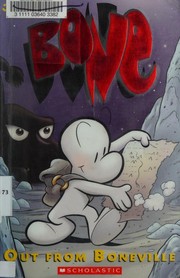
Bone, Vol. 1: Out from Boneville
Three cartoon cousins are run out of Boneville, separated by locusts, and dropped into a valley where rat creatures and an old grudge are waiting.
2,155-word summary · 10 min read

Austenland
A New York graphic designer obsessed with Mr. Darcy inherits a trip to a Jane Austen theme park, where the fantasy of Regency romance collides with the men…
2,030-word summary · 9 min read

Alone With You in the Ether
Two people in Chicago agree to six conversations, and the experiment becomes a love affair that is also a study of bipolar disorder, obsession, and the shape…
2,713-word summary · 12 min read

What Happened to You?
Oprah Winfrey and psychiatrist Bruce Perry explain how early experience shapes the brain, and why asking what happened to someone works better than asking what…
2,238-word summary · 10 min read

This Winter
On one difficult Christmas Day, Tori, Charlie, and Oliver Spring try to hold their family together while Charlie's eating disorder makes every tradition a test.
2,034-word summary · 9 min read

Amelia Bedelia
A literal-minded housekeeper follows her employer's list to disastrous and funny effect in the 1963 picture book that made wordplay a children's staple.
2,038-word summary · 9 min read

Hard Luck
Rowley has a girlfriend, so Greg turns to a Magic 8 Ball, a family Easter hunt and the school yearbook for answers.
2,586-word summary · 11 min read
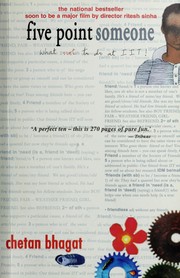
Five Point Someone: What Not to Do at IIT
Three friends at IIT drift to a five-point GPA, mock the system, and break into a professor's office for an exam paper.
2,458-word summary · 11 min read
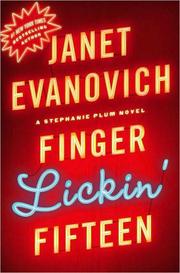
Finger Lickin' Fifteen
Lula sees a celebrity chef decapitated and talks Stephanie into entering a barbecue contest to lure the killers, while Ranger hires her to find a security leak…
2,248-word summary · 10 min read
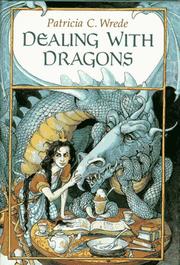
Dealing with Dragons
A princess who hates embroidery runs away to become the cook and librarian for a dragon, then has to outthink wizards, knights, and a plot against the dragon…
2,563-word summary · 11 min read

The Ex Talk
Two rival public radio producers pretend to be exes for a dating show, then fall for each other while the lie grows.
2,389-word summary · 11 min read

Summer Island
A radio advice host hides a scandal, and the estranged daughter hired to write about it agrees to care for her at the family's island house.
2,325-word summary · 10 min read

Mr. Maybe
Libby Mason wants a rich husband, but the wealthy man who proposes is dull and the broke writer she cannot forget is not offering forever.
2,322-word summary · 10 min read