
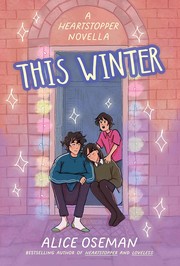
This Winter
2,034-word summary 9 min read 128 pages in the book
- First published
- 2015
- Publisher
- Scholastic Press
- Pages
- 128
- ISBN
- 9781338885132
Reading options
What's inside (10 sections)
Christmas stories are usually about coming home. This Winter is about how hard it is to come home when home is the place that hurt you. Alice Oseman's novella is set on one Christmas Day in the Spring family, and it is told from the perspectives of three siblings: Tori, Charlie, and Oliver. It is short, it is quiet, and it understands something that a lot of stories about mental illness miss. Recovery is not a single conversation. It is a series of ordinary moments, most of which go wrong.
The book was originally published as an eBook in 2015, then reissued in paperback with edits and illustrations in 2020 in the UK and 2023 in the US. It sits between Solitaire and the Heartstopper books, and it assumes you know who these people are. You can read it on its own, but it is a better book if you have spent time with the Spring siblings already.
The Morning
The novella opens at six in the morning. Tori, who is sixteen, is woken by her seven-year-old brother Oliver, who bursts into her room with a musical Christmas card. Oliver is the kind of child who radiates joy before the sun is up. Tori and Charlie are not like that. They are both tired, both guarded, and both carrying things that Oliver does not understand.
Charlie appears at the door. He is fifteen, and he has been home from a psychiatric ward for a few weeks. He smiles, but the smile costs him something. The three siblings sit on Tori's bed and listen to hymns on the radio until it is late enough to wake their parents. It is a small scene, and it tells you almost everything. These three love each other. They also do not know how to talk to each other.
Tori narrates the first section. She is sarcastic, observant, and hard on herself. She explains that Charlie has anorexia, that he relapsed in October, and that he spent weeks in a ward for teenagers with eating disorders. She also explains that she blames herself for not telling their parents sooner. She noticed something was wrong and did nothing, or did not do enough, and that failure sits in her chest all day.
Christmas is a difficult holiday for someone with an eating disorder. The day is organized around food. Every tradition, from the chocolates in the morning to the dinner in the afternoon, is a test. Tori knows this. She decides that the day should be about supporting Charlie, and she tries to make that happen. The trying is the story.
Presents and Relatives
The family opens presents. There is a moment of normalcy, the kind that is almost painful because you know it will not last. Then the extended family arrives for dinner. The house fills with aunts, uncles, cousins, and grandparents. The noise goes up. The attention turns to the children.
At the kids' table, a twenty-year-old cousin named Clara asks Charlie about his boyfriend, Nick. Charlie is not out to his grandparents. He glances toward them, afraid of what they might hear. Clara is not being cruel. She is being careless, which is its own kind of danger. Charlie answers, but he is uncomfortable, and the discomfort spreads.
Tori notices that Charlie has eaten some of his plate. That is a good sign, and she holds onto it. Their father hovers, asking questions, watching, trying to help. His attention is loving and suffocating at the same time. Charlie wants to be normal. His father's worry makes normal impossible.
Then Uncle Ant asks about the psychiatric ward. He makes jokes about white walls and straitjackets. Aunt Jules says they are all glad Charlie is better, as if recovery were a switch. Tori corrects her: it is a psychiatric ward, not a mental hospital. The correction is small and sharp, and it shows how much language matters. Charlie looks sick and leaves the room.
The Fight
Tori follows him and overhears an argument in the kitchen. Their mother is telling Charlie that he is being immature, that he wants attention. Charlie fires back that she alternates between pretending he is not ill and making him feel like a burden. She tells him to get out. He leaves.
Tori catches him at the door. He is crying, or close to it. He says he is going to Nick's. She asks him to stay. He calls himself the joke of the family and says the winter has been terrible. Tori asks him to spend Christmas with her, at least. He says something cruel about Nick being the only person who treats him as something other than an illness. Tori says she does too, but her voice is quiet, and he is already gone.
This is the scene the book is built around. It is not a big confrontation. It is a series of small failures. The mother is not a villain. She is exhausted and scared and saying the wrong thing. Charlie is not being dramatic. He is trying to survive a day that is designed to hurt him. Tori is not a savior. She is a sixteen-year-old who loves her brother and does not know how to fix him.
Tori confronts her mother, who insists she is trying her best. Tori sits on the porch in the cold and thinks about all the things she has done to help: sitting with Charlie at meals, being his friend as well as his sister. None of it feels like enough. That feeling is the book's emotional center. Love is not the same as competence, and good intentions do not guarantee good outcomes.
Charlie at Nick's
The narrative shifts to Charlie. He is walking to Nick's house in the rain, texting him, trying to explain. His section is partly text messages, partly interior monologue. It is the most interior part of the book, and it gives you a sense of how much work it takes for him to seem okay.
Charlie thinks about the ward. He explains that it was what he needed. He started therapy with a therapist named Geoff, met other young people with eating disorders, and learned that his coping mechanisms, restricting food and self-harm, are responses to pain rather than moral failures. Recovery means dealing with the pain, not just stopping the behavior. That is a more honest account of treatment than most young adult novels offer.
He arrives at Nick's house soaked and shaking. Nick hugs him, and Charlie cries. Nick gives him a handkerchief that his grandmother gave him for Christmas, and the absurdity of it makes Charlie laugh. They kiss. Nick's family discovers them and welcomes Charlie in. It is a warm, noisy house, and nobody asks him invasive questions. For a few hours, he gets to be a guest rather than a patient.
Then Nick's older brother David corners him in the kitchen. David asks if he is all cured, calls the ward a mental hospital, and makes ignorant comments about eating disorders. Charlie tries to push back, but David talks over him. Nick comes back, hears it, and confronts his brother. Charlie watches. He has learned that most people either ignore mental illness or treat the person as strange and fascinating. The middle ground, the simple act of being present, is rare.
That idea comes from Geoff, and it is the thesis of the novella. Tori and Nick are both good at the middle ground. They do not fix Charlie. They sit with him. They ask what he needs. They do not make his illness the only thing about him.
Tori's Walk
Tori texts Charlie, then decides to walk to Nick's house herself. It is dark and raining. She is angry, scared, and determined. When she arrives, she is out of breath and dripping. She tells Charlie he needs to come home. Their father is upset, Oliver is in a bad mood, and their mother might apologize.
Charlie opens up. He talks about the arguments, the sleeplessness, the wish for a normal Christmas. He says that even though he managed dinner, he felt everyone watching him, waiting for him to fail. Nick points out that his parents may have been trying to pretend everything was normal too, and asks whether Charlie told them what he needed. Charlie realizes he did not. Nick says that his fear of being a burden keeps him from asking for help.
This is the conversation the book has been building toward, and it is not a cure. It is a set of small admissions. Charlie agrees to try to communicate. Tori agrees to listen. They apologize. They joke about their cousins and their grandfather's annual argument. The tone lifts, but the problems do not disappear.
Oliver's Christmas
The final section is Oliver's. He is seven, and he has been left alone while his siblings fight and his parents argue. He plays Mario Kart by himself and finds it boring. His mother sits with him and explains that Charlie was upset. Oliver asks if Charlie's mental illness caused it. She says it is part of it, and that recovery takes time. Then she admits she said unkind things to Charlie, and she looks sad in a way Oliver has never seen.
Oliver hugs her and tells her she should apologize. She smiles and agrees. It is a child's solution to an adult problem, and it is also the right one. When Charlie and Tori come home, Oliver runs to Charlie, who picks him up and carries him into the lounge. Charlie hugs their mother, and they go into the kitchen to talk. Tori sits with Oliver, who tells her that everything is better when all three of them are together. He makes her promise that next time they leave, they will tell him first and come back. She promises.
The book ends with Oliver and Tori playing Mario Kart while Charlie and their mother talk. It is not a resolution. It is a pause. The family is still messy, still capable of hurting each other, still trying. That is what makes it feel true.
What It Gets Wrong
The novella is short, and some of its arcs are rushed. The mother's change of heart happens quickly. The father is mostly a background presence. The grandparents are mentioned but never confronted. The book is more interested in the siblings than in the adults, which is fair, but it leaves the family system underdeveloped.
It also depends on prior knowledge. If you have not read Solitaire or Heartstopper, you may wonder who these people are and why Charlie's relationship with Nick matters. The book does not spend much time explaining. It trusts you to catch up.
The resolution is hopeful, perhaps too hopeful. A single Christmas does not fix an eating disorder or a family's communication problems. The book knows this, but it still ends on a warm note. That is a choice, and it works emotionally, even if it is not entirely realistic.
Why It Works
This Winter works because it is specific. It does not talk about mental illness in general. It talks about one boy, one family, one day, and the particular ways that day goes wrong. The details are precise: the musical card, the handkerchief, the Mario Kart, the cousin who asks the wrong question. Specificity is what makes the story universal.
It also works because it lets everyone be flawed. The mother is not a monster. Charlie is not a saint. Tori is not a therapist. They are people who love each other and fail each other, and the book is honest about both. That honesty is rare in Christmas stories, which usually prefer reconciliation without cost.
I would recommend it to anyone who has read Solitaire or Heartstopper and wants more time with the Spring family. I would also recommend it to readers who want a short, honest book about mental illness and siblings. It is not a cure, and it is not a lecture. It is a day in a difficult winter, and it ends with a small, hard-won bit of light.
FAQ
Do I need to read Solitaire before This Winter?
It helps, because This Winter is a Solitaire novella and assumes you know the Spring family, but the story stands on its own.
What illness does Charlie have in This Winter?
Charlie has anorexia and has also struggled with self-harm. He has recently spent several weeks in a psychiatric ward for teenagers with eating disorders.
Is This Winter part of the Heartstopper universe?
Yes. It is a Solitaire novella, and Charlie's boyfriend Nick is one of the main characters of Heartstopper.
Similar books
Radio Silence
Head girl Frances loves a secret podcast made by shy Aled, and both crack under A-levels in Oseman's warm 2016 story of friendship, fandom, family and choosing…
2,778-word summary · 12 min read

Heartstopper: Volume Four
Nick and Charlie face eating disorders, coming out, and first love in Oseman's tender fourth volume.
2,393-word summary · 11 min read

We Are Okay
Marin fled San Francisco after her grandfather vanished and stopped answering anyone. When Mabel visits her college dorm, she has to say what happened.
2,253-word summary · 10 min read

Aristotle and Dante Dive into the Waters of the World
Ari and Dante return for senior year in El Paso, navigating first love, AIDS, family grief, and the cost of being openly gay in 1987 Texas.
2,188-word summary · 10 min read

Wintergirls
After her ex-best friend dies, eighteen year old Lia fights anorexia, guilt and a ghost while her family tries to pull her back.
2,740-word summary · 12 min read

Aristotle and Dante Discover the Secrets of the Universe
Two Mexican American boys in 1987 El Paso become inseparable and learn what love asks of family.
2,093-word summary · 9 min read

Loveless
Georgia starts university sure she wants love, then learns she is aro-ace.
2,539-word summary · 11 min read
Solitaire
Gloomy Tori Spring hunts school prank group Solitaire with odd Michael Holden while brother Charlie heals.
2,068-word summary · 9 min read
Nick and Charlie: A Heartstopper Novella
Nick is off to university and Charlie is staying behind. One last summer to decide if first love can survive distance.
2,329-word summary · 10 min read

Heartstopper: Volume Five
Nick and Charlie face exams and university distance while holding on.
2,057-word summary · 9 min read
Heartstopper: Volume Three
Nick and Charlie test honesty on a Paris trip while friends face exams, outings, and eating-disorder strain.
2,355-word summary · 10 min read

Heartstopper: Volume Two
Nick and Charlie test dating in Heartstopper Volume Two: coming out to family, a Paris trip, and Tao's doubts.
2,212-word summary · 10 min read

Heartstopper: Volume One
Charlie and Nick go from rugby mates to something tender and true.
1,940-word summary · 9 min read

What Happened to Goodbye
Mclean has reinvented herself in four towns since her parents divorced. In Lakeview she uses her real name, and for the first time staying put becomes a choice.
2,796-word summary · 12 min read
The Lost Sisters
Taryn Duarte writes a letter to her twin, Jude, explaining how she fell for Locke and why she stayed silent while he used them both.
1,914-word summary · 9 min read

Ace of Spades
Two Black seniors at an elite academy are celebrated by day and hunted by an anonymous texter in this YA thriller about institutional racism.
2,066-word summary · 9 min read
Mrs. Everything
Two Jewish sisters in Detroit grow up, apart and together, across seven decades of American life, from the 1950s to the 2016 election.
2,362-word summary · 10 min read

Wilder Girls
At a quarantined boarding school off Maine, three girls with strange mutations search for a missing friend and learn what the adults have hidden.
2,594-word summary · 12 min read

I Kissed Shara Wheeler
Shara Wheeler kisses her rival Chloe Green at prom and disappears, leaving a scavenger hunt that forces Chloe to rethink everything she knew about her.
2,083-word summary · 9 min read

The First to Die at the End
On the night Death-Cast launches, a boy with a bad heart meets a model with everything ahead of him, and one of them gets the call.
2,908-word summary · 13 min read

Sing You Home
A music therapist, her new wife and an evangelical ex-husband end up in court over three frozen IVF embryos.
2,952-word summary · 13 min read
Last Night at the Telegraph Club
The 2021 National Book Award winner follows Lily Hu, a Chinese American teenager in 1954 San Francisco, as she falls for Kath and learns what it costs to be…
2,336-word summary · 10 min read

Big Swiss
A transcriptionist for a sex coach falls for one of his clients, the tall Swiss gynecologist she calls Big Swiss, in a funny novel about work and secrets.
2,523-word summary · 11 min read

The Second Summer of the Sisterhood
Four friends share the traveling pants through a summer of grandmothers, first loves, and mothers who are learning to let go.
2,209-word summary · 10 min read

Reveal Me
A Shatter Me novella told by Kenji, set between Defy Me and Imagine Me, as the rebels learn Anderson has taken hostages and Juliette faces Emmaline.
2,098-word summary · 9 min read
On the Come Up
Bri Jackson, a sixteen-year-old rapper in Garden Heights, chases a record deal while a viral song turns her into a symbol she never wanted to be.
2,034-word summary · 9 min read

Delilah Green Doesn't Care
Delilah returns to Bright Falls to photograph her stepsister's wedding and falls for Claire, a bookstore owner and single mother, while a cruel bet threatens…
2,315-word summary · 10 min read

Dash & Lily's Book of Dares
Two lonely New York teenagers trade dares in a red notebook left at the Strand, falling for each other on the page before they meet.
2,228-word summary · 10 min read
Cemetery Boys
A trans brujo in East Los Angeles summons the ghost of a boy who refuses to move on, and together they uncover a murder hidden beneath Día de los Muertos.
1,997-word summary · 9 min read

And Every Morning the Way Home Gets Longer and Longer
An elderly grandfather, his son, and his grandson share memories and fears as the old man's mind begins to fade, in a short novel about grief and love.
2,078-word summary · 9 min read