

Reading options
What's inside (8 sections)
I read this one on a train, which turned out to be a mistake. It is a short book, barely ninety pages in the English edition, and I thought I could finish it between two stations. Instead I spent most of the ride staring out the window and thinking about my grandfather. Fredrik Backman has a talent for making small domestic details do a lot of work, and this novella is the clearest example of it. There is no plot in the usual sense. There is a man losing his memory, a boy who loves him, and a son who does not know how to say what he needs to say.
The book was first published in Sweden in 2015 as Och varje morgon blir vägen hem längre och längre. Alice Menzies translated it into English, and Atria Books brought it out in 2016. The edition I read runs 96 pages. It is illustrated in some editions, though the illustrations are not the point. The point is the voice, which is gentle and plain and occasionally very funny. Backman is known for A Man Called Ove and Beartown, and this book has the same interest in ordinary people who are difficult to love. It also has the same weakness: a habit of nudging the reader toward tears.
A Bench in a Shrinking Square
The story opens with a grandfather and his grandson sitting on a bench in a round square. The square is strange but familiar. There is Grandpa's work desk, with a calculator and squared notepaper. There is the stuffed dragon he once gave Noah. There are hyacinths, the flowers Grandma used to grow. The square keeps getting smaller. The roads out of it disappear. The buildings move. Grandpa knows what is happening, at least some of the time, and he is afraid.
Noah is a child, maybe ten or eleven, and he has played a game with Grandpa for years. Noah closes his eyes, and Grandpa takes him somewhere new. Sometimes they take buses. Sometimes they go into the woods behind the house by the lake. Sometimes they take the boat, and Grandpa gives Noah a map and a compass and asks him to find the way home. The game worked because Grandpa believed in two things without question: mathematics and his grandson. Numbers always lead people back. That is the promise the book sets up, and then it takes the promise away.
The square is Grandpa's mind. It is not a metaphor that the book hides. Grandpa says it outright. They are inside his brain, and it is getting smaller every night. The desk is the desk from his office. The calculator is the one he used for work. The dragon is a toy from Noah's childhood. The hyacinths are Grandma's. The objects are not random. They are the furniture of a life, and they are being packed away one by one.
I liked the way Backman handles the strangeness. He does not turn it into a fantasy adventure. Noah is not a hero who has to solve a puzzle. He is a boy trying to keep his grandfather company in a place that makes no sense. He asks practical questions. He gets scared. He tries to be brave because he can see that Grandpa is scared too. The role reversal is the heart of the book. The adult is becoming a child, and the child is becoming a guide.
Grandma on the Road Home
Grandma appears in the square. She is dead, but in Grandpa's mind she is young again, and she and Grandpa walk together on a road that leads home. These are the most tender scenes in the book. Grandpa remembers falling in love with her. He remembers her laugh, her hands, the way she smelled of hyacinths. He also remembers losing her, and he is terrified that he will forget her entirely. That fear is worse than the fear of dying. If he cannot remember the person he loved, what is left of him?
Grandma does not argue with him. She walks with him. She tells him that she spent her whole life with him, and that is enough. There is a line about how she would do it again, and it is not a grand romantic speech. It is the kind of thing a person says when they have been married for decades and have stopped needing to perform. Backman is good at that kind of line. He knows that the most moving declarations are often the most ordinary.
The road home is a beautiful image, and Backman uses it carefully. It is not a road to heaven. It is the road back to the self, or to the life that made the self. As Grandpa's memory fails, the road gets longer. The title comes from Noah's observation that Grandpa's way home gets longer every morning. It is a child's way of saying that the disease is progressive. Every day, the distance between Grandpa and the place where he is known grows a little more.
The book is honest about the exhaustion of caregiving. Ted, Grandpa's son, is not a villain. He is a man who has spent his life waiting for his father to notice him. Grandpa was a mathematician, and Ted was not. Ted liked writing and music. Grandpa did not know what to do with that. He taught Noah things he never taught Ted. He had more patience for his grandson than he had for his son. That is a painful truth, and the book does not soften it.
Ted and the Things Left Unsaid
Ted's sections are the ones that kept the book from floating away. Grandpa and Ted meet in the square, or in a garden that smells of hyacinths, and the conversation is full of old resentment. Ted is angry that his father was absent. He is angry that his father made him feel like a disappointment. He is angry that he is now the one who has to be patient. Grandpa, in his lucid moments, knows he failed his son. He does not offer a neat apology. He offers confusion, regret, and a love that was always there but rarely expressed.
The relationship between Ted and Noah is also carefully drawn. Ted is a good father in the way that many people are good parents: he shows up, he pays attention, he tries. But he is tired. He is watching his father disappear, and he is trying to protect his son from the worst of it. Noah is not fooled. Children rarely are. He sees that his father is sad, and he tries to help in his own way.
The book's theology, if it has one, is simple. Love is a practice, not a feeling. Grandpa loved Grandma by staying with her. Ted loves Noah by driving him to the hospital and answering his questions. Noah loves Grandpa by sitting with him and telling him the story of his life when he can no longer remember it. None of these acts are dramatic. They are the small, repeated things that hold a family together.
There is a scene in the hospital where Grandpa becomes agitated. He wants to go to work. He asks for cigarettes he quit decades ago. Ted tries to calm him and fails. Then Noah climbs into the bed and talks to him. The shift is not magic. Grandpa does not suddenly become lucid. But he calms down, because Noah is a familiar presence in a room full of strangers. Backman understands that presence is sometimes the only medicine available.
The Green Tent and the Star
The final movement takes place in a hospital room. Grandpa has had an accident. His brain is no longer working the way it used to. Ted explains this to Noah in plain language, and Noah listens. Then, in the middle of the room, there is a green tent. It is not clear whether the tent is real or imagined. It does not matter. The family gathers inside it. Grandpa is there. Noah is there. Ted is there with his guitar. They sleep together, surrounded by the smell of hyacinths.
The tent is a beautiful image because it is so ordinary. It is the kind of thing a family would do to make a hospital room less frightening. It is also a return to childhood, to the games Grandpa and Noah played. The book does not end with a cure. It ends with company. Grandpa is still dying. He is still forgetting. But he is not alone, and that is the consolation the novel offers.
The star metaphor runs through the book. Grandpa explains that when a star dies, its light keeps traveling toward earth for a long time. We see the light after the star is gone. Memory works the same way. The person is still there, in the light they left behind, even after the mind has begun to fail. It is a consoling idea, and Backman knows it is also a little sad. The light is not the star. The memory is not the person. But it is what we have.
The book's title is repeated several times, and by the end it has become a kind of refrain. The way home gets longer every morning. The sentence is simple, and it carries the whole story. It is about dementia, but it is also about any kind of loss. The older we get, the longer the road back to the people we love. The book does not pretend that the road can be shortened. It only insists that no one should have to walk it alone.
What Works and What Does Not
The novella is sentimental. That is not a dirty word, but it is a limitation. Backman wants the reader to cry, and he is not subtle about it. The hyacinths, the green tent, the star, the little boy who says wise things: these are all designed to tug at the heart. If you resist that kind of storytelling, the book will feel manipulative. If you give in to it, it will probably work.
Noah is too wise for his age. He says things that sound like they were written by an adult who has thought carefully about grief. That is a common problem in books with child narrators. Backman gives Noah the emotional intelligence the adults lack, and it makes him less believable as a real child. The same is true of Ted's arc. His resentment is set up, and then it is resolved a little too quickly. The book is short, and some of the reconciliation happens off the page.
The prose is simple, almost fable-like. Some readers will find it thin. I found it effective. Backman does not try to explain dementia in clinical terms. He shows it through the shrinking square, the disappearing roads, the keys that no longer open anything. The metaphors are not subtle, but they are clear, and they do what metaphors are supposed to do. They make an abstract experience feel concrete.
The translation by Alice Menzies is smooth. There are a few places where the Swedish sentence structure shows through, but nothing that gets in the way. The book is short enough to read in one sitting, and I think that is the right way to read it. It is not a novel you want to put down and pick up over a week. It is a single, sustained note.
Who This Book Is For
This is a book for people who have watched someone they love forget. It is also a book for people who have not, and who want to understand what that is like. It does not offer practical advice. It does not explain the science. It offers a feeling, and sometimes that is enough.
I would not recommend it to someone who is actively grieving a recent loss. It is too close to the bone. I would recommend it to someone who wants a short, honest book about family and memory, and who does not mind a few tears. It is not Backman's best book. A Man Called Ove has more range, and Beartown has more teeth. But this one has a quiet power that stays with you. It is a small book about a large thing, and it earns its title.
FAQ
Is this book connected to A Man Called Ove?
No. It is a standalone novella, though it shares Backman's interest in grief, family, and memory.
How long is it?
About 96 pages in the Atria Books edition, and it can be read in one sitting.
What is the book about?
A grandfather losing his memory, his son, and his grandson share memories and try to say goodbye.
Similar books

We Are Okay
Marin fled San Francisco after her grandfather vanished and stopped answering anyone. When Mabel visits her college dorm, she has to say what happened.
2,253-word summary · 10 min read

A Spool of Blue Thread
Four generations of the Whitshank family in Baltimore, and the silences, resentments and quiet love they hand down without ever saying so.
2,408-word summary · 11 min read
The Tiger's Wife
A young doctor in a war-scarred Balkan country chases the stories her grandfather left behind, including a deathless man and a deaf girl who loved an escaped…
2,232-word summary · 10 min read
Foster
A girl spends a summer with relatives on a Wexford farm and is cared for properly for the first time. A spare novella about family and what children notice…
2,043-word summary · 9 min read
The Accidental Tourist
Grieving Macon writes travel guides for haters of travel, then Muriel intrudes.
2,252-word summary · 10 min read

Kitchen
Orphan Mikage finds home in a kitchen with Yuichi and Eriko after loss.
2,597-word summary · 12 min read

The Berry Pickers
A four year old vanishes from a Maine blueberry camp in 1962, and two families carry the loss for decades until Joe and Norma face the truth.
2,606-word summary · 12 min read
We Are All Completely Beside Ourselves
Rosemary tells of twin sister Fern, a chimp raised as family, and research fallout.
2,058-word summary · 9 min read
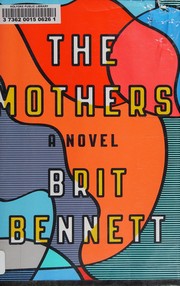
The Mothers
Nadia hides abortion from church Mothers while Luke and Aubrey circle for years.
2,078-word summary · 9 min read
A Tale for the Time Being
A diary by bullied Tokyo teen Nao washes up in Canada, pulling novelist Ruth into her family past.
2,148-word summary · 10 min read
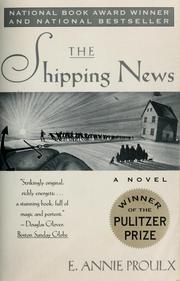
The Shipping News
At thirty-six, failed newsman Quoyle loses his cruel wife and flees to ancestral Newfoundland with his daughters, where a small-paper job slowly rebuilds him.
2,833-word summary · 13 min read
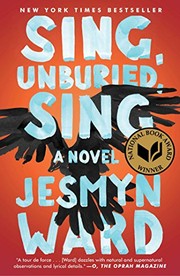
Sing, Unburied, Sing
A Mississippi family drives to Parchman prison while ghosts press close, and a dying grandmother holds the house together.
2,871-word summary · 13 min read
Dear Edward
Twelve-year-old Edward Adler survives a plane crash that kills his family, then learns how to live with grief, letters, and love.
2,903-word summary · 13 min read
I Know This Much Is True
A housepainter fights to free his schizophrenic twin from a locked ward while a grandfather's memoir and a lost marriage resurface. Long, heavy, hard to forget.
2,533-word summary · 11 min read
Hamnet
Agnes Hathaway holds her Stratford family together while her husband works in London, until plague takes eleven-year-old Hamnet in 1596.
3,164-word summary · 14 min read
Extremely Loud and Incredibly Close
Nine year old Oskar searches New York for a lock matching his father's key after 9/11.
2,999-word summary · 13 min read
The Winners
Two years on, Beartown opens a new rink, welcomes Maya and Benji home, and faces money fights and a gun at the ice.
2,366-word summary · 11 min read
My Grandmother Sends Her Regards and Apologises
Seven-year-old Elsa loses her granny and best friend, then delivers apology letters to neighbours while holding onto fairy tales of Miamas and the Land of…
2,311-word summary · 10 min read
Lisey's Story
Two years after her novelist husband dies, Lisey Landon follows a trail of clues into his childhood and the other world that made him a writer.
1,998-word summary · 9 min read
This Winter
On one difficult Christmas Day, Tori, Charlie, and Oliver Spring try to hold their family together while Charlie's eating disorder makes every tradition a test.
2,034-word summary · 9 min read

Memories of My Melancholy Whores
A ninety-year-old journalist pays for a night with a teenage girl, cannot go through with it, and discovers love for the first time in García Márquez's late…
2,101-word summary · 9 min read

Howards End
Forster's 1910 novel follows two families, a house in Hertfordshire, and a burned note, asking whether money and feeling can ever be connected.
2,187-word summary · 10 min read

Fathers and Sons
Arkady brings the nihilist Bazarov home to his father's estate, and a generational argument turns into love, a duel, and an early death.
2,192-word summary · 10 min read

Dance Dance Dance
A divorced Tokyo writer returns to a Sapporo hotel that has been rebuilt, then follows a woman who may be a ghost and a teenage girl through a mystery about…
2,407-word summary · 11 min read
Unaccustomed Earth
Lahiri’s second story collection follows Bengali families in America and abroad, tracing the quiet distances between parents and children, spouses, and the…
2,333-word summary · 10 min read

The Age of Miracles
A California girl grows up while the Earth's rotation slows, and ordinary adolescence continues alongside slow catastrophe.
2,417-word summary · 11 min read

Sam's Letters to Jennifer
A grieving journalist reads her grandmother's letters and finds a decades-long love affair that changes how she sees her family.
2,310-word summary · 10 min read
Peace Like a River
An asthmatic boy in the early 1960s narrates his family's search for his older brother, who is accused of two killings and has escaped custody.
1,969-word summary · 9 min read

Two by Two
Sparks's twentieth novel turns from first love to a marriage breaking up: Russell Green loses his wife and his job, then rebuilds his life around his…
2,192-word summary · 10 min read

The Chosen
A shattered pair of glasses in a 1944 Brooklyn softball game starts a friendship between a Hasidic boy and his Orthodox neighbor, and their fathers pull them…
2,443-word summary · 11 min read