
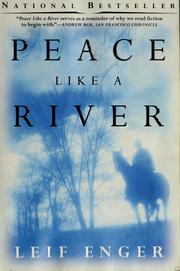
Peace Like a River
1,969-word summary 9 min read 320 pages in the book
- First published
- 2001
- Publisher
- Atlantic Monthly Press
- Pages
- 320
- ISBN
- 9780871137951
Reading options
What's inside (10 sections)
Peace Like a River begins with a birth that should not go well, which is the only way it could begin, because the whole novel is about a family that believes, at every hour and against the evidence, that something is holding them up. Reuben Land, the narrator, enters the world unable to breathe, and his father, a school janitor and a man of uncomplicated faith, leans over the baby and commands him to do the one thing he cannot do. Reuben breathes. He grows into a boy with severe asthma who spends the rest of the book half-arriving at his own conclusions about what happened that day, and the adult he becomes narrates the story looking back on his eleventh year with the frankness of someone who has decided to report the evidence and let the reader argue with it.
I read it without knowing anything about it, which I recommend, and I came out of it aware that I had encountered something unusual, a religious novel that is not self-conscious about being religious, a Western with almost no gunfights, and a family story that is willing to end with the ledger open. Published in 2001, it became one of those books people press into other people's hands, and after reading it I understood the pressing. It is a quiet book with a hole in the middle of it, and the quiet makes the hole worse.
The Land family
The household makes sense once you know its pieces. Jeremiah Land is the janitor at the school, deeply devout in a way that manifests as calm certainty rather than sermon, and Reuben believes his father performs actual miracles, a belief the narration presents with a straight face. Around him are the children: Davy, the eldest, who is the one the world will come for; Reuben, twelve-ish in temperament though eleven in years, watchful and breathless; and Swede, the youngest, a girl with a notebook who writes an ongoing Western serial about a cowboy named Sunny Sundown and an outlaw called Valdez.
The mother, Helen, is not in the house. Reuben narrates her leaving as a settled fact of the family's geography, and the absence does what such absences do, it makes the remaining members more tightly wound around each other. This is a family that has already survived one departure and has no illusions about being owed stability.
Swede's cowboy story is the novel's best structural invention, and it runs beside the main plot like a second column of the same newspaper. Her Sunny Sundown and Valdez saga keeps rewriting itself as the story deepens, the outlaw more sympathetic, the hero more compromised, the border between them blurrier, and the parallel is not subtle, but it earns its keep, because a child writing a Western is exactly how a family processes what is happening to them. They cannot sort Davy cleanly, so they watch a ten-year-old try to sort fictional men instead.
The two men who came to the house
The event the book organizes around is presented from inside the family's account, and Enger is careful never to let the reader forget that this is an account. Two local men, Israel Finch and Tommy Basca, have been making trouble, and the family's version is that they had threatened and harmed people close to them and then come to the house at night. Davy meets them outside and shoots them both.
What follows is trial, and the trial is the first place the novel's double vision becomes hard to bear. Reuben testifies. The family expects a conviction, which tells you everything about how they read their own situation: they expect Davy to be punished, because they believe what he did was both understandable and fatal to his future. Then, on the morning of sentencing, Davy escapes his cell, and the family's expectation is overturned by the boy himself.
I want to linger on the choice Enger makes here, because it is the choice that governs the rest of the book. A more conventional novel would make the killing the mystery, was it justified, should he hang. This one makes it the given. Everybody in the story knows what happened and roughly why. The mystery is what you owe a person after the fact, and the novel answers it by setting his father, his brother, and his sister on the road after him, which is a morally suspect project that the book never pretends is anything else.
The Airstream and the road
The family acquires an Airstream trailer and sets out following leads, moving across Minnesota and into North Dakota and the Badlands, and the middle of the novel becomes a road story with the particular quality of the American prairie, enormous skies, small towns, weather that arrives with opinions. They are followed by a federal agent named Martin Andreeson, who is not a villain so much as an office, the government made mobile and mildly embarrassed.
On the road they meet Roxanna, who shelters the family in bad weather and becomes genuinely important to them, and the Roxanna chapters are the warmest in the book. She is a person with no stake in the central drama who chooses to help anyway, and her presence lets Enger write tenderness without the strain of romance.
There is a risk in this section, which is that a road novel with an Airstream and a widowed father can curdle into sentimentality, and Enger keeps it honest by never letting the journey feel purposeful. They do not know where Davy is. Their leads are mostly stale. The landscape does not cooperate with their urgency. What they have instead of a plan is the company, and the book's faith, in both senses, is in the proposition that the company is the point even when the mission fails.
Davy, Waltzer, and Sara
The search eventually finds its object, and what it finds is not what the family expected. Reuben reaches Davy, who is living in hiding in the company of a man named Jape Waltzer, and the world Davy has entered has its own gravity. Around Waltzer is a girl named Sara, being raised in a situation the book makes unmistakably coercive, a household where a controlling man's charm is the governing law and everyone inside has learned to speak his dialect.
This is the point where the novel's crime plot and its moral education merge. Davy, the killer, the boy who shot two men in the dark, becomes the person who decides that Sara has to be extracted from Waltzer's household, and his violence is redirected toward something the reader can endorse without reservation. Enger does not call this redemption, and neither should a summary. It is a decision, made by a young man who has already learned exactly what such decisions cost.
The family's reunion, when it comes, has the shape of a negotiation rather than a rescue. Davy brings Sara and asks that she be allowed to stay with the family. He cannot stay himself. The household that set out to bring him home ends up accepting a different cargo, a girl instead of a son, and the asymmetry of that trade is the quiet devastation of the book's final movement.
The shooting, and the old country
Then Waltzer shoots Jeremiah and Reuben, and the novel goes somewhere I did not expect it to go, which is into an extended sequence in which Reuben, dying, wakes into what he calls the old country, a landscape of almost unbearable peace where he meets his father.
The sequence is written with restraint and total commitment. Enger does not hedge it, does not frame it as a dream the boy might have misread, and the narration's certainty here is the logical conclusion of a book that has treated every earlier miracle as real. What Reuben comes to understand is that his father's death has purchased his own life, a sacrifice in the plain theological sense, and he returns from it to a body that will keep breathing, eventually, without the command.
How you take this section determines how you take the whole novel. Readers who share the book's frame will find it the reason it exists. Readers who do not will either admire the nerve of it or resent the machinery. I landed between admiration and something I do not quite have a word for, a secular reader being handed a genuine miracle and told plainly that the offer is real. That is a rarer thing in fiction than the rarity suggests, and I respected the book enormously for refusing to make its central belief decorative.
The coda
The adult Reuben closes the story from a distance of years. He has married Sara. Swede has become a writer, which surprises nobody who read her notebooks. Davy visits from time to time and cannot be persuaded to stay. The man who shot Jeremiah is not caught, and the novel leaves that open, refusing the consolation of a final confrontation.
That last refusal is the book's most adult decision. There is no justice for Waltzer, no reckoning, no scene where the debt is collected. What there is instead is a family that has been reduced and has continued, a marriage to the girl the mission rescued, a sister's stories in print, a brother arriving for dinner and leaving again. The peace of the title, in the coda, is not a resolution. It is a quality the family learned to carry while the resolution stayed out of reach.
Where it falls short
The novel's gentleness is also its limitation. Reuben's narration is warm to the point of occasionally smoothing out texture, and readers who want their prose to keep some roughness will find the cadence, with its direct addresses and its aphoristic pauses, a little rehearsed.
The middle stretch, once the Airstream is rolling, drifts through a series of encounters that do not all carry equal weight. Some of the roadside figures are illustrations rather than characters, and the book is visibly more interested in the family's interior than in the world it passes through, which in a road novel is a structural mismatch.
And Andreeson's thread never quite resolves. The agent pursuing them evaporates from the plot in a way that the book treats as realism, since real pursuits do peter out, but which reads on the page as an abandoned thread. I did not mind, because his function was pressure rather than plot, but a tidier reader will.
Who should read it
This is for you if you like families in crisis told from the inside, if the American road appeals to you in fiction, and if you are willing to read a book whose metaphysical claims are meant literally. It is for people who came to faith-based fiction warily and want it written with craft rather than reassurance, and for readers of Westerns who suspect the genre's real subject was always moral ambiguity wearing a hat.
It is not for you if you need your narrators unreliable, or if a novel that treats miracles as fact will close the door before you are through the first chapter. On that question the book offers no compromise, which is precisely what gives it its strange, old-fashioned force.
I finished it on a Sunday afternoon and found that I had been reading slowly without noticing, the way you walk on good ground. What stayed with me was not the shootings or the trial but the image of a family driving a silver trailer across a landscape too large for their question, arguing about a girl's cowboy poem while the answer waited somewhere ahead of them, out of order and out of time, and arrived anyway.
FAQ
Is Peace Like a River a religious novel?
It is openly spiritual without being a sermon. Jeremiah Land is a devout man whose miracles the narration treats as real, and the book's moral world is plainly Christian while remaining hospitable to doubt.
Is Peace Like a River part of a series?
No, it is standalone. Enger's second novel, So Brave, Young, and Handsome, follows about twenty years later and follows different characters.
What kind of book is it, exactly?
A hybrid: a coming-of-age narration, a family road novel set in the early 1960s, and a Western in temperament, told by an adult looking back on his eleventh year.
Similar books

The Chosen
A shattered pair of glasses in a 1944 Brooklyn softball game starts a friendship between a Hasidic boy and his Orthodox neighbor, and their fathers pull them…
2,443-word summary · 11 min read

The Age of Miracles
A California girl grows up while the Earth's rotation slows, and ordinary adolescence continues alongside slow catastrophe.
2,417-word summary · 11 min read

The Story of Edgar Sawtelle
A mute boy on a Wisconsin dog-breeding farm relives Hamlet as his uncle returns, his father dies in the barn, and the dogs inherit what is left.
2,392-word summary · 11 min read
Foster
A girl spends a summer with relatives on a Wexford farm and is cared for properly for the first time. A spare novella about family and what children notice…
2,043-word summary · 9 min read
Summer Sisters
Vix and Caitlin share Martha's Vineyard summers from age twelve into adulthood, through first love, grief, marriage, and a disappearance that still haunts Vix.
3,633-word summary · 16 min read
Purple Hibiscus
Kambili, fifteen, watches her devout factory-owner father rule the Enugu house through fear until a Nsukka visit teaches her speech and freedom.
2,595-word summary · 12 min read
Ordinary Grace
In 1961 Minnesota, thirteen-year-old Frank Drum faces a summer of deaths that tests his minister family and forces him to weigh truth, guilt, and mercy.
2,948-word summary · 13 min read
The Elegance of the Hedgehog
A Paris concierge hides her brilliant mind while a gifted girl plans her death, until a new tenant sees through them both.
2,248-word summary · 10 min read
The Cider House Rules
Homer Wells grows up in a Maine orphanage under Dr. Larch, who delivers babies and performs illegal abortions.
2,985-word summary · 13 min read
Dear Edward
Twelve-year-old Edward Adler survives a plane crash that kills his family, then learns how to live with grief, letters, and love.
2,903-word summary · 13 min read
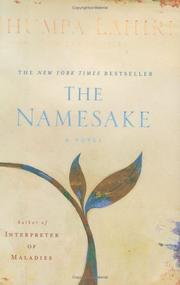
The Namesake
Jhumpa Lahiri follows Gogol Ganguli from a hated namesake to adult loss, marriage, and family reckoning between Calcutta and Boston.
2,878-word summary · 13 min read

The God of Small Things
Twins Rahel and Estha grow up in Kerala in 1969, where family rules and caste lines shape a loss that follows them into adulthood.
2,646-word summary · 12 min read
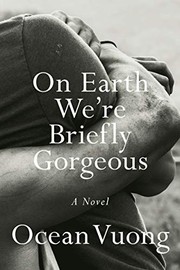
On Earth We're Briefly Gorgeous
A son writes to the mother who cannot read him: war, migration, first love, and loss in one Vietnamese American family in Hartford.
3,113-word summary · 14 min read
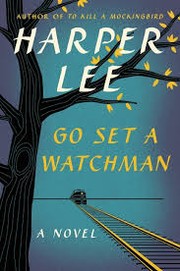
Go Set a Watchman
Jean Louise Finch returns to Maycomb and finds her father changed: Lee's contested 2015 draft about family loyalty and race in Alabama.
3,478-word summary · 15 min read
A Prayer for Owen Meany
John Wheelwright believes in God because of Owen Meany, the tiny friend whose foul ball killed his mother.
3,046-word summary · 14 min read
She's Come Undone
Abused as a girl, divorced and struggling with weight, Dolores Price slowly finds healing after years of trauma.
2,550-word summary · 11 min read

Extremely Loud and Incredibly Close
Nine year old Oskar searches New York for a lock matching his father's key after 9/11.
2,999-word summary · 13 min read
The Curious Incident of the Dog in the Night-Time
Curious Incident retold: Christopher finds Wellington dead, maps primes, seeks truth in Swindon.
2,146-word summary · 10 min read

What Happened to Goodbye
Mclean has reinvented herself in four towns since her parents divorced. In Lakeview she uses her real name, and for the first time staying put becomes a choice.
2,796-word summary · 12 min read

The Idiot
A Turkish-American freshman at Harvard falls in love through email with a Hungarian math student and spends a summer in Hungary trying to turn correspondence…
2,019-word summary · 9 min read
Brown Girl Dreaming
Jacqueline Woodson retells her childhood in verse, moving from Ohio to South Carolina to Brooklyn while the civil rights movement reshapes the world around her.
2,727-word summary · 12 min read

Little Town on the Prairie
In the spring after the Long Winter, fifteen-year-old Laura sews shirts, studies for a teaching certificate, and helps send her blind sister Mary to college.
2,071-word summary · 9 min read

Less Than Zero
Clay returns to Los Angeles for Christmas and drifts through parties, drugs, and old friends, including one who is selling himself to survive.
1,926-word summary · 9 min read

Howards End
Forster's 1910 novel follows two families, a house in Hertfordshire, and a burned note, asking whether money and feeling can ever be connected.
2,187-word summary · 10 min read

Fathers and Sons
Arkady brings the nihilist Bazarov home to his father's estate, and a generational argument turns into love, a duel, and an early death.
2,192-word summary · 10 min read
Unaccustomed Earth
Lahiri’s second story collection follows Bengali families in America and abroad, tracing the quiet distances between parents and children, spouses, and the…
2,333-word summary · 10 min read

We Are Okay
Marin fled San Francisco after her grandfather vanished and stopped answering anyone. When Mabel visits her college dorm, she has to say what happened.
2,253-word summary · 10 min read

The Magnolia Story
How Chip and Joanna Gaines met, closed their first shop, nearly lost everything in a housing development, and built Fixer Upper.
2,994-word summary · 13 min read

A Spool of Blue Thread
Four generations of the Whitshank family in Baltimore, and the silences, resentments and quiet love they hand down without ever saying so.
2,408-word summary · 11 min read

This Is How You Lose Her
Yunior cycles through love affairs and betrayals in nine linked stories, tracing the damage he does and the family history behind it.
2,195-word summary · 10 min read