

Little Town on the Prairie
2,071-word summary 9 min read 304 pages in the book
- First published
- 1941
- Publisher
- Scholastic
- Pages
- 304
- ISBN
- 9780590488112
- Series
- Little House (#7)
Reading options
What's inside (10 sections)
The Little House books are usually remembered for blizzards, log cabins, and covered wagons. Little Town on the Prairie is the one where the family gets a house in town, Laura starts earning money, and the biggest drama is whether a crop will pay for a sister's college. It is a quieter book than The Long Winter, and for a long time I thought that made it lesser. Reading it again, I think the quiet is the point. This is the book where the Ingalls family stops surviving and starts building something.
Published in 1941, it is the seventh of the nine Little House books and the fourth of Wilder's five Newbery Honor books. It opens in May 1881, after the hard winter that nearly starved the family out of De Smet, Dakota Territory. Laura is fifteen. Mary is blind. The railroad is coming, the town is filling up, and the prairie is still capable of taking everything if the weather turns.
The Claim in Spring
The book begins with work. Pa plants corn and oats on the claim, the cash crops that are supposed to carry the family through the year. He builds a second half onto the claim shanty so that the girls can have a small bedroom. Ma plants a vegetable garden. Laura, Mary, Carrie, and Grace help with the chores and with Grace, who is still small enough to need watching.
The comedy in these early chapters is domestic and precise. Gophers eat the seed corn, so the family wages a small war against them. A mouse cuts Pa's hair while he sleeps, which is funny until you remember how little margin the family has. They get a cat, and the cat turns out to be a better hunter than anyone expected. Wilder writes these scenes with the patience of someone who remembers exactly how much a garden mattered.
What I notice now is the economics. Every chapter is about money, even when it is about something else. The corn and oats are money. The garden is money. The shirts Laura sews are money. Mary's college is money. The family is not poor in the sentimental way that children's books often portray poverty. They are poor in the specific way that means a destroyed crop changes whether a blind girl can go to school.
Shirts, Blackbirds, and a Cow
Laura takes a job in town sewing shirts. She hates the work, the sitting, the cramped fingers, the feeling of being indoors while the prairie is outside. She keeps at it because the money is for Mary. The shirts are not a metaphor. They are a transaction, and Wilder lets you feel the cost of it in Laura's boredom and pride.
Then the blackbirds come. The corn and oats are doing well, and Pa is counting on selling them to pay for Mary's first term at the Iowa College for the Blind in Vinton. The birds descend and strip the fields. The family resigns itself to delay, and then Pa sells a cow to make up the difference. That sale is the emotional center of the first third of the book. It is not dramatic. It is a father deciding which future matters more.
Ma and Pa take Mary to Iowa, leaving Laura, Carrie, and Grace alone for a week. The girls do the fall cleaning, make mistakes, and surprise their parents by keeping the house together. Wilder is good at this kind of small triumph. She does not make the girls heroic. They are tired, they argue, and they get things wrong. But they manage, and the managing is the point.
Mary's departure is handled with more dignity than I remembered. The book does not turn her blindness into a lesson for the sighted characters. Mary is stubborn, proud, and sometimes difficult, and she wants an education. Laura's sacrifice is real, but it is not presented as sainthood. She is jealous sometimes. She is also determined. Both things are true.
The Town and the School
In the fall, the family moves into De Smet for the winter. Pa does not trust the claim shanty to keep them warm after the Long Winter, and the town has enough people now to make a winter there practical. Laura and Carrie go back to school. Laura is reunited with Minnie Johnson and Mary Power, and she meets Ida Brown, the adopted daughter of the new minister.
The school chapters are the best social comedy in the book. The fall teacher is Eliza Jane Wilder, Almanzo's older sister, who has a claim nearby and no gift for discipline. Nellie Oleson, Laura's old enemy from Plum Creek, is in the class and works on Miss Wilder until the teacher turns against Laura. The school board visits, order is restored, and Miss Wilder leaves at the end of the term. Mr. Clewett takes over for the winter.
Nellie is a wonderful villain because she is not a monster. She is a spoiled girl who has learned how to be charming to adults and cruel to other children. Her tactics are small: a whisper, a look, a story told to the teacher. Laura's response is also small. She does not defeat Nellie in a grand confrontation. She outlasts her, and she learns that adults can be fooled.
The town itself becomes a character. De Smet has a store, a church, a school, a hotel, and a growing sense of itself. The literaries on Friday nights bring the whole town together for singing, recitations, spelling bees, and plays. Wilder captures the pleasure of a community making its own entertainment. It is also where the book's most dated material appears, in the minstrel show that the townspeople put on. The blackface humor is a period detail that reads badly now, and it is worth naming rather than skipping.
Almanzo and the Slow Courtship
Almanzo Wilder starts appearing more often. He is a grown man with a homestead, horses, and a reputation for being good with both. Laura is fifteen. The age gap is large enough to make a modern reader pause, and the book does not ignore it. Ma is surprised when Almanzo walks Laura home from a revival meeting. She does not forbid it, but she notices.
The courtship is slow and practical. Almanzo offers rides, brings Laura home, and builds a sleigh. He does not declare his feelings in a speech. He shows up. Laura is not swept off her feet. She is cautious, curious, and aware that marriage would end her chance at teaching. Wilder writes this with the restraint of someone who lived it. The romance is not the point of the book, but it is one of the reasons the book still works.
The revival meetings are another set of scenes that could have been sentimental and are not. The preacher is a performer, the town is moved, and Laura is skeptical. She is not a rebel. She is a girl who has learned to watch adults carefully. When Almanzo walks her home, she is pleased and embarrassed and unsure what it means. That mixture feels true.
The Exhibition and the Certificate
The last third of the book is about school and money again. Mr. Owen, the new teacher, organizes a school exhibition to show the town that the school needs more space. He assigns Laura and Ida the job of reciting the whole of American history, which is an absurd amount of material. They practice, they panic, and on the night they perform perfectly. Carrie recites a poem and brings the house down.
The exhibition is the book's set piece, and Wilder builds it well. You feel the heat of the room, the rustle of the audience, the terror of forgetting a line. Laura's performance is not just a school triumph. It is a public claim on a future. She is showing the town that she is worth hiring.
Mr. Boast and Mr. Brewster see her perform and offer her a teaching position at the Brewster settlement, twelve miles away. The superintendent tests her. She is not yet sixteen, but she passes and receives a third-grade certificate. The novel ends with her preparing to teach. It is a small ending and a huge one. She has become the person who earns the money that keeps Mary in school.
The Illustrations and the Editions
The version most readers know is the 1953 Harper edition illustrated by Garth Williams, whose drawings fixed the Ingalls family in the popular imagination. Williams spent time in De Smet and drew the prairie with a softness that makes the hardship look picturesque. The first edition, published in 1941, was illustrated by Helen Sewell, and her drawings are sharper and less sentimental. If you can find an early copy, compare the two. The same scene can feel like an adventure in one and a warning in the other.
The book was a Newbery Honor in 1942, one of five honors Wilder received for the series. It has never been out of print. That long life has made it easy to treat as a neutral classic, a book that simply exists, like a landmark. It is more interesting than that. It is a product of the 1930s and 1940s, written by an older woman looking back at her adolescence with the help of her daughter, and it is shaped by what they chose to remember.
What the Book Leaves Out
The Little House books are not strict autobiography, and Little Town on the Prairie is shaped by Wilder's daughter, Rose Wilder Lane, who helped edit the manuscripts. The town is cleaner, the family is more harmonious, and the racism of the period is mostly kept off the page except in scenes like the minstrel show. The real Laura married Almanzo at eighteen, taught school, lost a son, and struggled with drought and debt. The book stops before all of that.
That shaping is worth noticing, but it does not make the book false. It makes it a selected memory. Wilder is not trying to write a history of the prairie. She is trying to show what it felt like to be a girl who wanted an education and could not afford one. On that level, the book is honest. The hunger is real. The arithmetic is real. The pleasure of a new dress and a sleigh ride is real.
Ma is the character I understand better as an adult. She is strict, practical, and worried about appearances. She does not want Laura to work in town, and she does not want her to marry too young. Her disapproval is not a plot device. It is the voice of a woman who knows how quickly a family can lose its footing. The book is gentler with her than Laura is. Wilder lets us see that Ma's caution comes from experience, even when it frustrates her daughter.
The book is also episodic. It moves from season to season, from one small crisis to the next, without a single driving plot. Readers who want a strong through-line may find it slow. Readers who like domestic detail will find plenty. The chapters are short, and each one has a shape. It is a good book to read aloud, one chapter at a time.
Why It Lasts
Little Town on the Prairie lasts because it takes a girl's ambition seriously. Laura is not trying to be pretty or popular. She is trying to get a certificate so she can teach so her sister can stay in school. That chain of purposes gives the book a moral clarity that many children's novels lack. It also gives it a sadness. Laura is growing up fast because the family needs her to.
The book is a portrait of a town becoming a town, and of a family becoming something other than a survival unit. It is not the most exciting Little House book. It may be the most adult. I would give it to a reader who has already fallen for the series, and who wants to understand how the Ingalls got from the claim to the house in town. It is also a useful corrective to the idea that pioneer life was simple. It was a series of bills, crops, and choices, and Laura's family made those choices one hard winter at a time.
FAQ
Is Little Town on the Prairie autobiographical?
Yes, it is based on Laura Ingalls Wilder's adolescence in De Smet, Dakota Territory, though she shaped the events with her daughter Rose Wilder Lane.
What happens to Mary Ingalls in this book?
Mary leaves for the Iowa College for the Blind in Vinton, Iowa, and the family's income is stretched to keep her there.
How old is Laura in Little Town on the Prairie?
She is fifteen when the book opens and turns sixteen near the end, when she receives her teaching certificate.
Similar books
More from Little House first, then related titles.
Little House in the Big Woods
The Ingalls family spends a full year in a Wisconsin log cabin, filling the attic, marking Christmas, and sugaring maples in spring.
3,884-word summary · 17 min read
Little House on the Prairie
The Ingalls family leaves Wisconsin for Kansas, builds a log house, and faces wolves, fire, and fever.
3,002-word summary · 13 min read
On the Banks of Plum Creek
The Ingalls family trades their horses for a dugout on Plum Creek and bets a single wheat harvest on a house above ground, in Wilder's fourth Little House book.
2,090-word summary · 9 min read

The Long Winter
Dakota Territory, 1880: seven months of blizzards cut a town off from the railroad, and a family survives on twisted hay, ground wheat, and a dangerous wheat…
2,210-word summary · 10 min read
Roll of Thunder, Hear My Cry
In Depression-era Mississippi, nine-year-old Cassie Logan learns what her Black family's land costs and why they keep it.
2,273-word summary · 10 min read
Little Women
Alcott's Little Women retold: Meg, Jo, Beth and Amy March through the Civil War years and beyond.
2,487-word summary · 11 min read
Make Way for Ducklings
A pair of mallards raise eight ducklings on the Charles River and lead them across Boston to the Public Garden, with a little help from a friendly policeman.
2,044-word summary · 9 min read

The Shadow Sister
Star D'Apliese steps out of her sister's shadow and follows a bookshop clue into the Edwardian life of Flora MacNichol, a woman who gave up love for duty.
2,260-word summary · 10 min read

Mrs. Everything
Two Jewish sisters in Detroit grow up, apart and together, across seven decades of American life, from the 1950s to the 2016 election.
2,362-word summary · 10 min read

The Chosen
A shattered pair of glasses in a 1944 Brooklyn softball game starts a friendship between a Hasidic boy and his Orthodox neighbor, and their fathers pull them…
2,443-word summary · 11 min read
The Borrowers
A family of tiny people live under the floorboards of an English house, borrowing what they need until a lonely boy and a suspicious housekeeper change…
2,164-word summary · 10 min read
A Painted House
In 1952 Arkansas, seven-year-old Luke Chandler picks cotton with his family and learns how quickly poverty, violence, and adult secrets can end a childhood.
2,060-word summary · 9 min read
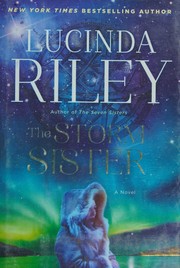
The Storm Sister
Ally D'Aplièse loses her father and her lover within weeks, then follows a brass frog and a Norwegian biography into Anna Landvik's music and the world of…
2,376-word summary · 11 min read
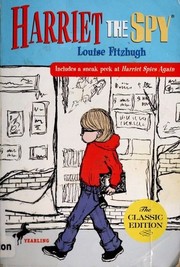
Harriet the Spy
Eleven year old Harriet Welsch fills notebooks with honest, often cruel observations about her neighbors, until her classmates read one and turn her spy route…
2,510-word summary · 11 min read
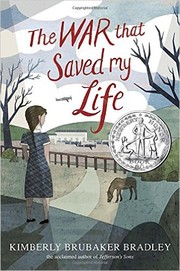
The War That Saved My Life
Ten-year-old Ada has never left her London flat, hidden away because of her clubfoot. Wartime evacuation sends her to Kent, where a reluctant guardian and a…
2,252-word summary · 10 min read
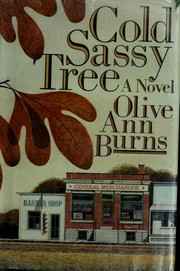
Cold Sassy Tree
In 1906 Georgia, fourteen-year-old Will Tweedy watches his widowed grandfather marry a much younger woman three weeks after his grandmother's funeral.
2,154-word summary · 10 min read
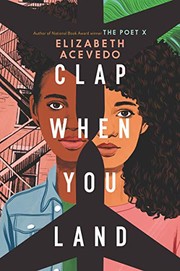
Clap When You Land
Two half sisters, one in Sosúa and one in Queens, discover each other after their father dies in a plane crash, in Elizabeth Acevedo's novel in verse.
2,890-word summary · 13 min read
Esperanza Rising
Esperanza trades ranch life for farm labor camps in California.
2,338-word summary · 10 min read
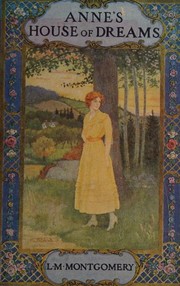
Anne's House of Dreams
Newlyweds Anne and Gilbert start in a seaside house with kind neighbors.
2,465-word summary · 11 min read
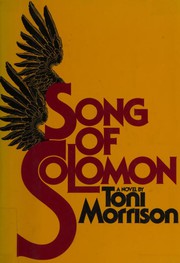
Song of Solomon
Milkman Dead leaves Michigan to hunt for family gold and finds instead the old song of his ancestor Solomon.
2,465-word summary · 11 min read
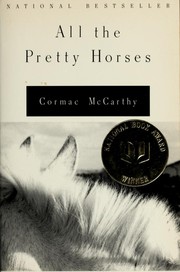
All the Pretty Horses
John Grady and Rawlins ride to Mexico for ranch work, finding love, prison, and a code that costs all.
2,677-word summary · 12 min read
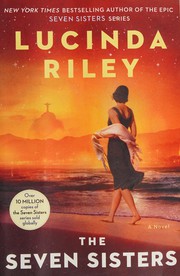
The Seven Sisters
Maia follows Pa Salt clue from Geneva to Rio and Christ the Redeemer.
2,210-word summary · 10 min read
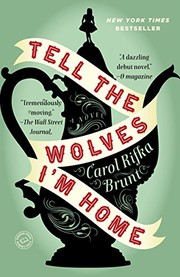
Tell the Wolves I'm Home
A grieving fourteen year old secretly befriends her late uncle's boyfriend in 1980s New York, testing family loyalty and love.
3,014-word summary · 13 min read
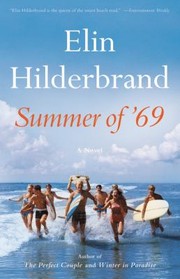
Summer of '69
Four Levin siblings split for summer 1969 as Vietnam, pregnancy and first love pull the family apart.
2,886-word summary · 13 min read
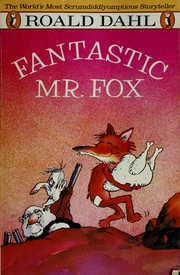
Fantastic Mr. Fox
Mr. Fox raids three cruel farmers to feed his family, then outdigs tractors and a siege to host a feast underground.
2,910-word summary · 13 min read
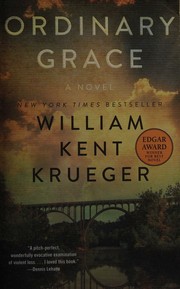
Ordinary Grace
In 1961 Minnesota, thirteen-year-old Frank Drum faces a summer of deaths that tests his minister family and forces him to weigh truth, guilt, and mercy.
2,948-word summary · 13 min read
Anne of the Island
Anne leaves Avonlea for Redmond College, shares Patty's Place with friends, and learns to tell admiration apart from love.
2,766-word summary · 12 min read
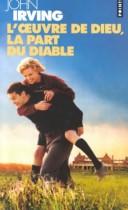
The Cider House Rules
Homer Wells grows up in a Maine orphanage under Dr. Larch, who delivers babies and performs illegal abortions.
2,985-word summary · 13 min read
Heidi
Orphan Heidi blooms with her grandfather in the Swiss Alps, wilts in Frankfurt as a companion, then helps Klara walk.
2,952-word summary · 13 min read
Alexander and the Terrible, Horrible, No Good, Very Bad Day
Alexander has one bad day from gum in his hair to bedtime, while his family copes and his mother stays honest.
2,548-word summary · 11 min read