
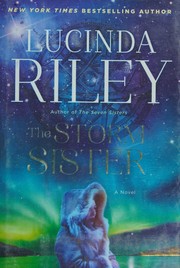
The Storm Sister
2,376-word summary 11 min read 512 pages in the book
- First published
- 2015
- Publisher
- Atria Books
- Pages
- 512
- ISBN
- 9781476759920
- Series
- The Seven Sisters (#2)
Reading options
What's inside (10 sections)
Ally D'Aplièse is somewhere in the Aegean when her father dies, and the location tells you almost everything about her. She is on the water, doing the thing she loves most, sailing with a man she has only recently fallen for, a British skipper named Theo Falys-Kings. Then her phone picks up a signal and the messages pour in. Pa Salt is dead. The yacht he kept for his daughters, the Titan, has already carried his body and buried him at sea. Ally had watched that same yacht cross the horizon through binoculars a day earlier, which is the kind of quiet cruelty Riley likes to arrange. By the time Ally reaches Atlantis, the estate above Lake Geneva where she and her sisters grew up, the funeral has happened without her.
She arrives to find her five sisters gathered, the woman they call Ma (Marina) holding the household together, and a lawyer named Georg Hoffman waiting with the paperwork. Pa Salt, the elusive billionaire who adopted six infant girls from six corners of the world and never explained why, has left each daughter a letter and a set of coordinates engraved on an armillary sphere in the garden. Ally's letter contains a small brass frog and sends her to a book in his library, a Norwegian biography called Grieg, Solveig og Jeg by Jens Halvorsen. It is a strange inheritance. Not money, not an explanation, just a direction and a frog.
That is the setup, and it is worth saying plainly that the setup is a large part of the pleasure. Riley writes grief as an administrative fog, the way a death actually lands, full of phone calls, lawyers, and a house that suddenly feels enormous. This is the second book in the Seven Sisters series, and the series machinery is fully on display. Coordinates stand in for heredity. A missing seventh sister, never found, hovers at the edge of every conversation about the family.
The Storm and the Race
Before Ally can follow any clue, she does something stubborn and loving. She joins Theo and his crew for the Fastnet Race, the punishing offshore run from Cowes, around the Fastnet Rock off Ireland, and back to Plymouth. Riley uses the real 1979 Fastnet disaster as the shadow over the 2007 race in the novel, a storm that killed fifteen sailors and sank or abandoned dozens of boats, a benchmark for how bad the Celtic Sea can get. The forecast is grim. Theo reads it the way he reads everything, calmly, and decides at the last moment that Ally should go ashore for her own safety.
The storm arrives, and it is as bad as advertised. A crewmate ends up in the water, and Theo, who has spent his life managing other people's danger, jumps in after him. He gets the man onto a buoy. The sea takes Theo. Ally loses her father and the man she loved inside a few weeks, and then, almost as an afterthought, discovers she is pregnant. She scatters Theo's ashes off Lymington with his mother, Celia, and then she does the thing that people in shock sometimes do, which is to leave. She books a flight to Norway with a translation of a biography she cannot yet read and a frog in her pocket.
That is a great deal of catastrophe packed into the first fifth of a long book, and I think it mostly earns it. The Fastnet sequence is the most kinetic writing in the novel. What follows does not move at that speed again, and readers who come expecting a maritime thriller should know the sea lanes close early.
Anna of the Mountains
The book then steps back more than a century, to August 1875 in Telemark, in the mountains of southern Norway. Here we meet Anna Landvik, a farm girl who sings while she herds the family's cows, and whose voice is so unusual that it stops a passing music teacher in his tracks. The man is Herr Franz Bayer, a professor from Christiania, the old name for Oslo. He talks her reluctant parents into letting her come to the city for a year to train, and just like that a shepherd's daughter is on a road that leads toward concert stages.
Riley is good with Anna. The farm life is drawn without sentimentality, and the ascent without easy triumph. Anna is not a naive girl waiting to be rescued. She has a stubborn moral streak and a promise to herself that she will never marry a man she does not love, which turns out to be the hinge on which the rest of her life swings. Bayer teaches her to sing and also to behave like a woman of a class she was not born into, and the cost of that education is visible on every page. Anna learns quickly, and she also learns that being useful to powerful men is not the same as being safe with them.
The Ghost Voice of Peer Gynt
In Christiania, Anna's break arrives in a form that makes the historical thread worth reading on its own. The Christiania Theater is preparing the world premiere of Henrik Ibsen's Peer Gynt, with incidental music by Edvard Grieg, and the actress Thora Hansson, who is playing Solveig, cannot manage the singing. Anna is hired as the secret voice behind her, singing Solveig's Song from the wings while Hansson mouths it on stage. It is 1876, and the melody millions of people now know through the Peer Gynt suites is coming out of a hidden farm girl's throat.
Down in the orchestra pit is a flautist named Jens Halvorsen, who plays the opening bars of Morning Mood and who has a reputation with women and a gambler's weakness. Anna falls for him anyway, against her better judgment and the warnings of everyone who knows him. When Bayer, who has quietly fallen in love with his own protegee, proposes marriage, Anna refuses him and tells him the truth about Jens. Bayer's response is petty and human. He uses his influence to get Jens dismissed from the orchestra. With Christiania closed to them, Anna and Jens make a romantic, disastrous decision. They elope to Leipzig, Germany, where Jens intends to study at the famous conservatory, the one Grieg himself had attended.
Leipzig, and the Long Fall
Leipzig is where the novel turns bleak, and arguably where it is most honest. The couple arrives full of passion and runs straight into poverty. Jens disappears into his studies and his new friends and then, for a summer, into the company of a wealthy patroness, promising to send for Anna and not sending. Anna, pregnant and alone, gives birth to a stillborn daughter, whom she names Solveig, and then takes work as a scullery maid for a cruel landlady. It is the most unglamorous stretch of the book, and Riley does not soften it out of loyalty to her heroine. Anna's voice, the thing that made her special, goes silent.
The rescue, when it comes, is either moving or convenient depending on your tolerance. Edvard Grieg, who had been struck by Anna's singing back in Christiania, turns up in Leipzig, finds her barely surviving in a scullery, and becomes her patron. This is the Grieg connection the series blurb promises, and it is more than a name drop. He restores her health, restarts her career, and by the time Jens is found destitute in Paris and coaxed back into her life, Anna is a celebrated soprano. She marries the man who abandoned her, and they settle in Bergen, at a house called Froskehuset, near Grieg's own estate at Troldhaugen. Their son, Edvard Horst Halvorsen, is born in 1884. Through the warmth of these chapters you can feel Riley enjoying herself, and the Bergen scenes carry a kind of settled happiness that the earlier sections keep delaying.
I will not pretend the coincidence sits easily. A woman rediscovering a lost career and a lost husband at once strains belief, and the novel's habit of letting Grieg appear exactly when needed is its most repeated weakness. Riley's defense, if she has one, is thematic. This is a story about art arriving as rescue, and Grieg is the patron who proves it.
Bergen and the Frog
The Bergen years carry the historical thread into a second generation, and this is where the book quietly becomes about something larger than one singer's career. Horst's son, Jens Junior, known as Pip, goes to Leipzig to study piano and composition in 1936. He falls in love with Karine Rosenblum, a German-Jewish oboist, and as the persecution of Jews escalates he brings Karine and two of her friends, Bo and Elle, back to Norway. Pip and Karine marry and have a son, Felix Mendelssohn Halvorsen, born in November 1938.
Pip writes a piano concerto for Karine and calls it The Hero Concerto. On 9 April 1940, Germany invades Norway. Days later, Pip and Karine are killed in a bombardment in Bergen. Two-year-old Felix is found standing beside their bodies, a detail Riley neither exploits nor needs to. The manuscript of the concerto disappears into the family's stunned grief. Letters that survive also carry a quieter revelation, the suggestion that Horst, the son Anna raised, may have been Grieg's biological child rather than Jens's. The book leaves the question deliberately unresolved for the family, and if you like your genealogies tidy, this is one of several places the novel will frustrate you.
Ally in Norway
Present-day Ally reaches Norway carrying all of this without knowing any of it. She visits the Ibsen Museum in Oslo and the Grieg Museum at Troldhaugen in Bergen, and at the museum she learns what the brass frog was meant to be. It was Grieg's own good luck talisman, the kind of object a man like Pa Salt would leave as a private joke and a breadcrumb at once. Then she meets Thom Halvorsen, a violinist with the Bergen Philharmonic who lives at Froskehuset, and the two of them recognize something in each other before either can name it. Riley handles the mutual recognition lightly. On the page it reads as kinship, and that is the point.
Thom's father is Felix, the baby found beside his parents in 1940, now a former concert pianist whose career collapsed into alcoholism. Ally, pregnant with Theo's child and short on patience for evasion, corners him until he talks. In 1977, Felix tells her, a woman named Martha gave birth to twins in Trondheim, a girl late on 31 May and a boy on 1 June. Martha kept the boy and arranged a private adoption for the girl, who became Alcyone D'Aplièse. A DNA test confirms it. Felix is Ally's biological father, and Thom is her twin brother. She takes the news not as a wound but as a gift, and her reaction is the most appealing thing about her present-day arc.
If that sounds like a great many secrets arriving in one small room, it is. The twin revelation is the book's boldest coincidence, and readers who have been tracking the series will suspect the author of stacking the deck to seed later novels. She is, and she does, and you either accept the terms of a saga or you do not. The compensations are real, though: Thom is a warm, unshowy presence, and the Norwegian present-day chapters have an unhurried charm that the headlong opening lacks.
The Hero Concerto
What saves the ending is music. Ally and Thom find Pip's lost manuscript, The Hero Concerto, and realize that only Felix, whose genius has been corroded by drink, has the ability to reconstruct and orchestrate it. Ally gives him the score in secret, trusting him with the thing he has spent decades failing at. She also picks up the flute she set aside for sailing, which is its own small return to an abandoned self. The climax is the Grieg Centenary Concert in December 2007, where Ally opens the evening with the flute solo from Morning Mood, Thom plays first violin, and a sober Felix performs his own father's concerto in public for the first time. Ma and Star are in the audience. Ally decides to stay in Bergen, buy a share of Froskehuset, and raise her child near the twin she did not know she had. The novel closes by handing off to Star, whose book comes next.
What Works, and What Drags
The historical half of The Storm Sister is the stronger half. Anna Landvik is a fully drawn woman with a voice and a will, the Christiania theater material is rich with period detail, and the chapters set in Bergen before the war give the family a real weight. The Grieg thread earns its place in the story, and the Peer Gynt premiere makes a genuinely good set piece. The book is at its best when Anna is in a room full of people who underestimate her.
The present-day half is thinner. Ally is capable and likable, but the prose around her tends toward summary, and the death of Theo, which should shadow everything, fades faster than it ought to. The mystery of Pa Salt and the missing seventh sister is a hook the book will not resolve, by design, and if you want a self-contained novel, this is not one. The coincidence pile, the twin, the Grieg paternity, the rediscovered concerto, will annoy readers who care about plausibility. The novel is also long. The edition cited on this page, the Atria Books hardcover, runs 512 pages and carries the ISBN 9781476759920, and while the Leipzig section earns every one of its pages, some of the Norwegian travelogue could have been tightened without losing anything. The original edition appeared in 2015.
Who should read it: anyone who liked The Seven Sisters, readers of family sagas and romantic historical fiction, and people who like their grief leavened with music. Who should stay away: readers who want spare prose, a tight plot, or a book that answers its own central questions. The series knows exactly what it is, and this installment does that thing with real feeling.
FAQ
Is The Storm Sister part of a series?
Yes. It is book two of The Seven Sisters, following Ally D'Aplièse after Maia's story in book one, and the series continues with The Shadow Sister.
When was The Storm Sister published?
The original edition appeared in 2015. The Atria Books edition cited here runs 512 pages and the ISBN is 9781476759920.
Who are the two timelines about?
Ally D'Aplièse in the present day and Anna Landvik in late nineteenth-century Norway and Germany, with Edvard Grieg and Jens Halvorsen around her.
Similar books
More from The Seven Sisters first, then related titles.

The Seven Sisters
Maia follows Pa Salt clue from Geneva to Rio and Christ the Redeemer.
2,210-word summary · 10 min read

The Shadow Sister
Star D'Apliese steps out of her sister's shadow and follows a bookshop clue into the Edwardian life of Flora MacNichol, a woman who gave up love for duty.
2,260-word summary · 10 min read
When He Was Wicked
Widowed Francesca Bridgerton falls for her late husband cousin Michael, who loved her silently for years.
2,055-word summary · 9 min read

In Her Shoes
Philadelphia lawyer Rose takes in her wayward sister Maggie until a betrayal splits them, sending both toward their long-lost grandmother in Florida.
2,781-word summary · 12 min read

If I Stay
Mia Hall watches her body after a crash and must decide whether to live for Adam and cello.
3,907-word summary · 17 min read

The Japanese Lover
A Polish refugee and the son of a Japanese gardener fall in love in San Francisco in 1939, then keep the affair secret for nearly seventy years.
2,286-word summary · 10 min read

Little Town on the Prairie
In the spring after the Long Winter, fifteen-year-old Laura sews shirts, studies for a teaching certificate, and helps send her blind sister Mary to college.
2,071-word summary · 9 min read

Mrs. Everything
Two Jewish sisters in Detroit grow up, apart and together, across seven decades of American life, from the 1950s to the 2016 election.
2,362-word summary · 10 min read

Sam's Letters to Jennifer
A grieving journalist reads her grandmother's letters and finds a decades-long love affair that changes how she sees her family.
2,310-word summary · 10 min read

Two by Two
Sparks's twentieth novel turns from first love to a marriage breaking up: Russell Green loses his wife and his job, then rebuilds his life around his…
2,192-word summary · 10 min read
Between Sisters
Estranged sisters Meghann and Claire reunite in Washington when Claire announces a rushed wedding, then face their mother's desertion and a medical crisis.
2,467-word summary · 11 min read
The House We Grew Up In
The Bird family of the Cotswolds breaks apart after a suicide and spends twenty years not talking about what happened.
2,198-word summary · 10 min read

At First Sight
Jeremy and Lexie are married and expecting a baby when anonymous emails tell him the child may not be his.
2,317-word summary · 10 min read
What the Wind Knows
Annie scatters her grandfather's ashes on Lough Gill and is pulled into 1921 Ireland, where she becomes the missing Anne Gallagher and falls for Dr. Thomas…
2,056-word summary · 9 min read

Delilah Green Doesn't Care
Delilah returns to Bright Falls to photograph her stepsister's wedding and falls for Claire, a bookstore owner and single mother, while a cruel bet threatens…
2,315-word summary · 10 min read

Someone Like You
Halley and her best friend Scarlett face a summer of grief, a surprise pregnancy, and Halley's dangerous first romance in Sarah Dessen's 1998 young adult novel.
2,218-word summary · 10 min read
Garden Spells
Two sisters reunite in their family home in Bascom, North Carolina, where an apple tree shows anyone who eats from it the biggest event of their life.
2,030-word summary · 9 min read

Clap When You Land
Two half sisters, one in Sosúa and one in Queens, discover each other after their father dies in a plane crash, in Elizabeth Acevedo's novel in verse.
2,890-word summary · 13 min read

True Colors
Three Grey sisters split over love and duty after their father judges them.
2,596-word summary · 12 min read

The Sky Is Everywhere
Lennie grieves Bailey while torn between Toby and Joe.
2,251-word summary · 10 min read

The Identicals
Twin sisters swap Nantucket and Martha Vineyard lives for a summer.
2,556-word summary · 11 min read
The Accidental Tourist
Grieving Macon writes travel guides for haters of travel, then Muriel intrudes.
2,252-word summary · 10 min read
Sold on a Monday
A reporter hides a Depression photo of children for sale and must face the cost.
2,501-word summary · 11 min read
Anne's House of Dreams
Newlyweds Anne and Gilbert start in a seaside house with kind neighbors.
2,465-word summary · 11 min read
The Rules of Magic
Franny, Jet, and Vincent Owens test strict family rules and a love curse in 1960s Manhattan and Massachusetts in Alice Hoffman's warm prequel about love, loss,…
2,686-word summary · 12 min read
The House at Riverton
In 1999, ninety eight year old maid Grace Bradley tapes the truth about a 1924 shooting at Riverton Manor, poet Robbie Hunter, two sisters and a lie held for…
2,433-word summary · 11 min read

We Are All Completely Beside Ourselves
Rosemary tells of twin sister Fern, a chimp raised as family, and research fallout.
2,058-word summary · 9 min read

The Switch
A burned-out consultant and her 79-year-old grandmother swap London and Yorkshire homes for two months, facing grief, dating apps, and village politics.
2,782-word summary · 12 min read

The Starter Ex
A retired bad-girlfriend-for-hire takes one last job and falls for the mark.
2,092-word summary · 9 min read

The Last Letter
Ella trades letters with soldier Chaos, then her brother Ryan death brings Beckett to Telluride with a hidden name, sick Maisie, and a love tested by truth.
2,559-word summary · 11 min read