

Reading options
What's inside (9 sections)
I read this in two sittings on a wet weekend, and the scene I keep returning to is the first one. Jennifer and her grandmother Sam are on the Lake Michigan shore, at the exact spot where Jennifer met Danny six years earlier. Same water, same wind, same flat horizon. Everything else has changed. Danny is dead, a year gone, and the baby Jennifer was carrying when he drowned is gone too. She is a Chicago journalist in her thirties with a career she can manage and a life she cannot.
The meeting is worth holding onto, because the novel keeps circling it. Danny rescued her from a bad night, brought her coffee, and called her Scram. Six years later she is standing in the same place with the woman who raised her, and neither of them says the obvious thing. That restraint is Patterson at his best, and it is not what I expected from the man who wrote Along Came a Spider.
James Patterson published this as a romance, and anyone bracing for a thriller should adjust expectations. It came out in 2004 from Little, Brown and Company, runs 272 pages, and carries ISBN 9780316710572. The structure alternates between Jennifer's first person narration and the letters Sam wrote for her. Once the letters begin, the book has a second voice, and that voice is better than the first. It is not close.
The call from the reverend
Jennifer's plan, such as it is, is to keep working and wait to feel like a person again. Then Reverend John Farley telephones. He is an old family friend, and he tells her that Sam has fallen at her home in Lake Geneva, Wisconsin, and is in a coma. Jennifer drives up.
That drive is the hinge. A woman who has been surviving on routine suddenly has somewhere to be and someone to sit with, and the book shifts from grief in the abstract to grief with a destination. Lake Geneva in the off season is a good place for it. The resort town empties out. The water goes gray. The houses along the shore sit closed and quiet, and the hospital becomes the only lit building in her day.
Sam is in her eighties, and she is the one stable adult of Jennifer's childhood. At the lake house Jennifer finds a packet of letters Sam wrote for her, and she starts reading them in pieces around hospital visits. This is the engine of the whole novel. Jennifer reads about a young woman making choices in a world with fewer doors while she sits beside the old woman those choices produced.
The first letters break something open. Sam never loved Charles, Jennifer's grandfather. The marriage was long, respectable, and loveless. It was held together by duty and by the family it produced, and Sam stayed because leaving was not something women of her generation did without becoming a scandal, a ruin, or both. Jennifer has to recalibrate a grandmother she thought she knew, and she has to do it in a hospital corridor with a paper cup of bad coffee in her hand.
A marriage that was a duty
This is the part that surprised me, and the part I trust most. Patterson does not make Charles a monster. He is not cruel in any dramatic way that would let the reader off the hook. He is a man Sam married and never loved, and the letters are honest about what that costs across fifty years. There are children. There are holidays. There is a house that runs properly. There is also a woman going quietly strange inside it.
The letters do not excuse Sam or sentimentalize her. They show a smart woman doing arithmetic, weighing what she would lose against what she wanted, and choosing the version of her life that other people could see. Patterson is careful to show that this was not simple weakness. It was a calculation made under constraints she did not invent. Divorce would have cost her standing, possibly her children, certainly her name. The novel's real subject sits here: the compromises women of that era made, and the private life they built anyway, in the margins, on the side.
I kept thinking about how little the book has to explain. Anyone with a grandmother from that generation has seen the shape of this. A marriage that looks solid from the outside. A woman with a locked drawer in her head. Sam's letters open the drawer, and Patterson is generous enough not to blame her for the lock. He is also honest enough to show that the children grew up inside the arrangement without knowing it, which is its own kind of damage.
Jennifer's reaction is the right one. She is not scandalized. She is sad, and then angry on her grandmother's behalf, and then aware that Sam is telling her this on paper because saying it out loud would have been impossible. A letter is what a woman of that generation could manage. The form itself is part of the story.
Doc and the observatory
Sam's real love appears in the letters as Doc. A local man, met at a Red Cross dinner dance. He is kind, funny, and attentive in the small ways that matter over years rather than weeks. They fall in love and carry on a long affair, and Patterson writes it with warmth rather than heat. Doc is not a younger man or a danger or a plot device. He is a decent person who loves a married woman and waits, mostly, and the waiting wears on both of them.
The proposal happens at Yerkes Observatory. Doc asks her to marry him there and gives her a sapphire ring. She says yes. Then she does not leave Charles. That is the tragedy of the middle of the book in one sentence: she says yes to the proposal and no to the life. The ring exists. The yes happened. The door still did not open.
Set that scene beside the shore scene and you have Patterson's two best images. One is a lake in daylight, a young woman at the start of a marriage that will fail. The other is a domed building at night, a woman in middle age being offered a different ending and refusing it. I have read enough Patterson to know he can write a room. Here he writes a building and a choice, and the building does most of the work.
The affair lasts decades. That is the detail the novel keeps returning to, and it is more interesting than any single scene. Sam and Doc do not get a crisis that forces the issue. They get years, and years make the arrangement look like a life. Jennifer reads that and has to square it with the grandmother who took her to church and taught her to swim. The double vision is the point.
Brendan next door
Meanwhile Jennifer is falling back into the world against her will. Brendan Keller is a childhood friend, now a doctor, staying at his uncle's house next door to Sam's. He is easy to be around, which is the highest compliment this book gives anyone. No drama, no performance. He makes her laugh in a hospital corridor and she notices that she is noticing.
Jennifer has sworn off love, and she is not being cute about it. Her husband drowned on a vacation that was supposed to be happy. She lost the baby in the aftermath. The fear of another loss sits in her like a stone, and Patterson lets it sit there instead of talking her out of it. The Brendan thread is deliberately slow and deliberately unglamorous. Coffee. Walks. Conversations that do not resolve. Her thaw is small and uneven: she resists, then stops resisting for an afternoon, then panics and pulls back.
Then Brendan leaves. He has a brain tumor, and he goes off to have risky surgery without telling her. Jennifer is furious, then frightened, then practical. She tracks him down and stays through the recovery. The surgery works. They marry.
This is where the novel gets tidy in a way that bothered me. The tumor arrives at exactly the point where Jennifer needs a reason to commit, and it resolves cleanly. A real illness in a real relationship leaves debt, exhaustion, and fear that comes back on anniversaries. This one leaves a wedding. I am not asking Patterson to kill the man. I am asking for the after.
The man on the phone
Sam comes out of the coma. She is diminished but lucid, and the hospital scenes between her and Jennifer are the emotional center of the book. The old woman is not restored. She is slower, thinner, less able. But she is enough herself to hear Jennifer's news and be glad about it, and the two women get a stretch of time most families never get.
Then the reveal. Doc is Reverend John Farley, the family friend who called Jennifer at the start. The man who telephoned her about Sam's fall is the man Sam loved for decades. They never married. They had a long love and a separate life, and John was in the house, at the hospital, on the phone, the whole time.
I had guessed it. The book probably expects you to. A family friend who hovers, a local man with no family of his own, a mystery love described but never named: the arithmetic is not hard. Patterson is not writing a mystery here, so the guess does not ruin anything. But it does deflate the reveal, which arrives as confirmation rather than shock. The bigger emotional beat is not the identity. It is the arithmetic of forty years, and the fact that John was in the room for all of it without being in the family.
Sam dies. At the funeral Jennifer speaks, and she announces that she and Brendan are expecting a baby, a girl, and that they will name her Sam. It is a sentimental ending and Patterson commits to it. The last movement is about inheritance as a name, a lake house, a set of letters, a child who will never meet the woman she is named for but will grow up hearing her voice on paper.
What does not work
The prose is often flat. Patterson's chapters here run two or three pages, sometimes one, and the effect is less like reading a novel than like reading a treatment for a movie. Every scene is a beat. There is very little room for a paragraph to sit and think. The short chapters keep you moving, but they also keep the book from being beautiful for long, and Sam's letters are the only place the language relaxes into something specific. Jennifer's narration tells us she is sad more often than it makes us feel it.
The tumor plot is the other weak spot. It resolves with a surgery that works and a marriage that follows, and the whole thread is arranged so Jennifer can be brave without being unlucky. Grief in the first half is allowed to be ugly. Love in the second half is not allowed to be hard for long.
And the Doc is John reveal is easy. I do not mind guessing. I mind that the book treats the guess as a surprise, and that the reveal does not change how anyone behaves. John has been kind and present all along, so the news costs him nothing and gains him nothing except our sympathy after the fact.
If you want a tight plot or detective work, skip this. It is not that. If you are recently widowed or have lost a pregnancy, the first hundred pages may be more than you want on a rainy night. Patterson does not flinch from the details of losing a spouse, and the opening grief is direct and unadorned.
What stays
What works is Sam. The letters carry the book, and the grandmother-granddaughter relationship is the reason to read it. Patterson writes an old woman who is not a saint, who made a cowardly choice and a brave one and knows the difference, and who loves her granddaughter without managing her. Jennifer's voice is thinner. Sam's is the one I remember.
The observatory proposal is the best scene in the book. A sapphire ring, a man asking, a woman saying yes and then doing the other thing. Patterson does not give you a speech to quote. He gives you the image: the dome, the cold, the ring, the answer that changes nothing.
The honest look at a loveless marriage is the novel's real achievement. It is not a scandal. It is a woman making the best of a long arrangement, and the cost is decades. Sam's generation paid that price to keep a place in the world, and Patterson lets the reader feel the bill without turning Charles into a villain or Sam into a martyr.
I finished thinking about the difference between a life that looks correct and a life that is lived. Sam got both, in separate rooms, with one man on the phone for forty years and another at the dinner table. Jennifer gets the version where the rooms become one, and the novel wants us to feel that as grace rather than luck.
The last image I hold is not the funeral or the baby. It is Sam at Yerkes, with the ring in her hand, deciding. The dome opens over her. She says yes and goes home to Charles. That is the novel's real ending. The wedding and the pregnancy that follow are the part Patterson gives us because he is kind, or because he does not trust us with the harder one.
FAQ
Is Sam's Letters to Jennifer a thriller?
No. It is a romance and family novel, despite James Patterson's reputation for thrillers.
How is Sam's Letters to Jennifer structured?
It alternates Jennifer's first-person narration with the letters her grandmother Sam wrote for her.
Can Sam's Letters to Jennifer be read as a standalone?
Yes. It is not part of a series and resolves Jennifer's story within the book.
Similar books
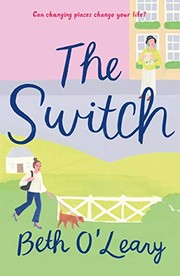
The Switch
A burned-out consultant and her 79-year-old grandmother swap London and Yorkshire homes for two months, facing grief, dating apps, and village politics.
2,782-word summary · 12 min read
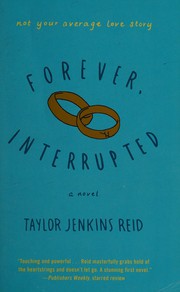
Forever, Interrupted
Elsie elopes in May, loses Ben nine days later, and learns grief beside the mother in law she never met.
2,051-word summary · 9 min read
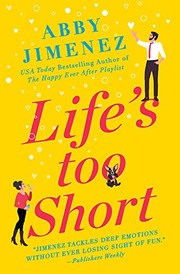
Life's Too Short
A travel YouTuber facing possible ALS takes in baby Grace and falls for Adrian, the lawyer next door.
2,913-word summary · 13 min read
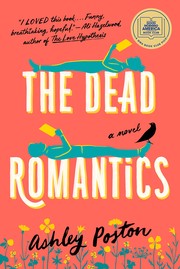
The Dead Romantics
A ghostwriter who stopped believing in love goes home to bury her father and finds her editor's ghost waiting at the funeral parlor.
2,634-word summary · 12 min read
Still Me
Lou spends a year in New York working for the Gopniks, torn between Josh, distant Sam, and the life she wants.
2,939-word summary · 13 min read

Just for the Summer
Emma and Justin date to break a matching curse, then face sudden guardianship and illness on Lake Minnetonka.
3,090-word summary · 14 min read
Reminders of Him
Kenna returns after prison to meet the daughter she lost, facing the family that blames her.
2,168-word summary · 10 min read
Suzanne's Diary for Nicholas
A dumped editor reads a Vineyard mother's diary that reframes everything.
2,087-word summary · 9 min read

What Happened to Goodbye
Mclean has reinvented herself in four towns since her parents divorced. In Lakeview she uses her real name, and for the first time staying put becomes a choice.
2,796-word summary · 12 min read
Amy & Roger's Epic Detour
Amy Curry has not driven since the crash that killed her father. With Roger at the wheel and a box of maps between them, a cross-country trip becomes a slow…
3,034-word summary · 13 min read

Two by Two
Sparks's twentieth novel turns from first love to a marriage breaking up: Russell Green loses his wife and his job, then rebuilds his life around his…
2,192-word summary · 10 min read
Between Sisters
Estranged sisters Meghann and Claire reunite in Washington when Claire announces a rushed wedding, then face their mother's desertion and a medical crisis.
2,467-word summary · 11 min read

At First Sight
Jeremy and Lexie are married and expecting a baby when anonymous emails tell him the child may not be his.
2,317-word summary · 10 min read

A Spool of Blue Thread
Four generations of the Whitshank family in Baltimore, and the silences, resentments and quiet love they hand down without ever saying so.
2,408-word summary · 11 min read
Wedding Night
Lottie marries an old flame days after a breakup, then flies to a Greek island while her sister quietly works to sabotage the honeymoon. A farce about memory,…
2,213-word summary · 10 min read

Delilah Green Doesn't Care
Delilah returns to Bright Falls to photograph her stepsister's wedding and falls for Claire, a bookstore owner and single mother, while a cruel bet threatens…
2,315-word summary · 10 min read
The Storm Sister
Ally D'Aplièse loses her father and her lover within weeks, then follows a brass frog and a Norwegian biography into Anna Landvik's music and the world of…
2,376-word summary · 11 min read

The No-Show
Three women are stood up on Valentine's Day by the same man, but the timeline is not what it seems. O'Leary's warmest book with a knife in it.
2,127-word summary · 9 min read

Someone Like You
Halley and her best friend Scarlett face a summer of grief, a surprise pregnancy, and Halley's dangerous first romance in Sarah Dessen's 1998 young adult novel.
2,218-word summary · 10 min read
Maame
Maddie Wright, 25, has spent years as the responsible one in her Ghanaian British family, and the year she finally tries to live for herself is the year…
2,108-word summary · 9 min read
How to Walk Away
Margaret Jacobsen has the job, the fiance, and the future mapped out, until a small-plane crash on Valentine's Day takes almost all of it in one afternoon.
2,012-word summary · 9 min read
Every Breath
Two strangers share one week at Sunset Beach in 1990, part for duty, and reunite decades later at the mailbox that started it all.
2,357-word summary · 10 min read

Dial A for Aunties
A wedding photographer accidentally kills her blind date, and her mother and three aunties help her hide the body during the biggest wedding of their careers.
2,076-word summary · 9 min read
True Colors
Three Grey sisters split over love and duty after their father judges them.
2,596-word summary · 12 min read
The Identicals
Twin sisters swap Nantucket and Martha Vineyard lives for a summer.
2,556-word summary · 11 min read

The Accidental Tourist
Grieving Macon writes travel guides for haters of travel, then Muriel intrudes.
2,252-word summary · 10 min read
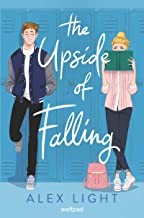
The Upside of Falling
Two teens fake-date for a summer dare and end up facing grief, family secrets, and first love.
2,274-word summary · 10 min read
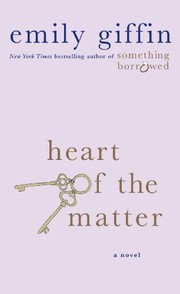
Heart of the Matter
Two Boston mothers collide after a burn injury puts a single mom in the orbit of another woman's surgeon husband.
2,585-word summary · 11 min read
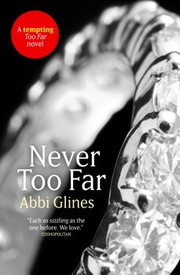
Never Too Far
Blaire flees Rosemary Beach after Rush's lies, then must decide if his pursuit and Nan's exposed schemes earn trust again.
2,626-word summary · 12 min read
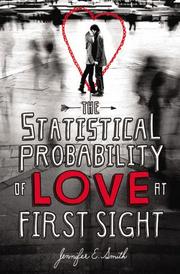
The Statistical Probability of Love at First Sight
Hadley misses a flight, meets Oliver to London, and faces her father wedding in one day.
2,002-word summary · 9 min read