
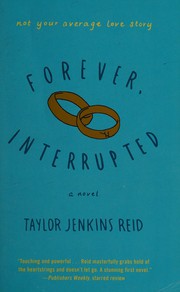
Forever, Interrupted
2,051-word summary 9 min read 352 pages in the book
- First published
- 2013
- Publisher
- Washington Square Press
- Pages
- 352
- ISBN
- 9781476712826
Reading options
What's inside (12 sections)
I read Forever, Interrupted because Evelyn Hugo made Reid essential and I wanted her start. Taylor Jenkins Reid published her debut in 2013. My reading follows the 352 page Washington Square Press paperback. Elsie Porter elopes with Ben Ross in May and loses him to a truck nine days later, then must grieve beside a mother in law who never knew she existed. It is big hearted debut romance about loss that reads fast and lands softly.
Elsie meets Ben on a rainy New Year's Day and the chemistry is instant and total. Within weeks they are inseparable. By May they elope with giddy certainty. Reid writes that whirlwind without irony. Long talks. Bad pizza. Inside jokes forming hourly. Ben, warm and steady, adores Elsie's librarian mind. Elsie, careful and funny, trusts Ben's constancy completely. Their spring reads like supernovas, Ben's own metaphor for bursts that shine brightest before fading fast. That image, planted sweetly, turns devastating within pages.
Nine days a wife
Ben dies nine days after the wedding, hit by a truck while biking. At the hospital Elsie faces Susan, his mother, who never knew her son married. That encounter structures the whole book. Two women who loved the same man from different angles, meeting at the worst moment with no shared language. Susan grieves a son. Elsie grieves a husband of days. Each doubts the other's claim to devastation. Those doubts curdle into barbs before softening into the book's true love story. Not Elsie and Ben, bright and brief. Elsie and Susan, slow and salvaged.
Reid braids past and present in alternating chapters that balance ache and warmth. Past tracks Elsie and Ben from rain to vows. Present tracks Elsie and Susan from hospital hostility to cautious alliance. That structure lets grief breathe between joys. A chapter of first kiss joy steadies a chapter of funeral planning. Readers who weep easily should keep tissues. Reid earns tears through specifics rather than sentimentality. Ben's terrible dancing. Susan's lasagna. Elsie's library carts. Small things carry unbearable weight when someone dies young. The book knows and lists them lovingly.
Susan deserves emphasis as co heroine rather than obstacle. Widowed herself, fierce about her remaining family, she meets Elsie's existence as ambush on top of loss. Her early coldness reads as protection, not cruelty. Who is this stranger claiming my son. As she learns Elsie, truly learns through shared tasks like sorting Ben's things and planning memorials, her armor cracks in scenes that avoid villain-to-saint shortcuts. She stays sharp tongued and opinionated. She adds Elsie to the people she feeds. That addition, offered gruffly over leftovers, moved me more than any vow. Mothers-in-law as chosen family is rarer in fiction than it should be.
Supernovas and second chances
The supernova image repays tracking across the book because Reid loads it carefully. Ben introduces it as romance, bursts brighter than anything before fading fast. Elsie adopts it as private language for their spring. After his death it curdles into accusation. Was she just audience to his flash. Susan reframes it finally as incomplete physics. Some stars burst. Others burn steady for billions of years. Both light. That reframing gives Elsie permission to seek steadier love without betraying Ben's flash. Meteors matter. So do suns. Grief can hold both astronomies without ranking.
Ana's friendship provides the book's comic ballast through mourning that could drown in sorrow. Roommate jokes about casseroles. Work gossip that continues indecently soon after funerals. Dating advice Elsie is nowhere near ready to use. Those normalcies keep pages breathing between hospital and memorial scenes. Reid understands that grief coexists with laundry and rent rather than pausing life. The world indecently continues, which wounds and saves by turns. Ana embodies that continuation with love that does not flinch from tears or force timelines. Stay as long as needed. Live meanwhile.
Grief with roommates and work
Elsie's best friend Ana grounds the present with humor and friction. Roommate, witness, and truth teller, Ana calls out Elsie's retreats while stocking fridges. Their friendship shows grief's unglamorous logistics. Who pays rent when you can not work. Who answers condolence texts. Who sits through silences. Those details keep the book from floating into elegy. Bodies need feeding. Bills arrive. Ana handles both while mourning her own way. That practical love balances Susan's fierce kind. Elsie is held from two sides, friend and family by marriage neither planned.
Work threads add texture without distracting. Elsie the librarian returns to shelves that smell the same while she changed entirely. Patrons ask nothing. Books wait. Those quiet chapters honor how ordinary jobs anchor mourners. Ben's absence from his own work leaves odder holes colleagues fill awkwardly. Reid, who writes about workplaces well across all her novels, shows offices grieving clumsily. Casseroles in break rooms. Emails unanswered. The world continues with one desk empty. That continuation both comforts and wounds. Life goes on is promise and insult at once.
The supernova metaphor recurs with growing ache. Ben loved cosmic bursts, bright and brief. Elsie once found that romantic. Widowed, she reframes it through Susan's longer lens. Some lights last by burning steady. Mothers. Friends. Librarians reshelving. The book's title carries the same double sense. A marriage interrupted. A life continuing. Reid refuses to resolve which matters more. Both. The romance was real though short. The aftermath is real though unchosen. Holding both truths without ranking is the novel's mature achievement for a debut. Length of love does not measure depth. Nine days can hold years.
Susan's late education
Susan's growth from hostile stranger to chosen family deserves tracking beat by beat because it carries the book's second half. She starts by questioning Elsie's right to mourn, guarding Ben's memory like property. Shared tasks crack that guard first. Sorting clothes. Canceling accounts. Cooking for one less. Each chore done together teaches what arguments can not. Grief shared in kitchens differs from grief performed at funerals. The former allows silence. Susan learns Elsie through dishwater rather than declarations. That domestic pedagogy suits women of her generation who trust doing over saying.
Her late admission that she needs Elsie as much as Elsie needs her lands without fanfare in a scene about leftovers. No speeches. Just extra portion packed. Those small generosities accumulate into kinship that neither planned. By finale Susan defends Elsie to doubters with maternal ferocity once aimed against her. That reversal satisfies because it was earned in increments visible only on reread. Watch her hands across chapters. Clenched. Busy. Finally holding Elsie's. The hands tell the story words would cheapen.
What debuts well and what wobbles
What debuts well is voice, structure, and emotional generosity. Reid writes readable sentences that never show off, dialogue that snaps with humor even in grief, and alternating timelines that pace tears with laughter. The starred PW review called it stunning first novel with good reason. Her later books grow more ambitious in form, Daisy Jones's interviews and Evelyn's scope, but this one distills her core gift. Make readers love quickly, then test that love kindly. Elsie and Ben earn devotion in hundred pages. Susan earns it in three hundred. Both investments pay.
What wobbles is predictability for seasoned romance readers. The beats arrive on schedule. Whirlwind. Tragedy. Hostile in law. Bonding. Healing. A late revelation about Ben's last day adds wrinkle without truly surprising. The prose, while propulsive, rarely surprises at sentence level the way her later style does. Those are debut features rather than failures. The book aims to comfort more than to astonish. It comforts expertly. Readers wanting Evelyn Hugo complexity should adjust expectations toward warmth. This is hug after loss, not puzzle box.
Length at 352 pages suits the story. No bloat. A few middle bonding chapters circle similar ground, but circling suits grief's non linearity. The ending offers happy continuation rather than replacement. Elsie moves forward carrying Ben and Susan both, toward work and love that honor rather than erase. That forward motion satisfies without betraying loss. Happy endings after death look like mornings, not fireworks. The book ends at morning. Appropriate.
Ben's afterglow management
Ben exists mostly in flashback and memory, which risks sainting him beyond critique. Reid avoids hagiography through small flaws lovingly reported. Terrible dancing. Stubborn routes. Dishes left to soak. Those imperfections keep him human enough to grieve as person rather than symbol. Susan's memories add maternal edits, clumsiness exaggerated and kindness polished by loss. Elsie holds both versions without needing single true Ben. People contain multitudes that death freezes mid contradiction. Loving all of them, dishes and dancing both, is the work. The book shows that work explicitly through sorting scenes where objects trigger competing stories. Keep the dancing. Forgive the dishes.
What Ben wanted for Elsie after him emerges slowly through friends' reports rather than letters, which Reid handles with restraint that avoids ghostly puppetry. No secret videos. No scheduled emails. Just remembered conversations about her librarian dreams and his pride in them. Those recollections guide without commanding. Elsie chooses forward motion because Ben loved her momentum, not because he scripted it. That distinction matters for widowhood narratives that sometimes trap survivors in dead spouses' plans. Here the dead man points toward life generally. Details left to the living. Good.
Workplaces that grieve awkwardly
Elsie's library and Ben's former office deserve attention as grief's unglamorous stages. Colleagues bring food and avoid eyes. Supervisors offer time they can not spare. Patrons need books regardless of staff sorrow. Those realities ground mourning in schedules that continue indecently. Reid writes break room dynamics with anthropologist's eye for ritual failure. What to say. How long to hug. When normal talk resumes. Nobody knows. Everyone improvises badly. That awkwardness rings truer than eloquent eulogies. Grief at work is logistics with tears. Manage both poorly together.
Ben's coworkers' memorial gestures, from collections to plaques, show institutional mourning's limits and uses. Money helps practically. Plaques comfort abstractly. Neither reaches Elsie where she lives, which is fine because they are not for her. Rituals serve the living who remain in place. Elsie, peripheral to his office, receives reports secondhand through Susan. That distance stings and frees simultaneously. Not family enough for front row. Not stranger enough for ignorance. Liminal mourners inhabit awkward pews. The book honors those seats without forcing invitations. Sit where you can. Grieve how you must.
Reid's later echoes begin here
Devotees tracking Reid from debut to Atmosphere will spot signatures forming that later books amplify. Food as love language. Workplaces as families. Women befriending across generations. Alternating timelines braiding joy and grief. Those tools recur in Evelyn Hugo's interviews and Daisy Jones's transcripts with greater sophistication. Here they appear in simpler, sweeter forms that charm precisely through lack of polish. Early Reid hugs where later Reid dissects. Both modes satisfy different hungers. Read chronologically to watch craft grow, or reverse to see roots of favorites. Either direction enriches. The oeuvre converses with itself across decades. Join the talk.
Librarianship as love language
Elsie's profession shapes the book more deeply than backdrop, rewarding attention to shelves and carts. She orders chaos for a living, reshelving stories where they belong. Widowhood scrambles her own stacks beyond Dewey help. Which memory where. Whose grief first. Her return to work provides structure when feelings refuse any. Stamp. Shelve. Repeat. Those verbs steady more than counseling scenes could. Reid, who loves workplace texture across novels, writes libraries as sanctuaries with fluorescent lights. Quiet required. Healing optional but available in stacks. Visit yours after finishing. Reshelve something broken.
Who should begin
Give Forever, Interrupted to Reid fans tracing from debut to Atmosphere, to romance readers who like grief with warmth, to anyone who married into complicated families. It suits rainy weekends and book clubs that cry together. Do not give it to readers needing slow literary mourning or twisty plots. Pair it with One True Loves for Reid's later take on loving after loss.
At 352 pages I read it in two sittings, marking supernova pages. Elsie starts eloping in May and ends held by a mother in law she never expected, carrying nine days that outweigh years. That span, brief marriage into lasting kinship, is why the debut endures past first novel roughness. Some bursts fade fast. Their light reaches years. Look up.
FAQ
When was Forever, Interrupted published?
Published in July 2013. This paperback runs 352 pages and the ISBN is 9781476712826.
Is it part of a series?
No. It stands alone as Reid's debut before After I Do and her later ensemble novels.
Who are Elsie, Ben, and Susan?
Elsie Porter, librarian; Ben Ross, her whirlwind husband; and Susan, his mother meeting Elsie at the hospital.
Similar books

Sam's Letters to Jennifer
A grieving journalist reads her grandmother's letters and finds a decades-long love affair that changes how she sees her family.
2,310-word summary · 10 min read
The Switch
A burned-out consultant and her 79-year-old grandmother swap London and Yorkshire homes for two months, facing grief, dating apps, and village politics.
2,782-word summary · 12 min read
Life's Too Short
A travel YouTuber facing possible ALS takes in baby Grace and falls for Adrian, the lawyer next door.
2,913-word summary · 13 min read
Still Me
Lou spends a year in New York working for the Gopniks, torn between Josh, distant Sam, and the life she wants.
2,939-word summary · 13 min read

Just for the Summer
Emma and Justin date to break a matching curse, then face sudden guardianship and illness on Lake Minnetonka.
3,090-word summary · 14 min read
Reminders of Him
Kenna returns after prison to meet the daughter she lost, facing the family that blames her.
2,168-word summary · 10 min read

What Happened to Goodbye
Mclean has reinvented herself in four towns since her parents divorced. In Lakeview she uses her real name, and for the first time staying put becomes a choice.
2,796-word summary · 12 min read

Amy & Roger's Epic Detour
Amy Curry has not driven since the crash that killed her father. With Roger at the wheel and a box of maps between them, a cross-country trip becomes a slow…
3,034-word summary · 13 min read

We Are Okay
Marin fled San Francisco after her grandfather vanished and stopped answering anyone. When Mabel visits her college dorm, she has to say what happened.
2,253-word summary · 10 min read

Two by Two
Sparks's twentieth novel turns from first love to a marriage breaking up: Russell Green loses his wife and his job, then rebuilds his life around his…
2,192-word summary · 10 min read
Between Sisters
Estranged sisters Meghann and Claire reunite in Washington when Claire announces a rushed wedding, then face their mother's desertion and a medical crisis.
2,467-word summary · 11 min read

At First Sight
Jeremy and Lexie are married and expecting a baby when anonymous emails tell him the child may not be his.
2,317-word summary · 10 min read

A Spool of Blue Thread
Four generations of the Whitshank family in Baltimore, and the silences, resentments and quiet love they hand down without ever saying so.
2,408-word summary · 11 min read

Delilah Green Doesn't Care
Delilah returns to Bright Falls to photograph her stepsister's wedding and falls for Claire, a bookstore owner and single mother, while a cruel bet threatens…
2,315-word summary · 10 min read

The Storm Sister
Ally D'Aplièse loses her father and her lover within weeks, then follows a brass frog and a Norwegian biography into Anna Landvik's music and the world of…
2,376-word summary · 11 min read

The No-Show
Three women are stood up on Valentine's Day by the same man, but the timeline is not what it seems. O'Leary's warmest book with a knife in it.
2,127-word summary · 9 min read

Someone Like You
Halley and her best friend Scarlett face a summer of grief, a surprise pregnancy, and Halley's dangerous first romance in Sarah Dessen's 1998 young adult novel.
2,218-word summary · 10 min read

Maame
Maddie Wright, 25, has spent years as the responsible one in her Ghanaian British family, and the year she finally tries to live for herself is the year…
2,108-word summary · 9 min read
How to Walk Away
Margaret Jacobsen has the job, the fiance, and the future mapped out, until a small-plane crash on Valentine's Day takes almost all of it in one afternoon.
2,012-word summary · 9 min read
Dial A for Aunties
A wedding photographer accidentally kills her blind date, and her mother and three aunties help her hide the body during the biggest wedding of their careers.
2,076-word summary · 9 min read
True Colors
Three Grey sisters split over love and duty after their father judges them.
2,596-word summary · 12 min read
The Identicals
Twin sisters swap Nantucket and Martha Vineyard lives for a summer.
2,556-word summary · 11 min read
The Accidental Tourist
Grieving Macon writes travel guides for haters of travel, then Muriel intrudes.
2,252-word summary · 10 min read
The Upside of Falling
Two teens fake-date for a summer dare and end up facing grief, family secrets, and first love.
2,274-word summary · 10 min read

Heart of the Matter
Two Boston mothers collide after a burn injury puts a single mom in the orbit of another woman's surgeon husband.
2,585-word summary · 11 min read
The Statistical Probability of Love at First Sight
Hadley misses a flight, meets Oliver to London, and faces her father wedding in one day.
2,002-word summary · 9 min read
You've Reached Sam
After Sam dies, Julie calls his phone to hear his voicemail and he answers, forcing her to face grief and learn how to say goodbye.
2,887-word summary · 13 min read

The Wish
A dying photographer recalls 1996 Ocracoke first love and an adoption choice.
2,176-word summary · 10 min read

The Longest Ride
A stranded widower relives his marriage while a Wake Forest student and a bull rider test new love in North Carolina.
2,488-word summary · 11 min read
The Last Letter
Ella trades letters with soldier Chaos, then her brother Ryan death brings Beckett to Telluride with a hidden name, sick Maisie, and a love tested by truth.
2,559-word summary · 11 min read