
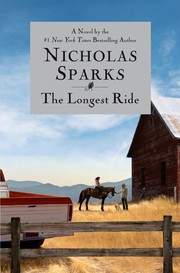
The Longest Ride
2,488-word summary 11 min read 398 pages in the book
- First published
- 2013
- Publisher
- Grand Central Publishing
- Pages
- 398
- ISBN
- 9781455520657
Reading options
What's inside (8 sections)
I came to The Longest Ride sideways. I had read a couple of Sparks books years ago and filed him in my head as the guy you read when you want to cry on a plane. A friend who grew up near Winston-Salem kept saying this one was different because of the art plot, and that hooked me more than the cowboy on the cover. The copy I am retelling is the Grand Central Publishing first edition from 2013, about 398 pages in print. I read it over four nights, mostly late, with a pencil stuck in the pages for the parts about the paintings. I expected a simple romance and got two love stories running side by side, one just starting and one looking back from the far end.
The shape helps to know going in. Sparks cuts between three voices. Old Ira Levinson speaks from inside a wrecked car in the snow. Sophia Danko narrates the present as a college senior. Luke Collins, the bull rider she falls for, gets his own chapters too. The young couple lives a few miles from where Ira is stuck, and you wait most of the book to see how those lines meet.
Snow and a passenger who cannot be there
Ira is ninety one when the book opens, in poor health and alone in the world. He has driven off the road on ice and slid down an embankment where nobody can see the car from the highway. The front is smashed into a tree. He is pinned and hurt in several places, cold settling in, and he knows that climbing out at his age would likely finish him. So he stays put and tries to stay awake.
What keeps him awake is Ruth.
Ruth was his wife for more than five decades and she died nine years earlier. Ira knows she cannot be in the passenger seat. He says so to himself plainly. Still he sees her there, blurry at first and then clearer, telling him to hang on, scolding him when his eyes close, asking him to remember with her. The device could feel cheap. For me it mostly worked because Sparks plays it as memory under stress rather than magic. Ira talks to Ruth to keep his brain lit. She answers with the stories they told each other for years.
Water is on the floor of the car. His glasses are lost. He is thirsty and shivering. He worries about bleeding. Drink the water or leave it. Try the horn or save strength. Ruth keeps pulling him back to their life together, Greensboro and the shop and the war years and the paintings, and each return to the past lets him rest without sleeping.
I liked this thread best. It is slow and confined, almost all in one seat. A very old man measuring a life while his body fails is a hard thing to write without turning solemn. Sparks keeps Ira wry and specific. He notices the cold in his fingers first. He argues with Ruth the way long married people argue, with fondness under the correction.
The girl from Jersey and the rider from King
A few miles away the tone changes completely. Sophia Danko is a senior at Wake Forest, studying art history, raised in New Jersey. She has just ended things with Brian, a fraternity boyfriend with money and charm and a habit of cheating. Her best friend Marcia has watched Sophia forgive him too often. Brian has not accepted the split. He follows Sophia around campus and Sophia is scared in the low level way that makes you change your routes.
Marcia drags her to a bull riding event for a weekend break. Sophia does not know the sport and does not care about it. Brian finds her there and starts a scene, loud and possessive, and a young rider steps in and cools it down without throwing punches. That rider is Luke Collins.
Luke lives with his mother Linda on a ranch outside King, North Carolina. He rides bulls for a living on the professional circuit, helps keep the family place afloat with winnings and work, and carries himself like someone used to being looked past by college kids. He is polite to Sophia in a way that surprises her. He listens. He asks about her major and actually follows up. Sophia, who expected another frat boy in boots, finds herself talking to him long after the event ends.
Their early dates have an easy charm. He shows her the ranch, the barns and fences that always need repair, the horses, the plain house where his mother runs the books. She tells him about wanting work in New York after graduation. He tells her about riding, the travel, the entry fees, the way eight seconds can pay a month of feed bills or put you in the dirt. Sophia is headed toward galleries and city rent. Luke is tied to land and animals and a body that takes hits for pay.
One small scene stayed with me. Sophia watches Luke with a nervous horse and sees patience she did not associate with a sport built on risk. He does not grab or shout. He waits, hand open, until the animal comes to him. It tells you more about how he will love than any speech could, and Sparks is smart enough to leave it there.
A comeback with a hidden cost
The trouble arrives the way it usually does in these books, as a secret kept too long.
Luke was once near the top of his sport. Then came a bad wreck and a head injury that put him in a coma for days and left doctors telling him to quit for good. He did quit for a while. Now he is trying to come back, chasing points toward a big final in Las Vegas, telling himself one more season will secure the ranch and prove he is still who he was. He does not tell Sophia how bad the first injury was. He lets her think riding is dangerous in the normal way, not dangerous in the specific way his own scans say it is for him.
Sophia has her own pressure. She lands a chance at real work in the New York art world, with an interview that goes well enough to make the future feel close. Marcia warns her that Luke and New York point in opposite directions. Luke says he will not hold her back, and means it in the moment, and still goes back on the road because the season clock is running.
Sparks adds a rival rider and a feared bull named Rango to sharpen the sports plot. Luke draws tough stock and hides the extent of his hurts. Sophia finds out from someone else how close he came to dying the first time, and the betrayal stings more than the risk itself. I believed her anger here.
They split for a stretch, and the pages without them together sag a little. Sophia preps for New York. Luke rides hurt. His mother watches with the flat expression of a woman who has already buried a husband and does not want to bury a son.
Greensboro, the war, and six paintings that became a thousand
Ira and Ruth carry the second half of the book, and theirs is the richer story.
They met young in Greensboro through family circles. Ruth had come from Vienna with her parents just before the war, fleeing what Hitler was building. Ira grew up over his parents haberdashery, a local boy with steady habits. Their courtship was slow, proper, full of walks and family dinners. Then the United States entered World War Two and Ira enlisted in the Army Air Corps. What happened to him overseas left him unable to father children, a fact he carried home like a debt. He tried to break their engagement over it, telling Ruth she should find a man who could give her the big family she wanted. Ruth refused him. She married him anyway.
That choice shapes everything after. They tried to adopt and were turned down. Ruth taught elementary school and poured herself into a thin, hungry boy in her class who lived in neglect. She and Ira wanted to take him in and were denied by the courts. The loss nearly broke the marriage. Ruth left for a time. Ira waited and they found their way back, not with a grand gesture but with daily repair.
The art thread starts on their honeymoon, of all places. Passing near Black Mountain College, the small experimental school in the North Carolina mountains, they stopped at a student exhibition. Ira bought six small works to please Ruth. That purchase became a habit and then a collection. Over decades they bought what they loved and could afford before the names got huge, focusing on American modern work. By the end they owned more than a thousand pieces, including work by people like Jackson Pollock and Andy Warhol and Jasper Johns. They were not rich people playing rich games. They were a shopkeeper son and a teacher buying on instinct.
After Ruth died Ira put most of it in storage because seeing it without her hurt too much. He kept one crude portrait of Ruth on the wall, painted years later by that once hungry schoolboy, now grown, who sent his wife to Ira's door with the gift as thanks. That detail got me.
Ira tells all this to the Ruth in the passenger seat while the snow keeps falling. She corrects dates. She teases him about stubbornness. The chapters move between tenderness and plain facts about money and health and houses. I believed in this marriage more than any other in Sparks I have read. They desired each other, disappointed each other, stayed.
How a wreck by the road finds two kids in love
Sparks does not keep the two stories apart forever. Sophia and Luke come across Ira car down the slope and flag help that leads to him. What matters is that the young couple sits with Ira in the hospital afterward, and that Ira, childless and widowed, takes to them fast.
Sophia, the art history major, is the one who grasps what Ira owns. Ira, amused, lets her talk about Pollock and Warhol and what Black Mountain meant. Luke respects the art without pretending to love it, which Sophia finds honest rather than lacking. The hospital scenes give the young couple a mirror. Here is what staying looks like over fifty years.
Ira does not recover for long. His body was already failing before the crash. He dies with his affairs in order. The surprise is in the will. He directs that the collection be sold at auction, with one condition tied to that crude portrait of Ruth. Whoever buys the portrait receives the entire collection as a gift under the will.
The auction scene is pure Sparks engineering, and I mean that as both praise and complaint. The room fills with dealers and press. The portrait opens low and stalls. Luke, late and dusty from the road, bids from the back and wins it for a small sum as a gesture for Sophia. Then the lawyer reads the condition and the room erupts. The kid who bought the least valuable thing in the catalog now holds the whole treasure.
With the proceeds Sophia can open the gallery she dreamed about and Luke can save the ranch without riding until his brain gives out. Luke does ride once more in a big showdown with Rango, staying on the full eight seconds, but the book lets him walk away after. Sophia chooses work that keeps her near him rather than the New York job. They marry in the frame the novel gives at the end.
What earns its feeling and what feels arranged
I want to give credit where the book earns it. The dual structure works better here than in some Sparks novels because the two romances comment on each other without copying each other. Ira and Ruth show endurance. Sophia and Luke show beginning. The art gives both stories a spine beyond kissing and quarrels. Black Mountain College is real, strange history, and Sparks clearly fell for it during research. I did too. I looked up three painters after finishing.
The North Carolina texture helps. Ranch fences that need mending before rain, hospital waiting rooms with bad coffee, auction rooms with paddles going up. Luke's mother Linda is drawn with care, a practical widow who loves her son and fears his sport. Brian is thin, the rich cheating ex who will not let go, but he serves his purpose in two scenes and then mostly exits.
Now the complaints, because there are real ones. The auction bequest strains belief even inside a romance. A will that hands a collection worth many millions to whoever buys one low value lot would face challenges that the book waves past. It solves two problems at once, money for the gallery and money for the ranch, and lets Luke quit riding without the couple making the harder choice between New York and King.
Luke secret also frustrated me in the middle. Hiding a coma level injury from a partner you claim to love is serious, and the book treats it as a mistake to forgive rather than a pattern to weigh. Sophia forgives fast because the plot needs them together for the rescue and the auction. I wanted one more hard conversation about what that lie would mean in a marriage.
Pacing dips around the separation. Sophia mopes through New York prep. Luke mopes through motel rooms. The rival rider material reads like filler before Rango. And if you have read Sparks widely, beats will feel familiar. Storm or snow as trial. Letter or will as message from beyond. Young woman torn between safe money and risky love.
Still I would press this one into a friend's hands before several other Sparks titles. The reason is Ira. His voice is wry, grateful, unshowy, and his chapters hold the book upright when the young romance wobbles. The image that stays with me is not the bull or the auction paddle. It is an old man in a cold car, talking to the wife he lost, trying to stay awake by naming paintings they bought when they were young.
If you pick it up, read it for Ruth as much as for Sophia. Notice how Ruth chooses Ira knowing what marriage will lack, and how that choice echoes when Sophia must choose between a job in a far city and a man on a ranch. The rhyme is plain and Sparks does not hide it. I did not mind being led by the hand here, because the hand was warm.
FAQ
When was The Longest Ride published?
Grand Central Publishing published it on September 17, 2013. The first edition hardcover runs 398 pages with ISBN 9781455520657.
Who are Ira, Ruth, Sophia, and Luke?
Ira is a 91 year old widower who pictures late wife Ruth beside him after a crash. Sophia is a Wake Forest art history senior who falls for bull rider Luke Collins.
Is The Longest Ride part of a series?
No. It is a standalone novel with two linked love stories, and the 2015 film stars Britt Robertson, Scott Eastwood, and Alan Alda.
Similar books
The Switch
A burned-out consultant and her 79-year-old grandmother swap London and Yorkshire homes for two months, facing grief, dating apps, and village politics.
2,782-word summary · 12 min read
The Girl You Left Behind
Two women a century apart fight for what they love, joined by a portrait painted in wartime France and claimed in modern London.
2,613-word summary · 12 min read
Things We Left Behind
Lucian Rollins returns to Knockemout to bury his father's past and collides with librarian Sloane Walton.
2,777-word summary · 12 min read
Part of Your World
ER doctor Alexis Montgomery falls for carpenter Daniel Grant in Wakan while her surgeon family presses duty.
3,078-word summary · 14 min read
Just for the Summer
Emma and Justin date to break a matching curse, then face sudden guardianship and illness on Lake Minnetonka.
3,090-word summary · 14 min read
Things We Never Got Over
Naomi runs from her wedding to help her twin in Knockemout and clashes with Knox Morgan.
3,358-word summary · 15 min read

At First Sight
Jeremy and Lexie are married and expecting a baby when anonymous emails tell him the child may not be his.
2,317-word summary · 10 min read
Every Breath
Two strangers share one week at Sunset Beach in 1990, part for duty, and reunite decades later at the mailbox that started it all.
2,357-word summary · 10 min read
The Wish
A dying photographer recalls 1996 Ocracoke first love and an adoption choice.
2,176-word summary · 10 min read
The Wedding
Wilson Lewis courts his own wife again with Noah's help as daughter Anna plans her wedding.
2,076-word summary · 9 min read
A Bend in the Road
Widowed sheriff Miles loves teacher Sarah while her family's secret touches his wife's death.
2,182-word summary · 10 min read
The Choice
A settled Beaufort veterinarian falls for his taken neighbor, then faces an impossible hospital decision eleven years later.
2,150-word summary · 10 min read
The Rescue
Volunteer fireman Taylor finds a crashed mother and son in a storm, then falls for them both.
1,939-word summary · 9 min read
Message in a Bottle
A divorced mother finds a grieving widower's letter and seeks him in North Carolina.
2,113-word summary · 9 min read
Safe Haven
Katie hides in Southport from a violent husband and falls for widower Alex.
2,480-word summary · 11 min read
The Last Song
Angry teen Ronnie spends a summer in Wilmington with her pianist father, finding first love, family repair, and loss.
2,761-word summary · 12 min read
Dear John
A soldier and a student trade letters through war until duty and waiting pull them apart.
2,138-word summary · 10 min read

What Happened to Goodbye
Mclean has reinvented herself in four towns since her parents divorced. In Lakeview she uses her real name, and for the first time staying put becomes a choice.
2,796-word summary · 12 min read

Sam's Letters to Jennifer
A grieving journalist reads her grandmother's letters and finds a decades-long love affair that changes how she sees her family.
2,310-word summary · 10 min read

Act Your Age, Eve Brown
Eve Brown crashes into a Lake District bed and breakfast, breaks the owner's arm, and talks her way into his kitchen. A grumpy-sunshine romance about work,…
2,474-word summary · 11 min read
Between Sisters
Estranged sisters Meghann and Claire reunite in Washington when Claire announces a rushed wedding, then face their mother's desertion and a medical crisis.
2,467-word summary · 11 min read

Delilah Green Doesn't Care
Delilah returns to Bright Falls to photograph her stepsister's wedding and falls for Claire, a bookstore owner and single mother, while a cruel bet threatens…
2,315-word summary · 10 min read
How to Walk Away
Margaret Jacobsen has the job, the fiance, and the future mapped out, until a small-plane crash on Valentine's Day takes almost all of it in one afternoon.
2,012-word summary · 9 min read
Garden Spells
Two sisters reunite in their family home in Bascom, North Carolina, where an apple tree shows anyone who eats from it the biggest event of their life.
2,030-word summary · 9 min read
Dial A for Aunties
A wedding photographer accidentally kills her blind date, and her mother and three aunties help her hide the body during the biggest wedding of their careers.
2,076-word summary · 9 min read
True Colors
Three Grey sisters split over love and duty after their father judges them.
2,596-word summary · 12 min read
The Identicals
Twin sisters swap Nantucket and Martha Vineyard lives for a summer.
2,556-word summary · 11 min read
Heart of the Matter
Two Boston mothers collide after a burn injury puts a single mom in the orbit of another woman's surgeon husband.
2,585-word summary · 11 min read
Never Too Far
Blaire flees Rosemary Beach after Rush's lies, then must decide if his pursuit and Nan's exposed schemes earn trust again.
2,626-word summary · 12 min read
The Statistical Probability of Love at First Sight
Hadley misses a flight, meets Oliver to London, and faces her father wedding in one day.
2,002-word summary · 9 min read