
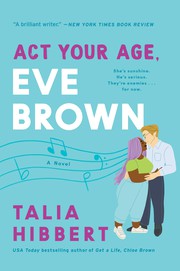
Act Your Age, Eve Brown
2,474-word summary 11 min read 400 pages in the book
- First published
- 2021
- Publisher
- Avon
- Pages
- 400
- ISBN
- 9780062941275
- Series
- The Brown Sisters (#3)
Reading options
What's inside (9 sections)
The meet-cute in this book is a car accident. A woman with purple hair reverses out of a parking space, knocks down the man who just turned her down for a job, and then has to work for him while his arm heals. I have read plenty of romance setups involving rainstorms and shared taxis. This one has the good sense to be embarrassing instead of cute, and it stays embarrassing for most of the book.
Talia Hibbert published it with Avon in 2021. It runs 400 pages and closes out the Brown Sisters series, which began with Chloe and continued with Dani. You do not need the first two to follow this one, though the family scenes land harder if you have met the sisters already.
The doves and the ultimatum
Eve Brown is twenty-six and has spent her adult life starting things. Performing arts college, law school, teaching, graphic design, wedding planning: each one began with real enthusiasm and ended with Eve leaving before anyone could formally call it a failure. Her parents have watched this pattern for years with a mixture of love, money, and exhaustion.
The breaking point is a wedding. Eve, hired to help run the event, decides the doves need to be liberated. It is a disaster with feathers. Her parents, Joy and Martin, sit her down and deliver an ultimatum: the trust fund stops, she has three months to move out, and she needs to hold a job for a full year. They even have positions ready for her at their own companies, which is the detail that stings. The help is real, and so is the assumption that she cannot manage without it.
Eve refuses the offers, cries in the driveway, and drives away with no plan. Hibbert is good at this kind of scene. The parents are not monsters. They are tired people who have confused control with care, and Eve is not a helpless child, though she has learned to let them think so when it suits her.
There is a version of this opening that would make Eve a martyr. Hibbert avoids it by letting her be genuinely difficult. She is funny, warm, and quick to help a stranger, and she is also used to being forgiven before she has to change. The trust fund is not the only thing keeping her afloat. Charm has been doing a lot of the work, and the novel is honest about how far charm can carry a person before it stops being enough.
A sign outside a bed and breakfast
She ends up in the Lake District, in a village called Skybriar, which Hibbert writes as the kind of place where the hedges look arranged and the tea is always hot. Eve spots a hand-lettered sign at Castell Cottage, a bed and breakfast advertising interviews for a chef. She has no interview clothes, no CV, and no particular reason to think she will get the job. She walks in anyway.
Jacob Wayne owns the place. He is precise, blunt, and autistic, and he has spent the past week rejecting candidates who cannot follow basic instructions. His friend Montrose, who runs the local pub and calls him out on his nonsense, sits in on the interviews. Jacob takes one look at Eve's purple hair and chaotic energy and tells her no. Mont thinks she is the best option they have.
Then Eve reverses into Jacob in the car park. He goes down, his arm breaks, and Mont drives him to the hospital. Eve, drowning in guilt, stays to help. Mont hires her on the spot and hands her Jacob's seven handwritten staff handbooks, which is either a joke or a cry for help. The Gingerbread Festival is four weeks away, Jacob has already booked a stall, and without a chef the B&B loses its best chance at the season.
That is the engine: a woman who cannot commit to anything is suddenly responsible for a business she has already damaged, owned by a man who trusts spreadsheets more than people. The setup is a farce, but the stakes are small and real. If Eve walks away, a man with a broken arm loses his season. If she stays, she has to be competent in front of the one person who has already decided she cannot be.
Jacob's introduction could easily slide into a type. The rigid, rude man who needs a sunny woman to loosen him up is one of the oldest figures in romance. Hibbert gives him enough specific texture to push past the type. The handbooks are the texture: seven volumes of instructions for the kitchen, the rooms, and the way guests should be greeted. He has a reason for every rule, and the book lets the reasons arrive slowly instead of dumping them in a speech.
The handbooks
The early kitchen chapters are my favorite part of the novel. Eve reads all seven handbooks in two days. She follows them with a seriousness that surprises Jacob and, frankly, surprises her. She charms the guests, keeps the breakfast service running, and discovers that competence feels different when someone is watching and the stakes are small enough to survive.
Jacob comes downstairs expecting chaos and finds order. He offers her a trial, and because his dominant hand is in a cast, she ends up feeding him. Her fingertips brush his lips. Neither of them says anything useful about it.
Hibbert writes attraction as a disturbance in routine. Jacob notices that Eve hums while she works. Eve notices that Jacob relaxes, a little, when the food is good. The book takes its time with these small observations, which makes the later heat feel earned rather than dropped in. It also helps that the food writing is specific. Eve cooks for the person in front of her, adjusting as she goes, and that is the first honest language the two of them share.
It makes the middle chapters work better than they might. A lesser version of this novel would have Eve magically transformed by love into a tidy person. Here she is still late, still loud, still inclined to solve problems with improvisation. She just has a reason to stay.
The heat is explicit, and it is worth saying plainly for anyone deciding whether to pick the book up. The love scenes are frank about desire and bodies, and they do character work rather than interrupting the plot. Readers who want a closed-door romance should look elsewhere. Readers who like their comedy with a sharp erotic edge will be well served.
Two childhoods
The first real crack in Jacob's composure comes during an argument by his pond. Eve falls in. He jumps in after her with a broken arm, which is reckless and also the most romantic thing he does in the first half of the book. Back inside, wet and shivering, he tells her about his parents.
They were drifters. They neglected him, then left him on his aunt Lucy Castell's doorstep when he was ten. Lucy raised him and gave him the B&B, and he has spent his adult life making the place so orderly that no one can leave it in a mess. His need for control is not a quirk. It is a survival strategy that outlived the emergency.
Eve's childhood was the opposite: too much attention, too much money, too many people deciding what she needed. Hibbert lets the contrast sit without turning it into a competition. Jacob was abandoned by people who should have stayed. Eve was smothered by people who never left. Both of them have trouble believing that love can be steady and still let a person breathe.
The autism material is handled with more care than romance novels usually manage. Jacob explains stimming briefly and then drops the subject. Eve does not make it a project. She watches, asks a question or two, and then minds her own business, which is its own kind of respect.
At a festival committee meeting, a man calls Jacob "Spock." It is a coded jab, the kind that sounds like a joke and works like a door closing. Eve makes him explain it out loud, in front of everyone, until the insult has nowhere to hide. The scene is satisfying without being a lecture. It also shows what Eve is good at: she is fearless in other people's defense and terrible at her own.
That asymmetry is one of the book's best ideas. Eve can see Jacob's worth clearly and cannot see her own. She can tell when a room is being unfair to him and cannot tell when her family is being unfair to her. The romance works because each of them becomes a witness for the other, not because one of them fixes the other.
The friendship date
Eve's loneliness gets its own chapter, which I did not expect. She misses her sisters. She misses having people who know her. So she organizes a "friendship date" with Jacob: pillows on the floor, snacks, a shared music queue, no pressure to be charming.
It goes well until it goes honest. Eve admits that she once wanted to perform and was told she was too fat and too dark for the stage. The rejection broke something, and she has been breaking things ever since, as if she could get there first. Jacob tells her that the dream broke and she has been blaming herself every time the sharp pieces cut her.
Then the scene turns. Jacob finds her vibrator in the sofa cushions, and the encounter that follows is explicit, focused, and immediately complicated by his fear of being left. He pulls back, frames it as a one-time thing, and starts looking for reasons Eve should move out. It is a familiar romance pattern, but it is rooted in his history rather than in plot convenience.
Eve is furious, and rightly so. He made a decision about her without asking her. When he apologizes, he does it badly and then better. He tells her she makes him smile every day. He stops looking at flats.
The apology matters because the book does not pretend it solves anything. Jacob still expects to be abandoned. Eve still expects to be tolerated rather than chosen. They are two people with evidence for their worst beliefs, trying to act as if the evidence might be wrong. That is a more interesting place for a romance to live than simple misunderstanding.
The thing she has not said
The novel's biggest secret is not a secret to the reader. Eve has been offered paid event-planning work starting in September. She has not told Jacob or her parents. She keeps meaning to. She keeps not doing it.
Her family shows up at the B&B unannounced after tracking her phone, having heard a voice note she never meant to send. In the chaos, her father mentions the September contract. Jacob hears it for the first time. His old wound opens, and he says the worst thing he can think of: he does not need her and never has.
Eve leaves with her family. Jacob spends a sleepless night, then finds an AirPod in his desk drawer with a sticky note signed "XOXO Sunshine." It is a small, silly object, and it breaks him open. He realizes he has been waiting for Eve to leave since the day they met, and that his certainty about her was never about her at all.
At home, Eve finally fights her family on adult terms. She admits she has been immature. She also tells them that caring for people is the work she wants, that she is good at it, and that she will not apologize for choosing it. Her parents, to their credit, listen. They apologize. It is a faster reconciliation than the years of habit would suggest, but it gives Eve the ground she needs.
She drives to find Jacob. He is already driving to find her. They meet on a narrow country road, which is contrived and also exactly right for these two people who keep colliding in vehicles. He picks roadside daisies. She drops them, grabs him, and kisses him.
What the ending earns
The epilogue takes place a year later at the second Gingerbread Festival. Eve's whole family is there. Jacob gives her a name tag that says MANAGER, which is his way of saying he wants her to stay forever. He asks whether she would say yes to a hypothetical proposal. She says yes. Her grandmother takes a photo.
It is a soft ending, and I was glad of it. The book has been careful enough with both characters that softness feels like a reward rather than a cheat.
The criticism is worth stating plainly. Publishers Weekly called the romance half-baked, and I understand the complaint. Eve's refusal to accept consequences can be grating, especially in the middle stretch where she keeps making messes and letting other people clean them up. The third-act separation depends on a conversation she could have had at any point. At 400 pages, the novel has room for a few scenes that repeat an emotional beat rather than advance it.
The bigger issue is that the book wants to be about two kinds of neurodivergence and a family system and a business rescue, and it does not always give each thread the space it needs. Eve's realization that she is probably autistic arrives late and is handled quickly. It is a meaningful moment, but it lands closer to a plot point than a transformation.
What holds up is the comedy, the kitchen, and the way Hibbert writes two people who are attracted to each other's competence before they are attracted to each other's bodies. The Lake District setting is a postcard, but the B&B feels lived in. The handbooks are funny because they are absurd and because Jacob needed them. The daisies are funny because they are the least planned thing he has ever done.
I finished the book wanting to read the other two, which is the correct response to the last volume of a series. It also made me think about how often romance novels treat a diagnosis as a destination. Here it is one more thing Eve has to make room for, along with a man, a job, and a family that has to learn to let her go.
Not everything in that list gets equal time. The book is generous with Eve and Jacob and a little stingy with the people around them. Still, the central pair is worth the pages. They are funny together, they are honest together, and when they finally choose each other, they do it with their eyes open.
FAQ
Do I need to read the first two Brown Sisters books first?
No. Act Your Age, Eve Brown stands alone, though Chloe and Dani appear and the family scenes land harder if you have read their books.
Is Act Your Age, Eve Brown spicy?
Yes. It has several explicit sex scenes and a frank approach to desire, so readers looking for a low-heat romance should choose something else.
Is Eve autistic?
The novel strongly implies that Eve is autistic. She reaches that conclusion herself after learning about autism from Jacob and researching it.
Similar books
More from The Brown Sisters first, then related titles.
Get a Life, Chloe Brown
A chronically ill woman recruits her gruff handyman neighbor to help her finish a bold Get a Life list.
2,147-word summary · 10 min read
Take a Hint, Dani Brown
A viral rescue video turns a PhD student and a grumpy security guard into internet couple goals, and the fake relationship they build to keep the attention…
2,005-word summary · 9 min read

At First Sight
Jeremy and Lexie are married and expecting a baby when anonymous emails tell him the child may not be his.
2,317-word summary · 10 min read

2 States: The Story of My Marriage
A Punjabi boy from Delhi and a Tamil Brahmin girl from Chennai meet at IIM Ahmedabad, and turn a love marriage into a campaign to convince two families.
2,634-word summary · 12 min read
Delilah Green Doesn't Care
Delilah returns to Bright Falls to photograph her stepsister's wedding and falls for Claire, a bookstore owner and single mother, while a cruel bet threatens…
2,315-word summary · 10 min read
Secretly Yours
A bubbly Napa gardener sends anonymous love letters to her grumpy professor neighbor in this steamy small-town rom-com.
2,504-word summary · 11 min read
My Killer Vacation
A teacher and a bounty hunter share a Cape Cod rental with a corpse and a growing attraction.
2,625-word summary · 12 min read
Mr. Wrong Number
After a fire and a wrong-number text, Olivia falls for a stranger who is closer than she thinks in this funny Omaha rom com.
2,248-word summary · 10 min read
The Kiss Quotient
Stella Lane hires escort Michael Phan to practice dating and learns logic fails where touch and family press in.
2,716-word summary · 12 min read
Austenland
A New York graphic designer obsessed with Mr. Darcy inherits a trip to a Jane Austen theme park, where the fantasy of Regency romance collides with the men…
2,030-word summary · 9 min read
The Bookshop on the Corner
A Birmingham librarian loses her job, buys a van, and moves to the Scottish Highlands to run a mobile bookshop. Warm and bookish, with uneven pacing.
2,557-word summary · 11 min read
Ricochet
Lily Calloway tries to stay celibate for ninety days while Loren is in rehab, leaning on Rose, Connor, and Ryke as therapy forces her to face her childhood.
2,575-word summary · 11 min read
Under Locke
Iris Taylor moves to Austin broke and wary, takes a front-desk job at a tattoo shop, and spends the book learning that Dex Locke’s blunt cruelty and unexpected…
2,591-word summary · 12 min read
The Ex Talk
Two rival public radio producers pretend to be exes for a dating show, then fall for each other while the lie grows.
2,389-word summary · 11 min read
Bet Me
A sharp actuary agrees to dinner with a charming serial bettor, then spends the next month pretending the wager does not matter.
2,710-word summary · 12 min read

Two by Two
Sparks's twentieth novel turns from first love to a marriage breaking up: Russell Green loses his wife and his job, then rebuilds his life around his…
2,192-word summary · 10 min read
This Time Next Year
Two women give birth minutes apart on New Year's Day 1990, and one takes the other's lucky name. Thirty years on, their children meet again.
2,194-word summary · 10 min read

Indigo Ridge
A new police chief in a Montana town meets the founding family's eldest son in a bar, and one night later a body turns up under their cliff.
2,763-word summary · 12 min read
True Believer
Jeremy Marsh, a science journalist who debunks paranormal claims, comes to a small North Carolina town and falls for a librarian who believes in things he…
2,125-word summary · 9 min read

Juniper Hill
Fleeing New York with her baby, Memphis takes a housekeeping job above Knox Eden's garage, and the grumpy chef becomes the first person she can rely on.
2,021-word summary · 9 min read
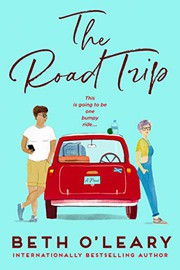
The Road Trip
Two exes squeeze into one small car for the drive to a Scottish wedding, with four years of history and one photograph between them.
2,418-word summary · 11 min read
My Favorite Half-Night Stand
Millie, a criminology professor who has always been one of the guys, invents a secret dating profile and matches with her best friend Reid.
2,362-word summary · 10 min read
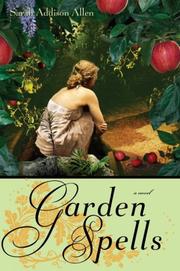
Garden Spells
Two sisters reunite in their family home in Bascom, North Carolina, where an apple tree shows anyone who eats from it the biggest event of their life.
2,030-word summary · 9 min read
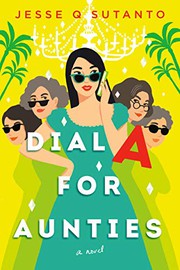
Dial A for Aunties
A wedding photographer accidentally kills her blind date, and her mother and three aunties help her hide the body during the biggest wedding of their careers.
2,076-word summary · 9 min read
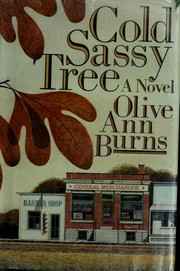
Cold Sassy Tree
In 1906 Georgia, fourteen-year-old Will Tweedy watches his widowed grandfather marry a much younger woman three weeks after his grandmother's funeral.
2,154-word summary · 10 min read
The Marriage Bargain
A bookstore owner marries a billionaire friend's brother for a year to save home and company.
2,092-word summary · 9 min read
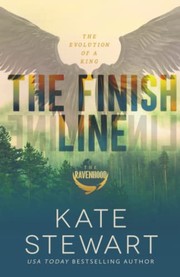
The Finish Line
Tobias King seeks forgiveness from Cecelia as the Ravenhood past closes in.
2,868-word summary · 13 min read

Lovelight Farms
Stella fakes dating Luka to save her Christmas tree farm.
2,584-word summary · 11 min read

The Simple Wild
City Calla flies to Alaska to face dying father and gruff pilot Jonah, learning bush life and love.
2,284-word summary · 10 min read
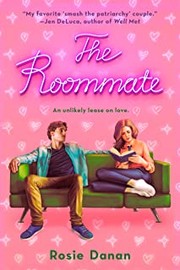
The Roommate
Uptight Clara shares a flat with porn star Josh and teams up to build ethical adult films for women.
2,362-word summary · 10 min read