
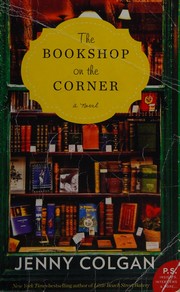
The Bookshop on the Corner
2,557-word summary 11 min read 332 pages in the book
- First published
- 2016
- Publisher
- William Morrow Paperbacks
- Pages
- 332
- ISBN
- 9780062467256
- Series
- Kirrinfief (#1)
Reading options
What's inside (8 sections)
The first thing I did after finishing this novel was look up train times to the Scottish Highlands, which tells you how convincing Jenny Colgan makes the place feel. I had expected a light book about a woman and a van full of paperbacks. I got that, plus a lambing scene that made me put the book down and stare at the wall. The novel came out in the United States in 2016 from William Morrow, 332 pages, and it is the first in the Kirrinfief series. In the UK it had appeared earlier that year as The Little Shop of Happy Ever After from Sphere, which is why used copies turn up under two titles.
Nina Redmond is twenty-nine and works in a branch library in Birmingham. Her gift is matching a person to a book, watching someone circle a shelf and then handing them the exact thing they did not know they wanted. When the branch is marked for closure, her manager Cathy Neeson delivers the news in the language of restructuring, and the replacement is described as a multimedia experience zone. Nina listens with the expression of someone watching a house burn.
Her colleague Griffin compares the book disposal to book burning, which is both funny and a little true. Nina responds by taking the books home. She fills her car, then her hallway, then the stairs of the flat she shares with Surinder. Surinder says the things Nina avoids saying to herself, and she points out that the floor is not designed to hold a second library. Neither of them is wrong. Nina is grieving. Surinder is trying to keep the ceiling attached.
A course, a van, and a very long bus ride
The job centre sends Nina to a team building course for displaced library staff. The instructor is a relentlessly positive man named Mungo, and under his questioning Nina admits, out loud, that she has always wanted to own a bookshop. Mungo suggests a mobile shop instead, a van that travels to readers rather than waiting for them to come to a building with rent and rates and a leaking roof.
That night she finds an advertisement for a vintage van in Kirrinfief, a village in the Scottish Highlands. She ignores it for a while, helps Griffin polish his application for the new library hub, and sits through a pre-interview with Cathy that makes clear she is not being encouraged. Then she uses her holiday days and takes a bus north.
Kirrinfief is tiny, dark by the time she arrives, and the pub, the Rob Roy, is the only place open. The landlord, Alasdair McRae, feeds her and gives her a room. Two locals, Edwin and Hugh, take her to see the van, which is much larger than the photograph suggested. The owner is a farmer called Wullie Findhorn, and he does not think a woman from Birmingham should be driving a vehicle that size. He agrees to a test drive mostly to prove his point.
Nina drives it and something in her settles. When she goes back to Birmingham and bombs the interview, Alasdair calls with news that the pub regulars have bought the van from Wullie themselves. They think she is staying. She accepts it, plans to drive home, and then discovers that Birmingham council will not give her a permit to park something that size outside her flat.
So she sets off south at night, tired and upset, and a deer steps into the road. She swerves, stalls on a railway crossing, and sees a freight train coming. The train stops inches from the van. The driver is a man called Jim, and the engineer who climbs down is Marek, a Latvian who speaks careful English and looks at the van with open delight. He helps her move it clear and offers her a ride back to Birmingham in the locomotive. They talk about books for most of the journey.
The barn, the lamb, and the village
Surinder's flat finally gives up. During another argument about the books, a pile on the stairs shifts, the banister takes a knock, and a crack opens in the ceiling. Nina takes it as a sign, sells her car, and moves to Scotland. She rents a converted barn on a farm owned by Lennox, a tall farmer in the middle of a divorce. Their first meeting goes badly. He assumes she is lost. She assumes he is rude. While they talk, her van rolls down the hill, and he sprints after it and yanks the handbrake before it reaches the road. Then he tells her that reading is a waste of time.
He is wrong about the reading, but right about the handbrake. Nina moves into the barn anyway, because the light inside it is extraordinary and the rent is low enough to be suspicious. The farm comes with a dog called Parsley and a lot of weather.
The village is where the book loosens up. Lesley runs the grocer's shop and delivers news faster than any phone. Moira wants children's books. An older woman mourns the library that closed years ago. Nina parks in the square and sells to people who have not had a bookshop within walking distance for years. The first day is not a triumph of business planning. It is a series of conversations, and by the end she has customers and a reason to get up.
The best early scene is the lambing. Lennox knocks on her door at night because a ewe is struggling and his hands are too big for the job. Nina has to reach inside the animal and turn a lamb whose legs are tangled. She is terrified, and Colgan does not pretend otherwise. She also does it. Two lambs come out alive. Afterwards Lennox gives her a hot toddy and she falls asleep by his fire, and in the morning there are fresh eggs on the table. It changes their relationship. He has seen her do something difficult. She has seen him be gentle with something small.
Then there is the Young Farmers' dance. Nina goes with Surinder, who is visiting, and spends most of the night being taught the steps by a cheerful farmer called Archie. Lennox mostly ignores her, until one dance puts them together and he spins her hard and lets go. The hall is full of people who have known each other since school, and Nina is the outsider slowly being let in. It is loud and a bit ridiculous.
The shop gets a name and a route
Surinder paints the van's new name on the side: The Little Shop of Happy Ever After. Nina starts running routes to markets and outlying farms, and the shop becomes a fixture faster than seems plausible. Colgan is not interested in the paperwork of running a business, and anyone hoping for a realistic account of cash flow, insurance, or diesel costs will be disappointed. What she is interested in is the moment a reader finds a book.
Nina is very good at that moment. She puts the right book into the hands of a new mother who has not slept. She finds old fashioned stories for an elderly woman tired of modern fiction. She reads aloud to children in the back of the van, and the noise is unbearable and happy. This is where the novel feels most like the author's own pleasure.
Ainslee appears at the market before she ever speaks. She is a teenager who hovers near the shelves and refuses every invitation to browse. Eventually she admits she has no books at home. Nina offers her a job tidying the van in exchange for books, and Ainslee turns out to be a natural organizer. She takes a graphic novel called Fore Girl as her first payment and hides it carefully, which tells Nina something without saying it.
Ainslee has a younger brother, Ben, who is often out of school and always hungry. Their mother is in bed with multiple sclerosis, and the house is falling apart around them. Ainslee is doing the work of an adult and failing her exams because of it. Nina sees all of this and does the thing that is both kind and intrusive: she cleans the house with Ainslee and Ben, finds unopened benefit letters, and calls social services. Ainslee is furious at first, and the anger is believable. Being rescued is not comfortable when you have spent years holding everything together.
The tree by the railway
The romance with Marek runs on letters. He and Jim leave books and notes in a tree near the crossing, and Nina leaves shortbread and replies. He sends Russian poetry. The correspondence is the most romantic thing in the novel, partly because it is so impractical. They have met twice, and neither of them seems to mind.
Surinder is suspicious from the start. She thinks Nina is in love with the idea of Marek rather than the man, and she says so. Nina ignores her, which is what people do.
The midnight meeting is set up like a scene from a film. Marek stops the freight train at the crossing, Nina climbs into the cab, and they have a picnic and a first kiss while the engine idles. Then Lennox arrives with an injured lamb bleeding on the passenger seat, furious that a train is blocking the road. The timing is comic and brutal at once. Marek asks Nina to come with him. She says no. Lennox drives her home and tells her that men who work far from home often have families there.
He is right. In Birmingham, at a book auction, Marek shows Nina a photograph of his girlfriend Bronia and their son Aras. He does not pretend it is nothing. Nina ends it, tells him to go home to his family, and asks him to stop the book deliveries. The scene is short and quiet, and it hurts more than the dramatic picnic did. Later she learns that Marek lost his job over the deliveries and left the country. Lennox, without telling her, had asked his lawyer to look into the case.
Midsummer, Kate, and the farm
The middle stretch has a lot of village business. There is a midsummer festival where Lesley lends Nina a dress and the aurora appears above the dancing. Lennox touches her hand and Nina pulls away, because she has just been humiliated by Marek and does not trust her own judgment. Then there is the offer to move the shop to Orkney, which hangs over the last third as a way out.
Lennox's divorce drives the final act. His wife Kate wants the farm sold and the money split, which would leave Nina without a barn and Lennox without the land he has worked his whole life. Kate arrives in the middle of a fragile reconciliation, and she is exactly as unpleasant as Nina feared. Then something better happens. She steps into the book van, sees a copy of Up on the Rooftops, a children's book she loved, and softens. Nina uses that moment to suggest a solution: Kate takes the converted barn as her settlement instead of forcing the sale. Kate agrees. Then she destroys Nina's last copy of the book on her way out.
That detail is the best thing in the final third. It gives Kate a real wound and a real cruelty in the same scene, and it refuses to make her a simple villain. It also means Nina loses her home while saving Lennox's farm, which is more interesting than a tidy compromise.
The ending is rushed, and I will come back to that. But the pieces are right. Lennox has to cut down a diseased tree by the railway, the one where Nina and Marek left their notes, and he discovers that locals have been hanging books in it. He and Nina finally say what they mean. He tells her a new tree will be planted and asks her to move into the farmhouse. The last chapter is set in winter. Nina is living with him, the shop is busy, Ainslee has passed her exams, and Surinder is thinking about buying the barn and staying in Scotland herself. Lennox gives Nina a pristine copy of Up on the Rooftops, and she reads it to him by the fire.
What works and what drags
The book is at its best when it is about putting books into hands. Colgan writes readers well. She writes the shy ones and the ones who pretend they are just browsing. Nina's talent is a form of attention, and the novel makes that convincing. The Highland setting is more than scenery too. Weather and distance matter. The lambing, the dance, the drive to the market, the train crossing at night, all of it gives the romance a place to happen.
The criticism I keep coming back to is the pacing. The first hundred pages are weighed down with logistics: the closure, the course, the bus trip, the parking permit, the interview, the boxes. The novel takes a long time to get Nina into the van. The last hundred pages have the opposite problem. The relationship with Lennox goes from irritation to bed in a very short space, and the emotional work is skipped. I believed the lambing scene. I did not entirely believe the kiss.
Marek is the more vivid romance because he is given time and mystery. Lennox gets a divorce, a dog, and a frown. He improves, but the book never quite earns the turn from rude man who says reading is pointless to man Nina cannot live without. Readers who dislike the grumpy landlord trope will find him thin, and readers who dislike love triangles will find the Marek section frustrating.
There is also a fairness problem in how the novel handles Ainslee's family. Nina calls social services, the house gets cleaned, the community repairs it, and the mother becomes a background figure. Real social care does not arrive that fast, and the book knows it but does not want to sit in the difficulty. The same is true of the shop's finances. Nina worries about money, then the shop succeeds, and the worry evaporates. It is a fairy tale with diesel in it.
None of this ruined the book for me. I read it in three sittings, and the third was mostly because I wanted to know whether Ainslee would be all right. That is a real hold, even if it is not the hold the cover promises. The novel is sweet and funny in places, and genuinely moved by the idea that a book can be the right thing at the right time. If you want a realistic novel about small business failure or a romance with slow, earned heat, this is not it. If you want a woman who bets her severance pay on a van and a village that decides to keep her, it does what it says on the side of the bus. The UK title is the more honest one. Happy ever after is not a place Nina arrives at. It is a name she paints on a vehicle and then has to live up to.
FAQ
Is The Bookshop on the Corner the same book as The Little Shop of Happy Ever After?
Yes. It was first published in the UK in 2016 as The Little Shop of Happy Ever After by Sphere, and the US edition from William Morrow appeared later that year under the new title.
What is the first book in the Kirrinfief series?
The Bookshop on the Corner is book one in Jenny Colgan's Kirrinfief series, which follows Nina Redmond and the Scottish village she moves to.
Does The Bookshop on the Corner have a love triangle?
Yes. Nina corresponds with Marek, the Latvian train engineer, while growing closer to her grumpy landlord Lennox, and the two relationships pull the middle and final sections in different directions.
Similar books
More from Kirrinfief first, then related titles.

Act Your Age, Eve Brown
Eve Brown crashes into a Lake District bed and breakfast, breaks the owner's arm, and talks her way into his kitchen. A grumpy-sunshine romance about work,…
2,474-word summary · 11 min read

Indigo Ridge
A new police chief in a Montana town meets the founding family's eldest son in a bar, and one night later a body turns up under their cliff.
2,763-word summary · 12 min read

At First Sight
Jeremy and Lexie are married and expecting a baby when anonymous emails tell him the child may not be his.
2,317-word summary · 10 min read
True Believer
Jeremy Marsh, a science journalist who debunks paranormal claims, comes to a small North Carolina town and falls for a librarian who believes in things he…
2,125-word summary · 9 min read

Juniper Hill
Fleeing New York with her baby, Memphis takes a housekeeping job above Knox Eden's garage, and the grumpy chef becomes the first person she can rely on.
2,021-word summary · 9 min read

Delilah Green Doesn't Care
Delilah returns to Bright Falls to photograph her stepsister's wedding and falls for Claire, a bookstore owner and single mother, while a cruel bet threatens…
2,315-word summary · 10 min read
The Finish Line
Tobias King seeks forgiveness from Cecelia as the Ravenhood past closes in.
2,868-word summary · 13 min read

Lovelight Farms
Stella fakes dating Luka to save her Christmas tree farm.
2,584-word summary · 11 min read

The Simple Wild
City Calla flies to Alaska to face dying father and gruff pilot Jonah, learning bush life and love.
2,284-word summary · 10 min read
Secretly Yours
A bubbly Napa gardener sends anonymous love letters to her grumpy professor neighbor in this steamy small-town rom-com.
2,504-word summary · 11 min read
My Killer Vacation
A teacher and a bounty hunter share a Cape Cod rental with a corpse and a growing attraction.
2,625-word summary · 12 min read
Good Girl Complex
A people-pleasing college girl moves to beach town Avalon Bay and falls for a local boy who distrusts her whole world.
2,225-word summary · 10 min read
All Rhodes Lead Here
Grieving Aurora moves to Colorado to fix a farmhouse, finding slow healing with her gruff older neighbor Tobias Rhodes.
2,249-word summary · 10 min read

Exodus
Cecelia grieves Sean while Dominic pulls her into the Ravenhood reckoning.
2,463-word summary · 11 min read
Hopeless
Fake engaged to town hero Beau Eaton, outcast bartender Bailey Jansen finds pretend and real blurring in Chestnut Springs.
2,491-word summary · 11 min read
Flock
Nineteen-year-old Cecelia trades a year in Triple Falls for her mother future and falls for two men hiding the Ravenhood secret.
2,997-word summary · 13 min read
The Storied Life of A.J. Fikry
A widowed bookseller on Alice Island adopts abandoned toddler Maya, rebuilds Island Books, and finds love with sales rep Amelia before illness closes in.
2,972-word summary · 13 min read
Heartless
Gruff single dad Cade Eaton hires bubbly Willa Grant as summer nanny in Chestnut Springs, and two months together wear down his walls.
2,967-word summary · 13 min read
Flawless
Pro bull rider Rhett Eaton is benched by scandal, and his agent's daughter Summer must keep him in line in Chestnut Springs.
2,484-word summary · 11 min read

Book Lovers
Sharp literary agent Nora Stephens gets dragged to small-town Sunshine Falls with her sister and keeps colliding with brooding editor Charlie Lastra.
1,952-word summary · 9 min read
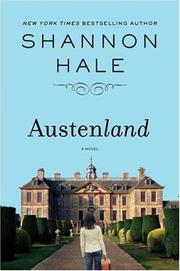
Austenland
A New York graphic designer obsessed with Mr. Darcy inherits a trip to a Jane Austen theme park, where the fantasy of Regency romance collides with the men…
2,030-word summary · 9 min read

Lick
Evelyn wakes up married to the lead guitarist of Stage Dive after a Las Vegas birthday she cannot remember, and the annulment gets complicated.
1,989-word summary · 9 min read
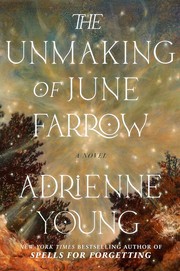
The Unmaking of June Farrow
A woman in a North Carolina flower-farming family walks through a red door into 1951, where she must solve her mother's disappearance and decide whether to…
2,701-word summary · 12 min read
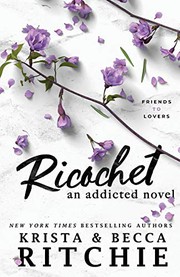
Ricochet
Lily Calloway tries to stay celibate for ninety days while Loren is in rehab, leaning on Rose, Connor, and Ryke as therapy forces her to face her childhood.
2,575-word summary · 11 min read
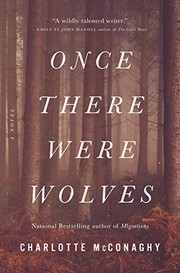
Once There Were Wolves
A biologist reintroduces fourteen wolves to the Scottish Highlands while protecting her traumatized twin sister, then finds a body in the snow that could…
2,682-word summary · 12 min read

My Dark Romeo
A debutante ball kiss traps Dallas Townsend in a marriage to Romeo Costa, a man who wants her as leverage in a war against his father and her fiance.
2,530-word summary · 11 min read
Under Locke
Iris Taylor moves to Austin broke and wary, takes a front-desk job at a tattoo shop, and spends the book learning that Dex Locke’s blunt cruelty and unexpected…
2,591-word summary · 12 min read

The Ex Talk
Two rival public radio producers pretend to be exes for a dating show, then fall for each other while the lie grows.
2,389-word summary · 11 min read
Bet Me
A sharp actuary agrees to dinner with a charming serial bettor, then spends the next month pretending the wager does not matter.
2,710-word summary · 12 min read
Beneath This Man
Ava returns to Jesse after five days apart and finds his drinking, jealousy, and a hidden deception that changes what she can forgive.
2,341-word summary · 10 min read