
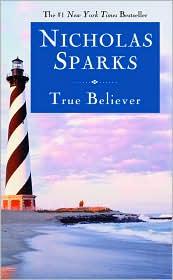
True Believer
2,125-word summary 9 min read 322 pages in the book
- First published
- 2005
- Publisher
- Warner Books
- Pages
- 322
- ISBN
- 9780446532433
- Series
- Jeremy Marsh & Lexie Darnell (#1)
Reading options
What's inside (10 sections)
True Believer is a Nicholas Sparks novel about a man who does not believe in ghosts and a woman who does not believe in leaving. It is a romance, but it is also a book about the stories people tell themselves to survive. Sparks is often dismissed as a sentimentalist, and there is plenty of sentiment here. There is also a sharper question underneath the sweetness: what happens when the evidence contradicts the life you have built?
The novel was published in 2005 by Warner Books. It runs 322 pages in hardcover. It is the first book in the Jeremy Marsh and Lexie Darnell series, followed by At First Sight. The series matters because True Believer ends with a beginning. It is not a self-contained romance in the usual sense. It leaves the couple married and expecting, and the sequel picks up from there. If you want a clean ending, you may find the last chapter frustrating. If you want a door into a longer story, it works.
Jeremy Marsh is a science journalist in New York City. He is thirty-seven, divorced, and famous for debunking paranormal claims. He writes for a magazine and appears on television. He is smart, sarcastic, and cautious. His divorce from Maria left him wary of commitment. He has a life that looks successful from the outside: an apartment, a career, a reputation. Inside, he is lonely and a little stuck.
Lexie Darnell is the town librarian in Boone Creek, North Carolina. She is thirty, single, and the granddaughter of the town's longtime mayor. She grew up in Boone Creek, left for a while, and came back. She is warm, direct, and guarded in her own way. She has a history of loss, and she has built a life that is small enough to control. She is not waiting for a stranger from New York to change it.
The Ghost Lights
Jeremy comes to Boone Creek to investigate a local legend. For generations, people have reported strange lights in the cemetery. Some say they are ghosts. Others say they are a natural phenomenon. Jeremy plans to spend a week, gather evidence, write an article, and go home. He is not looking for romance. He is looking for a story.
The lights are the novel's central metaphor. They are mysterious, beautiful, and open to interpretation. Jeremy wants to explain them. Lexie wants to protect them. The conflict is not really about ghosts. It is about the difference between analyzing a place and belonging to it. Jeremy arrives as an outsider with a notebook. Lexie has lived with the stories her whole life. The question is whether he can learn to see what she sees without destroying it.
Sparks uses the setting well. Boone Creek is a small town with a square, a diner, a library, and a lot of people who know each other's business. The pace is slow. The nights are quiet. The weather is hot. The details are not original, but they are comfortable. Sparks knows how to create a place that feels like a refuge from the city.
Jeremy and Lexie meet at the cemetery. Their first conversation is prickly. She challenges him. He is amused by her. The attraction is immediate, but neither of them admits it. Sparks is good at the early stages of romance: the glances, the jokes, the small excuses to see each other again. The dialogue is not subtle, but it is effective.
Two Kinds of Belief
The novel's title points to the central theme. Jeremy is a believer in science, evidence, and rational explanation. Lexie is a believer in people, place, and the possibility of change. Both of them are wrong in some ways and right in others. The book is not anti-science. Jeremy's skepticism is treated with respect. But it is also not anti-faith. Lexie's openness is treated as a strength, not a weakness.
Jeremy's investigation becomes less important as the romance develops. He still wants to explain the lights, but he also wants to understand Lexie. The shift is gradual. He begins to notice the town's rhythms. He goes to the diner. He talks to the neighbors. He starts to imagine a life that is not organized around deadlines and airports. The city recedes.
Lexie's past is revealed slowly. She has lost people. She has made choices that closed doors. She is afraid of being hurt again. Her grandmother watches over her, sometimes gently, sometimes not. The older woman is a link to the town's history and a reminder that Lexie's life is not only her own. Sparks uses her to show the weight of family and community.
The ex-wife, Maria, is a complication. She wants Jeremy back. She is not a villain. She is a person who made mistakes and wants a second chance. Jeremy has to decide whether to return to the life he knows or risk a new one. The choice is not easy, and Sparks gives Maria enough dignity to make the conflict real. The novel does not pretend that the past can be erased.
The Town and the City
Sparks contrasts New York and Boone Creek. New York is fast, anonymous, and full of options. Boone Creek is slow, intimate, and full of obligations. The contrast is a familiar one, but Sparks uses it well. Jeremy's apartment is a place to sleep. Lexie's library is a place where people know her name. The city offers freedom. The town offers belonging. The novel asks whether Jeremy can have both.
The library is an important setting. Lexie is a librarian, and books matter to her. She is not a passive romantic heroine. She has a profession, a routine, and a reason to stay. Jeremy's respect for her work is part of what draws him to her. He sees that she is good at what she does. That matters more than her looks.
The town's gossip is a source of comedy and pressure. Everyone knows who Jeremy is and why he is there. His presence is an event. The neighbors speculate. The mayor is protective of Lexie. Jeremy has to earn their trust. The novel is not subtle about this, but the dynamics are believable. Small towns can be warm and suffocating at the same time.
The Ghost Lights and the Limits of Explanation
The ghost lights are never fully explained, and that is the smartest choice in the book. Jeremy can offer theories. He can measure the light, interview witnesses, and look for a physical cause. But the story is not really asking whether the lights are supernatural. It is asking what people need to believe about a place. The lights give Boone Creek a mystery, and the mystery gives the town a story. Jeremy's attempt to solve it is also an attempt to control it.
Lexie understands this in a way he does not. She is not anti-science, but she knows that some things matter because they are shared, not because they are proven. The lights are part of the town's memory. They are a reason for people to gather. They are a way of saying that the world is larger than the obvious. Jeremy's skepticism is useful, but it is not enough. He has to learn that explanation and meaning are different kinds of knowledge.
That theme carries into the romance. Jeremy wants to know whether Lexie loves him, and he wants proof. Lexie wants him to trust her without proof. Both of them are asking for something the other finds difficult. The novel resolves this through a leap of faith, which is appropriate for a book about belief. It is also a little too easy. The hard work of trusting someone after divorce and loss is not something a single grand gesture can settle.
The sequel, At First Sight, picks up the story after the wedding. It tests the couple in ways that True Believer avoids. That makes the first book feel like a prologue, but it also makes the ending more honest. The romance is not the destination. It is the beginning of a life that will require the same negotiation all over again.
The Romance
The romance is the engine of the book. Sparks writes it in his usual style: long looks, meaningful conversations, and a few dramatic gestures. Jeremy and Lexie have chemistry. They also have conflict. She does not want to be a fling. He does not want to settle down. They have to negotiate what they are to each other.
The love scenes are restrained. Sparks is not explicit. The emotion is in the anticipation, the waiting, and the small confessions. Some readers find this old-fashioned. Others find it refreshing. I found it consistent with the characters. Jeremy is guarded, and Lexie is cautious. A slow burn makes sense for them.
The novel's middle section sags a little. Jeremy goes back to New York, and the separation feels repetitive. He misses Lexie. She misses him. They both wonder whether the relationship can survive. The reader knows the answer, so the tension is low. Sparks fills the space with phone calls and reflections. It is not bad, but it is not the strongest part of the book.
The ending is romantic and a little rushed. Jeremy returns to Boone Creek, makes a speech, and chooses Lexie. The town gathers. The future is sketched in broad strokes. It is the kind of ending Sparks's readers expect. It is also the kind of ending that makes the sequel necessary. The hard work of marriage is left for the next book.
What Works
Sparks is good at emotion. He knows how to make readers care about his characters, even when the plot is predictable. Jeremy's loneliness is real. Lexie's fear is real. The town feels lived in. The novel is easy to read, and it moves quickly. It is a good book for a rainy afternoon.
The theme of belief is handled better than I expected. Jeremy's skepticism is not mocked. Lexie's faith is not sentimentalized. They both have to learn something. The ghost lights remain unexplained, which is a smart choice. The book is not about debunking or proving the supernatural. It is about the mystery of other people.
The supporting characters are memorable. Lexie's grandmother is sharp and funny. The town's mayor is protective without being a caricature. The librarian's colleagues are not important, but they add texture. Sparks has a good ear for Southern speech. The dialogue is not always natural, but it is often charming.
What Does Not Work
The prose is plain. Sparks is a storyteller, not a stylist. Some sentences are clunky. The narration tells us what characters are feeling instead of showing us. The plot is predictable. The conflict is resolved with a gesture rather than a long, difficult change. The novel is not interested in ambiguity. It wants to comfort.
The female characters are less developed than Jeremy. Lexie is independent, but her main function is to be the woman who changes him. Maria is the ex who wants him back. The grandmother is the wise elder. These are familiar types. Sparks gives them moments of depth, but he does not give them full inner lives. That is a limitation.
The ending is too neat. Jeremy gives up his career, his city, and his apartment with little struggle. The practical questions are brushed aside. Where will they live? What will he do for work? How will Lexie feel about his sacrifice? The sequel addresses some of this, but True Believer does not. It ends on a wave of emotion, and the wave carries the reader past the problems.
Who Should Read It
This is a book for readers who like Nicholas Sparks. If you enjoyed The Notebook or A Walk to Remember, you will find the same pleasures here: a likable couple, a picturesque setting, and a love story that makes you feel good. If you do not like Sparks, this book will not change your mind. It has his strengths and his weaknesses in equal measure.
It is also a book for readers who like small-town romance. The setting is a character. The community matters. The pace is slow. The conflicts are personal. If you want a fast plot or moral complexity, look elsewhere. If you want comfort, this is a good choice.
I would recommend it as a light read, not as a great novel. It is honest about what it is. It does not pretend to be literary fiction. It is a romance about two people who are afraid of different things and who help each other become brave. That is a modest goal, and the book achieves it.
FAQ
Is True Believer part of a series?
Yes. It is the first book in the Jeremy Marsh and Lexie Darnell series, followed by At First Sight.
Does the book explain the ghost lights?
No. The lights remain ambiguous, and the novel uses them as a metaphor rather than a puzzle to solve.
Is it appropriate for young readers?
It is an adult romance with some sexual content and mature themes, though it is not explicit.
Similar books
More from Jeremy Marsh & Lexie Darnell first, then related titles.

At First Sight
Jeremy and Lexie are married and expecting a baby when anonymous emails tell him the child may not be his.
2,317-word summary · 10 min read

Indigo Ridge
A new police chief in a Montana town meets the founding family's eldest son in a bar, and one night later a body turns up under their cliff.
2,763-word summary · 12 min read
My Killer Vacation
A teacher and a bounty hunter share a Cape Cod rental with a corpse and a growing attraction.
2,625-word summary · 12 min read
A Bend in the Road
Widowed sheriff Miles loves teacher Sarah while her family's secret touches his wife's death.
2,182-word summary · 10 min read
The Unmaking of June Farrow
A woman in a North Carolina flower-farming family walks through a red door into 1951, where she must solve her mother's disappearance and decide whether to…
2,701-word summary · 12 min read

The Bookshop on the Corner
A Birmingham librarian loses her job, buys a van, and moves to the Scottish Highlands to run a mobile bookshop. Warm and bookish, with uneven pacing.
2,557-word summary · 11 min read
Act Your Age, Eve Brown
Eve Brown crashes into a Lake District bed and breakfast, breaks the owner's arm, and talks her way into his kitchen. A grumpy-sunshine romance about work,…
2,474-word summary · 11 min read

Say You're Sorry
A widowed prosecutor defends the teenager accused of killing her babysitter, uncovering a small town's secrets and a killer hiding in plain sight.
2,116-word summary · 9 min read

Juniper Hill
Fleeing New York with her baby, Memphis takes a housekeeping job above Knox Eden's garage, and the grumpy chef becomes the first person she can rely on.
2,021-word summary · 9 min read

Delilah Green Doesn't Care
Delilah returns to Bright Falls to photograph her stepsister's wedding and falls for Claire, a bookstore owner and single mother, while a cruel bet threatens…
2,315-word summary · 10 min read
The Finish Line
Tobias King seeks forgiveness from Cecelia as the Ravenhood past closes in.
2,868-word summary · 13 min read
Same Time Next Summer
A woman planning a perfect wedding meets her first love back at the beach house.
2,329-word summary · 10 min read

Lovelight Farms
Stella fakes dating Luka to save her Christmas tree farm.
2,584-word summary · 11 min read
Everything We Keep
A widow questions her husband's death when a stranger claims his past.
2,307-word summary · 10 min read

The Simple Wild
City Calla flies to Alaska to face dying father and gruff pilot Jonah, learning bush life and love.
2,284-word summary · 10 min read
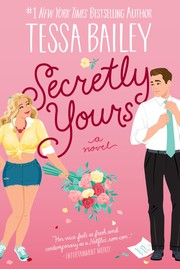
Secretly Yours
A bubbly Napa gardener sends anonymous love letters to her grumpy professor neighbor in this steamy small-town rom-com.
2,504-word summary · 11 min read
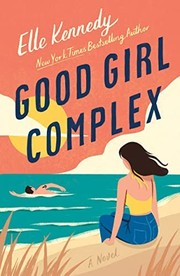
Good Girl Complex
A people-pleasing college girl moves to beach town Avalon Bay and falls for a local boy who distrusts her whole world.
2,225-word summary · 10 min read

Funny You Should Ask
Chani profiles star Gabe Parker, then ten years later a reunion interview tests memory, work, and timing.
2,603-word summary · 12 min read
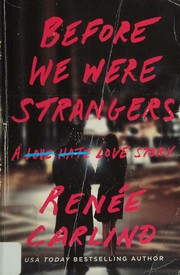
Before We Were Strangers
Matt waits fifteen years to ask Grace why she left after one college night that shaped them both.
2,386-word summary · 11 min read
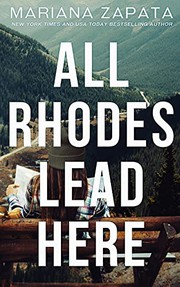
All Rhodes Lead Here
Grieving Aurora moves to Colorado to fix a farmhouse, finding slow healing with her gruff older neighbor Tobias Rhodes.
2,249-word summary · 10 min read
Exodus
Cecelia grieves Sean while Dominic pulls her into the Ravenhood reckoning.
2,463-word summary · 11 min read
King of Greed
Billionaire Dominic fights to win back Alessandra after work obsession breaks their ten year marriage.
2,548-word summary · 11 min read
Hopeless
Fake engaged to town hero Beau Eaton, outcast bartender Bailey Jansen finds pretend and real blurring in Chestnut Springs.
2,491-word summary · 11 min read
Flock
Nineteen-year-old Cecelia trades a year in Triple Falls for her mother future and falls for two men hiding the Ravenhood secret.
2,997-word summary · 13 min read
Final Offer
Cal Kane must spend the summer at Lake Wisteria to inherit, but his childhood ex Lana, now a mother, says the house belongs to her family.
2,379-word summary · 11 min read
Heartless
Gruff single dad Cade Eaton hires bubbly Willa Grant as summer nanny in Chestnut Springs, and two months together wear down his walls.
2,967-word summary · 13 min read

Flawless
Pro bull rider Rhett Eaton is benched by scandal, and his agent's daughter Summer must keep him in line in Chestnut Springs.
2,484-word summary · 11 min read

Two by Two
Sparks's twentieth novel turns from first love to a marriage breaking up: Russell Green loses his wife and his job, then rebuilds his life around his…
2,192-word summary · 10 min read
Every Breath
Two strangers share one week at Sunset Beach in 1990, part for duty, and reunite decades later at the mailbox that started it all.
2,357-word summary · 10 min read
The Wish
A dying photographer recalls 1996 Ocracoke first love and an adoption choice.
2,176-word summary · 10 min read