
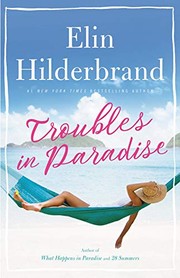
Troubles in Paradise
2,471-word summary 11 min read 352 pages in the book
- First published
- 2020
- Publisher
- Little, Brown and Company
- Pages
- 352
- ISBN
- 9780316435581
- Series
- Paradise (#3)
Reading options
What's inside (8 sections)
I finished the first two Paradise books in a single summer, mostly on a porch with a glass of iced tea going watery beside me. They are not demanding novels, but they are generous ones, full of food, weather, and people who make bad decisions for understandable reasons. By the time I opened Troubles in Paradise, I wanted two things: to know who killed Russ Steele, and to see Irene, Cash, and Baker end up somewhere that felt like home. The book gives me both, though it takes a slower road than the previous installments. This is the cleanup volume, the one where the secrets are explained and the survivors have to decide what to do with the rest of their lives.
Russ died on New Year's Day in a helicopter crash with his mistress, Rosie Small, and his business partner, Stephen Thompson. Irene had spent thirty-five years believing she knew her husband. Then she flew to St. John and learned about Rosie, about Russ and Rosie's twelve-year-old daughter Maia, and about Ascension, the offshore company that made the family rich. By the start of this novel, the FBI has seized the fifteen-million-dollar villa in Little Cinnamon and the family home in Iowa City. Irene is sleeping on the couch of Huck Powers, Rosie's stepfather, a charter fishing captain with a boat called the Mississippi. She is also working as his first mate, which means she spends her days baiting hooks and making conversation with tourists while her old life is packed into evidence boxes.
That opening is one of the best things about the book. Hilderbrand does not rush Irene into another marriage or a glamorous reinvention. Irene is fifty-seven, broke, and embarrassed. She has to ask a friend for a photograph of Russ's mother because the FBI took the original. She has to accept a lawyer's help from Mavis Key, a former colleague, whose twin sister Natalie is a corporate attorney specializing in white-collar crime. Natalie reads the Ascension paperwork and finds that almost every incriminating document carries Russ's signature and not much else. Todd Croft, the man who founded Ascension, claims he knew nothing. Irene does not believe him. She thinks Croft bribed Russ, then blackmailed him by threatening to expose Rosie and Maia. She is right, but the proof will take most of the book to arrive.
The island starts making room
St. John is a small place, and the novel uses that well. Everyone knows the Steeles now. Everyone has an opinion about the widow and the sons and the dead mistress. Irene cannot walk into a restaurant without someone looking up. Huck offers her shelter, then work, then something closer to partnership. She worries about the blur between friendship and romance. He is steady and decent and he knew Rosie better than almost anyone, which makes him both a comfort and a reminder. Their scenes together are quiet. They talk about fishing, about Irene's sons, about Huck's late wife LeeAnn. Hilderbrand lets the relationship build through errands and meals rather than grand speeches, and that suits two people who have already been through enough.
Maia is the heart of these scenes. She is twelve, she has lost her mother and her father in the same crash, and she is now trying to make room for Irene, a woman she met only after the funeral. Maia brings Irene breakfast and tells her that she still has family, friends, and the papaya jam from Jake's. It is a small moment, but it matters. Maia refuses to be a symbol of the affair. She is a child who wants the adults around her to stop falling apart.
Baker arrives from Houston with his four-year-old son, Floyd, and no idea that the villa has been seized. On the flight he meets Duncan Huntley, a twenty-eight-year-old Australian entrepreneur who has bought Lovango Cay and wants to build a resort. Duncan is charming in the way that expensive men often are, which is to say he is charming until he is not. Baker's almost-ex-wife Anna wires him a hundred and twenty-five thousand dollars and tells him to start fresh. He buys a Jeep, enrolls Floyd at Gifft Hill School, takes a time-share sales job at the Westin, and rents a stone villa called the Happy Hibiscus. The villa happens to sit across the street from Ayers Wilson, Rosie's best friend and the woman Baker slept with once before everything fell apart.
Ayers is in her own mess. Her fiance Mick kissed his ex-girlfriend Brigid on the beach, and Maia saw him do it. Ayers returned the ring. Now she is nauseated and exhausted, and a test tells her she is pregnant with Baker's child. She confides in Cash, who has come to collect his dog Winnie. Then Mick gets drunk and tells Baker about the pregnancy, which is the worst possible way for Baker to find out. When Ayers and Baker finally talk, she is honest. The baby is his. She is keeping it. But she wants space, and she wants her heart rather than the pregnancy to decide who she is with. It is a mature boundary in a series that has sometimes preferred romantic chaos to clear thinking.
Cash and the Payne family
Cash is living at the Peter Bay villa of his girlfriend Tilda Payne. Tilda's father, Granger Payne, is partnering with Duncan on the Lovango resort. Cash is the sole crew on Treasure Island, the charter boat where Ayers also works, and he cannot join Tilda on a weeklong research trip to Caribbean resorts. Duncan volunteers to go instead. Tilda calls Cash at two in the morning to accuse him of flirting with an influencer, and the details she lets slip about couples massages and waterfall picnics make it clear that she is the one who has been unfaithful. Cash recognizes the projection and texts her that he is breaking up with her. It is not a dramatic scene. It is a tired man finally seeing a pattern.
Cash's story is the weakest strand for me. He spends much of the book being someone's guest, first Tilda's, then Huck's, then the island's. He is kind and he is trying, but the novel keeps him in a holding pattern until the hurricane. His romance with Tilda never has enough heat to make the breakup hurt, and his later decision to ferry to Lovango during the storm feels more like a narrative obligation than a choice I believed. Hilderbrand is fond of him, and I am fond of him too, but fondness is not the same as a story.
Rosie's journals
Huck finds Rosie's journals, which Ayers had taken from Rosie's room and recently turned over to him. The journals tell the story of the affair from Rosie's side. They also reveal that Rosie saw Irene as a rival she hoped to replace, which is a much harder truth than the simple picture of a husband who lied. Huck gives the journals to Irene because he believes honesty is the right course. It backfires. Irene is devastated, then furious. She accuses Huck of complicity, of failing to question Rosie's secret relationship even though he must have suspected something.
Huck explains that LeeAnn, his wife and Rosie's mother, handled Rosie's affairs. After LeeAnn died, he was too afraid of losing Rosie and Maia to press. It is not a perfect excuse, and the novel does not pretend it is. Irene quits the boat, moves into Baker's villa, and announces that she will earn her own captain's license and start a competing charter called the Angler Cupcake. The name is pure Irene, a little defiant and a little silly. It is also a declaration that she will not spend the rest of her life as someone's first mate.
Her plan runs into a practical wall. A captain's license requires three hundred and sixty logged days on the water. Irene has roughly thirty. She studies anyway. Then Maia delivers a handwritten letter from Huck, who explains his ignorance, his fears, and his history of betrayal by his first wife. Irene tucks the letter away instead of throwing it out. When Swan Seeley mentions seeing Huck with a pretty redhead at Skinny Legs, Irene is jealous before she can stop herself. The woman turns out to be FBI Agent Colette Vasco, whose advances Huck rebuffed, but Irene does not know that yet. The jealousy tells her what she has been avoiding: she does not want to lose him.
The black Jeep
The mystery of the Jeep with tinted windows pays off in the best scene in the book. Marilyn Monroe, Todd Croft's wife and former secretary, arrives at the Happy Hibiscus in the black Jeep that Huck has noticed for weeks. Her name is not a joke, or at least not only a joke. She tells Irene the whole story. Todd's business began by laundering money for a marijuana farmer and grew into serving clients involved in narcotics, weapons, and human trafficking. Todd recruited Russ after a chance reunion because Russ looked like the perfect front man. The meeting between Russ and Rosie at Caneel Bay was engineered. Todd had Oscar Cobb stage a harassment scene so Russ could rescue Rosie, which ensured the affair began. Once Rosie was pregnant, Todd had permanent hold over Russ, and Russ's name went on every incriminating document.
When Russ and Stephen tried to leave Ascension, Todd ordered Oscar to plant explosives on the helicopter. Oscar refused and tried to warn Rosie. Todd killed Oscar and fled toward Venezuela. Marilyn made copies of everything in Todd's safe and is on her way to the FBI to turn state's evidence. It is a lot of exposition delivered by a woman in a Jeep, and Hilderbrand knows it. The scene works because Marilyn is not a villain or a savior. She is a wife who has finally decided she is done being useful to a man who treats people as instruments.
Irene drives to the dock. When the Mississippi pulls in, she asks permission to board. Huck spreads his arms and says, "Permission granted, AC." She jumps, and he catches her. It is a romantic ending that has been earned through dozens of small repairs. The novel then moves through spring and summer. Todd Croft is convicted of second-degree murder and manslaughter, sentenced to twenty-two years, and fined nearly four hundred million dollars. Irene and Huck buy a boat together and expand their fleet. Baker confronts Duncan over his inappropriate behavior toward Swan during a meeting on Lovango. Duncan had touched her without consent. Baker intimidates him into a written apology and rehires Swan. It is a small reckoning, but it matters that the book does not let the rich man's behavior slide.
The storm and the birth
In early September, Hurricane Inga, a category five storm, bears down on the Virgin Islands. Duncan abandons Tilda on Lovango and flies to Las Vegas on a private jet. Cash asks Huck to ferry him to the island so he can ride out the storm with her. It is the one moment where Cash's story clicks into place. He is not trying to be a hero. He is trying to be present, which is the thing he has failed at all book.
At the Happy Hibiscus, Ayers goes into labor. She insists on a home birth supported by her parents, Phil and Sunny Ray, who have flown in from their globe-trotting life. Huck drives through rising winds to collect Sadie, a nurse practitioner whose mother was a renowned midwife and who delivered Rosie decades earlier. Baker enters the room as the father. Maia holds Ayers's hand. The storm devastates St. John, but the characters emerge intact. Irene finds Milly's photograph cracked but intact and tells Huck that the island is damaged, not destroyed. The line is a little too neat, but it fits the book's belief that places and people can survive damage without being ruined.
The baby is named Millicent Maia Steele, after Russ's mother and after Maia herself. In the epilogue, Maia leans over the bassinet, lets baby Milly grasp her pinkie, and whispers, "Just watch me. I'll show you how it's done." It is a lovely final note, and it belongs to Maia rather than to Irene or Huck or any of the romantic couples. The series began with adults lying to each other. It ends with a child promising to teach the next one how to live.
What works and what does not
Troubles in Paradise is a comfort read with a body count in its past. It is not a thriller, even when it is pretending to be one. The FBI investigation, the lawyer Natalie Key, the old diary, and the pregnancy all resolve gently or fade into the background. Kirkus compared the book to a third serving of an enjoyable meal, with not much excitement left, and I understand the complaint. The central mystery is solved by a character arriving with a folder of explanations. The Jeep is a better symbol than it is a plot device. The hurricane is announced in the opening note, which drains some of the suspense, and the storm's main function is to gather everyone in one place for the birth.
The book also has a habit of introducing threads it does not need. The unplanned pregnancy is handled with care, but it is another complication in a novel that already has a financial investigation and a romantic reconciliation. Duncan's behavior toward Swan is a useful reminder that charm is not ethics, but it sits oddly beside the resort subplot. The novel's real subject is Irene learning to trust her own judgment again. Everything else is weather.
Still, I closed the book satisfied. Hilderbrand is very good at the textures of island life: the heat, the food, the way a small community absorbs a scandal and then goes back to work. She is also good at middle-aged love, which is rarer than it should be. Irene and Huck do not get a whirlwind. They get a boat, a business, and a second chance that requires maintenance. That feels honest.
If you have read the first two books, this is a necessary ending. If you have not, start with Winter in Paradise. The series is built on accumulation, on the pleasure of returning to the same beach and the same cast. Troubles in Paradise is the last round of drinks, the one where everyone tells the truth and then decides who to go home with. It is not the best book in the trilogy, but it is the one that lets the others rest.
FAQ
Is Troubles in Paradise the last book in the Paradise series?
Yes. It is the third and final book, following Winter in Paradise and What Happens in Paradise, and it resolves the mystery of Russ Steele's death and the Ascension money.
Does Irene end up with Huck?
Yes. After a rupture over Rosie's journals, Irene and Huck reconcile at the dock, buy a boat together, and build a life on St. John.
Who was responsible for Russ Steele's death?
Todd Croft arranged it. He ordered Oscar Cobb to plant explosives on the helicopter, and when Oscar refused and tried to warn Rosie, Todd killed him and fled.
Similar books
More from Paradise first, then related titles.

Where We Belong
Marian's orderly New York life cracks when the daughter she gave up for adoption arrives, and the search for the father forces her to tell the truth.
2,056-word summary · 9 min read
Ghosted
After seven perfect days with Eddie, Sarah is ghosted, and her search for answers uncovers a secret tied to the accident that changed both their lives.
2,011-word summary · 9 min read

Three Wishes
Triplet sisters Lyn, Cat and Gemma Kettle blow up their thirty-fourth birthday dinner in Sydney, then rewind a year of affairs, pregnancies and family chaos.
2,262-word summary · 10 min read
The Rumor
Two Nantucket best friends, Madeline and Grace, watch a summer of small indiscretions get retold into gossip that reshapes both their households.
2,017-word summary · 9 min read

The Stationery Shop
Two teenagers fall in love in a Tehran stationery shop in 1953, are separated by the coup and a family deception, and meet again sixty years later.
2,024-word summary · 9 min read

The Shadow Sister
Star D'Apliese steps out of her sister's shadow and follows a bookshop clue into the Edwardian life of Flora MacNichol, a woman who gave up love for duty.
2,260-word summary · 10 min read
The Unmaking of June Farrow
A woman in a North Carolina flower-farming family walks through a red door into 1951, where she must solve her mother's disappearance and decide whether to…
2,701-word summary · 12 min read

The Echo of Old Books
Barbara Davis's 2023 novel sends a rare-book dealer in 1984 New Hampshire hunting for the authors of two unpublished volumes that tell opposite sides of one…
2,491-word summary · 11 min read
The Overdue Life of Amy Byler
A burned-out school librarian gets a summer to herself when her estranged husband returns, and discovers that being a mother does not have to mean losing…
2,055-word summary · 9 min read
The Keeper of Happy Endings
Barbara Davis's 2021 standalone braids a Paris dressmaker's wartime losses with a grieving Boston artist who unlocks her family's secrets through an old row…
2,437-word summary · 11 min read

Same Time Next Summer
A woman planning a perfect wedding meets her first love back at the beach house.
2,329-word summary · 10 min read
Everything We Keep
A widow questions her husband's death when a stranger claims his past.
2,307-word summary · 10 min read
The Shell Seekers
Elderly Penelope Keeling must decide the fate of her father's treasured painting while her three children press her to sell.
2,592-word summary · 12 min read

The Evening and the Morning
Edgar, Ragna, and Aldred build a bridge town that becomes Kingsbridge around 997, facing Viking raids, harsh law, and a scheming bishop in Follett's prequel.
2,833-word summary · 13 min read

Next Year in Havana
A Cuban-American writer takes her grandmother's ashes to Havana and finds a hidden 1959 love that reshapes her family story.
2,962-word summary · 13 min read

After We Fell
With Tessa's father back and a Seattle move looming, she and Hardin face family secrets that push their love to its edge.
2,121-word summary · 9 min read
The Prince of Tides
A South Carolina man tells a psychiatrist about his family past to help his twin sister, and faces what he buried.
2,022-word summary · 9 min read
When We Believed in Mermaids
ER doctor Kit flies to New Zealand when fire victim may be sister Josie.
2,020-word summary · 9 min read
The Thorn Birds
Meggie loves priest Ralph across decades on Drogheda sheep station.
2,280-word summary · 10 min read

The Lucky One
Marine Logan finds photo lucky and seeks Beth in North Carolina.
2,590-word summary · 12 min read

PS, I Love You
Widowed at thirty, Holly Kennedy follows ten monthly letters left by her late husband Gerry, facing grief, loving family chaos and slow steps toward a new life…
2,501-word summary · 11 min read

One Day
Emma and Dexter meet July 15 1988 and we revisit each St Swithins Day for 20 years.
2,392-word summary · 11 min read

We'll Always Have Summer
Belly must choose between Conrad and Jeremiah after two years with Jeremiah and a wedding plan at Cousins.
2,540-word summary · 11 min read
The Hawthorne Legacy
Avery hunts for lost Toby Hawthorne while old wills, postcards and a violent rival force her to face what the inheritance really costs.
2,576-word summary · 11 min read

It's Not Summer Without You
After Susannah's death, Belly returns to a cold Cousins Beach with Jeremiah to save the house and faces grief, brother tension, and first love.
2,736-word summary · 12 min read
The Summer I Turned Pretty
Belly spends another Cousins summer torn between Conrad and Jeremiah Fisher.
3,556-word summary · 16 min read

The Identicals
Twin sisters swap Nantucket and Martha Vineyard lives for a summer.
2,556-word summary · 11 min read

What Happened to Goodbye
Mclean has reinvented herself in four towns since her parents divorced. In Lakeview she uses her real name, and for the first time staying put becomes a choice.
2,796-word summary · 12 min read

Violeta
A woman born in 1920 writes her life story to her grandson, from one pandemic to another, through wealth, ruin, passion, and dictatorship in South America.
2,555-word summary · 11 min read

The Japanese Lover
A Polish refugee and the son of a Japanese gardener fall in love in San Francisco in 1939, then keep the affair secret for nearly seventy years.
2,286-word summary · 10 min read