
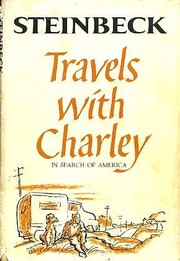
Travels with Charley
2,039-word summary 9 min read 246 pages in the book
- First published
- 1962
- Publisher
- Viking Press
- Pages
- 246
- ISBN
- 9780670725083
Reading options
What's inside (11 sections)
I read Travels with Charley on a road trip through New England, which is either the best or the worst way to read it. The best, because Steinbeck's descriptions of Maine in the fall are so precise that I recognized the light before I saw it. The worst, because the book is not really a travel guide. It is a long, restless essay about a country that Steinbeck suspected had changed beyond his understanding, and about a man trying to find out whether he still belonged to it.
Viking Press published the book in 1962. The edition I used runs 246 pages and carries the ISBN 9780670725083. It is subtitled "In Search of America," and that subtitle is important. Steinbeck was fifty-eight when he set out. He had won the Nobel Prize in Literature in 1962, the same year the book appeared, and he was in poor health. He had spent most of his adult life writing about California, the Dust Bowl, and the working poor. He wanted to see the country again before he died.
The trip
Steinbeck left Sag Harbor, Long Island, in the fall of 1960. He drove a custom-built pickup truck with a camper shell on the back, which he named Rocinante after Don Quixote's horse. He took his standard poodle, Charley. The plan was to circle the country: New England, the Midwest, the Pacific Northwest, California, the Southwest, Texas, the South, and back home. He covered more than ten thousand miles and passed through dozens of states.
The trip was not a scientific survey. Steinbeck avoided highways when he could, stopped in small towns, and talked to people in diners, gas stations, and motels. He was looking for conversations, not statistics. He wanted to know what Americans believed about themselves and their country. He also wanted to know whether the America he had written about in The Grapes of Wrath still existed.
The answer, as he suspected, was complicated. The country was richer than it had been in the 1930s. It was also more mobile, more suburban, and more standardized. Small towns were dying. Family farms were disappearing. The people he met were generous and lonely, proud and anxious. Steinbeck found that the country was full of contradictions, and he was honest enough to admit that he did not resolve them.
Rocinante and Charley
Rocinante is one of the great vehicles in American travel writing. It is a small house on wheels, and Steinbeck writes about it with affection and frustration. The truck is cramped, temperamental, and difficult to park. It is also a way of carrying home with him. Steinbeck is not a camper by nature. He likes his comforts. The truck gives him the illusion of independence while keeping him close to the road.
Charley is the book's secret weapon. A standard poodle is an unusual companion for a rugged American road trip, and that is the point. Charley is dignified, curious, and a little ridiculous. He is also a bridge. People who would not talk to a famous writer will talk to a man walking a dog. Charley opens conversations in parks, motels, and gas stations. He also gives Steinbeck someone to talk to when there is no one else.
The relationship between Steinbeck and Charley is one of the book's great pleasures. Steinbeck talks to the dog as if he were a person, and the dog listens with the patience of a good friend. There is a scene where Charley is sick, and Steinbeck's worry is genuine and unembarrassed. The book is not sentimental about animals. It is sentimental about companionship, which is different.
The American road
Steinbeck is a master of the small scene. A waitress in a diner, a farmer in a field, a motel clerk at midnight: each of them gets a few lines and becomes a person. He is interested in how people talk, what they eat, what they drive, and what they are afraid of. The book is full of details that feel observed rather than researched.
The Maine sections are the strongest. Steinbeck writes about the cold, the emptiness, and the independence of the people. He visits a farm where the family has lived for generations. He talks to a French-Canadian potato farmer. He notices the way the landscape changes as he drives north. The prose is quiet and exact. You can feel the season turning.
The Midwest sections are more mixed. Steinbeck is suspicious of the new suburbs and the conformity he sees there. He worries that Americans are becoming a nation of consumers rather than citizens. Some of his complaints sound like the grumblings of an older man who misses the world of his youth. Other complaints are sharp and still relevant. The tension between nostalgia and insight is part of the book's charm.
The Western sections are more expansive. Steinbeck loves the scale of the landscape, the emptiness, the sense of possibility. He also sees the damage that has been done to the land. He writes about the destruction of forests, the pollution of rivers, and the sprawl of cities. His environmental concerns were ahead of his time. He does not use the language of modern activism, but he understands that the country's beauty is finite.
The title is worth thinking about. "In Search of America" suggests that America is a thing that can be found, like a town on a map. The book quietly argues the opposite. America is not a destination. It is a set of arguments, habits, and memories that change depending on who is doing the looking. Steinbeck's search succeeds only in the sense that he learns how large the question is. That is a modest result for a ten-thousand-mile trip, and it is also an honest one. The road does not reveal the country. It reveals the traveler.
Race in New Orleans
The book's most famous and most troubling section is set in New Orleans. Steinbeck witnesses a crowd of white women protesting the integration of a public school. The women are screaming at a young Black girl as she walks into the building. Steinbeck calls them "the Cheerleaders," and the name is an act of moral judgment. The women are not cheering for anything. They are performing hatred for an audience.
Steinbeck is disgusted. He does not pretend to be objective. He describes the women as ordinary, middle-class, and respectable, which is what makes their behavior so frightening. They are not monsters. They are people who have convinced themselves that their cruelty is righteous. Steinbeck sees the connection between their anger and the larger history of racism in the South, and he does not look away.
The scene is important because it complicates the book's nostalgia. Steinbeck misses the America of his youth, but he also knows that the America of his youth was unjust. The New Orleans section prevents the book from becoming a simple lament for a lost past. It forces the reader to see that the past was not innocent, and that the present is still fighting the same battles.
The West and the past
Steinbeck's return to California is the emotional climax of the book. He visits Salinas, the town where he grew up, and finds that it has changed. The fields are still there, but the people are different. The family ranch is gone. The landmarks of his childhood have been paved over or turned into something else. He feels like a stranger in his own hometown.
The visit is a reminder that travel is not only about seeing new places. It is also about returning to old ones and discovering that you cannot go back. Steinbeck's grief for the California of his memory is real, but he does not let it become self-pity. He knows that the changes he mourns are the same changes that gave other people better lives. The book holds both truths at once.
The Texas section is lighter. Steinbeck meets a man who boasts about the size of everything in Texas, and the encounter is funny and affectionate. The humor is a relief after the darkness of the New Orleans scene. Steinbeck is good at comedy, and he knows when the reader needs a break.
The ending
Steinbeck returns home at the end of the trip, but he does not claim to have found the America he was looking for. He admits that the country is too large and too varied to be captured in a single book. He also admits that he was traveling in a bubble. He met the people who were willing to talk to a man with a dog and a camper. He did not meet the people who were too busy, too suspicious, or too poor to spend time with him.
The ending is honest. Steinbeck does not pretend that his journey was a representative sample of American life. He offers impressions, not conclusions. The book is a portrait of a country at a particular moment, seen by a particular man. That limitation is what makes it valuable. It is not a definitive account of America in 1960. It is a record of one person's attempt to understand it.
What works and what does not
The prose is wonderful. Steinbeck can describe a landscape in a sentence and a person in a paragraph. He has a reporter's eye and a novelist's ear. The dialogue is vivid, and the descriptions of food, weather, and roads are precise. The book is a pleasure to read slowly.
The structure is loose but purposeful. The trip provides a backbone, and the encounters provide the meat. Steinbeck moves between comedy and tragedy without forcing the transitions. The New Orleans section lands harder because it arrives after hundreds of pages of gentle humor and small kindnesses.
Charley is a great character. The dog gives the book a warmth that it would otherwise lack. Steinbeck's love for him is unironic, and that love makes the narrator more human. A man who is grumpy about America is still a man who worries about his dog.
What does not work
The book is not reliable as journalism. The journalist Bill Steigerwald retraced Steinbeck's route in 2011 and found that many of the episodes were exaggerated, compressed, or invented. Steinbeck stayed in motels more often than he admitted. His wife joined him for part of the trip. Some of the people he describes may be composites. The book is a literary work, not a report. Readers who want a factual account of America in 1960 should look elsewhere.
Steinbeck's nostalgia can be grating. He complains about suburban conformity, television, and the loss of small-town life in a way that sometimes sounds like an old man yelling at the future. He is more interesting when he is curious than when he is mourning. The book is at its best when Steinbeck is listening, not lecturing.
The ending is anticlimactic. After ten thousand miles, Steinbeck does not arrive at a grand revelation. That is realistic, but it may disappoint readers who expect a neat conclusion. The book is a journey, not an argument.
Who it is for
This is a book for readers who love road trips, American history, and good prose. It is for people who have read Steinbeck's novels and want to know more about the man. It is also for readers who are interested in the 1960s and the changes that were beginning to reshape the country.
It is not a guidebook, and it is not a rigorous social study. It is a personal essay with a dog and a truck. If you accept it on those terms, it is one of the best books of its kind. If you want facts, you will be frustrated.
I finished it with a better sense of Steinbeck as a person: funny, irritable, generous, and haunted by the feeling that he had outlived the world he knew. That is not a happy portrait, but it is a true one. The book is a reminder that travel does not always give you what you want. Sometimes it gives you what you need, which is a clearer view of yourself.
FAQ
Is Travels with Charley a true story?
It is based on a real trip, but later investigations found that Steinbeck exaggerated or invented some episodes.
Who is Charley?
Charley is Steinbeck's standard poodle, who travels with him and helps him start conversations.
Where did Steinbeck go in Travels with Charley?
He drove from Long Island through New England, the Midwest, the West, California, Texas, and the South before returning home.
Similar books
Down and Out in Paris and London
Orwell's account of washing dishes in Paris hotels and tramping through London does not ask for pity, only for a clear look at how poverty actually works.
2,282-word summary · 10 min read
Between Two Kingdoms: A Memoir of a Life Interrupted
Diagnosed with leukemia at twenty-two, Suleika Jaouad survives treatment and then takes a 100-day road trip to meet the strangers who wrote to her.
2,311-word summary · 10 min read
Notes from a Small Island
Bill Bryson's 1995 farewell tour of Britain, funny and fond, from Dover to London, the north, Scotland and Wales.
2,301-word summary · 10 min read

In a Sunburned Country
Bryson revisits Australia by city walks and long trains, with reef trips, critter comedy, and explorer history.
2,387-word summary · 11 min read
Zen and the Art of Motorcycle Maintenance
Father and son ride west while lectures on Quality and past madness intrude.
2,180-word summary · 10 min read
Kitchen Confidential: Adventures in the Culinary Underbelly
Bourdain on rough kitchens, past drug use, Les Halles years, and why you should never order fish on Monday.
2,562-word summary · 11 min read

Eat, Pray, Love
Eat, Pray, Love retold: divorce, Italy for pleasure, India for practice, Bali for balance.
1,962-word summary · 9 min read

Long Walk to Freedom
Mandela's account of a Thembu childhood, a law practice, a banned movement, twenty-seven years in prison, and the negotiation that ended apartheid.
2,454-word summary · 11 min read

In Order to Live: A North Korean Girl's Journey to Freedom
A young North Korean girl crosses the Yalu, survives trafficking in China, and rebuilds her life in Seoul in this unsparing memoir.
2,027-word summary · 9 min read

Too Much and Never Enough: How My Family Created the World's Most Dangerous Man
Mary L. Trump's 2020 memoir traces how a cold, zero-sum Queens household shaped her uncle, and uses family tax documents to challenge his self-made story.
2,059-word summary · 9 min read
Same Kind of Different as Me
An art dealer and a formerly homeless sharecropper tell the story of the friendship that began at a Fort Worth mission and the woman who insisted on it.
2,023-word summary · 9 min read
My Life in France
Julia Child's memoir of learning to cook in Paris, testing recipes for nine years, and becoming the teacher who changed how America thought about French food.
2,038-word summary · 9 min read

Infidel
Ayaan Hirsi Ali's memoir of a Somali childhood, a forced marriage, a Dutch asylum claim, and the political fight that followed the murder of Theo van Gogh.
2,041-word summary · 9 min read
Year of Yes: How to Dance It Out, Stand in the Sun and Be Your Own Person
Shonda Rhimes takes her sister’s accusation seriously and spends a year saying yes to the things that frighten her, from live television to her own reflection.
2,585-word summary · 11 min read

The Girl with Seven Names: A North Korean Defector's Story
Hyeonseo Lee crossed the frozen Yalu River at seventeen, spent years hidden in China, escaped to South Korea, and later returned to rescue her family.
2,404-word summary · 11 min read

Love Does
A lawyer and activist tells stories of saying yes, showing up, and loving people through ordinary, often ridiculous actions.
2,411-word summary · 11 min read

Beautiful Boy: A Father's Journey Through His Son's Addiction
David Sheff recounts watching his son Nic slide into meth addiction, and his own desperate, humbling search for how to help without destroying them both.
2,076-word summary · 9 min read

The Magnolia Story
How Chip and Joanna Gaines met, closed their first shop, nearly lost everything in a housing development, and built Fixer Upper.
2,994-word summary · 13 min read
The Dharma Bums
Ray Smith rides freight trains, climbs Matterhorn Peak and argues about Zen with the poet Japhy Ryder in Kerouac's 1958 road novel.
2,729-word summary · 12 min read
Lone Survivor: The Eyewitness Account of Operation Redwing and the Lost Heroes of SEAL Team 10
Marcus Luttrell's account of the 2005 SEAL mission in Afghanistan that killed three of his team and left him alone.
2,144-word summary · 10 min read

Life
The Rolling Stones guitarist tells his own story: a Dartford childhood, the band's first gigs, the drug raids, the tax years and Patti Hansen.
2,761-word summary · 12 min read
Dry
A memoir of drinking, rehab and relapse, and the strange business of getting sober one morning at a time.
2,643-word summary · 12 min read

Dear Girls: Intimate Tales, Untold Secrets & Advice for Living Your Best Life
Ali Wong's debut collects fourteen letters to her daughters, covering sex, money, work, marriage, Vietnam, and being a working Asian American mother.
2,266-word summary · 10 min read
America (The Book): A Citizen's Guide to Democracy Inaction
Jon Stewart and the Daily Show writers turn a high school civics textbook inside out, with a foreword from beyond the grave.
2,511-word summary · 11 min read
Smoke Gets in Your Eyes: And Other Lessons from the Crematory
A young medieval history graduate takes a job at an Oakland crematory and becomes a mortician, confronting the physical reality of death and the funeral…
2,003-word summary · 9 min read

Scrappy Little Nobody
Anna Kendrick's essays trace her path from a Portland childhood and Broadway to Hollywood, with jokes, anxiety, and a refusal to pretend fame fixed her.
2,092-word summary · 9 min read
Red Notice
An American financier in Moscow exposes a $230 million tax fraud, watches his lawyer die in prison, and turns the case into an international human rights law.
2,008-word summary · 9 min read
The Lost City of Z: A Tale of Deadly Obsession in the Amazon
David Grann retraces Percy Fawcett's 1925 disappearance in the Amazon and finds that the lost city he sought was not entirely a fantasy.
2,493-word summary · 11 min read

The Letters of Vincent van Gogh
Vincent van Gogh's letters to his brother Theo, in a Penguin Classics selection edited by Ronald de Leeuw, trace a decade of work, faith, and obsession.
2,611-word summary · 12 min read
Lucky
Alice Sebold's memoir of the 1981 rape she survived as a college freshman, the courtroom that followed, and a conviction later proven to be a case of mistaken…
2,091-word summary · 9 min read