
Reading options
What's inside (11 sections)
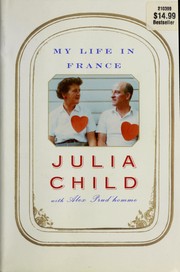
I came to this book after watching someone make boeuf bourguignon on television and wondering how a six-foot-two Californian ended up teaching America to cook. My Life in France answers that question in Julia Child's own voice, written with her grandnephew Alex Prud'homme and published by Knopf in 2006, two years after her death. It is a memoir about food, marriage, and the pleasure of learning something difficult late in life. It is also a portrait of a very particular kind of American abroad, one who fell in love with France and never quite got over it.
The meal that changed everything
The book begins in 1948. Julia and her husband Paul Child arrive at Le Havre on the SS America on November 3. She is thirty-six. He is ten years older, a diplomat, photographer, and fluent French speaker who worked with her in the OSS during the war. They drive to Paris in a blue Buick station wagon and stop for lunch at La Couronne in Rouen, a restaurant that dates back to 1345.
Julia orders oysters, sole meunière, a green salad, Pouilly-Fumé, fromage blanc, and café filtre. She calls it the most exciting meal of her life. The fish is browned in butter, the lemon is sharp, the whole thing is simple, and something in her clicks. She had eaten well before. She had never eaten like this. The scene is famous because it is the origin story of an entire career, and Child tells it without a trace of irony. She is not embarrassed to be a woman in her thirties discovering that food can be a subject.
They settle at 81 Rue de l'Université, an apartment they call Roo de Loo, with a quirky kitchen and a view of the Seine. Julia takes Berlitz classes, shops the markets, and reads old cookbooks. She realizes that French cooking is not a set of recipes but a system of techniques, and she wants to learn the system.
The Cordon Bleu
On October 4, 1949, she enrolls at the École du Cordon Bleu. She thinks she is signing up for a cooking class and ends up in the year-long professional course. The owner, Madame Elizabeth Brassart, is not impressed by her. Chef Max Bugnard, who teaches the class of eleven former GIs, is. He becomes her mentor, and his insistence on technique over shortcuts shapes everything she does later.
She fails the final exam on the first attempt. She retakes it and passes. Paul writes that all sorts of delights are spouting from her fingers like sparks from a pinwheel. The memoir is full of these small humiliations and recoveries. Julia is not a natural genius in the kitchen. She is a stubborn, curious person who practices.
The Cordon Bleu chapters are also a portrait of a woman learning to be a beginner. She is thirty-six, taller than most of the men, and louder than all of them. She makes mistakes. She burns things. She asks questions that annoy the chef. The other students are veterans, housewives, and professionals, and she is the American who does not fit. That discomfort is useful. It teaches her how to explain things to people who did not grow up in a French kitchen.
Simca, Louisette, and the school
In 1951 she has lunch with the Gourmettes, an exclusive women's eating club, and meets Simone Beck and Louisette Bertholle. Simca is French, opinionated, and a serious cook. Louisette is charming and less rigorous. The three of them found L'École des Trois Gourmandes, a cooking school that meets in Julia's kitchen. The name is a joke about the three of them, and it sticks.
Simca and Louisette are already working on a French cookbook for Americans. They ask Julia to help finish it. She reads the draft and finds it a jumble. She proposes a full rewrite. That decision costs her nine years.
The book is honest about how hard the collaboration was. Simca and Julia argue about cassoulet, about whether to include beef dishes, about how much explanation an American reader needs. Louisette's role shrinks until she is listed as a consultant. The friendship survives, but not without scars. Julia's voice is generous, and it is also clear about who did the work.
The years in Marseille and Germany
Paul is transferred to Marseille in March 1953. Julia studies the city's markets, its bouillabaisse, its fish. She learns that translation is not just language. A recipe that calls for dogfish cannot simply say catfish, because the American reader will buy the wrong thing. She and Paul come up with the idea of step-by-step illustrations, which becomes one of the book's innovations.
In October 1954 Paul is posted to Germany. Julia works long-distance with Simca, testing recipes and mailing corrections. She also teaches cooking classes to American women, which teaches her how to explain things to beginners. The book's middle section is less dramatic than the Paris years, but it is where the cookbook actually gets made. It is a long, patient, unglamorous process, and Child makes it feel like one.
There is also a McCarthy-era scare. Paul is called back to Washington and questioned in a loyalty investigation. He is exonerated and promoted, but the episode hangs over the book. Julia does not make a big political speech out of it. She just shows the fear and the relief, and the way a career can be put on hold by someone else's suspicion.
The book
The manuscript goes to Houghton Mifflin, where editor Dorothy de Santillana finds it too long and asks for cuts. Then the publisher declines it. Julia is devastated. Her friend Avis DeVoto, a formidable letter writer and cook, sends the manuscript to Bill Koshland at Knopf, who passes it to Judith Jones. Jones is the editor who will later work with Anne Frank and John Updike, and she understands what Julia is trying to do.
Knopf offers a $1,500 advance against 17 percent royalties. Judith suggests larger serving sizes and more beef dishes. The title becomes Mastering the Art of French Cooking. It appears in October 1961, and Craig Claiborne praises it in the New York Times. The book is a success, and Julia's life changes.
What I like about this section is how unromantic it is. Nine years of testing, rewriting, arguing, and mailing pages across the Atlantic. The glamour comes later. The work comes first. Child is proud of the work, and she is also aware of how lucky she was to have a husband with a salary and a publisher who believed in her.
Fame and La Pitchoune
The fame arrives through television. A WGBH segment on I've Been Reading leads to The French Chef, which premieres in 1963. Julia is a natural on camera, not because she is polished but because she is unafraid of mistakes. If something falls on the floor, she picks it up. If a recipe fails, she says so. That ease is the secret of her appeal.
The Childs build La Pitchoune, which they call La Peetch, on land rented from Simca in Provence. It is a small house with a big kitchen and a garden, and it becomes their retreat. Julia appears on the cover of Time in 1966. She publishes Mastering Volume II in 1970. After Simca's harsh criticism of the second volume, Julia ends the collaboration and writes From Julia Child's Kitchen on her own.
The last part of the book is about aging and loss. Paul has a heart attack in 1974 and later strokes. Julia cares for him, keeps working, and closes La Peetch in 1992. Paul dies in 1994. Julia dies in 2004, just before the book was finished. Alex Prud'homme completed it from her letters, datebooks, and memories.
What the book gets right
The voice is the best thing about it. Julia Child sounds like a person, not a brand. She is curious, blunt, occasionally vain, and very funny about her own failures. She is also deeply in love with Paul, and the marriage is the quiet spine of the book. He reads her drafts, takes photographs, makes her laugh, and believes in her work before anyone else does.
Paul deserves more attention than most readers give him. He is not just the supportive husband. He is the one who teaches her to taste wine, who photographs the dishes, who types and retypes the manuscript, who keeps her grounded when the book feels impossible. He is also a man with his own career, and the book is honest about the moves that disrupt her work. The partnership is not equal in every way. It is equal enough, and it lasted.
The French cooking world Julia enters is not a welcoming place for an American woman in her thirties. The Cordon Bleu is run by a woman who does not think she belongs. The chefs are men. The cookbook industry assumes that American housewives want shortcuts. Child refuses the shortcuts. She insists that her readers can learn technique, that they are smart enough to follow a long recipe, and that the pleasure of cooking is worth the work. That insistence is a kind of feminism, even if she would not have used the word.
The food writing is excellent without being precious. She describes technique in a way that makes you want to try it. She is not a snob. She respects the butcher, the fishmonger, the woman who has been making the same dish for forty years. The memoir makes clear that her democratic approach to cooking came from a genuine pleasure in sharing, not from a marketing strategy.
What it skips
This is a charmed life, and the book knows it. Julia has a diplomat husband, a publisher, a house in Provence, and the freedom to spend nine years on a cookbook. She mentions the privilege lightly, but she does not dwell on it. Readers looking for a story about struggle will find plenty of work but not much hardship.
The darker sides of her personality are mostly off the page. She can be competitive and imperious. The break with Simca is described with care, but Julia's own role in it is softened. The book is also quiet about the politics of the French food world, the sexism she must have faced, and the cost of her ambition to the people around her. It is a memoir, not a confession, and it chooses warmth over exposure.
The book was assembled from letters, datebooks, and interviews, and Alex Prud'homme finished it after Julia's death. That explains both its immediacy and its gaps. Some conversations are reconstructed. Some dates are approximate. The voice is so consistent that it is easy to forget there are two writers involved, which is a credit to the collaboration. It also means the memoir should be read as a crafted story, not a transcript.
What the book captures better than any biography is the pleasure of the work. Julia loves the smell of a market, the feel of dough, the moment when a sauce comes together. She loves the arguments with Simca, the letters from readers, the students who finally understand. The food is not a metaphor for her. It is the thing itself, and the memoir makes that joy contagious.
Should you read it
Read it if you love food, France, or stories about starting over in your thirties. Read it if you want to understand how Mastering the Art of French Cooking was made, because the process is more interesting than the legend. Read it if you need a reminder that mastery is mostly practice, and that a late start is still a start.
Do not read it expecting a warts-and-all autobiography. It is a love letter to a country, a marriage, and a way of working. That is enough. I finished it hungry, which is the correct response, and I also finished it with a new respect for the sheer stubbornness behind the butter. Julia Child did not become Julia Child by being effortless. She became Julia Child by failing an exam and taking it again.
FAQ
Did Julia Child write My Life in France herself?
She wrote it with her grandnephew Alex Prud'homme during the last months of her life. He completed the book after her death in 2004.
How long did Mastering the Art of French Cooking take?
About nine years, from the first collaboration with Simone Beck and Louisette Bertholle in the early 1950s to publication in October 1961.
What is the famous first meal in the book?
Sole meunière at La Couronne in Rouen, which Child called the most exciting meal of her life and the moment she fell in love with French cooking.
Similar books
Julie and Julia: 365 Days, 524 Recipes, 1 Tiny Apartment Kitchen
Stuck at thirty in Queens, Julie cooks all 524 Julia Child recipes in a year and blogs it.
2,834-word summary · 13 min read
Under the Tuscan Sun
Frances Mayes and her husband Ed restore an abandoned villa near Cortona, learning its stone walls, markets, and seasonal cooking one room and one meal at a…
2,619-word summary · 12 min read
Kitchen Confidential: Adventures in the Culinary Underbelly
Bourdain on rough kitchens, past drug use, Les Halles years, and why you should never order fish on Monday.
2,562-word summary · 11 min read

Down and Out in Paris and London
Orwell's account of washing dishes in Paris hotels and tramping through London does not ask for pity, only for a clear look at how poverty actually works.
2,282-word summary · 10 min read
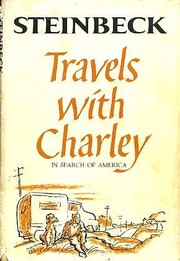
Travels with Charley
Steinbeck drives across America with his poodle Charley, looking for the country he remembers and finding a place that has changed.
2,039-word summary · 9 min read
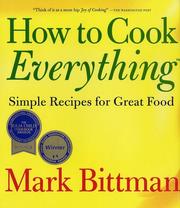
How to Cook Everything: Simple Recipes for Great Food
Bittman's 1998 doorstop taught a generation that dinner is a technique, not a recipe, with master recipes and variations instead of rigid instructions.
2,027-word summary · 9 min read
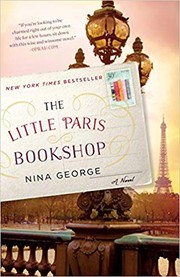
The Little Paris Bookshop
A Paris bookseller who prescribes novels as medicine finally opens a twenty one year old letter from his lost love and sails south through France to find her.
2,050-word summary · 9 min read
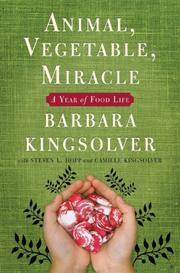
Animal, Vegetable, Miracle: A Year of Food Life
A family eats only local for a year from their Virginia farm.
2,270-word summary · 10 min read
Notes from a Small Island
Bill Bryson's 1995 farewell tour of Britain, funny and fond, from Dover to London, the north, Scotland and Wales.
2,301-word summary · 10 min read
In a Sunburned Country
Bryson revisits Australia by city walks and long trains, with reef trips, critter comedy, and explorer history.
2,387-word summary · 11 min read
Chocolat
A single mother opens a chocolate shop opposite the church during Lent, and a divided French village must choose between pleasure and piety.
2,272-word summary · 10 min read
Let's Explore Diabetes with Owls
Sedaris gets French dental work, feeds a kookaburra in Australia, shops for a stuffed owl in London, and survives China, airports and a colonoscopy.
2,538-word summary · 11 min read
Better Homes and Gardens New Cook Book
First published in 1930, this red-checked kitchen reference teaches basic skills, clear charts, and tested recipes for daily cooking.
2,986-word summary · 13 min read

A Hymn to Life
Gisele Pelicot tells her own story, from a shattering 2020 phone call to the open Mazan trial where shame changed sides.
2,456-word summary · 11 min read
A Moveable Feast: The Restored Edition
Young Hemingway writes hungry in Paris cafes among Stein, Pound and Fitzgerald.
2,116-word summary · 9 min read
The Joy of Cooking
First self-published in 1931, this one-volume kitchen teacher shows how to learn skills, follow its action format, and pick an edition.
2,591-word summary · 12 min read
When You Are Engulfed in Flames
In twenty two essays Sedaris tries to quit smoking in Japan, buys a skeleton, fights spiders in Paris, and files dry reports from France on family, country…
2,974-word summary · 13 min read
Zen and the Art of Motorcycle Maintenance
Father and son ride west while lectures on Quality and past madness intrude.
2,180-word summary · 10 min read
Crying in H Mart
Japanese Breakfast singer Michelle Zauner remembers her Korean mother through food, grief, and growing up in Oregon.
2,337-word summary · 10 min read
A Walk in the Woods: Rediscovering America on the Appalachian Trail
Bryson and friend Katz attempt the Appalachian Trail with blisters, bears, and laughs.
2,660-word summary · 12 min read
Me Talk Pretty One Day
Sedaris on French classes, family chaos, and learning to speak badly in two languages.
2,111-word summary · 9 min read
Eat, Pray, Love
Eat, Pray, Love retold: divorce, Italy for pleasure, India for practice, Bali for balance.
1,962-word summary · 9 min read

Long Walk to Freedom
Mandela's account of a Thembu childhood, a law practice, a banned movement, twenty-seven years in prison, and the negotiation that ended apartheid.
2,454-word summary · 11 min read
Brown Girl Dreaming
Jacqueline Woodson retells her childhood in verse, moving from Ohio to South Carolina to Brooklyn while the civil rights movement reshapes the world around her.
2,727-word summary · 12 min read

The Beach
A young backpacker follows a dead man's map to a hidden island community, then discovers what the people there are willing to do to keep it secret.
2,067-word summary · 9 min read

In Order to Live: A North Korean Girl's Journey to Freedom
A young North Korean girl crosses the Yalu, survives trafficking in China, and rebuilds her life in Seoul in this unsparing memoir.
2,027-word summary · 9 min read

Too Much and Never Enough: How My Family Created the World's Most Dangerous Man
Mary L. Trump's 2020 memoir traces how a cold, zero-sum Queens household shaped her uncle, and uses family tax documents to challenge his self-made story.
2,059-word summary · 9 min read
Same Kind of Different as Me
An art dealer and a formerly homeless sharecropper tell the story of the friendship that began at a Fort Worth mission and the woman who insisted on it.
2,023-word summary · 9 min read

Infidel
Ayaan Hirsi Ali's memoir of a Somali childhood, a forced marriage, a Dutch asylum claim, and the political fight that followed the murder of Theo van Gogh.
2,041-word summary · 9 min read
The Happiest Man on Earth
Eddie Jaku's memoir follows a Leipzig childhood, Buchenwald, Auschwitz, a death march, and the slow rebuilding of a life in Australia.
2,597-word summary · 12 min read