
Reading options
What's inside (5 sections)
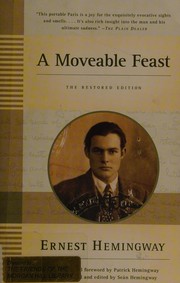
I had read the old 1964 edition in college and remembered it as pretty cafes and drunk writers, so I was curious what the Restored Edition changes. A Moveable Feast: The Restored Edition, edited by Seán Hemingway with a foreword by Patrick Hemingway, first published by Scribner in 2009, 240 pages, ISBN 9781416591313, restores Hemingway's Paris memoir to something closer to his 1928 manuscript before Mary Hemingway reshaped it after his death. The original A Moveable Feast first appeared in 1964. This 2009 version cuts some moralizing, restores jokes, moves chapters, and ends differently. It is still nostalgic, still score settling, still beautiful about work, but it feels younger and less bitter.
Hemingway was in his twenties in Paris in the 1920s with his first wife Hadley, poor, hungry, writing in cafes to stay warm. He remembers a small apartment on Rue Cardinal Lemoine without hot water, a sawmill? Actually a bal musette below, good luck from a horseshoe, trips to Shakespeare and Company where Sylvia Beach lent books, lunches with Gertrude Stein who taught him to be ruthless about words. The restored text keeps those routines front and center. Wake, walk, write 500 words, eat oysters and drink wine if money allows, argue about painting with friends who cannot paint. The pleasure is in discipline inside poverty. Hunger as sauce, he says, and you believe him because he describes meals so precisely you taste them.
Cafes, hunger, and learning to write
The opening chapters are the reason people love this book. Hemingway writes in a cold cafe, orders rum, watches a girl come in out of rain, tells himself not to look because writing needs hunger. He lists what he will not write to save for later. He walks home hungry and happy. Those pages teach more about process than most manuals. Write one true sentence. Stop when you know what happens next. Do not empty the well. Reread to get back in. He shows himself learning from Stein to cut, from Pound to trust images, from hunger to notice. A young writer reading this today will underline half of it, then feel annoyed that advice so simple is so hard.
Hadley anchors the early book in a way the 1964 edition softened. She is kind, athletic, trusting, bad at French in a charming way, good at making a small apartment feel like home. Hemingway loves her here without the retrospective guilt that Mary added later. They ski in Schruns, talk about money without fighting, miss each other when apart. Knowing, as readers do, that he will leave her for Pauline only makes these pages sadder and sweeter. The restored edition keeps that love present longer before introducing Pauline as a wedge. You see what was lost, not just who was blamed.
Food writing carries memory. Oysters with white wine at Prunier after good work. Goat cheese and red wine on a picnic. A sandwich and beer after skiing. Hemingway eats when poor with more attention than rich tourists eat at feasts. He remembers prices, which cafe gives free olives, how to make a meal last an afternoon of watching. Those details are not decoration. They show how a young artist budgets joy. Spend on food that teaches. Save on heat by writing in cafes. Treat a good lunch as payment for good pages. I found myself cooking simpler after reading, which is a strange effect for a memoir about drinking.
For craft, the sentences are short and clean in a way that feels easy until you try it. Nouns you can touch. Verbs that move. Little French left untranslated to keep flavor without showing off. Dialogue with Stein about writing is quoted at length and still useful. Be clear. Cut adjectives about weather unless weather does work. Write about what hurts. Stein also warns about gossip, which Hemingway then ignores by gossiping brilliantly for 200 pages. That contradiction, advice taken for prose and ignored for life, is very human and very Hemingway.
Stein, Pound, Fitzgerald, and friends
The middle portraits are where score settling lives and where restoration matters most. Gertrude Stein starts as mentor, generous with time and ruthless with a pencil, then becomes petty about rivals in ways Hemingway records with glee. Ezra Pound is kind throughout, helping young writers with money and introductions, boxing badly, teaching Hemingway to distrust abstractions. Sylvia Beach lends books and trust. Ford Madox Ford smells bad and lies well, at least in Hemingway's telling. Each portrait mixes gratitude and revenge. You learn as much about Hemingway's grudges as about their work.
Fitzgerald arrives late and steals every scene he enters. Handsome, drunk, anxious about his wife Zelda, convinced he is dying, asking Hemingway if sleeping with Zelda is enough to know if he is adequate. The restored edition keeps Fitzgerald human rather than cautionary. Hemingway takes him to get measured? Actually the famous trip to Lyon to check? He helps him cut Tender Is the Night? No, that is later. Here Fitzgerald is working, worrying, generous with praise, undone by drinking and by Zelda's illness. A scene where Hemingway watches Fitzgerald try not to drink on a train and fail in small sips is painful because Hemingway drinks too and knows it. He judges Fitzgerald for what he fears in himself. That self knowledge flickers and fades, which is why the portrait endures. It is not fair. It is felt.
Pound gets the best treatment and deserves it. He finds Hemingway work, introduces him to editors, spars gently about poetry versus prose. A chapter where Pound teaches Hemingway to box while talking about meter sounds invented and probably is half invented, but the point stands. Timing matters in both. Breath matters. Do not waste motion. Those lessons show up in Hemingway's later style more than Stein's rules. I liked that the restored edition keeps Pound's kindness front and center without making him a saint. He could be dogmatic too. Hemingway admits it while thanking him.
For pacing, the portrait chapters can feel episodic. Cafe, friend, walk, judgment. Two dinners in a row with writers arguing about who is washed up blurred for me. I skimmed one Ford lunch because the point, Ford lies, was clear in the first paragraph. Then a short chapter where Hemingway and Hadley walk home in rain sharing an umbrella snaps it back. Marriage as shelter from literary weather. Those quiet returns to Hadley structure the book better than any table of contents. Each time friends wound, home heals until home breaks.
Pauline, endings, and what restoration changes
The biggest difference in the Restored Edition is how Pauline Pfeiffer enters and how the book ends. In the 1964 Mary edition, Pauline is a predator who breaks a marriage, and the book ends with moralizing about wealth ruining writers. Seán Hemingway's edit, based on manuscripts at the Kennedy Library, removes much of that framing, restores jokes and alternate endings, reorders fragments about hunger and writing to the front, and ends not with a sermon but with Hadley and the feeling of loss without lecture. It feels younger because Hemingway was young when he lived it and middle aged when he wrote it in Cuba in the late 1950s, trying to remember happiness before success complicated.
Without spoiling the final pages, the restored ending stays with Hadley on a train, happy and tired, rather than jumping to warnings about rich people. That choice changes the moral from do not sell out to remember love clearly. I prefer it, though I understand why Mary wanted to protect Ernest's image by blaming outsiders. The restored text lets Hemingway blame himself more, for drinking, for ambition, for listening to Pauline while loving Hadley. That self blame, incomplete and evasive, feels truer than a tidy lesson. He knew what he did. He wrote around it beautifully and guiltily.
Hemingway's guilt about leaving Hadley runs under every cafe scene once Pauline appears. He describes Pauline's efficiency, her money, her fashion knowledge, as both attractive and corrosive. He goes to Chartres to think and thinks about Hadley. He writes well and feels bad. Those contradictions are the book's real subject more than Paris. Can you make good work while behaving badly in life. Hemingway wants yes for art and no for marriage. The restored edition does not resolve. It shows a man who got the sentences right and the life wrong and knew it while writing.
For criticism, the book remains a curated memory, not history. Dates shift. Conversations are reconstructed decades later. Stein scholars dispute accounts. Fitzgerald fans dispute the measuring trip. Hemingway admits he invents dialogue to get at truth, which is fine for memoir if you accept it. Also, women beyond Hadley get short shrift. Stein is brilliant then petty. Zelda is mad. Pauline is efficient then blamed. French waitresses are kind but nameless. A modern reader will notice who serves and who speaks. And poverty here is romantic because Hemingway knew it was temporary. Real hunger without an end in sight does not feel like sauce.
Still, at 240 pages in Scribner hardcover it reads fast for its weight. Short vignettes, white space, dialogue that snaps. I read it in two sittings with coffee, which felt appropriate. The Paris it describes is gone, if it ever existed so cleanly, but the work advice holds. Write true, eat simply, walk to think, love people while you have them. Those are good instructions for any twenties, not just 1920s.
For who this is for. If you write, read the restored edition, not just the 1964. The reordered hunger chapters teach more. If you love Paris, you will add places to a list that no longer match. Shakespeare and Company moved. Prunier remains. If you want biography, pair with a life of Hadley for balance. Hemingway loves her here but still leaves. I closed it thinking about my own twenties rooms, cold apartments where I wrote badly and happily, and feeling grateful I did not have to choose between love and work so starkly. Hemingway did and chose badly and wrote beautifully about choosing. That is the feast and the bill together.
Seán Hemingway's editing choices as described in forewords deserve attention because they change how you trust memory. He removed Mary's framing chapters that moralized about wealth, restored nineteen alternate endings that show Hemingway trying different tones, moved the hunger passages earlier to emphasize craft over gossip. Reading those notes after the memoir made me reread the opening with new eyes. The hunger that felt like scene setting is actually thesis. Learn to be hungry and observe. That thesis gets lost when the book ends with sermons. Restored, it sings. I spent an evening comparing one paragraph in both versions about Fitzgerald's drinking. The 1964 version judges. The 2009 version watches, worries, and drinks alongside. Same facts, different heart. That difference taught me more about editing as ethics than any craft essay. What you cut decides who you were.
Paris apartments as budgets deserve a last look because Hemingway itemizes poverty the way others itemize wealth. Rent on Rue Cardinal Lemoine, coal for heat, books borrowed not bought, lunches skipped to afford writing afternoons in cafes where one coffee buys hours of warmth. Hadley mends clothes instead of replacing. They walk rather than ride. Those constraints shape aesthetics. Short sentences cost less paper. True images beat fancy ones because fancy requires leisure to polish. When money arrives later from journalism, Hemingway notices his writing gets looser, hungrier for praise. He links full stomachs to slack paragraphs without romanticizing hunger as virtue. He just observes that need focused him. That observation, made by a middle aged man remembering young want, carries more weight than any rule about showing versus telling. It says circumstances write too, not just talent.
Sylvia Beach's lending library as community center also stays with me. She knows who needs what book before they ask, presses a novel on a homesick kid, trusts returns without cards. Her shop survives on faith that readers return kindness with custom. Hemingway repays by bringing friends who buy. Those small economies of generosity run parallel to the famous generosity of Pound and Stein with introductions. Paris works in this memoir because people share addresses, meals, contacts. Even Ford, liar though Hemingway paints him, shares a publisher's name that leads somewhere. Remembering that network tempers the lone genius myth Hemingway also sells. He did not starve alone in a garret inventing modernism. He ate soup made by Hadley from market leftovers, borrowed books from Sylvia, got checks from Ezra, argued with Gertrude, and then wrote alone at a table others kept warm.
FAQ
What does Restored Edition change?
Seán Hemingway restored 1928 manuscript order, cut Mary's moral framing, restored jokes and alternate endings, ending on Hadley rather than sermon.
When was A Moveable Feast published?
The memoir first appeared in 1964 posthumously. The restored Scribner edition came in 2009, 240 pages, ISBN 9781416591313.
Similar books
My Life in France
Julia Child's memoir of learning to cook in Paris, testing recipes for nine years, and becoming the teacher who changed how America thought about French food.
2,038-word summary · 9 min read
Bird by Bird
Anne Lamott's 1994 book on writing and life: shitty first drafts, the one-inch picture frame, and quieting the inner critic so you can take it bird by bird.
2,592-word summary · 12 min read
Ham on Rye
Henry Chinaski grows up rough in Depression Los Angeles and finds writing.
2,244-word summary · 10 min read
Twelve Years a Slave
Free violinist Solomon Northup tells how Brown and Hamilton lured him south into twelve years of Louisiana bondage until Bass letters brought rescue in January…
2,931-word summary · 13 min read
Narrative of the Life of Frederick Douglass
Douglass names names from Maryland slavery to his 1838 escape, showing how literacy, wages, and faith were policed, then answers with defiance.
2,630-word summary · 12 min read
The Story of My Life
Deafblind Keller learns water at pump through Sullivan finger spelling.
2,149-word summary · 10 min read
All Creatures Great and Small
Young vet Herriot learns lambing, Tricki Woo, and Darrowby life.
2,327-word summary · 10 min read
What I Talk About When I Talk About Running
Murakami connects daily running to writing novels, from his jazz club years to marathons and a 62-mile ultramarathon, with frank notes on aging. A quiet memoir…
3,100-word summary · 14 min read
Giovanni's Room
An American in Paris stalls between his fiancee in Spain and an Italian bartender who loves him. Baldwin's brief tragedy still stings.
2,264-word summary · 10 min read
Walden
Thoreau builds a cabin at Walden Pond and spends two years testing what a person really needs to live well.
2,986-word summary · 13 min read
Madeline
Ludwig Bemelmans's 1939 Madeline: the twelve girls in Paris, Miss Clavel, the midnight appendix scare, and why the smallest girl became a classic.
2,944-word summary · 13 min read
The Phantom of the Opera
A masked Erik haunts the Paris Opera, coaching Christine Daae while rivaling Raoul for her. Chandelier crash, cellar lake, and unmasking follow.
2,307-word summary · 10 min read
On Writing
Stephen King blends memoir and blunt writing advice on reading daily, drafting fast, and cutting hard.
2,702-word summary · 12 min read
I Know Why the Caged Bird Sings
Angelou recalls Stamps, St Louis and San Francisco, from childhood silence after trauma to voice through books and work.
2,607-word summary · 12 min read
For Whom the Bell Tolls
An American dynamiter joins Spanish guerrillas for three days to blow a mountain bridge, finding love and doomed courage.
2,286-word summary · 10 min read
A Farewell to Arms
Frederic loves Catherine in Italy until desertion leads to Switzerland and stillbirth.
2,502-word summary · 11 min read
The Sun Also Rises
Jake Barnes drifts through Paris bars and Pamplona bullfights with Brett Ashley and a wounded generation.
3,187-word summary · 14 min read
The Old Man and the Sea
Off Cuba, old Santiago rows out after 84 empty days, hooks a great marlin, and holds on for three days alone.
2,593-word summary · 12 min read

The Long Winter
Dakota Territory, 1880: seven months of blizzards cut a town off from the railroad, and a family survives on twisted hay, ground wheat, and a dangerous wheat…
2,210-word summary · 10 min read
The Crying of Lot 49
A California woman named executor of her ex-lover's estate follows a muted post horn into a possible centuries-old postal conspiracy, and Pynchon refuses to…
2,003-word summary · 9 min read
Silas Marner
A falsely accused weaver hoards gold in Raveloe until a stolen hoard and an abandoned child remake his narrow life.
2,699-word summary · 12 min read

Revolutionary Road
A Connecticut couple who believe they are too good for the suburbs plan to move to Paris, and the plan slowly exposes everything they cannot say to each other.
2,085-word summary · 9 min read

Make Way for Ducklings
A pair of mallards raise eight ducklings on the Charles River and lead them across Boston to the Public Garden, with a little help from a friendly policeman.
2,044-word summary · 9 min read

Long Walk to Freedom
Mandela's account of a Thembu childhood, a law practice, a banned movement, twenty-seven years in prison, and the negotiation that ended apartheid.
2,454-word summary · 11 min read
Brown Girl Dreaming
Jacqueline Woodson retells her childhood in verse, moving from Ohio to South Carolina to Brooklyn while the civil rights movement reshapes the world around her.
2,727-word summary · 12 min read
Rosencrantz and Guildenstern Are Dead
Stoppard's 1966 play retells Hamlet from the wings, where two minor courtiers wait, joke, and walk toward a death they cannot see.
2,021-word summary · 9 min read

Little Town on the Prairie
In the spring after the Long Winter, fifteen-year-old Laura sews shirts, studies for a teaching certificate, and helps send her blind sister Mary to college.
2,071-word summary · 9 min read

In Order to Live: A North Korean Girl's Journey to Freedom
A young North Korean girl crosses the Yalu, survives trafficking in China, and rebuilds her life in Seoul in this unsparing memoir.
2,027-word summary · 9 min read

Amelia Bedelia
A literal-minded housekeeper follows her employer's list to disastrous and funny effect in the 1963 picture book that made wordplay a children's staple.
2,038-word summary · 9 min read

Too Much and Never Enough: How My Family Created the World's Most Dangerous Man
Mary L. Trump's 2020 memoir traces how a cold, zero-sum Queens household shaped her uncle, and uses family tax documents to challenge his self-made story.
2,059-word summary · 9 min read